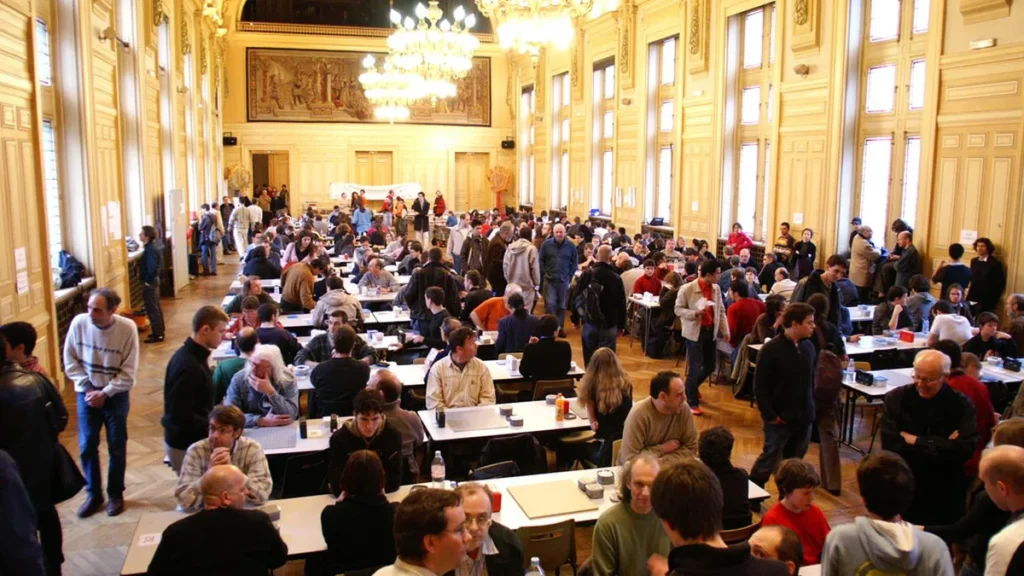
Running card games for 476 players sounds impossible until you break the crowd into tables. Nobody plays one giant game with 476 people around a single table. Instead, you run 119 tables of four, all playing the same short games at the same time, and you bring everyone together between rounds for scores, stories, and a shared finish. The room feels like one event, but every table feels like a friendly game night.
The trick is choosing games that teach in two minutes, finish in about fifteen, and work with one small box per table. Long, complicated games stall a big night because half the room is still reading rules while the other half is waiting to play. Short games keep the energy up, let tables rotate, and give every player several chances to win something before the night ends.
This guide gives you nine games that fit that plan, a simple table layout, a checklist that covers the whole evening, and answers to the questions every organiser asks first. Each game below works at a four person table, needs little or no setup, and has been picked to feel fresh next to the other huge group card nights on this site.
Key takeaways
- Split 476 players into 119 tables of four and run the same short games everywhere at once.
- Pick games that teach in two minutes and finish in about fifteen.
- Use one small box per table, plus a spare copy for every tenth table.
- Score tables together between rounds so the whole room shares one leaderboard.
- Rotate games every round so every player tries at least three different games.

How a 476-player card night works
With 476 players and four to a table, you need 119 tables. If your room holds fewer tables, run two sessions of about 238 players each, or mix four person tables with a few tables of five. Either way, keep every table playing the same game in each round so the room stays in step and nobody feels left behind. The format is close to the approach used for card games for 474 players, where the same table plan keeps a very large room playing together.
Each round lasts about fifteen minutes of play plus five minutes for scoring and moving. Four rounds fill roughly eighty minutes, which leaves time for a welcome, a break, and a final. A host with a microphone calls the start and end of every round, reads the scores from the top tables, and keeps the pace friendly rather than rushed. Tables that finish early can play a quick filler round while they wait, so nobody sits idle.
Supplies stay simple. You need one boxed game per table for each round, a score sheet and a pencil at every table, and a central leaderboard where the host posts the top ten tables after each round. Buy a few spare copies of the most popular games, because a missing box can hold up a whole table. Keep the spare games, extra pencils, and a first aid kit at the host table so helpers can reach them fast.
Seating matters more than most organisers expect. Mix ages and experience levels at every table instead of letting the strongest players cluster together. Put a confident, friendly player at each table as the table captain, and give that person a one page rules sheet for the round. The captain reads the rules aloud, deals the first hand, and answers the easy questions, which frees the host to walk the room and fix the few problems that need a grown up decision.
Scoring should reward playing well, not just winning once. Give each table points for finishing first, second, third, and fourth, and add a small bonus for the table with the best team spirit in each round. Add the points up after every round and post the running totals where everyone can see them. A shared leaderboard turns 119 separate tables into one shared contest, and it gives every table a reason to keep playing hard in the last round.
The 9 card games for 476 players
The nine games below all fit a four person table, teach in about two minutes, and finish in roughly fifteen. They use different skills, so a player who struggles with one game often shines at the next. Buy one copy per table for each round, and keep a spare copy of each game at the host table.
| Game | Players | Time | What you need | Best for |
|---|---|---|---|---|
| 1. Wavelength | 2 to 12 players | 15 minutes | One box per table | Talking and guessing together |
| 2. Fuji Flush | 3 to 8 players | 15 minutes | One box per table | Quick numbers and bold plays |
| 3. Kariba | 2 to 6 players | 15 minutes | One box per table | Animal cards and clever timing |
| 4. Illusion | 2 to 5 players | 10 minutes | One box per table | Judging colours by eye |
| 5. Diamonds | 2 to 6 players | 20 minutes | One box per table | Collecting gems and outwitting rivals |
| 6. The Bottle Imp | 3 to 4 players | 20 minutes | One box per table | Trick taking with a risky bottle |
| 7. Voodoo Prince | 3 to 6 players | 20 minutes | One box per table | Trick taking with a twist |
| 8. Mü & More | 3 to 6 players | 30 minutes | One box per table | Bidding and trick taking |
| 9. Arboretum | 2 to 4 players | 20 minutes | One box per table | Building a beautiful tree garden |
1. Wavelength
Wavelength turns a whole table into one team trying to read each other’s minds. One player draws a card with two opposite ideas, such as hot and cold, and places a hidden target on a long scale. The rest of the table talks, argues, and finally agrees on where the target sits. It is loud, funny, and perfect for strangers, because the best clues come from shared memories and honest opinions. A table of four gets everyone talking without anyone hiding at the edge of the group. The box is small, the rules fit on one page, and a round takes about fifteen minutes. Keep the target cards shuffled between rounds so no table can memorise the answers.
2. Fuji Flush
Fuji Flush is a fast numbers game where the highest card usually wins, but a lower card can beat it if two players play the same number together. That single twist keeps every hand tense, because a weak card is never truly dead. Players lay cards down in turn, watch the table, and try to empty their hands first. It teaches in about a minute, which makes it ideal for a first round when the room is still settling. At a four person table the game moves quickly, and a full game finishes in about fifteen minutes. It also works well as a warm up before the longer games in this list.
3. Kariba
Kariba is a bright, simple card game about animals, where a bigger animal usually eats a smaller one, but the smallest animal can scare away the biggest. Players lay cards in front of them, collect matching sets, and try to time their plays so their animals survive. The rules take about two minutes to explain, and the animal pictures make the game easy to follow even for players who have never played a card game before. A table of four gives everyone enough room to build a small collection without the game dragging on. It is gentle, cheerful, and a good choice for mixed age tables.
4. Illusion
Illusion asks players to sort cards by how much of one colour they contain, and it is much harder than it sounds. A card that looks mostly blue may hold only a thin stripe of it, while a pale card may hide far more. Players take turns placing a card into a line, and anyone who thinks the line is wrong can challenge it. The game is quiet, focused, and strangely addictive, which makes it a good change of pace after a loud party game. It needs no table talk, so it works well for players who prefer thinking to shouting. A full game takes about ten minutes, so it fits neatly into a short round.
5. Diamonds
Diamonds is a tidy trick taking game where players collect gem cards and try to win the most valuable tricks. The twist is that the gem suit changes value as the game goes on, so a card that looks weak in the first hand can become the best card in the last. Players must watch the table, remember what has been played, and decide when to spend their strongest cards. It teaches in about three minutes, and a table of four finishes in about twenty minutes, so plan it for a slightly longer round. It suits players who enjoy a little thinking with their card play.

6. The Bottle Imp
The Bottle Imp is a trick taking game built around a single bottle that nobody wants to hold at the end. Each trick has a price, and the player who wins the bottle must pay it, so winning too much can be worse than winning too little. Players try to win just enough tricks, and the tension grows as the bottle moves around the table. It is made for three or four players, which makes it a natural fit for a four person table. The rules take about three minutes to explain, and the game finishes in about twenty minutes. It is a good pick for a later round, once everyone is comfortable with trick taking.
7. Voodoo Prince
Voodoo Prince is a trick taking game where the trump suit can change, and the player who wins a trick sometimes wishes they had not. Each round has a different trump, and the scoring rewards careful play rather than brute force. Players who watch the table and count the cards do well, but the game is forgiving enough for new players to enjoy their first game. It teaches in about three minutes, and a four person table finishes in about twenty minutes. It is a strong choice for the middle of the evening, when the room is warmed up and ready for something a little deeper.
8. Mü & More
Mü & More is a trick taking game with a bidding round, where players promise how many tricks they will win before a single card is played. Bid too high and you lose points, bid too low and you waste a good hand. The game rewards honest judgement, and the table talk around the bids is half the fun. It is the longest game in this list, at about thirty minutes, so save it for a longer round or a final table. It suits players who have already played a round or two and want a game with a little more depth. One copy per table is enough, and a spare rules sheet helps the table captain.
9. Arboretum
Arboretum is a calm, beautiful card game where players build paths of trees in their own garden, trying to make the longest run of each tree type. The catch is that you can only score a tree if you hold the highest card of that type in your hand at the end, so every card you play is also a card you give away. It is easy to learn and hard to master, and the tree artwork makes the table look lovely. It is made for two to four players, so a four person table is exactly right. A game takes about twenty minutes, and it works well as a quiet final round after the louder games.
The trick taking games in this list share a family feel with the games in the guide to card games for 472 players, so tables that enjoy Diamonds or The Bottle Imp will settle into those games quickly too.
Your 476-player checklist
Use this checklist on the night. Tick each item off as you go, and keep the list at the host table where every helper can see it.
- Count 119 tables, 476 chairs, and one boxed game per table for the first round.
- Put a score sheet, a pencil, and a one page rules sheet on every table.
- Name a table captain for each table and give them a quick briefing before the doors open.
- Test the microphone, the leaderboard, and the timer before the first player arrives.
- Keep spare copies of every game, extra pencils, and a first aid kit at the host table.
- Post the running scores after every round and read out the top ten tables before the final.
Frequently asked questions
Can 476 players really play card games at the same time?
Yes, if you split them into 119 tables of four and run the same game at every table in each round. No single game seats 476 people, but 119 small games running together feel like one big event, especially when the host keeps the rounds in step and posts a shared leaderboard.
How many tables do I need for 476 players?
You need 119 tables of four. If your room holds fewer tables, run two sessions of about 238 players each, or mix in a few tables of five. Keep the table size close to four, because most of the games in this list play best with four players.
How many decks and copies should I buy?
Buy one copy of each game for every table that will play it in a round, plus one spare copy of each game for every ten tables. That means about 12 spare copies of each game across the whole event. The spare copies cover lost cards, damaged boxes, and tables that want a second game.
What if most players have never played these games?
Start with Fuji Flush or Kariba, which both teach in about two minutes. Put a confident table captain at each table, give them a one page rules sheet, and let the captain read the rules aloud before the first hand. Most players learn faster by playing than by listening, so keep the introduction short.
How long does a 476-player card night last?
Four rounds of fifteen minutes of play plus five minutes for scoring take about eighty minutes. Add a welcome, a break, and a final, and the whole evening runs for about two hours. If you want a shorter night, run three rounds instead of four and skip the break.
How do we pick one overall winner from 476 players?
Add up the points from every round on a shared leaderboard, and crown the table with the highest total, not just the winner of the last game. Give a small prize to the top three tables and a fun prize to the table with the best team spirit, so every table has something to play for in the final round.
If you want a different set of nine games for a slightly smaller crowd, the guide to card games for 470 players uses the same table plan with a fresh set of games.
The Bottom Line
The plan is simple: 119 tables of four, nine short games, and a shared leaderboard that ties the room together. Pick three games from this list for your first night, keep the rounds short, and let the table captains carry the rules. The best huge group card nights feel like a friendly game night that happens to have 476 players, and that is exactly what this plan gives you.
If you run this format once, the second night is easier, because the captains know the games and the room knows the rhythm. Keep the spare copies handy, post the scores after every round, and end with a final that the whole room can watch. That is how a crowd of 476 becomes one shared game night.