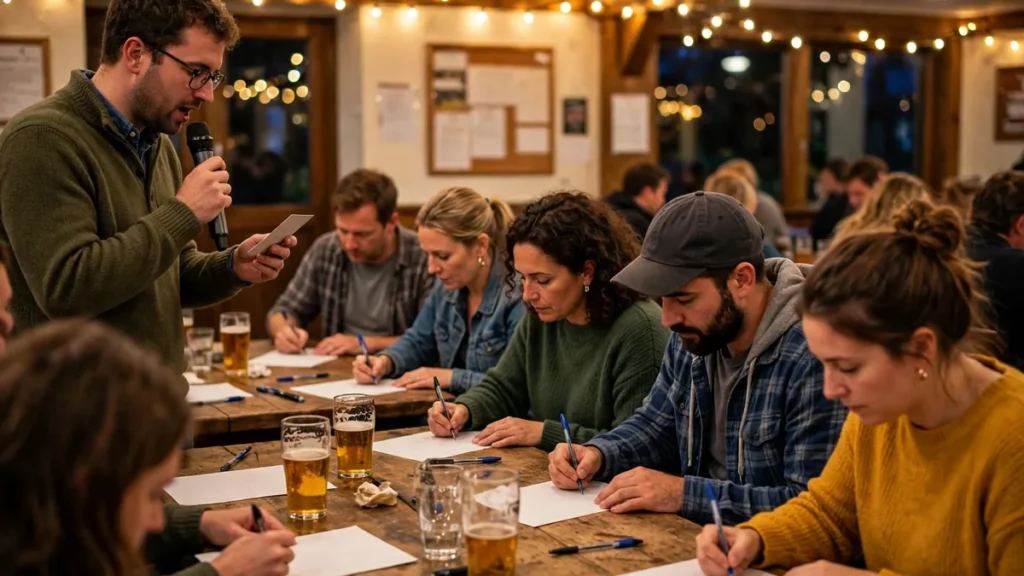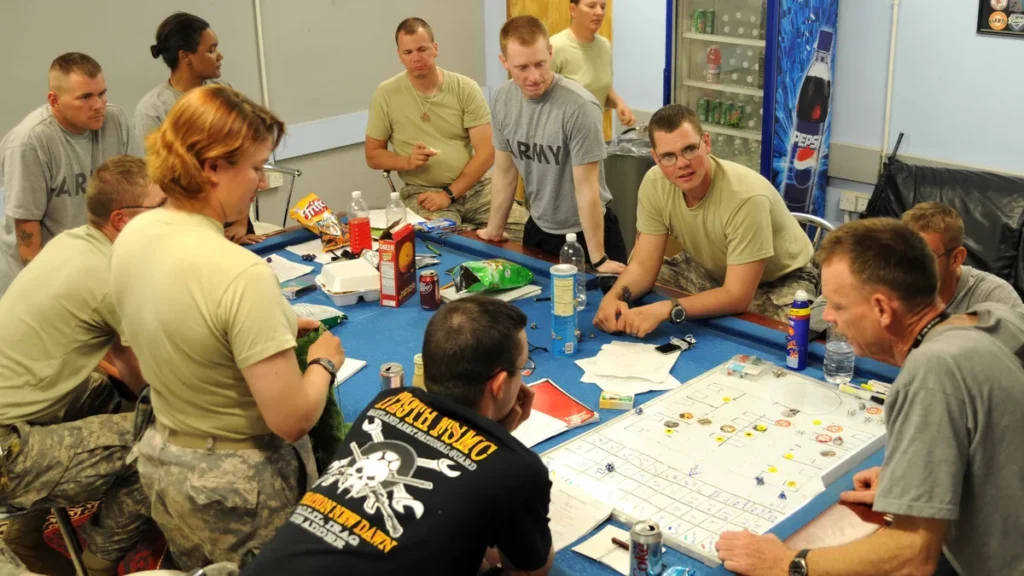
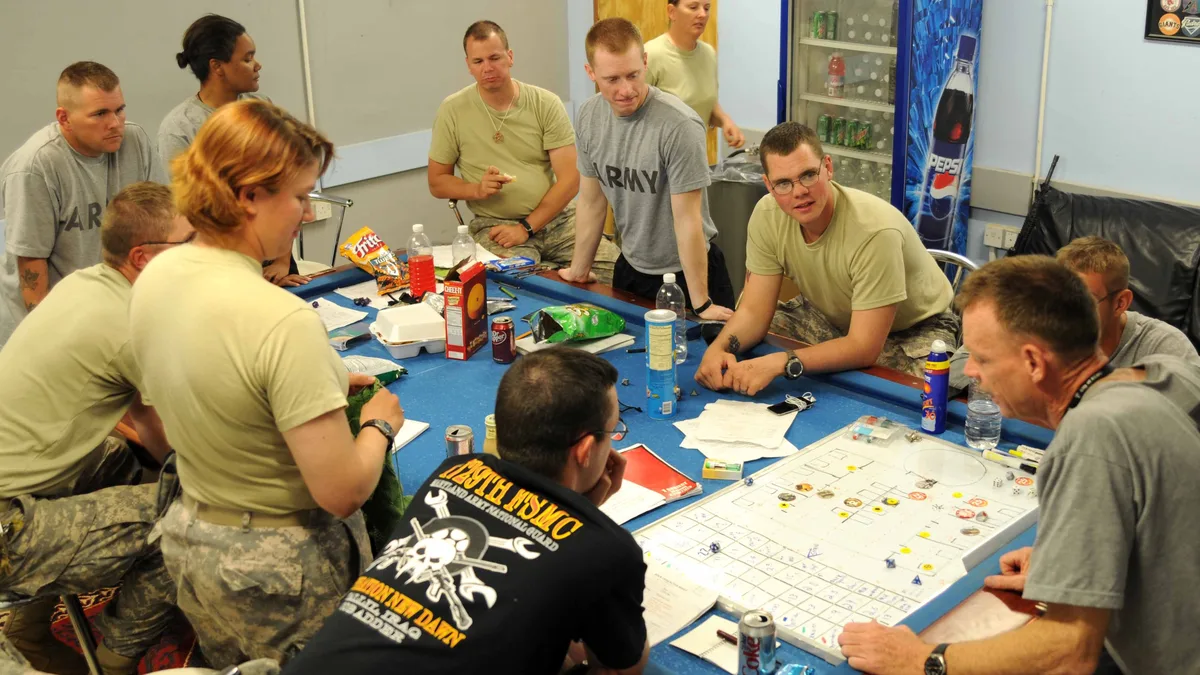
Four hundred and fifty players in one room sounds impossible for board games, and in a way it is. But a game night for 450 players is not one giant game. It is ninety tables playing at the same time, connected by one shared schedule, one scoring system, and one room full of energy that no small game night can match.
The trick is to stop thinking about one game and start thinking about one event. Each table of four or five players runs its own copy of a game, and the tables compare results at the end of each round. Nobody waits for 449 other people to take a turn. Everybody plays at once, everybody finishes at roughly the same time, and the room stays loud in the best possible way.
This guide shows you exactly how to do it. You will find nine games that work brilliantly at this scale, three formats that keep ninety tables moving together, a setup plan, a checklist, and answers to the questions every organiser asks before the night begins.
Key takeaways
- Split 450 players into about 90 tables of five, and run the same game on every table at the same time.
- Pick games that finish in under an hour and teach in under ten minutes, so every table stays in step.
- Use one shared scoring sheet so tables can be ranked against each other without slowing the night down.
- Appoint one helper for every ten tables to answer rules questions and keep rounds on schedule.
- Rotate games between rounds so players meet new opponents and nobody is stuck with one game all night.
How 450 Players Actually Play Together
The maths is simple, and it is the first thing to get right. Divide 450 players into tables of five and you need exactly ninety tables. Tables of five are the sweet spot for most of the games in this guide: large enough to feel social, small enough that nobody waits long between turns.
Every table plays the same game in the same round. That shared game is what turns ninety separate tables into one event. When a table finishes, its players record their scores on a shared sheet or a simple form, and the best scores feed into a leaderboard. The leaderboard connects them.
Timing matters more than the choice of game. A round should last forty-five to sixty minutes, including teaching time. Games that run longer leave fast tables sitting idle and slow tables feeling rushed. Choose games that end on a fixed number of rounds or a clear trigger, so the whole room finishes within a few minutes of each other. A short break between rounds lets players stretch and swap tables.
The Team Format
In the team format, each table is a team, and the table’s combined score counts. This is the friendliest format for a mixed crowd, because a new player is never exposed on their own. Strong players lift their table, and beginners learn by watching the people sitting next to them. Teams keep the same name all night, which makes the leaderboard easy to follow and gives the room something to cheer for.
The Station Format
In the station format, the room is divided into zones, and each zone runs a different game. Tables rotate between stations each round, so every player tries several games over the night. This format suits a crowd that wants variety more than competition, and it is the best choice when your game library is wide but shallow, with only a few copies of each title.
The Tournament Format
In the tournament format, tables are ranked after each round, and the top players move up to stronger tables while the rest stay put or move down. It is the most competitive of the three formats, and it works best when your crowd already knows the games. Winners feel the climb, and nobody is trapped at a table where they are out of their depth.
The 9 Best Board Games for 450 Players
The nine games below were chosen for a crowd of 450 for the same reasons: they teach fast, they finish in under an hour, they stay interesting when the whole room is playing them at once, and they work at tables of four or five. Each one brings something different to the night, from quiet tile-laying to loud bluffing and guessing.
| Game | Players per table | Playing time | Best for |
|---|---|---|---|
| Azul | 2 to 4 | 30 to 45 minutes | Calm, beautiful play |
| Catan | 3 to 4 | 60 minutes | Trading and talking |
| Love Letter | 2 to 6 | 20 minutes | Quick filler rounds |
| Coup | 2 to 6 | 15 minutes | Bluffing and laughs |
| Just One | 3 to 7 | 20 minutes | Cooperative wordplay |
| The Crew | 2 to 5 | 20 minutes | Teamwork under pressure |
| Camel Up | 2 to 8 | 20 to 30 minutes | Wild, noisy races |
| Skull | 3 to 6 | 15 to 45 minutes | Bold bluffing duels |
| Decrypto | 3 to 8 | 15 to 45 minutes | Team word puzzles |
Before you read the list, it helps to know how the night fits together. The games in this list work well with the same approach used for board games for 448 players, where every table runs the same game in the same round and the room shares one leaderboard.
1. Azul
Azul is a tile-drafting game where players take coloured tiles from shared factory displays and place them onto their own board to build a beautiful mosaic wall. The rules take about five minutes to explain: take tiles of one colour from one display, place them in a row, and score the pattern you create. The catch is that tiles you cannot place fall to the floor and cost you points, so every draft is a small, tense decision.
At a table of four, a game lasts about thirty to forty-five minutes, which fits the round length neatly. Azul is quiet and thoughtful, which makes it a good anchor for tables that want a calm game between louder rounds.
2. Catan
Catan is the classic trading game where players settle an island, collect wood, brick, sheep, wheat, and ore from the land around their settlements, and trade with each other to build roads, villages, and cities. The first player to ten points wins. Almost every table will have someone who has played it before, which makes teaching far easier across ninety tables.
The trading is what makes Catan sing at this scale. Tables get loud, deals get struck, and the player who was losing five minutes ago can suddenly be winning. A four-player game runs close to an hour, so schedule it as a full round on its own rather than squeezing it between shorter games.
3. Love Letter
Love Letter is a tiny game of deduction and luck that fits in a pocket. Each player holds one card, draws one card per turn, plays one, and tries to be the last player holding a card, or to hold the highest card when the deck runs out. A full round takes about twenty minutes, and a whole game is a race to a handful of favour tokens.
Love Letter is the best filler in this list. When a table finishes its main game early, the captain can pull out Love Letter and run two or three quick rounds while the rest of the room catches up. It needs almost no table space, which matters when ninety tables are squeezed into one hall. Teach it in two minutes and it still produces gasps and groans every round.
4. Coup
Coup is a bluffing game where each player secretly holds two character cards and claims whatever powers they need, while the other players decide whether to believe them or call the bluff. A player caught lying loses a card, and the last player with a card left wins. The whole game takes about fifteen minutes, and it is over almost before the room has settled.
Coup works brilliantly for a crowd of 450 because it creates stories. Tables erupt when a bluff is called, and the winners of one round become the targets of the next. Run it as an opening round to wake the room up, or as a closing round when energy is high and attention spans are short. It plays best with five or six players, so it suits the standard table size perfectly.
5. Just One
Just One is a cooperative word game where one player guesses a mystery word from the one-word clues written by the rest of the table. The twist is that any clue written by more than one player is erased before the guesser sees it, so the table has to think differently from each other while still being helpful. It is simple, warm, and funny in equal measure.
Because everyone at the table works together, Just One is ideal for tables where strangers have just met. There is no winner and no loser at the table, only a shared score that the whole room can compare. A game takes about twenty minutes, and it teaches in three minutes.
6. The Crew
The Crew is a cooperative trick-taking game where players work together to complete a series of missions in space, winning specific tricks in a set order without talking about the cards in their hands. It sounds hard, and the later missions are, but the early missions teach the system gently. The silence rule, where players may only share very limited information, creates a wonderful tension at the table.
At this scale, The Crew is the game for tables that want a real challenge together. A mission takes about twenty minutes, and the shared sense of achievement when a tricky mission is completed is hard to beat.
7. Camel Up
Camel Up is a betting game about a camel race where five camels stack on top of each other, carry each other forward, and turn the whole race upside down in a single move. Players bet on which camel will win the leg and the race, roll dice from a pyramid, and watch their careful plans collapse in the funniest possible way. It is pure chaos, and the room will love it.
A game takes twenty to thirty minutes and plays up to eight, so it can absorb an overfull table without complaint. Camel Up is the loudest game in this list, which makes it a perfect mid-evening pick when the room needs a lift.
8. Skull
Skull is a bluffing game played with nothing but a set of coasters: three flowers and one skull per player. Each round, players place a coaster face down, then bid on how many flowers they can flip without revealing a skull. The bidding climbs, someone takes the challenge, and the whole table holds its breath as the coasters are turned over one by one.
Skull is fast, brutal, and endlessly replayable. A full game takes fifteen to forty-five minutes depending on how cautious the table is, and the rules fit in a single sentence. It is a superb choice for tables of confident players who enjoy staring each other down. Because the game is so small, you can carry dozens of copies in a single box, which is a real advantage when you are supplying ninety tables.
9. Decrypto
Decrypto is a team word game where each team tries to pass secret three-digit codes to its own players using one-word clues, while the other team listens in and tries to intercept them. Give a clue that is too obvious and the other team steals it; give one that is too obscure and your own team misses it. Every round is a balancing act between clarity and secrecy.
Decrypto plays in teams, which makes it a natural fit for the team format of a 450-player night. A game takes fifteen to forty-five minutes, and it seats three to eight players comfortably. It is the smartest game in this list, and it rewards tables that talk well together.
Setting Up 90 Tables Without Chaos
The room is the real challenge of a 450-player night, not the games. Ninety tables need space, light, and a clear path between them. Aim for at least a metre of walking space on every side of each table, and mark the aisles with tape on the floor so chairs do not drift into the walkways. A hall that feels spacious at the start will feel crowded by the second round, so plan for the crowd, not the empty room.
Number every table and print the number on a tent card that stands at its centre. Players find their table by number, helpers find a problem table by number, and the leaderboard reads by number. It is a small detail that saves hours of confusion. Place the score sheets, the rules summary, and the game box on each table before the doors open, so the first round starts the moment players sit down.
Sound is the other half of the setup. Ninety tables talking at once is loud, and a single voice will not carry. Use a microphone and speakers for announcements, and use a bell or a buzzer to mark the start and end of rounds.
Helpers are what keep ninety tables in step. One helper for every ten tables is the right ratio, which means nine helpers for a night of 450 players. Each helper carries spare score sheets, a copy of the rules, and the authority to settle a rules question on the spot. Brief them before the night, give them a coloured badge or lanyard so players can spot them, and keep them moving between their tables rather than standing in one place.
Copies are the last piece of the puzzle. Ninety tables playing the same game need ninety copies of that game, which is a lot to buy or borrow. The same approach used for board games for 446 players works here too: borrow from local game shops, board game clubs, and players who bring their own copies, and run the station format when you cannot get ninety of one title. A mix of games across stations needs far fewer copies of each.
Checklist: Your 450-Player Game Night
Run through this checklist in the week before the night, and most of the problems that spoil big game nights will never happen. Print it out and hand a copy to every helper.
- Book a hall that fits ninety tables with a metre of walking space on every side, and check the power points for speakers and charging.
- Count your copies: ninety of the main game for the first round, or enough different titles to run the station format instead.
- Number every table, print tent cards, and prepare a leaderboard that lists tables by number rather than by player name.
- Brief nine helpers, one for every ten tables, and give each one spare score sheets, a rules summary, and a visible badge.
- Print a one-page rules summary for every game on the night, and place one on each table before the doors open.
- Test the microphone, the speakers, and the bell, and plan a short break between rounds so players can stretch and swap tables.
Frequently Asked Questions
Can 450 players really play board games together?
Yes, but not as one game. Split the crowd into ninety tables of five, run the same game on every table at the same time, and compare scores on one shared leaderboard.
How many tables do I need for 450 players?
Ninety tables of five players. Tables of five are the best size for the games in this guide: large enough to feel social, small enough that turns stay quick. If a few tables seat four, add one or two extra tables and rebalance during the first break.
How many helpers do I really need?
Nine helpers, one for every ten tables. Each helper answers rules questions, hands out spare score sheets, and keeps their tables on schedule. Fewer helpers means slow tables fall behind and the rounds drift apart; more helpers is a luxury, but nine is the number that works.
Which game should I start with?
Start with Coup or Love Letter. Both teach in under five minutes, finish in under twenty, and get the room laughing quickly. A fast, fun first round settles nerves, teaches players the rhythm of the night, and leaves plenty of time for a longer game like Catan in the second round.
What if some tables finish much faster than others?
Keep a filler game on every table, such as Love Letter or Skull, and let fast tables play it while they wait. The approach used for board games for 444 players works here as well: short filler rounds keep early finishers happy without holding up the leaderboard or the next round.
How long does a night for 450 players take?
Plan for three to four hours. That allows three rounds of forty-five to sixty minutes, with short breaks between them for stretching, swapping tables, and updating the leaderboard. Add half an hour at the start for seating and a captain briefing, and the whole evening fits comfortably into one night.
The Bottom Line
A night for 450 players is really ninety small game nights happening at the same time, joined by one schedule and one leaderboard. Pick games that teach fast and finish on time, number your tables, brief your helpers, and let the room do the rest. The games in this guide will carry the night; your job is to keep the tables moving together.