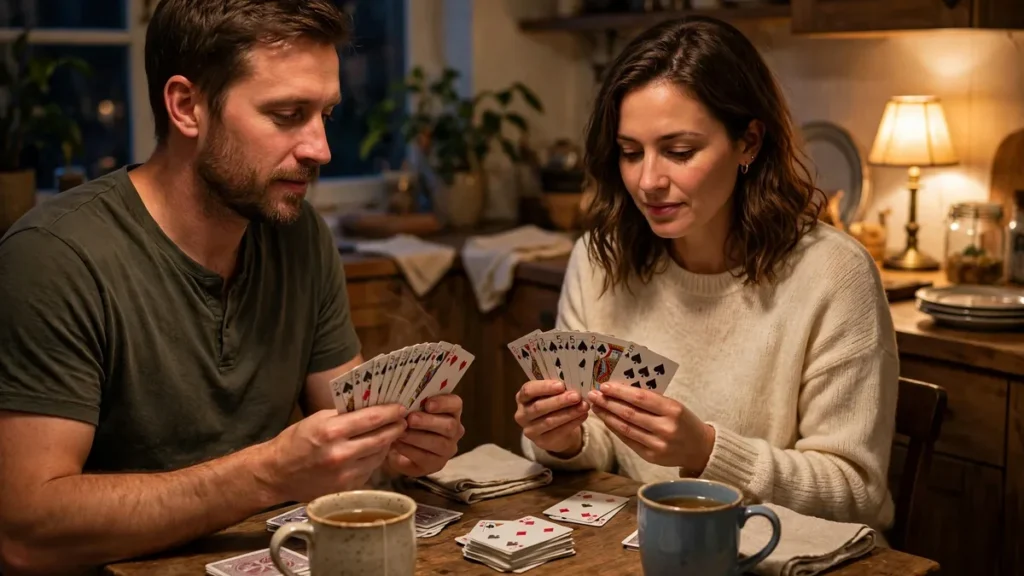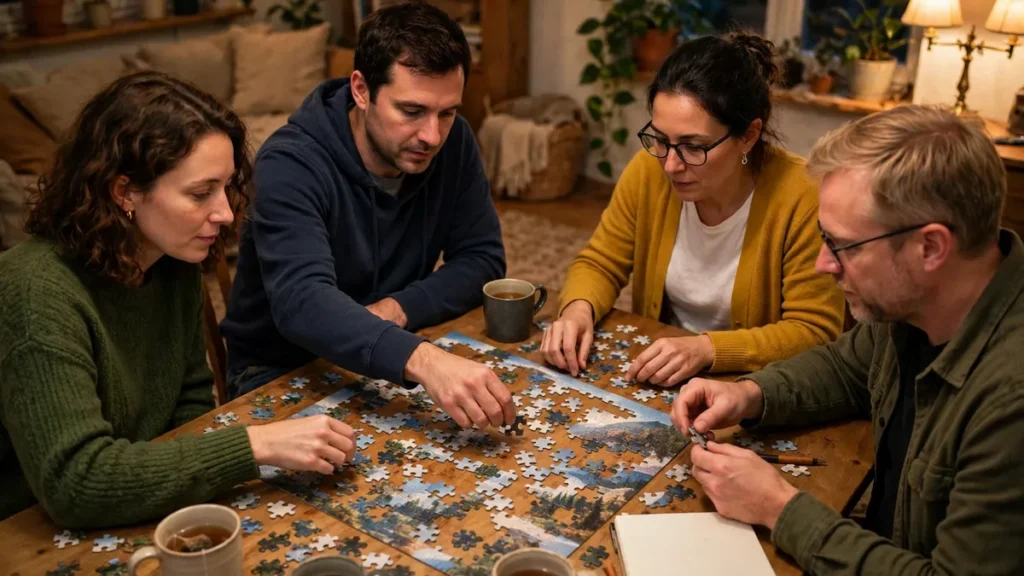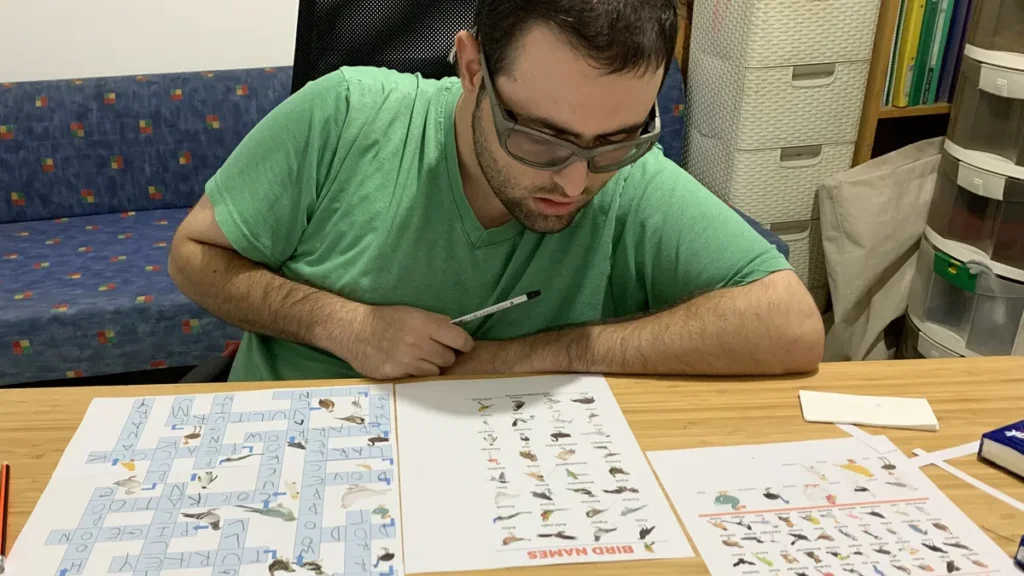
Two people share a kitchen table on a rainy Sunday afternoon. One has a newspaper folded to the puzzle page, a pencil moving slowly across a grid, pausing every few squares to stare at the ceiling. The other has a battered paperback open to a word search, circling answers with a pen, humming, finishing a whole page while the first person is still stuck on the same corner. Neither of them looks bored. Neither of them looks like losing. And yet, if you asked the room which pastime was better, you would get an argument before the kettle boiled.
That argument is worth having properly, because the two sides are not really the same hobby wearing different clothes. A crossword is one very particular machine for testing what you know, built around crossings that either hold together or fall apart. Word puzzles, taken as a family, are a whole fairground: searches, anagrams, ladders, cryptograms, codewords, and a dozen smaller stalls besides. Comparing them means comparing a single disciplined instrument against a shelf full of different tools. The honest answer is not a trophy for one side. It is a map of when each one wins, for whom, and why the smartest solvers I know keep both within reach.
The two jobs are not the same job
Start with what each format actually asks you to do. A crossword hands you a set of clues and a grid, and every answer must fit two directions at once. Fill in a word running across, and its letters become part of the words running down. That interlocking is the whole point. You can be unsure about an answer and still place it, because the crossings will either confirm it or expose it within a few minutes. The puzzle polices itself, and that self-checking is strangely comforting. You are never entirely lost; you are only ever one crossing away from a foothold.
A word puzzle from the wider family asks something looser. A word search asks your eyes to sweep rows and diagonals until a familiar shape jumps out. An anagram hands you a jumble and waits while your mind rearranges it, trying one ordering and then another until something clicks. A word ladder asks you to change one letter at a time, each step a small decision with no clue to lean on. A cryptogram asks you to crack a code by frequency and guesswork, and a codeword asks you to do the same thing with numbers standing in for letters. None of these leans on a grid. None of them checks your work for you.
That difference shapes everything else. The crossword rewards breadth of knowledge and a certain stubborn patience. The wider family rewards flexibility, the willingness to drop one approach and try another.
The case for word puzzles: range is a real advantage
Variety is the strongest argument the wider family has, and it is stronger than crossword loyalists usually admit. A crossword is always a crossword. The grid changes, the clues change, and the difficulty climbs, but the activity stays the same shape from January to December. Word puzzles let you change the shape entirely when your mood changes. Tired after a long day? A gentle word search asks almost nothing of you beyond attention, and you can finish it half-watching the room. Wide awake and restless? An anagram or a cryptogram will keep you busy for an hour without ever repeating itself. Travelling with children? A ladder puzzle can be played aloud in the back seat, one letter at a time, with everyone shouting suggestions.
That range also lowers the barrier for newcomers. Plenty of people bounce off crosswords because the first grid they try is too hard, and they conclude that the whole hobby is not for them. The wider family has a gentler on-ramp. A word search needs no vocabulary beyond recognition. An anagram of a five-letter word can be solved by anyone who can spell it. Once a newcomer has had a few small wins, the harder formats stop looking intimidating, and the habit has a chance to take root. Our roundup of the top word puzzles for adults shows how wide that shelf really is, from five-minute daily challenges to evening-eating print puzzles.
The case for crosswords: the grid is a teacher
Now the other side. Everything the crossword lacks in variety, it makes up for in depth, and the depth comes from that interlocking grid. Because every letter serves two words, a crossword forces a kind of honesty that looser puzzles never demand. You cannot bluff your way through a crossing. Either the letter fits both answers or it does not, and the grid will tell you which within a few squares. That discipline is what turns a pleasant diversion into a craft. People who do crosswords for years are not just filling time; they are building a mental library of word patterns, common letter combinations, and the particular logic of clue-writers. If you want to understand how a crossword puzzle actually works, the grid is the place to start, because everything else follows from it.
The grid also gives the crossword a quality the wider family rarely matches: a real sense of completion. Finishing a word search feels pleasant, but the page is done when the last word is found, and the finding was mostly a matter of looking. Finishing a crossword feels earned in a different way, because the last few squares usually require the whole grid to cooperate. The final answer lands with a small sense of triumph, the kind that makes people reach for another puzzle the next morning. That arc, from confusion to a fully filled grid, is a satisfying shape, and it is why crossword solvers talk about their hobby with the loyalty of people defending a favourite team.
There is also the matter of what you learn. Crosswords are famously hungry for knowledge: history, geography, literature, music, sport, slang, and the odd corners of everyday life. A regular solver quietly accumulates a broad general knowledge, not by studying but by repeatedly bumping into things they did not know and then remembering them because the grid made them matter. Word puzzles teach you about words themselves, their shapes and sounds and hidden connections, which is valuable in its own way. But crosswords teach you about the world the words describe, and that outward reach is part of their charm.

What each one trains, honestly
Both families get marketed as brain training, and both claims deserve a cooler look. Neither one will turn you into a genius, and neither one replaces reading, conversation, or sleep. What they do, reliably, is exercise specific habits of mind, and the habits differ.
Word puzzles are strongest on pattern recognition and mental flexibility. Anagrams train you to hold letters in mind and rotate them. Word searches train visual scanning, the ability to pick a shape out of a noisy field. Ladders train small-step planning, choosing a path from one word to another without wasting moves. Cryptograms train hypothesis testing: guess a letter, see what breaks, revise. These are real skills, and they transfer to everyday thinking more than the marketing suggests, because everyday thinking is mostly pattern-spotting under time pressure.
Crosswords are strongest on recall and connection. They train you to retrieve a word from a half-remembered definition, to hold several candidate answers in mind while the crossings narrow them down, and to use partial information well. They also train tolerance for being stuck. A hard clue can sit unanswered for twenty minutes while the rest of the grid fills in around it, and learning to leave it alone, work elsewhere, and come back fresh is a skill that applies far beyond puzzles. If word puzzles teach you to move fast and switch tactics, crosswords teach you to persist and to trust that the structure will eventually help you.
Time, mood, and the daily habit
The practical question most people care about is simpler than the theory: which one fits into a real day? Here the wider family has the edge on short sessions. A word search or a daily anagram takes five to fifteen minutes, fits into a coffee break, and ends cleanly. You can stop mid-puzzle without losing much, because there is no structure to hold in your head. The crossword is greedier. A small one takes fifteen minutes, a full daily one takes thirty to forty-five, and stopping halfway means carrying an unfinished grid around in your mind until you return to it. Some people enjoy that lingering feeling. Others find it nagging.
Mood matters too. On a tired evening, a crossword can feel like an exam you did not sign up for, especially when three clues in a row refuse to yield. A word search on the same evening feels like a warm bath: low demand, steady progress, a finished page to show for it. On a sharp morning, the reverse is true. The crossword feels like a proper workout, and the word search feels like going through the motions. Matching the puzzle to the mood is a skill in itself, and solvers who learn it stick with the habit far longer than solvers who force the same format every day regardless of how they feel. Whether you solve on paper or on a screen changes the feel as well, and the old question of puzzle books or apps still divides solvers for good reason.
Who should pick which
So who wins, for whom? A beginner who has never solved anything should start with the wider family. Word searches and simple anagrams give quick wins, build confidence, and reveal which kind of thinking the beginner enjoys. Once that is clear, the crossword becomes a natural next step rather than a wall to climb on day one.
A commuter with ten minutes should also lean toward word puzzles, at least on weekdays. A single anagram or a short search fits the journey; a full crossword does not, and a half-finished grid is a poor travelling companion. Save the crossword for the weekend, when there is time to sit with it properly.
A family looking for something to do together should pick the wider family without hesitation. Anagrams, ladders, and searches can be played aloud, in teams, with mixed ages, and nobody is left out because they do not know a particular piece of trivia. The crossword can join in as a shared evening activity, one person reading clues aloud while the others shout answers, but it works best as a group event rather than a daily habit.
A competitive solver, or someone who loves measurable progress, should lean toward crosswords. The format has times, tournaments, difficulty grades, and a clear ladder from easy to fiendish. There is always a harder grid waiting, and the improvement is visible week by week. The wider family offers competition too, but it is scattered across many formats, and the progress is harder to measure.
The verdict: a conditional win, not a coronation
Here is the verdict, and it is conditional on purpose. If you want one format to carry your whole puzzle habit, choose word puzzles. Their range means they will still suit you on tired days, busy days, social days, and travelling days, when a single rigid format would be abandoned. They are the better default, the better first habit, and the better choice for households and beginners.
But if you want the single most rewarding puzzle experience available, choose crosswords. Nothing in the wider family matches the feeling of a hard grid finally filling in, or the quiet accumulation of knowledge that comes from years of solving them. The crossword is the better peak experience, the better long-term craft, and the better choice for anyone who wants a hobby with depth rather than just variety.
The best answer, for most people, is not to choose at all. Alternate them. Let the crossword be the weekend anchor, the slow, serious solve that rewards patience and knowledge. Let word puzzles be the weekday companion, the quick, varied, forgiving habit that keeps the streak alive.
Quick answers
Can word puzzles replace crosswords entirely? They can, if what you want is variety and a low-pressure daily habit. You will miss the grid’s self-checking discipline and the knowledge it builds, but you will not miss out on puzzle-solving itself.
Is one better for children? Word puzzles, clearly. Searches, anagrams, and ladders can be pitched to any age, played aloud, and finished in minutes, while a standard crossword expects vocabulary and general knowledge that younger children simply have not built yet.
Do you need both to keep your mind sharp? You do not need both, but mixing them exercises more skills than either alone. If you only have time for one, pick the one you will actually do every day, because the habit matters more than the format.