The Sunday-morning test
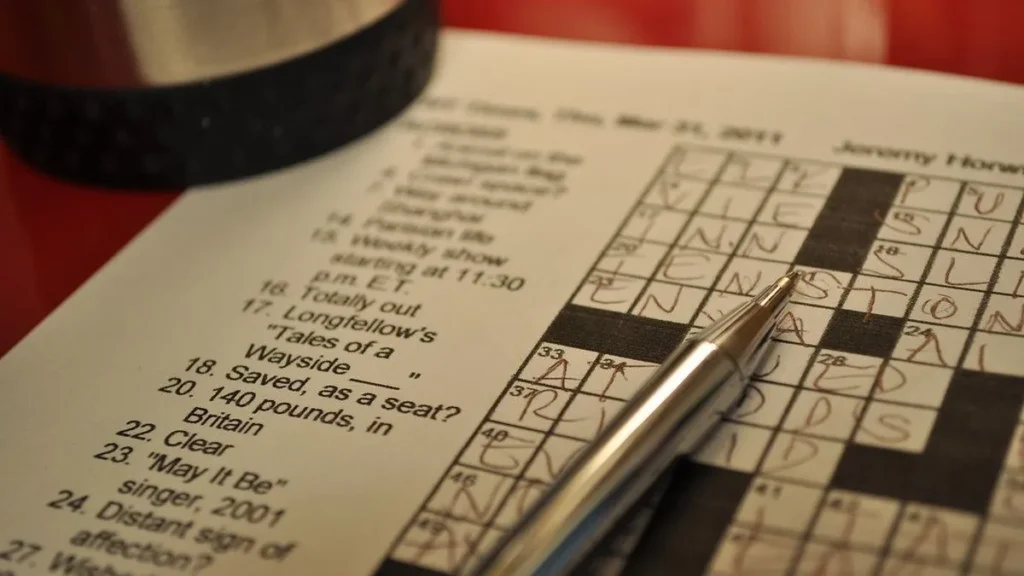
There is a particular kind of quiet that only exists around a crossword. The kettle has boiled, the coffee is going cold, and somebody at the table is staring at a half-finished grid with the expression of a person trying to remember a name they have known for forty years. The pencil hovers. The clue gets read aloud for the third time. Then a word arrives, all at once, and the whole corner of the grid opens up. That small rush is why millions of people keep coming back to the same black-and-white squares, and it is why the question in this piece keeps getting asked: is any of this actually doing your brain any good, or is it just a pleasant way to pass half an hour?
I have solved crosswords most mornings for longer than I care to admit, and I have read more of the research about them than is probably healthy for one person. My honest answer is yes, crosswords are good for your brain, but in a narrower and more interesting way than the cheerful headlines suggest. They train a handful of specific skills very well, they keep knowledge within reach instead of letting it fade, and they give your attention a structured job to do. They do not make you smarter in general, they do not hold dementia at bay on their own, and a puzzle that leaves you furious is doing you no favours at all.
Key takeaways
- Crosswords train recall, vocabulary and pattern-spotting through daily retrieval practice, not through passive reading.
- Large observational studies link regular solving with sharper attention and memory in later life, but the link is correlation, not proof of cause.
- The benefits are specific, not general: skill at crosswords mostly makes you better at crosswords and at remembering words.
- A crossword habit works best as one part of a varied mental life, alongside reading, conversation, movement and other kinds of puzzles.
My verdict, before the detail
Crosswords are good for your brain in the same way that a daily walk is good for your legs. Nobody would claim that a walk turns you into an athlete, and nobody sensible would claim that a crossword turns you into a genius. But a walk keeps your legs working, and a crossword keeps several mental habits working: pulling words out of memory, holding a half-formed answer in mind while you check it against the letters around it, and switching between a definition, a piece of trivia and a pun without losing the thread. Done regularly, at a difficulty that stretches you without defeating you, that is a genuinely useful workout, and one that most people actually enjoy enough to repeat.
What a crossword actually asks your brain to do
A crossword is not one task but four, running at the same time, and that layering is what makes it more demanding than it looks. First there is retrieval: a clue gives you a meaning or a fact and you must produce the word from your own memory, with no list to choose from. Second there is vocabulary: the answer has to be a real word of exactly the right length, which forces you to sort through near-matches and reject the ones that do not fit. Third there is pattern-spotting: the crossings hand you letters, and your brain has to notice that a certain combination can only be one word. Fourth there is the quiet discipline of checking your own work, because a wrong answer will make the words crossing it look impossible within a few squares.
That fourth job is the one people underestimate. In most of daily life, nobody tells you when you have misremembered something. A crossword does, and it does so quickly and without judgement. You write in a confident answer, the down words start to look like nonsense, and the grid itself argues back. So you rub it out, or you hold it lightly and work around it, and the puzzle teaches you something useful far beyond the page: how to treat a first guess as a hypothesis rather than a fact. If you want a fuller account of how the grid, the clues and the crossings fit together, our guide to what a crossword puzzle is walks through the whole thing from the first square to the last answer.
Recall is the heavy lifting
Of the four jobs, recall does the most work. Most everyday remembering is recognition: a face looks familiar, a song sounds known, a word on a list rings a bell. Recognition is gentle because the answer is already in front of you. A crossword clue is not gentle. It hands you a definition and asks you to produce the word from nothing, and producing is harder than recognising. That difficulty is the point. Every time you successfully pull a word out of memory, the path to it gets a little stronger, and the next time you need that word it arrives a little faster. Psychologists call this the testing effect: trying to remember something strengthens the memory more than simply reading it again.
Vocabulary grows sideways
Crosswords are famous for teaching people words they would never otherwise meet, and the reputation is deserved, although the mechanism is stranger than it looks. You do not learn a new word by studying it. You learn it by needing it. A clue asks for a five-letter word meaning a kind of tree, the crossings give you two letters, and suddenly you are considering words you have not thought about in years. Over months and years, that steady bumping into unfamiliar words builds a broader vocabulary, not through effort but through repeated small encounters that matter in the moment.
What the research actually shows
The strongest evidence for crosswords comes from large observational studies, and the most quoted one followed thousands of adults over fifty in Britain. Researchers at the University of Exeter and King’s College London found that people who did word puzzles regularly, including crosswords, tended to score better on tests of attention, reasoning and memory than people who did not, and the gap was roughly equivalent to being ten years younger on some measures. That is a striking result, and it is the one that ends up in the headlines. What rarely makes it into the headlines is the part the researchers themselves were careful about: the study shows that puzzle solvers score better, not that puzzles caused the better scores. It may be that people with sharper minds are simply more likely to enjoy crosswords in the first place.
That caution applies to almost everything in this area. Studies that track people over years consistently find that mentally engaging leisure, crosswords included, is associated with slower cognitive decline and a lower risk of dementia. The association is real and it shows up again and again. But association is not causation, and the people who solve crosswords daily also tend to read more, socialise more, stay in education longer, and look after their health better. Teasing apart which of those things does the protecting is genuinely hard, and no honest researcher will tell you that crosswords alone are the answer.

What crosswords cannot do
The first thing crosswords cannot do is raise your general intelligence. A lifetime of solving will make you a formidable crossword solver, and it will make you quicker at finding words, and it will fill your head with a wonderful clutter of facts and phrases. It will not make you better at maths, or at spatial reasoning, or at understanding a complex argument, except in the indirect sense that any habit of sustained attention is useful. If a product ever promises you a higher IQ from a daily puzzle, it is selling you something the evidence does not support.
The second thing they cannot do is prevent dementia on their own. Mentally active people do develop dementia less often, and crosswords are one of the activities associated with that lower risk, but the effect is modest and it is shared with dozens of other activities, from reading to dancing to learning a language. A crossword habit is a good ingredient in a brain-healthy life. It is not a shield. Anyone who tells you otherwise is overstating the case, and the overstatement does real harm, because it lets people believe a puzzle a day is a substitute for sleep, exercise, social contact and medical care, none of which it is.
Getting the most out of the habit
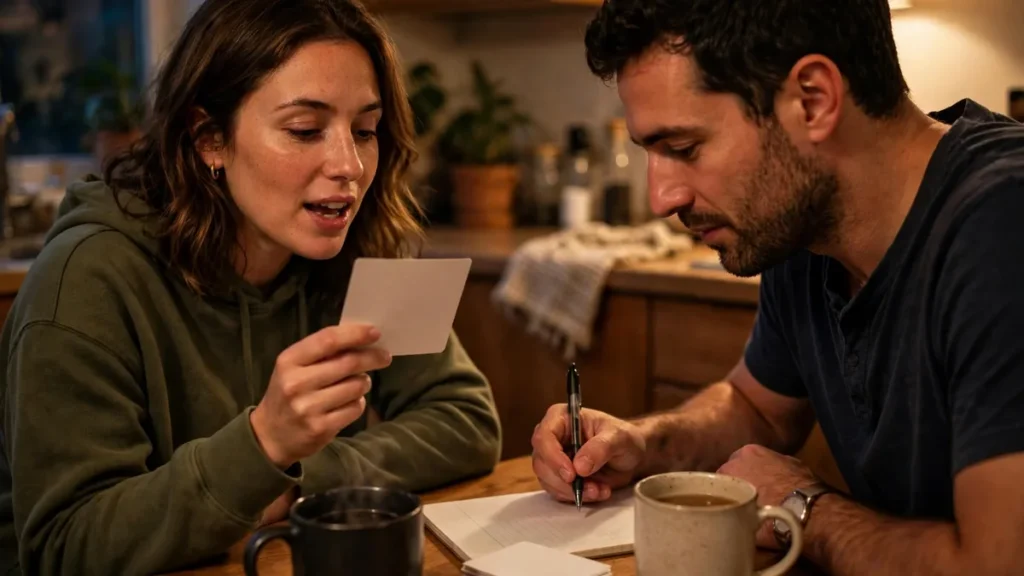
Mix up the formats. If you only ever do quick crosswords, try a cryptic once a week. If you only ever do the same newspaper, try another setter, because every setter has favourite words and favourite tricks, and a new setter is a new set of patterns to learn. If you always solve alone, try solving with someone else sometimes, because talking through a clue out loud forces you to turn a vague hunch into a spoken sentence, and that act of explaining is itself a powerful memory tool. And keep the habit varied beyond crosswords themselves: a crossword is a single disciplined instrument, while the wider family of word puzzles offers a whole shelf of different tools. Our comparison of word puzzles and crosswords sets out when each one wins, and why the strongest solvers keep both within reach.
Who benefits most, and who should skip it
The people who should skip crosswords, or at least stop forcing them, are the ones who find them miserable. If every puzzle leaves you feeling stupid, the puzzle is not training your brain, it is training your brain to associate thinking with failure, and that is the opposite of what you want. There are many other ways to exercise the same skills. Trivia nights, for instance, train recall under gentle social pressure and add a whole layer of conversation that a solitary crossword cannot match. Our verdict on whether trivia nights are good for your brain comes out in their favour for much the same reasons, with the added benefit of other people. The best brain exercise is the one you will actually do, and if that is not a crossword, then it is not a crossword.
Frequently asked questions
Do crosswords prevent dementia?
No, not on their own, and nobody honest will tell you otherwise. Regular solving is associated with a lower risk of dementia in large studies, but the link is modest, it is shared with many other mentally engaging activities, and it may partly reflect the fact that sharper minds are more likely to enjoy puzzles. Crosswords are a sensible part of a brain-healthy life, alongside sleep, exercise and social contact. They are not a guarantee.
Are crosswords better than other brain games?
They are better at what they specifically train: word retrieval, vocabulary and letter patterns. They are not better in general. Sudoku, chess, jigsaws and language learning all train different skills, and the evidence for any one of them lifting your overall intelligence is weak. The honest ranking is that the best brain game is the one that challenges you, that you enjoy, and that you will still be doing in a year.
How long should I spend on crosswords each day?
There is no magic number, but the pattern in the research points to regular, moderate sessions rather than occasional marathons. Twenty to forty minutes a day, most days, at a difficulty that makes you pause and think, is a reasonable target. If you finish a puzzle in five minutes without effort, it is probably too easy. If you are still stuck after an hour and feeling worse, it is probably too hard, or it is simply a bad day, and tomorrow’s grid will be kinder.
Do cryptic crosswords help your brain more than quick crosswords?
Probably, a little, because cryptics demand more flexible thinking: you have to hold two meanings in mind at once, spot hidden words, and switch between kinds of wordplay. But they also have a steeper learning curve, and a beginner who is defeated by cryptics gets no benefit at all. The practical answer is to solve the quick crosswords you enjoy, and to add a cryptic when you feel ready for the stretch.
The bottom line
Crosswords are good for your brain, within honest limits. They keep recall practised, they widen your vocabulary sideways, they train you to spot patterns and to check your own guesses, and they do all of this in a form that millions of people genuinely enjoy enough to repeat daily. They will not make you smarter in general, they will not prevent dementia by themselves, and they are no substitute for the rest of a mentally active life. But as one habit among several, done at the right difficulty, with attention and without cheating, they earn their place on the table beside the coffee. The grid will still be there tomorrow morning, and so, if you keep solving, will the words.