
A summer garden cookout with 574 people in it sounds like a fine idea until the food is ready and half the crowd is standing around with nothing to do. The grill can only feed so many at once, and a crowd that size needs something to join in with while the burgers cook.
Each game here works for a huge crowd because it is built around counting, guessing, or passing things along a line, rather than around one person doing something while everyone else watches. Nobody needs to know any rules in advance, and nobody is left out because they are too young, too old, or too shy to join in.
The nine games below follow the cookout itself, from the moment the coals are lit to the last slice of lemon drizzle cake. Some are quick and noisy, some are quiet and careful, and all of them use things you already have in the garden or the kitchen.
Key Takeaways
- Nine cookout games that all work for 574 players at once, using counting, guessing, and passing rather than taking turns one by one.
- Every game uses ordinary garden and kitchen things, so nothing special needs to be bought or made in advance.
- Games run side by side across the garden, so the crowd spreads out and nobody waits long for a go.
- Each game takes between five and twenty minutes, and the whole set fits into one long summer afternoon.
- Hosts keep the points simple, with one point per correct guess or neat finish, and the group with the most points at the end takes the honours.

How This Cookout Set Works
The trick with 574 players is to stop thinking of one big game and start thinking of nine small ones running at the same time. Split the crowd into nine groups of about sixty, give each group a corner of the garden, and let each group play a different game for fifteen minutes before moving on to the next one. A host stays with each game, explains it in under a minute, and keeps the points on a sheet of paper clipped to a board.
Points stay simple on purpose. One point goes to a group each time it gets a count right, lands a toss, or finishes a round neatly, and the host writes the points down where everyone can see them. If a game runs long, the host calls time and the group moves on; if a game finishes early, the group can play it once more with a harder target. The same easy structure works in other large party sets, and the midsummer well-dressing games for 572 players use a similar rotation so that a huge crowd keeps moving between games instead of bunching up in one place.
Before the first game starts, walk the garden once and check that each game has enough open ground around it. Keep the grill area clear of all games, put the food tables to one side, and leave a wide path down the middle so groups can move between games without crossing each other.
The Nine Games
Here are the nine games, in the order they fit best into a cookout afternoon. Start with the grill games while the coals are hot, move on to the garden games while the food is eaten, and finish with the quiet guessing games while everyone sits with a cold drink. Each game lists what you need and how it runs, so a host can read it once and run it straight away.
1. Cookout Tong Twirl
Each group gets a pair of long kitchen tongs and a patch of open lawn. One player at a time tosses the tongs gently into the air, lets them spin once, and catches them by the handle. A clean catch earns the group a point, and a fumbled catch hands the tongs to the next player.
Hosts can make the game harder once everyone has had a go, by asking for two spins instead of one, or by asking players to catch the tongs with their other hand. The tongs never leave the marked patch of lawn, and everyone else in the group counts the clean catches aloud, which keeps the whole group involved even while one person is tossing.
2. Burger Bun Count
Fill a large basket with burger buns, cover it with a cloth, and let each group take it in turns to lift the cloth for ten seconds, look at the buns inside, and then guess how many there are. The group writes its guess on a slip of paper before the next group looks, and the group nearest the true number earns three points, with one point for every other group that is within five of the true number.
The game works because a basket of buns is harder to count at a glance than most people expect, and the guesses are always spread widely. Hosts should pack the buns loosely so the pile looks different from every angle, and they should count the buns carefully before the game starts and write the true number down somewhere safe.
3. Charcoal Ember Tally
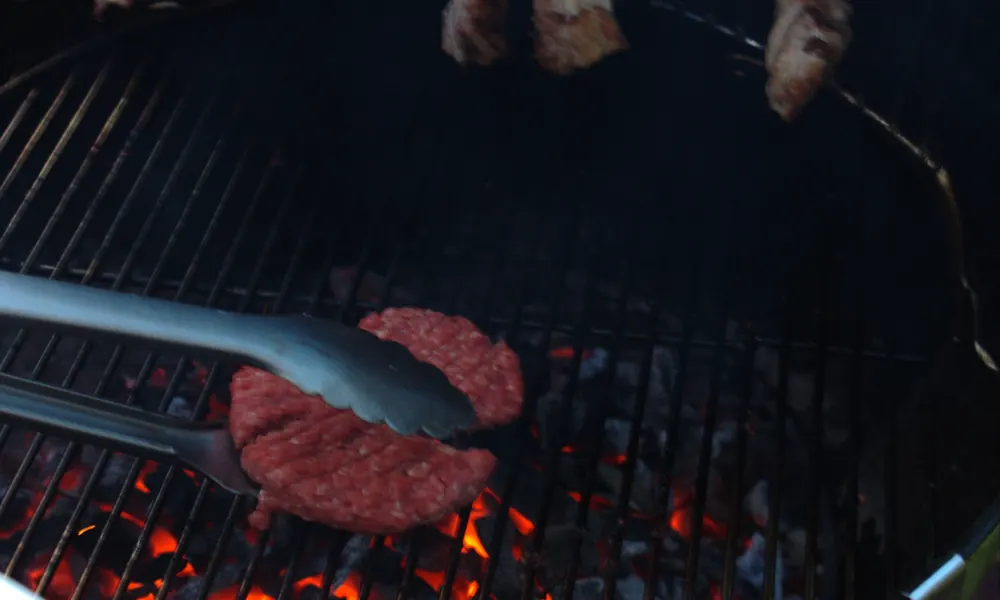
While the coals are still glowing, the host asks each group to guess how many glowing embers are left in the grill. Each group sends one player to look at the grill for five seconds, and that player reports back so the group can agree on a number together.
The guessing is the whole game, and the groups that look carefully do far better than the groups that guess wildly. One point goes to the group nearest the true number, and a bonus point goes to any group that guesses it exactly. Hosts should run this game early, while the coals are still bright, and keep every player well away from the heat.
4. Garden Hose Spray Aim
Set a row of empty plastic bottles on a low wall or a bench, stand the players a few long paces away, and hand the hose to one player at a time. Each player gets three short bursts of water to knock as many bottles over as they can, and each bottle that falls earns the group a point.
This is the wettest game in the set, so it belongs on the lawn rather than near the food tables, and players should wear shoes that can get damp. Groups love it because the water is hard to aim and the bottles wobble even when they are only splashed, which makes every go feel close. Hosts should keep the hose pressure low and the bursts short, so the game stays playful and nobody ends up soaked through.
5. Sun Hat Toss
Place a row of wide-brimmed sun hats on the grass, brim up, and give each player three soft beanbags to toss into them from a few paces away. A beanbag that lands inside a hat earns a point, and a beanbag that lands in the farthest hat earns two. The hats are light, the beanbags are soft, and the game needs nothing more than a flat patch of lawn and a little patience, which makes it a good game for the youngest players and the oldest ones alike.
Hosts can change the game by moving the hats farther away after each round, or by asking players to toss with their other hand. The hats should be plain ones from the garden shed rather than anyone’s best hat, and the beanbags should be soft enough that a missed toss does no harm.
6. Ice Lolly Stick Sort
Save the wooden sticks from the ice lollies through the afternoon, or bring a bag of clean craft sticks, and tip them into a big pile on a table. Each group gets one minute to sort the sticks into neat piles by their markings: plain sticks in one pile, sticks with a coloured tip in another, and sticks with a printed word in a third. The host checks each pile at the end of the minute, and the group with the most sticks sorted correctly earns three points, with one point for every group that finishes its piles without a mistake.
The game looks easy until the minute starts, and then the pile seems to grow while the sorting seems to slow down. Groups do best when they split the work, with some players picking out the coloured tips and others picking out the printed words, and the host should mix the sticks well before each round so no group gets an easy pile.
7. Ketchup Bottle Squeeze
Fill a few empty squeezy bottles with water, draw a chalk circle on the ground a few paces away, and hand a bottle to one player at a time. Each player gets three squeezes to land as much water as they can inside the circle, and the group earns a point for every squeeze that lands inside the chalk line. The bottles are light, the water is harmless, and the game needs only a patch of dry ground and a piece of chalk, which makes it easy to run anywhere in the garden.
The fun of the game is that a squeeze is harder to aim than it looks, and the water often lands just outside the circle. Groups usually want to play it twice, once with each hand, to see which hand aims better.
8. Sausage Skewer Pass
Give each group a long wooden skewer and a pile of soft foam pieces, and ask the group to pass the skewer along a line of players, with each player threading one foam piece onto it before handing it on. The skewer moves from the first player to the last without anyone dropping it, and the group earns a point for every foam piece that ends up on the skewer in the right order of colours. If the skewer is dropped, the group starts again from the beginning of the line, which makes everyone pass it carefully.
The game works best when the line is long and the players stand close enough to pass the skewer hand to hand without reaching. Hosts should use blunt wooden skewers and soft foam pieces, and they should never use real food on the skewers for this game, since the pieces are handled by dozens of hands.
9. Lemon Drizzle Slice Guess
Cut a lemon drizzle loaf into slices, lay them out on a large plate, and cover the plate with a cloth. Each group lifts the cloth for ten seconds, looks at the slices, and then guesses how many slices are on the plate, writing the guess down before the next group looks. The group nearest the true number earns three points, with one point for every other group that is within two of the true number.
Hosts should cut the slices in different widths, so the plate looks fuller than it is and the guesses spread widely. Announce the true number aloud once every group has guessed, and let the group that guessed nearest take a bow before the prizes are handed out.
At a Glance
| Game | Players | What You Need | Time |
|---|---|---|---|
| Cookout Tong Twirl | Whole group | Kitchen tongs, open lawn | 10 minutes |
| Burger Bun Count | Whole group | Basket of buns, cloth | 15 minutes |
| Charcoal Ember Tally | Whole group | Grill, tray of cold charcoal | 10 minutes |
| Garden Hose Spray Aim | Whole group | Hose, empty bottles | 15 minutes |
| Sun Hat Toss | Whole group | Sun hats, soft beanbags | 15 minutes |
| Ice Lolly Stick Sort | Whole group | Wooden sticks, table | 10 minutes |
| Ketchup Bottle Squeeze | Whole group | Squeezy bottles, chalk | 10 minutes |
| Sausage Skewer Pass | Whole group | Wooden skewers, foam pieces | 20 minutes |
| Lemon Drizzle Slice Guess | Whole group | Lemon drizzle loaf, plate, cloth | 15 minutes |
Keeping 574 Players Moving
A crowd of 574 can slow down fast if every group tries to play the same game at the same time, so the rotation matters more than any single game. Start each group at a different game, ring a bell or blow a whistle every fifteen minutes, and let the groups move one place along. The hosts stay where they are, which means each host only has to learn one game well, and the groups get a fresh host and a fresh game every quarter of an hour.
Water and shade matter as much as the games on a warm afternoon. Put a drinks table near the middle of the garden, with mugs of cold water and squash, and put a few chairs in the shade for players who want a rest between games. A cookout works best when it feels like a holiday, not like a school lesson, and the games should feel like a pleasure rather than a duty. The same care with a crowd shows in the bead-maker’s workshop games for 570 players, where small groups work through a craft theme together at their own pace instead of rushing from one game to the next.
Cookout Checklist
- Walk the garden once before anyone arrives, and mark out nine game areas with enough open ground around each one.
- Give each game a host who has read the game once and can explain it in under a minute.
- Put the grill area and the food tables to one side, with a wide path down the middle for groups moving between games.
- Keep a drinks table with cold water in the middle of the garden, and chairs in the shade for players who want a rest.
- Write every group’s points on one large sheet near the food table, where everyone can see the totals.
- Count the buns, the embers, and the lemon drizzle slices before the games start, and write each true number down somewhere safe.
Frequently Asked Questions
How long does the whole set take to play?
The nine games take about two hours if each group plays every game once for fifteen minutes, with short breaks for moving between games and for food. Most hosts run the set across a long afternoon, with the grill games first, the garden games in the middle, and the quiet guessing games last.
What if it rains in the middle of the cookout?
Move the guessing games indoors, since Burger Bun Count, Ice Lolly Stick Sort, and Lemon Drizzle Slice Guess all work on a kitchen table. The tossing and spraying games need the lawn, so pause those until the rain stops, and let the groups play the indoor games twice with different numbers of buns or slices.
Do the games work for a much smaller crowd?
Yes, every game here works with as few as ten players, since the counting and guessing games only need one group, and the tossing games only need a few players at a time. With a smaller crowd, let everyone play together instead of splitting into groups, and keep the same points system, with one point per correct guess or neat finish.
What ages can join in?
All nine games suit players from about six years old upwards, and most of them suit younger children too, with a little help from an adult. The guessing games need no strength or speed at all, and the tossing games use soft beanbags and light bottles, so nobody is at a disadvantage.
How many hosts do we need?
Nine hosts, one for each game, is ideal, since each host stays with one game and learns it well. If only a few hosts are free, run three games at a time and rotate the groups through those three, then swap in three more games later in the afternoon.
Can we play the games without a grill?
Yes, Charcoal Ember Tally is the only game that needs a grill, and it can be swapped for a second round of Burger Bun Count with a different basket of food. The other eight games need nothing more than a garden, a table, and a few ordinary kitchen things, so a cookout without a grill still has plenty to play.
The Bottom Line
A summer garden cookout for 574 players works when the games are simple, the groups keep moving, and nobody waits long for a go. These nine games use ordinary things, take only a few minutes each to learn, and fill a whole afternoon without any fuss. Set up the nine areas, give each game a host, and let the crowd drift between the grill, the lawn, and the food table as it pleases. For another large-crowd set built the same way, the ploughing-match games for 568 players run nine games on the same rotation, with a different theme and a different set of things to count, guess, and pass along.
Start with the tongs and the buns while the coals are hot, and finish with the sticks and the lemon drizzle slices while everyone sits with a cold drink. The group with the most points takes the honours, but the real prize is an afternoon where all 574 players had something to do, and nobody spent it standing around.


