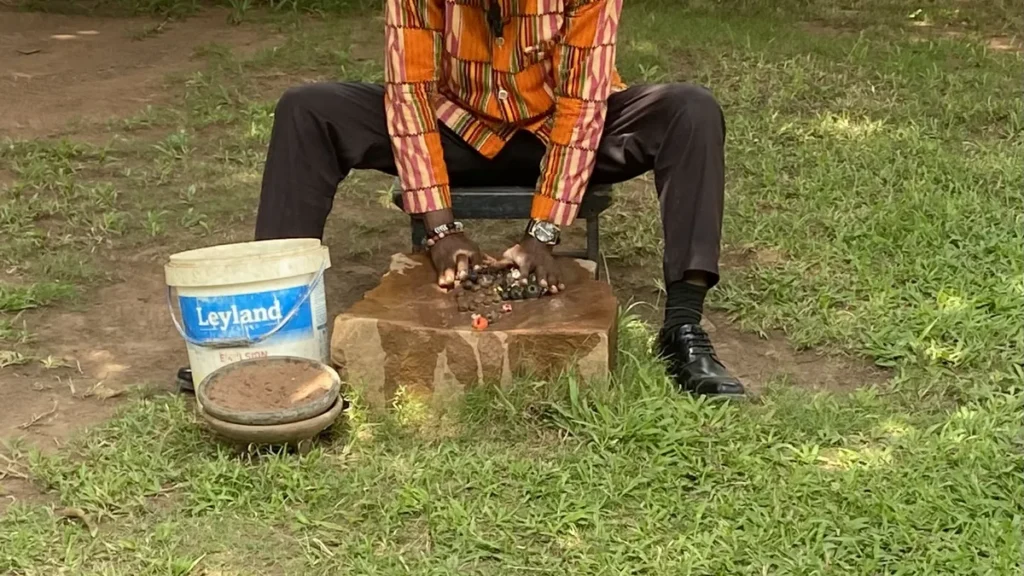
570 players, nine tables, and one old village bead maker workshop. That is the whole plan for the day, and it works because every game asks a crowd to do one simple thing with beads: look closely, count carefully, and agree on a number before time runs out. Nobody needs to know anything about beads before they arrive.
The workshop gives the day its shape. Long tables hold trays of glass beads, wooden beads, clay beads, and beads made from bone, shell, stone, ceramic, metal, and seed. Each table also holds a jar, a weighing dish, and a tally sheet. Players gather around the tables in groups, and each group moves from table to table as the day moves on.
Every game below runs for twenty minutes and earns points only. No money changes hands at any table, and no group needs any special tools beyond what the workshop already holds. The nine games use colour, size, holes, length, weight, glaze, shine, and scooping, so a group that is slow at one table can still shine at the next. The result is a day that feels fair, loud, and full of small surprises.
Key takeaways
- 570 players split into nine groups, with three groups of 64 and six groups of 63.
- Nine bead games, twenty minutes each, with groups moving from table to table.
- Points only, with a tally sheet for each group and a scorer at each table.
- Every game uses beads and plain tools from the bead maker workshop.
- A group that is slow at one table can still do well at the next, because the nine games test different skills.

| Game | What players do | Time | Top tally |
|---|---|---|---|
| Glass Bead Colour Grade | Grade glass beads by colour into piles | 20 minutes | 10 points |
| Wooden Bead Size Weigh | Weigh wooden beads by size in order | 20 minutes | 10 points |
| Clay Bead Hole Check | Check the hole in each clay bead | 20 minutes | 10 points |
| Bone Bead Length Check | Check bone beads against length marks | 20 minutes | 10 points |
| Shell Bead Tray Weigh | Weigh a tray of shell beads and call the total | 20 minutes | 10 points |
| Stone Bead Jar Count | Count the stone beads in a jar | 20 minutes | 10 points |
| Ceramic Bead Glaze Match | Match ceramic beads by their glaze | 20 minutes | 10 points |
| Metal Bead Shine Sort | Sort metal beads by how bright they shine | 20 minutes | 10 points |
| Seed Bead Scoop Count | Scoop seed beads and count the scoop | 20 minutes | 10 points |
How 570 Players Fit Into One Day
The 570 players split into nine groups. Three groups hold 64 players and six groups hold 63 players, which adds up to 570. Each group picks a captain, and the captain keeps the group tally sheet for the whole day. The captain also speaks for the group when a count is disputed, which keeps every argument short and friendly.
Each of the nine tables runs one game, and the groups move from table to table in turn. A game lasts twenty minutes, so nine games take three hours, with a short break after the fifth game. The day opens with fifteen minutes of greetings and simple rules, and it closes with fifteen minutes of final tallies and applause for the champion group. The whole day lasts three hours and thirty minutes.
The rotation below follows the same shape as the ploughing-match day we ran for 568 players, with groups moving from table to table when the organiser calls time. Nobody needs to memorise the order, because the next table number is written on each group tally sheet in plain figures. A group that arrives at a table early waits beside it and watches the beads, which is often the best way to learn the game.
Each table has a scorer, and the scorer is a player from the group at that table. The scorer writes the numbers down, and another player from the same group reads them aloud so everyone can hear. When time is called, the scorer hands the tally to the captain, and the group moves on.
The Nine Games
Each game below uses one material from the workshop and one clear job for the group. Read the job aloud, start the count, and write the number down when time is called. The games run in number order, and each table shows its game name on a plain paper slip so nobody has to ask where they are.
1. Glass Bead Colour Grade
The table holds a wide tray of glass beads in many colours, all mixed together. The group spreads the beads across the tray and grades them by colour into neat piles, one pile for each colour the group can name. A bead that sits between two colours belongs in the pile the group agrees on, and the group must agree before the bead moves. Pale blue and deep blue are different piles, and so are pale green and deep green, which is where most groups lose time.
Points come from the piles, not from speed alone. The scorer counts the piles when time is called, and the group earns one point for each pile that holds at least ten beads of one colour. A group that makes nine honest piles earns nine points, because thin piles earn nothing. The lesson lands fast: careful grading beats fast grading, and a group that talks while it works grades far better than a group that works in silence.
2. Wooden Bead Size Weigh
The table holds wooden beads in three sizes, all mixed in one jar. The group pours the beads onto the table and sorts them by size into three piles: small, middle, and large. Then the group weighs each pile in the weighing dish and writes the three weights on the tally sheet. The weights must be written in order from the lightest pile to the heaviest pile, and the order matters more than the numbers themselves.
Points come from getting the order right and the weights close to the truth. The scorer checks the three piles against an example the bead maker left on the table, and the group earns points for each pile that sits where it belongs. A group that swaps the middle and large piles loses points on both, which is why the careful groups weigh twice and write once.
3. Clay Bead Hole Check
The table holds a tray of clay beads, and each bead has a hole through its middle. The group picks up each bead, looks through the hole, and checks that the hole runs clean from one side to the other. A bead with a clean hole belongs in the good pile, and a bead with a blocked hole belongs in the mending pile. The group works bead by bead, and nobody moves on to the next bead until the last one is in a pile.
Points come from honest checking. The scorer takes ten beads from the good pile at random and checks them again, and the group earns a point for each of the ten that is truly clean. A group that rushes and lets blocked beads slip into the good pile loses points fast, because the scorer only needs to find one blocked bead to take a point away.
4. Bone Bead Length Check
The table holds bone beads of many lengths beside simple length marks on a wooden board. The group holds each bead against the marks and checks whether it is short, middle, or long. Short beads belong in one pile, middle beads in another, and long beads in a third. The board carries no numbers, only three marks, so the group must judge by eye and agree on each bead before it moves.
Points come from agreement. The scorer picks five beads from each pile and measures them against the marks, and the group earns a point for each bead that sits in its right pile. If your group enjoys the music and the stepping of our Highland ceilidh day for 566 players, this table will feel familiar, because the counting here is done out loud, with the whole group calling the lengths together as each bead is held up.
5. Shell Bead Tray Weigh
The table holds a tray of shell beads, and the group must weigh the whole tray and call the total weight before time runs out. The tray is weighed once at the start, empty, and the group writes that number down. Then the beads are poured into the tray, the tray is weighed again, and the group works out the weight of the beads alone by taking the empty weight away from the full weight.

Points come from a close answer. The scorer weighs the tray a final time on the bead maker weighing dish, and the group earns ten points for an answer within a small margin, seven points for an answer within a wider margin, and four points for any honest answer that is written down before time is called.
6. Stone Bead Jar Count
The table holds a glass jar full of stone beads, and the group must count how many beads are in the jar without pouring them all out at once. The group pours the beads out in small handfuls, counts each handful, and writes each small number on the tally sheet as the group counts. When the jar is empty, the group adds the small numbers together to reach the total, and the scorer reads the addition aloud so everyone can follow it.
Points come from the total. The bead maker knows the true number, because the jar was filled bead by bead the day before, and the group earns ten points for the exact total, seven points for a total within five beads, and four points for a total within ten beads. Stone beads are heavy and cool, and they clink gently as they are poured, so the counting settles into a steady pace.
7. Ceramic Bead Glaze Match
The table holds ceramic beads with glazes in many shades, and a row of example beads arranged as a reference. The group picks up each bead, holds it beside the samples, and matches it to the example with the nearest glaze. Beads that match the same example belong in the same pile, and beads that match no example belong in a pile of their own at the end of the table. The glaze is the only thing that matters here, and the shape of the bead counts for nothing.
Points come from true matches. The scorer takes five beads from each pile and holds them against the samples, and the group earns a point for each bead that truly matches its pile. A group that matches by shape instead of glaze loses points quickly, because ceramic beads come in many shapes with the same glaze.
8. Metal Bead Shine Sort
The table holds metal beads that shine in different ways, from bright and shining to dull and muted. The group sorts the beads into three piles: bright, middle, and dull. The beads are sorted by shine alone, and the size of the bead counts for nothing, which catches out groups that sort by size out of habit. A bead that is large and dull still belongs in the dull pile, and a bead that is tiny and bright still belongs in the bright pile.
Points come from sorting by shine and nothing else. The scorer holds five beads from each pile up to the light and checks the shine, and the group earns a point for each bead that sits in its right pile. The bright pile always draws a crowd, because bright metal beads catch the light from across the room.
9. Seed Bead Scoop Count
The table holds a wide bowl of tiny seed beads and a small scoop. The group fills the scoop, pours the beads onto the table, and counts them, then fills the scoop again and counts again. The game runs for three scoops, and the group writes each scoop count on the tally sheet before the next scoop is filled. The beads are tiny, so the group counts them in rows of ten, moving each counted row aside with a fingertip.
Points come from the three counts added together. The scorer adds the three numbers and compares the total with the true number the bead maker wrote down before the game began, and the group earns ten points for an exact total, seven points for a total within ten beads, and four points for a total within twenty beads.
Checklist for the Day
- Count the beads the day before and fill each jar, tray, and bowl, so no table starts the day short.
- Write each game name on a plain paper slip and leave it on its table, where every player can read it.
- Give each group a tally sheet and a crayon, and show the captains where to write the numbers.
- Keep an extra tray of beads at each table, so a dropped bead never stops a game.
- Agree what happens when two groups finish level before the opening game, so nobody argues about it later.
- Look over each table before players arrive and make sure every tray, jar, and tally sheet is where it belongs.
Frequently Asked Questions
How long does the whole day last?
The whole day lasts three hours and thirty minutes. That covers fifteen minutes of greetings, nine games of twenty minutes each, a short break after the fifth game, and fifteen minutes of final tallies and applause at the end. Groups that want a longer lunch can add thirty minutes in the middle, but the games themselves need no extra time.
What happens when two groups finish level on points?
Two groups that finish level share the higher position, and both groups are named together when the tallies are read aloud. If the two groups are level at the very top, both groups are named as champions, and each group receives the same small prize. The day is built for counting, not for arguing, so a shared victory is treated as a proper victory.
Do players need any skill with beads?
No skill with beads is needed, and most players have never handled beads before the day begins. Each game asks for looking, counting, and agreeing, which are skills every player already has. The bead maker walks the room during the games and answers questions, so a group that is unsure can simply ask.
Can a group join late?
Yes, a late group can join at the next table in the rotation and play the games that remain. The group starts with no points for the games it missed, and it catches up by playing well at the tables that remain. The same late-join rule worked at the sheep-shearing day we ran for 564 players, where late groups started at the table nearest the door and caught up during the break.
What if a bead drops on the ground?
A bead that drops on the ground stays there until the game ends, and the group counts only the beads that remain on the table. The extra tray at each table holds more beads, so the game never stops for one lost bead. At the end of the game, the scorer picks up the dropped beads and returns them to the tray.
How do we pick the champion group?
The champion group is the group with the highest tally across all nine games, and the tallies are added up in front of everyone at the end of the day. Each captain reads their own group tally aloud, and the organiser writes the nine totals where all can see them. The group with the highest total is named champion, and the applause that follows is the real prize of the day.
The Bottom Line
A bead maker workshop gives 570 players nine honest games, and each game asks for nothing more than close looking and careful counting. Groups that talk while they work, write every number down, and trust the marks on the table will do well at every table, from glass beads to seed beads.


