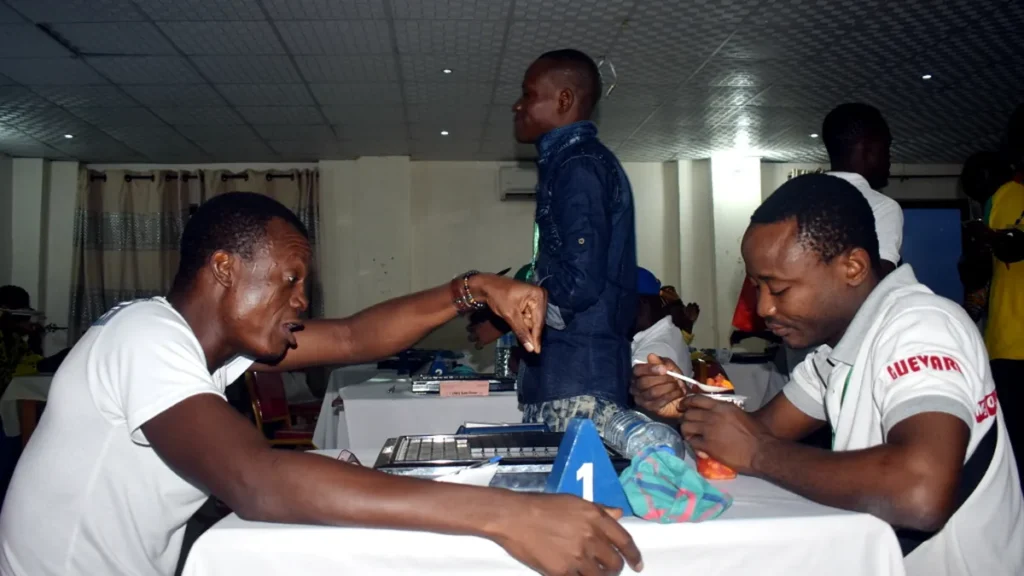
Five hundred and four players is a big crowd for a quiz. It is too many for one room with a single sheet of paper, yet it is exactly the right size for a night that feels like an event rather than a pastime. With the right plan, 504 players split into 84 teams of six, and the whole evening runs smoothly: nine rounds, one host, and a scoreboard everyone can see.
The secret is structure. Every round needs a clear theme, a fixed number of questions, and a scoring system that a small crew can run without fuss. The nine rounds below do exactly that. They move from the workshop to the open water, from the kitchen to the far north, and every round gives all 84 teams a fair chance to shine. The questions are written so that a mix of ages and backgrounds can all find something to answer.
This guide walks through the full evening: the nine rounds, a table that sums them up, a checklist for the host, and answers to the questions every organiser asks first. If you want to see how the format worked at a slightly smaller scale, our Best Trivia Games for 503 Players is a good warm-up. If you are new to running a night this size, start with the checklist and read the rounds in order. By the end you will have a plan that fits 504 players into one memorable night.
Key takeaways
- 504 players work best as 84 teams of six, with one host and a small scoring crew.
- Nine themed rounds, ten questions each, keep the night to about two hours of play.
- The rounds below cover makers, herders, keepers, and far-flung places, so every team finds a strength.
- A big screen, a tested sound system, and printed answer sheets matter more than fancy prizes.
- Read the scores aloud after every round to keep all 84 teams in the game.

The Nine Rounds at a Glance
The format follows the same pattern as What Makes Trivia Games for 502 Players Work?, with ten questions per round and scores read aloud after each one. Use the table below to pick your strongest rounds first, then read the full rounds that follow.
| Round | Category | What the round covers | Sample question |
|---|---|---|---|
| Round 1 | Famous Anchor Makers | Great anchors and the firms that forged them | Who made the Titanic’s centre anchor? |
| Round 2 | Famous Microscope Makers | Lens makers and the tiny world they revealed | Who first described animalcules? |
| Round 3 | Famous Pencil Makers | The craft behind the humble pencil | Who mixed graphite with clay in 1795? |
| Round 4 | Famous Goatherds | Herders whose goats changed history | Who found coffee after his goats ate the cherries? |
| Round 5 | Famous Gamekeepers | Keepers of estates, grounds, and creatures | Who tends the grounds at Hogwarts? |
| Round 6 | Famous Mead Makers | Honey wine in myth and story | What did Odin steal from the giants? |
| Round 7 | Famous Airports | The world’s busiest and best-known airports | Which airport uses the code SIN? |
| Round 8 | Famous Icebergs | Giant bergs of the far south | Which berg broke from Larsen C in 2017? |
| Round 9 | Famous Steppes | Grasslands from Hungary to Mongolia | Which steppe is known as the Puszta? |
The Nine Rounds
Each round below has ten questions in the full game, and the three shown here are samples you can use as they stand or swap for your own. The rounds are ordered to keep the energy up: a hands-on craft to open, a pair of lively people rounds in the middle, and a wide-open place round to close. Read each intro aloud before the questions so every team knows what the round is about.
Round 1: Famous Anchor Makers
Anchors are older than most people think, and the firms that forged them were household names in their ports. This round asks about the great anchors of history: the 15-tonne centre anchor of the Titanic, made by Noah Hingley and Sons in Netherton, and the anchor of the Mary Rose, raised from the seabed with the wreck in 1982. It also tests the parts of an anchor, from the shank to the fluke, and the yards where the biggest anchors were cast.
- Which firm made the 15-tonne centre anchor of the Titanic? Answer: Noah Hingley and Sons.
- Which Tudor warship’s anchor was raised with the wreck in 1982? Answer: The Mary Rose.
- What is the name of the pointed arm of an anchor that digs into the seabed? Answer: The fluke.
Round 2: Famous Microscope Makers
The microscope opened a world no eye had seen before, and the first instruments came from small workshops in the Netherlands, England, and Germany. This round covers Antonie van Leeuwenhoek, who first described tiny living things; Robert Hooke, whose book Micrographia showed a flea in huge detail; and Carl Zeiss, whose Jena workshop set the standard for every microscope that followed.
- Which Dutch lens maker first described tiny living things he called animalcules? Answer: Antonie van Leeuwenhoek.
- Which 1665 book by Robert Hooke showed a flea under the microscope? Answer: Micrographia.
- Which German workshop founder’s name is still stamped on microscopes today? Answer: Carl Zeiss.
Round 3: Famous Pencil Makers
The pencil looks simple, but it took centuries of craft to get right. This round follows the pencil from the graphite seams of Cumbria to the workshops of Nuremberg and the family firm in Concord, Massachusetts. It covers Nicolas-Jacques Conté, who mixed graphite with clay in 1795; the Thoreau family, whose son Henry David improved their pencils; and the Faber family, whose firm has made pencils since 1761.
- Which French craftsman mixed graphite with clay in 1795 to make the modern pencil? Answer: Nicolas-Jacques Conté.
- Which Concord family’s pencil business was improved by their son Henry David? Answer: The Thoreau family.
- Which German pencil firm, founded in 1761, is among the oldest in the world? Answer: Faber-Castell.
Round 4: Famous Goatherds
Goatherds have shaped history in quiet ways. This round starts with Kaldi, the Ethiopian goatherd whose goats ate coffee cherries and danced, and moves to the young goatherd who found the first Dead Sea Scrolls in 1947. It also visits Heidi’s grandfather, the goatherd of the Alps, and the goatherds of ancient verse, from Virgil’s Meliboeus to the goat-god Pan with his pipes.
- Which Ethiopian goatherd is said to have found coffee after his goats ate the cherries? Answer: Kaldi.
- Which young goatherd found the first Dead Sea Scrolls near the Dead Sea in 1947? Answer: Muhammad edh-Dhib.
- Which girl in a Swiss children’s story lives with her goatherd grandfather in the Alps? Answer: Heidi.
Round 5: Famous Gamekeepers
The gamekeeper looks after the birds, the coverts, and the shoot on a country estate, and the job has produced some memorable figures in stories and on screen. This round covers Rubeus Hagrid, who tends the grounds and creatures at Hogwarts; Oliver Mellors, the keeper in the 1928 story of Lady Chatterley; and the old saying that a gamekeeper turned poacher is the worst poacher of all. A good gamekeeper knows every bird, every covert, and every track on the estate, and the best ones are part warden, part naturalist.
- Which half-giant tends the grounds and magical creatures at Hogwarts? Answer: Rubeus Hagrid.
- In the 1928 story of Lady Chatterley, which gamekeeper wins her heart? Answer: Oliver Mellors.
- What name is given to the person who rears pheasants and manages the shoot on a country estate? Answer: A gamekeeper.

Round 6: Famous Mead Makers
Mead is the oldest fermented drink in the world, made from honey, water, and yeast, and it runs through myth and story. This round asks about the Mead of Poetry in Norse myth, stolen by Odin; the mead drunk in the great hall Heorot in Beowulf; and the monks of Lindisfarne, who still make a famous mead named after their home.
- In Norse myth, which drink of poetry did Odin steal from the giants? Answer: The Mead of Poetry.
- Which golden drink is served in the great hall Heorot in the poem Beowulf? Answer: Mead.
- Which community of monks makes a famous mead named after their home? Answer: Lindisfarne.
Round 7: Famous Airports
Airports are small cities, and the busiest ones move more people in a day than many towns see in a year. This round covers the world’s busiest airport, Hartsfield-Jackson Atlanta; Singapore Changi, with its huge indoor rain vortex; and London Heathrow, whose code LHR is known to travellers everywhere. It also tests the codes, the records, and the buildings that make each airport easy to spot.
- Which airport is the busiest in the world by passenger numbers? Answer: Hartsfield-Jackson Atlanta.
- Which airport uses the code SIN? Answer: Singapore Changi.
- Which London airport uses the code LHR? Answer: Heathrow.
Round 8: Famous Icebergs
Icebergs are floating masses of ice, and most of each one sits below the waterline. This round covers the giant tabular bergs of the far south, from B-15, one of the largest ever recorded, to A-68, which broke away from the Larsen C ice shelf in 2017. It also asks about the berg struck by the Titanic in 1912 and the small bergs that crews call growlers.
- Which giant iceberg broke away from the Larsen C ice shelf in 2017? Answer: A-68.
- Which iceberg, named B-15, broke off the Ross Ice Shelf in 2000 and was one of the largest ever recorded? Answer: B-15.
- What name is given to a small iceberg about the size of a room? Answer: A growler.
Round 9: Famous Steppes
The steppe is a sea of grass that runs across whole continents, from Hungary to Mongolia. This round covers the Mongolian steppe, home to nomadic herders and the wild horse called Przewalski’s; the Great Hungarian Plain, known as the Puszta; and the Pampas of Argentina, where the gauchos ride. It also asks about the conqueror whose armies rode out of the steppe to build the largest land empire in history. The steppe has no fences and few trees, so the people who live there learned to move with the seasons and to ride before they could walk.
- Which vast grassland is home to nomadic herders and Przewalski’s horse? Answer: The Mongolian steppe.
- Which steppe is known as the Puszta? Answer: The Great Hungarian Plain.
- Which South American grassland is called the Pampas? Answer: The Pampas.
Trivia Night Checklist
Work through this list in order the week before the night. For a second full set of rounds to borrow from, our Best Trivia Games for 501 Players pairs well with the nine rounds above.
- Split 504 players into teams of six, which gives 84 teams, and give every team a number.
- Appoint one host and a scoring crew of at least six helpers.
- Print answer sheets in advance, one per team per round.
- Test the sound system and the big screen before doors open.
- Keep each round to ten minutes, with scores read out after every round.
- Prepare a tie-break question before the night begins.
Frequently Asked Questions
How long does a trivia night for 504 players take?
Plan for about two hours of play, plus half an hour for arrival and seating. Nine rounds of ten questions take around ninety minutes when the host keeps a steady pace, and the score announcements between rounds add another half hour. A night that runs past two and a half hours will lose the back rows, so keep the breaks short.
How many teams should 504 players form?
Teams of six work best, which gives 84 teams. Six is small enough for everyone to join in and large enough to cover a wide spread of knowledge. Teams of four would make 126 teams, which is too many sheets for a small crew to mark, while teams of eight would leave quieter players with nothing to do.
Do we need special equipment for a crowd this size?
You need a sound system that reaches the back rows, a big screen for the questions, and printed answer sheets for every team. A microphone for the host is essential, and a second microphone for the score reader helps. Buzzers are a nice extra for a final round, but they are not needed for the nine written rounds. A spare set of pens and a printed score sheet for the host will save the night if anything runs short.
How do we stop teams from cheating?
Ask every team to put phones away at the start, and collect the answer sheets at the end of each round before the answers are read out. Seat teams with space between them, and use a mix of written and picture questions so that a quick search does not help. Most teams play fair when the rules are clear from the start. A short announcement of the rules at the start, read out by the host, sets the tone for the whole evening.
What happens if teams tie at the top?
Prepare one tie-break question before the night begins, and ask the tied teams to write down a number as their answer. The team closest to the true number wins. A good tie-break asks for a number nobody can guess exactly, such as the number of windows in a famous building or the weight of a well-known statue.
Can children play in a 504-player trivia night?
Yes, if the questions suit them. The rounds above mix easy and hard questions, and a team with younger players can still score well in the rounds about airports, icebergs, and steppes. Keep the night to two hours, seat families together, and offer a small prize for the best junior team so the younger players have something to aim for.
The Bottom Line
A night for 504 players works when the plan is simple: 84 teams of six, nine themed rounds, and a host who keeps the pace brisk. The rounds above give every team a fair shot, from the anchor makers to the steppes, and the checklist makes sure nothing is left to chance. Start with the rounds your teams will enjoy most, and keep the scoring simple enough that one helper can run it alone.
Book the hall, print the sheets, test the sound, and let the questions do the rest. With the right rounds and a steady host, 504 players will leave talking about the answers they got right, the ones they nearly had, and the night they will want to play again.