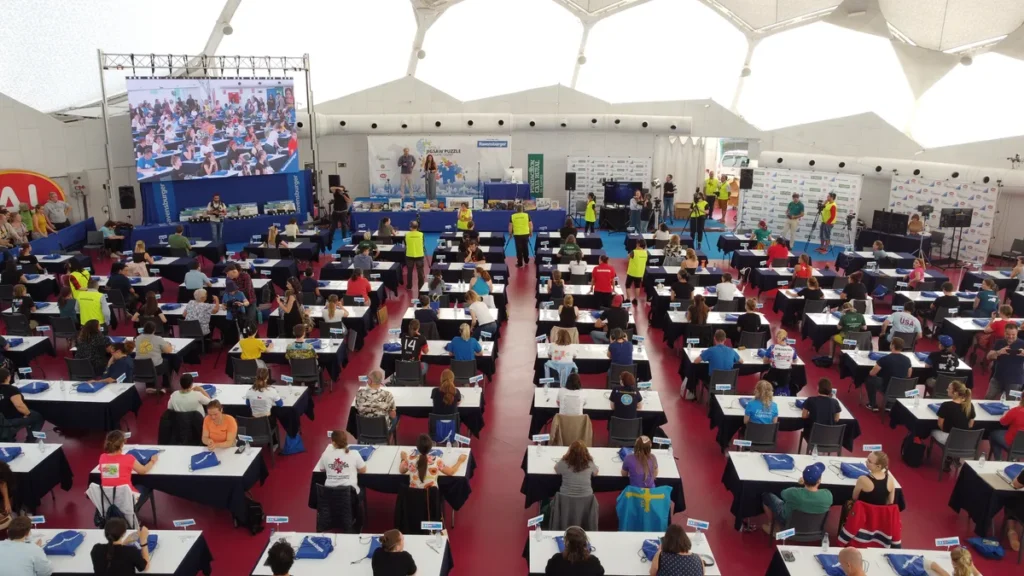
Five hundred players in one room sounds like chaos, and without a plan it is. Yet some of the best game nights ever held have worked at exactly this scale, because the organisers stopped trying to seat everyone around one giant table and started thinking like event planners instead. A 500-player board game night is not one game. It is a hundred small games running side by side, tied together by a shared schedule, a shared scoreboard and a shared sense of occasion.
The trick is to pick games that teach in five minutes, finish in under an hour and stay fun when played by strangers. Long, heavy strategy games have their place, but they are the wrong tool when a hundred tables need to start, finish and rotate in step. The nine games in this guide were chosen for speed, simplicity and the way they spark conversation between people who have only just met.
Run the night in one of three formats, give every table a captain, and keep the rounds short enough that nobody waits around. Do that, and 500 players will feel less like a crowd and more like a festival.
Key takeaways
- Split 500 players into teams of five, so you need 100 tables, 100 copies of games and one captain per table.
- Choose games that teach in five minutes and finish in under an hour, so every table stays in step.
- Run three short rounds with a break between each, rather than one long session that drifts.
- Use a single master scoreboard, visible from everywhere in the room, to keep the whole night feeling like one event.
- Keep spare copies, printed rules and a small team of helpers on hand, because something always runs late or goes missing.

The table below sums up all nine games at a glance. Use it to build your shopping list and your schedule, then read the full notes on each game to see how it behaves when a hundred tables play it at once.
| Game | Players per table | Round length | Why it works for 500 |
|---|---|---|---|
| The Chameleon | 3 to 8 | 15 minutes | Fast bluffing that needs no board at all |
| Balderdash | 2 to 6 | 30 minutes | Creative wordplay that suits mixed ages |
| Catch Phrase | 4 to 10 | 20 minutes | High energy team shouting in short bursts |
| Bezzerwizzer | 2 to 4 | 45 minutes | Trivia with tactical tile swapping |
| Reef | 2 to 4 | 45 minutes | Calm pattern building for quieter tables |
| Onitama | 2 | 15 minutes | Quick duels that feed a knockout ladder |
| That’s Pretty Clever | 1 to 4 | 30 minutes | Roll and write play with almost no setup |
| Gizmos | 2 to 4 | 45 minutes | Engine building with a satisfying marble run |
| Downforce | 2 to 6 | 30 minutes | Betting and racing that crowds love to watch |
How 500 Players Actually Play
No single format fits every group, so pick the one that matches your room, your helpers and your players. All three formats below have been used at this scale, and each one keeps a hundred tables moving together without constant announcements.
The Team Format
Divide the room into teams of five and seat each team at its own table for the whole night. Teams play the same game at the same time, report their scores after each round, and the leaderboard decides the winners. This format is the simplest to run, because nobody moves and every table captain knows exactly where their team sits. It also builds real team spirit, since five strangers become a team within the first round.
The Station Format
Set up the room as a circuit of game stations, with a different game at each one, and rotate the teams every thirty minutes. Players sample several games in one night, and the weaker games get carried by the stronger ones. This format needs clear signage and a bell or announcement for each rotation, but it is the best choice when your group has mixed tastes and you want everyone to try something new. If your group is two players short of a round number, the setup guide for board games for 498 players covers the same hall layout with one fewer table.
The Tournament Format
Run a knockout ladder in which table winners advance to the next round while the rest keep playing friendly games. Short duelling games work best here, because a fifteen minute match keeps the ladder moving and gives eliminated players something to watch. This format creates a real finale, with the last two tables playing in front of the whole room, and it gives competitive players the stakes they want without leaving casual players behind.
The 9 Best Board Games for 500 Players
Every game below was chosen because it survives contact with a hundred tables. They are quick to teach, hard to break, and fun for people who have never played a modern board game before. Keep the notes beside your shopping list when you order copies.
1. The Chameleon
The Chameleon is a bluffing game in which everyone at the table knows a secret word except one player, the chameleon, who must bluff their way through the discussion without being caught. Each round takes about fifteen minutes, the rules fit on a single card, and no board or pieces need to be laid out, which makes it ideal for tables squeezed into a crowded hall.
At this scale the game shines because it needs almost nothing. Print extra word cards, hand one set to each table captain, and the game runs itself. Quiet players get a fair chance because the discussion rewards careful listening as much as loud talking, and the reveal at the end of each round always gets a laugh.
2. Balderdash
Balderdash asks players to invent convincing definitions for strange real words, then vote on which answer is the true one. It is a writing and guessing game that rewards wit over knowledge, so a table of strangers can enjoy it within minutes of sitting down. A full game lasts about half an hour, which fits neatly into a three round evening.
For a 500 player night, Balderdash works best at tables with mixed ages, because grandparents and teenagers bluff just as well as each other. Give each table a pad of answer slips and a pencil per player, and ask captains to read the definitions aloud so that nobody is left out.
3. Catch Phrase
Catch Phrase is a team word game in which one player describes a word without saying it, while their team shouts guesses against a ticking timer. When the timer buzzes, the team holding the device loses the round, so every turn ends in a burst of noise. Games last about twenty minutes, and the pace keeps energy high in a large hall.
This is the loudest game on the list, so place its tables near the edges of the room or group them together in one noisy zone. For the loudest hour of the evening, borrow the rotation ideas from our guide to party games for 498 players and let the winning teams face each other in front of the room.
4. Bezzerwizzer
Bezzerwizzer is a trivia game with a twist. Players answer questions from twenty categories, but they can also swap question tiles with their opponents and steal categories they know well. This tactical layer keeps the game interesting even for players who are not trivia experts, because a clever swap can win a round that knowledge alone would lose.
At 500 players, trivia works best when the questions are mixed in difficulty and the categories are read aloud by the table captain. Keep the rounds to forty five minutes, and remind captains that the tile swapping is the heart of the game, not a side rule. Tables that finish early can start a second short game while they wait, so keep a spare quick game on every table for exactly that moment.
5. Reef
Reef is a calm, colourful pattern building game in which players stack coral pieces to match patterns on cards and score points for clever placement. It plays in about forty five minutes, the rules take five minutes to explain, and the table stays quiet enough for players who prefer a gentler pace. Every table needs only the box and a little elbow room.
This is the game to place at the quiet end of the hall, near the doors and the refreshment tables, where players who want a break from the noise can settle in. Because the game is so visual, new players can learn it by watching one round, which takes pressure off your helpers.
6. Onitama
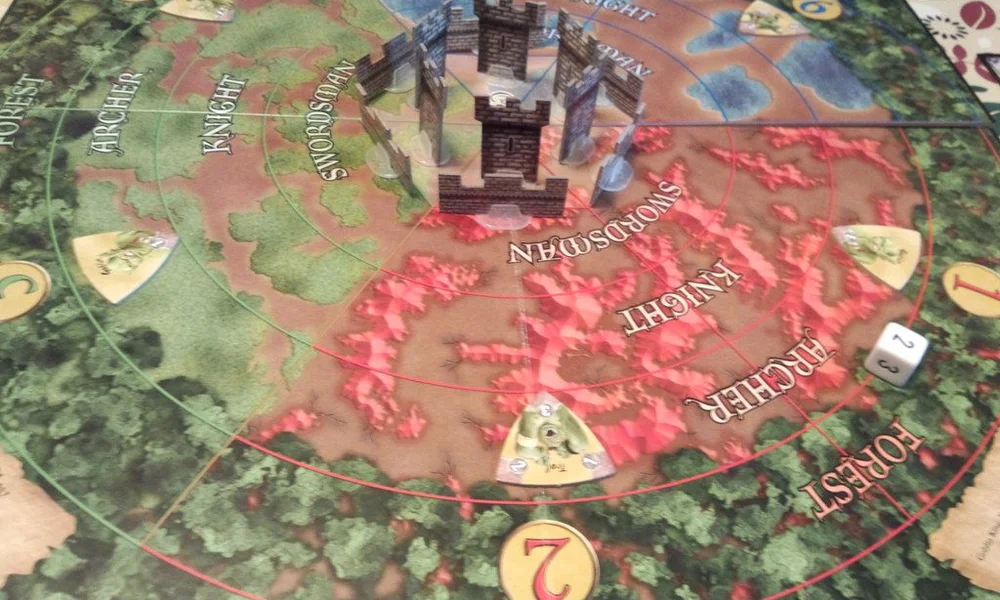
Onitama is a two player abstract duel played on a small board with five pieces per side and a rotating set of move cards. Each match lasts about fifteen minutes, the rules fit on a single card, and the rotating cards mean no two games play the same way. It is the most compact game on this list, needing only a board the size of a dinner plate.
For a 500 player night, Onitama belongs in the tournament ladder. Pair players at each table, run quick knockout matches, and let the winners advance while the losers join a friendly table nearby. Buy one copy per two players at the duelling tables, and keep a printed ladder where everyone can see it.
7. That’s Pretty Clever
That’s Pretty Clever is a roll and write game in which players draft dice, mark boxes on their personal sheets and chain bonuses into bigger scores. It plays in about thirty minutes, supports up to four players per sheet set, and needs almost no table space beyond a pencil and a score pad. Setup takes less than a minute, which matters when a hundred tables must start together.
The game suits a big night because every player is busy on every turn, even while waiting for the dice. Print spare score sheets in bulk, because each game uses a fresh sheet per player, and hand a small pot of pencils to every captain before the doors open.
8. Gizmos
Gizmos is an engine building game in which players collect coloured marbles from a clever dispenser and use them to build machines that trigger chain reactions. A game lasts about forty five minutes, the rules are friendly, and the marble dispenser itself becomes a talking point at every table. It is the most tactile game on this list, and players love watching their engines fire.
Place Gizmos at tables where you want a slower, more thoughtful pace, and warn captains that the first game always runs long while players learn the symbols. After that first game the pace picks up quickly, and the chain reactions keep everyone watching the table.
9. Downforce
Downforce is a racing and betting game in which players bid on cars, play speed cards and bet on the winner before the race even starts. A race lasts about thirty minutes, the board is easy to read from across the table, and the betting gives every player a stake in cars they do not control. It is a natural spectator game, which makes it perfect for the final round of the night.
Save Downforce for the last session, when the room is warm and the crowd is ready for a show. Run one showcase race on a raised table or a projected board, and let the whole room bet with play chips on the outcome.
Your 500-Player Night Checklist
Print this list and work through it the day before the event. Most failures at this scale come from small missing items, not from big planning mistakes, so tick each one off in order.
- Count the copies: one copy of each game per table, plus ten spare copies for damaged boxes and late arrivals.
- Print the rules: a one page rules sheet per table, per game, so captains can settle arguments without calling a helper.
- Label every table: a large number card on each table, matched to the scoreboard, so players and helpers can find their place.
- Appoint a captain per table: one confident player at each table who reads the rules, keeps the score and reports the result.
- Run a practice round: gather the captains an hour early, play one short round together and answer every question before the doors open.
- Keep a master scoreboard: one big board, updated after every round, where every player can see the standings at a glance.
Frequently Asked Questions
Can one board game really seat 500 players?
No single copy of a board game seats 500 players, and that is the first idea to let go of. A 500 player night is a hundred tables of five, all playing at the same time under one schedule. Pick games that scale by adding tables, not by adding players to one table, and the number stops being a problem.
How many tables do 500 players need?
Plan on 100 tables of five players, plus five or six spare tables for helpers, late arrivals and the showcase final. A hall with 100 tables needs wide aisles between rows, so measure the room before you book it and leave at least a metre of walking space on every side of each table.
How many helpers do we really need?
One helper for every ten tables is a good rule, so bring ten helpers for a 500 player night, plus two people on the scoreboard desk and one floater with spare parts. Helpers should know the rules of all nine games and carry spare pencils and score sheets.
Which game should we start with?
Start with the fastest game on the list, The Chameleon, because a fifteen minute round settles the room, teaches everyone the rhythm of the night and gives nervous players an early win. Save the longer games, such as Bezzerwizzer and Gizmos, for the second round, when the room is comfortable and the captains have found their footing.
What if some tables finish much faster than others?
Keep a short filler game on every table, such as a quick round of That’s Pretty Clever, so fast tables have something to play while they wait. Tables that finish early can also switch to quick card rounds, and our roundup of card games for 498 players has plenty that fit a ten minute gap. Never rush a slow table to catch up, because a rushed game is a spoiled game.
How long does a night for 500 players last?
Plan on three hours from the first round to the final scores, with a fifteen minute break between rounds and a short welcome at the start. Three rounds of about forty five minutes, plus breaks, gives every player a full evening without exhaustion, and it leaves time for the showcase final and the prize giving at the end.
The Bottom Line
A 500 player board game night works when you stop thinking about one big game and start thinking about a hundred small ones, all running to the same clock. Pick fast games, give every table a captain, keep the rounds short and let the scoreboard do the talking. Do that, and five hundred strangers will leave as one room full of people who cannot wait to play again.