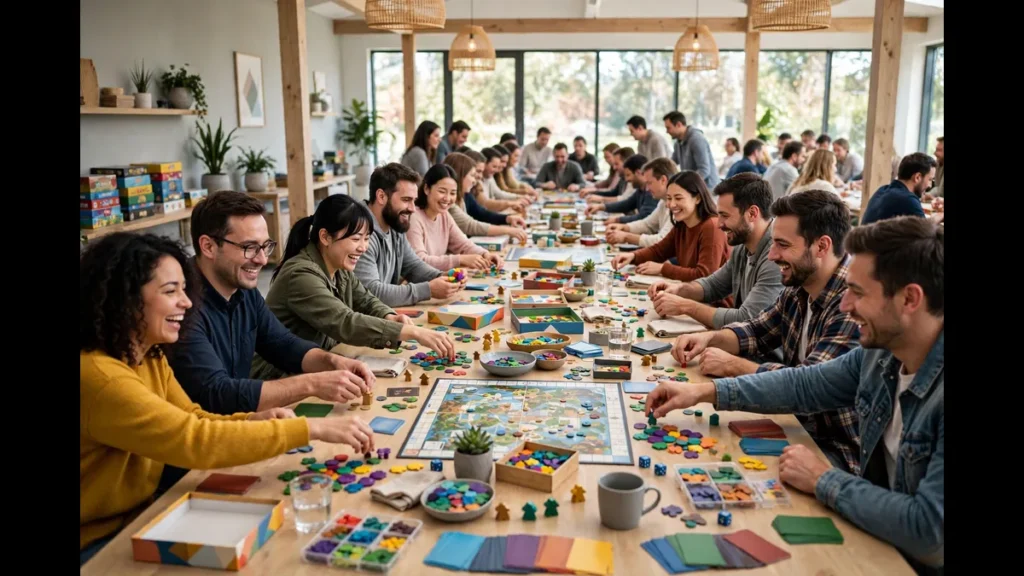
Logic puzzles are one of the gentlest and most enjoyable ways to keep the mind active. They do not require speed, special training, or a mathematics degree. They only ask you to slow down, look carefully, and think one small step at a time. That is exactly why so many seniors love them: a good easy logic puzzle feels like a friendly conversation with your own brain, not a test. You can solve one over a morning cup of tea, share another with a grandchild on the phone, or work through a whole page with friends at a community centre and compare answers over lunch.
What makes a puzzle easy is not that it is simple or dull. It is that the clue is fair, the pattern is visible once you spot it, and the answer makes you smile when it clicks into place. The puzzles in this collection were written with that feeling in mind. Every one of them can be solved with everyday knowledge: counting, days of the week, months of the year, colours, animals, food, money, and common sense. If you enjoy these, you will also enjoy our easy riddles for seniors with answers, which use the same warm, unhurried style and are perfect for sharing at family gatherings.
In this article you will find seventy original easy logic puzzles, grouped into seven friendly sections so you can dip in wherever you like. Start with number patterns if you love counting, jump to word puzzles if you love language, or try the everyday logic puzzles if you enjoy practical thinking. Every puzzle has its answer right beside it, so there is no flipping to the back of a book and no waiting to find out whether you were right. Take your time, trust your instincts, and remember that the best answer is the one you worked out yourself.
Key takeaways
- This collection has 70 original easy logic puzzles with answers, all written for seniors.
- Every puzzle uses everyday knowledge only, with no speed, maths degree, or special training needed.
- The puzzles are grouped into seven sections, so you can start anywhere and solve at your own pace.
- Each answer is given right after its puzzle, making the collection ideal for solo solving or group fun.
- Solving a few puzzles a day is a pleasant habit that keeps thinking sharp and conversations lively.

How to Enjoy These Puzzles
There is no right way to use this collection, but a few gentle habits make it more fun. First, read each puzzle out loud if you can, because hearing the words often reveals a pattern your eyes skipped. Second, cover the answer with your hand or a piece of paper until you have made a guess, even a wild one, because guessing is part of the game. Third, if a puzzle stumps you, move on and come back later; a fresh mind often sees in seconds what a tired mind missed for minutes. Finally, share the puzzles. A puzzle solved together is twice as satisfying, and explaining your answer to someone else is one of the best ways to enjoy it fully.
| Section | What You Will Practise | Number of Puzzles | Best For |
|---|---|---|---|
| Number Patterns | Counting and spotting sequences | 10 | Morning warm-ups |
| Word Logic | Language, rhymes, and categories | 10 | Word lovers |
| Odd One Out | Comparing and grouping things | 10 | Quick thinking |
| Who Did What? | Simple deduction from clues | 10 | Detective fun |
| Picture Patterns in Words | Shapes, letters, and order | 10 | Visual thinkers |
| Everyday Logic | Money, time, and daily life | 10 | Practical minds |
| Quick Reasoning | Memory and common sense | 10 | Group games |
Section 1: Number Patterns
Number patterns are the friendliest place to begin. Look at the numbers, ask yourself what changes from one to the next, and the missing number will usually reveal itself. These ten puzzles use only counting by twos, fives, tens, and doubling, so you can relax and enjoy the rhythm.
1. What number comes next? 2, 4, 6, 8, __? Answer: 10. The numbers go up by two each time.
2. What number comes next? 5, 10, 15, 20, __? Answer: 25. The numbers go up by five each time.
3. What number comes next? 1, 3, 5, 7, __? Answer: 9. These are the odd numbers in order.
4. What number comes next? 10, 20, 30, 40, __? Answer: 50. The numbers go up by ten each time.
5. What number comes next? 3, 6, 9, 12, __? Answer: 15. The numbers go up by three each time.
6. What number comes next? 100, 90, 80, 70, __? Answer: 60. The numbers go down by ten each time.
7. What number comes next? 1, 2, 4, 8, __? Answer: 16. Each number doubles the one before it.
8. What number comes next? 7, 14, 21, 28, __? Answer: 35. The numbers go up by seven each time.
9. What number comes next? 20, 18, 16, 14, __? Answer: 12. The numbers go down by two each time.
10. What number comes next? 4, 8, 12, 16, __? Answer: 20. The numbers go up by four each time.
Section 2: Word Logic
Word puzzles reward the knowledge you have gathered over a lifetime: the days of the week, the months of the year, rhymes you learned as a child, and the way words fit together. Read each one slowly and let the answer come to you.
11. What day comes after Tuesday? Answer: Wednesday.
12. What month comes after September? Answer: October.
13. Which word rhymes with cat: dog, hat, or fish? Answer: Hat.
14. What is the opposite of hot? Answer: Cold.
15. Which word belongs with apple, banana, and orange: carrot, grape, or potato? Answer: Grape. All the others are fruits.
16. What letter comes after M in the alphabet? Answer: N.
17. How many letters are in the word garden? Answer: Six. G-A-R-D-E-N is six letters.
18. Which is the odd word out: red, blue, happy, green? Answer: Happy. The others are colours.
19. What comes next: January, February, March, __? Answer: April.
20. Which word can follow sun to make a new word: flower, table, or chair? Answer: Flower. Sunflower is a real word.
Section 3: Odd One Out
In each of these puzzles, three things belong together and one does not. Your job is to find the one that is different and, just as importantly, to say why. There is often more than one clever reason, but the answer given is the simplest one.
21. Odd one out: dog, cat, fish, car? Answer: Car. The others are animals.
22. Odd one out: Monday, Tuesday, Saturday, January? Answer: January. The others are days of the week.
23. Odd one out: spoon, fork, knife, plate? Answer: Plate. The others are cutlery you hold in your hand.
24. Odd one out: rose, tulip, daisy, oak? Answer: Oak. The others are flowers.
25. Odd one out: bread, milk, cheese, shirt? Answer: Shirt. The others are foods.
26. Odd one out: 2, 4, 6, 7? Answer: 7. The others are even numbers.
27. Odd one out: train, bus, aeroplane, bicycle? Answer: Bicycle. The others have engines.
28. Odd one out: summer, winter, autumn, Monday? Answer: Monday. The others are seasons.
29. Odd one out: eye, ear, nose, knee? Answer: Knee. The others are on your face.
30. Odd one out: pen, pencil, crayon, book? Answer: Book. The others are things you write or draw with.
Section 4: Who Did What?
These little detective puzzles give you two or three short clues. Put the clues together, one at a time, and the answer will fall into place. If you enjoy this kind of gentle deduction, you will love our brain teasers for seniors, which offer more puzzles in the same friendly style.
31. Mary, John, and Sue each baked one thing: a cake, a pie, and cookies. Mary did not bake the cake. John baked the pie. Who baked the cookies? Answer: Mary. John baked the pie, so Mary baked the cookies and Sue baked the cake.
32. Tom, Ann, and Ben each have a pet: a dog, a cat, and a bird. Tom does not have the cat. Ann has the bird. Who has the dog? Answer: Tom. Ann has the bird and Tom does not have the cat, so Tom has the dog.
33. Three friends wear red, blue, and green hats. The friend in red is not first in line. The friend in blue is last. Who is first? Answer: The friend in the green hat.
34. A gardener planted roses, tulips, and daisies in three rows. Roses are not in the middle row. Tulips are in the first row. Which flowers are in the middle row? Answer: Daisies.
35. Four children, Amy, Ben, Cara, and Dan, finished a race in that order from first to last, except Ben finished before Amy. If Cara was first, who was second? Answer: Ben. Cara was first, Ben finished before Amy, so Ben was second.
36. A book, a pen, and a cup are on a table. The book is not in the middle. The cup is on the left. What is in the middle? Answer: The pen.
37. Anna, Ben, and Cara each drink one thing at breakfast: tea, coffee, and orange juice. Anna does not drink coffee. Ben drinks tea. Who drinks the orange juice? Answer: Anna. Ben drinks tea, and Anna does not drink coffee, so Anna drinks the orange juice and Cara drinks the coffee.
38. Three sisters are 60, 65, and 70 years old. The 65-year-old lives in the red house. The 60-year-old lives in the blue house. Who lives in the green house? Answer: The 70-year-old sister. The other two houses are taken, so the oldest sister lives in the green house.
39. A red car, a blue car, and a white car are parked in a row. The blue car is in the middle. The red car is on the left. Which car is on the right? Answer: The white car.
40. Emma, Jack, and Lily each play one instrument: piano, guitar, and violin. Emma does not play the violin. Jack plays the guitar. Who plays the piano? Answer: Emma. Jack plays guitar, Emma does not play violin, so Emma plays piano and Lily plays violin.
Section 5: Picture Patterns in Words
These puzzles ask you to picture something in your mind: a shape, a row of letters, or a pattern of colours. Close your eyes for a moment if it helps, and let the picture form before you answer.
41. How many sides does a triangle have? Answer: Three.
42. How many sides does a square have? Answer: Four.
43. What shape has no corners at all? Answer: A circle.
44. What letter comes next: A, C, E, G, __? Answer: I. The letters skip one each time.
45. What colour comes next: red, blue, red, blue, __? Answer: Red. The colours take turns.
46. If you fold a square of paper in half, how many sides does the folded shape have? Answer: Four. It becomes a rectangle, which still has four sides.
47. What is the first letter of the word elephant? Answer: E.
48. What is the last letter of the word garden? Answer: N.
49. How many letters are in the word cat? Answer: Three.
50. Which is longer, a pencil or a ruler? Answer: A ruler. A normal ruler is longer than a normal pencil.
Section 6: Everyday Logic
Everyday logic is the thinking you already do without noticing: working out change, planning a journey, or deciding how long a cake needs in the oven. These puzzles celebrate that practical wisdom.
51. You have ten pounds and you buy a cake for six pounds. How much change do you get? Answer: Four pounds.
52. A bus leaves at 10 o’clock and the journey takes one hour. What time does it arrive? Answer: 11 o’clock.
53. You need four eggs for a cake and you have two. How many more eggs do you need? Answer: Two.
54. It is Monday today. What day will it be in three days? Answer: Thursday.
55. A shop opens at 9 o’clock and closes at 5 o’clock. How many hours is it open? Answer: Eight hours.
56. You have three apples and you give one to a friend. How many apples do you have left? Answer: Two.
57. A cake takes 30 minutes to bake. If you put it in the oven at 2 o’clock, when will it be ready? Answer: Half past two, or 2:30.
58. There are twelve biscuits in a packet and four people share them equally. How many biscuits does each person get? Answer: Three.
59. You walk for 15 minutes to the shop and 15 minutes back. How long were you out? Answer: 30 minutes.
60. A book has 100 pages and you have read 40. How many pages are left? Answer: 60 pages.
Section 7: Quick Reasoning
These final ten puzzles are perfect for playing aloud with family or friends. Each one is short, each one has a single clear answer, and each one is a little reminder that common sense is a wonderful thing.
61. If you are in a dark room with a candle and a lamp, which do you light first? Answer: A match. You need a match to light either one.
62. What gets wetter the more it dries? Answer: A towel.
63. What has a face and two hands but no arms or legs? Answer: A clock.
64. What can you catch but never throw? Answer: A cold.
65. What has keys but cannot open a single door? Answer: A piano.
66. What goes up but never comes down? Answer: Your age.
67. What has a neck but no head? Answer: A bottle.
68. What can fill a room without taking up any space? Answer: Light.
69. What is always in front of you but cannot be seen? Answer: The future.
70. A farmer has 17 sheep. All but nine run away. How many sheep are left? Answer: Nine. All but nine ran away, so nine stayed.
Your Puzzle Checklist
Use this short checklist to get the most from every puzzle session, whether you solve alone or with friends.
- Read each puzzle slowly, out loud if you can, before you guess.
- Cover the answer until you have made your own guess.
- Try one section at a time instead of rushing through all seventy.
- Keep a pencil and paper nearby for number patterns and letter sequences.
- Share your favourite puzzles with family and friends and compare answers.
- Celebrate every correct answer, and enjoy the ones that surprise you just as much.
Frequently Asked Questions
Are these logic puzzles suitable for seniors with no maths background? Yes, absolutely. Every puzzle in this collection uses everyday knowledge, simple counting, and common sense. No puzzle needs algebra, formulas, or any special training, and every answer is explained in plain words.
How many puzzles are in this collection? There are 70 original easy logic puzzles in this article, grouped into seven sections of ten puzzles each, covering numbers, words, odd one out, deduction, patterns, everyday life, and quick reasoning.
Can I print these puzzles to solve with friends? Yes, these puzzles work beautifully in a group. Read each puzzle aloud, let everyone guess before you reveal the answer, and enjoy the conversation that follows. They are ideal for community centres, book clubs, and family gatherings.
What should I do if a puzzle seems too hard? Skip it and come back later, or move to another section and return with fresh eyes. There is no time limit and no score to beat. The puzzles are meant to be relaxing, so a short break often makes the answer clear.
Are the answers really included for every puzzle? Yes, each puzzle is followed immediately by its answer in bold, with a short explanation wherever one helps. You never have to search for answers or wait to find out whether you were right.
Where can I find more puzzles like these? If you enjoyed the word and number puzzles here, try our easy logic puzzles for kids for a lighter set you can share with grandchildren, and come back here often, because new collections are added regularly.
The Bottom Line
Easy logic puzzles are a small daily pleasure with a big reward: a few quiet minutes of thinking, a smile when the answer clicks, and a story to share with someone you love. The seventy puzzles in this collection are yours to enjoy at your own pace, in any order, as many times as you like. Start with the section that calls to you, keep a pencil nearby, and let each puzzle be a gentle workout for a mind that has earned its rest and its fun in equal measure.
Note: All 70 puzzles in this article are original and written for senior solvers. Answers are given with each puzzle, and the puzzles are intended for personal enjoyment and friendly group play.