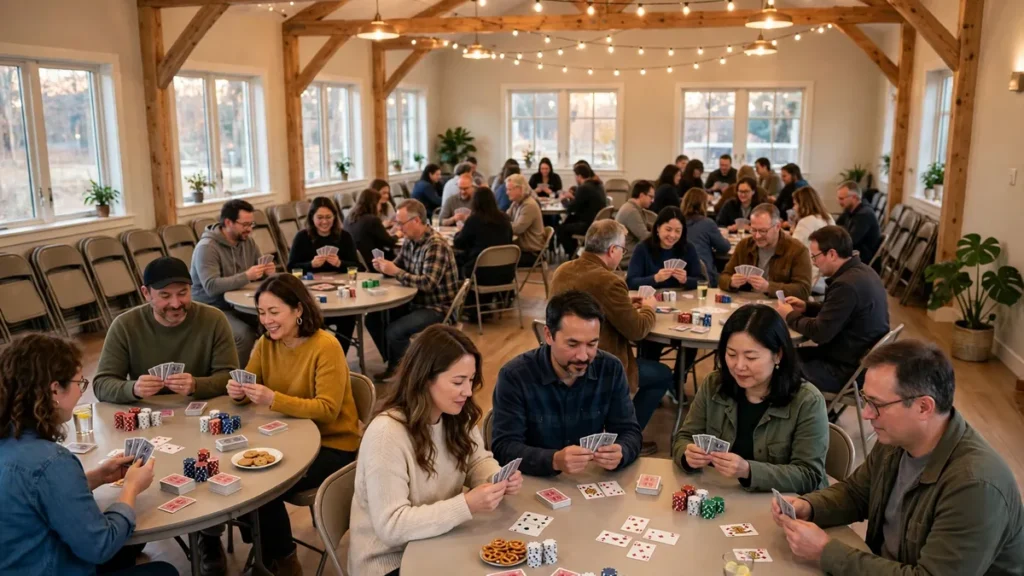
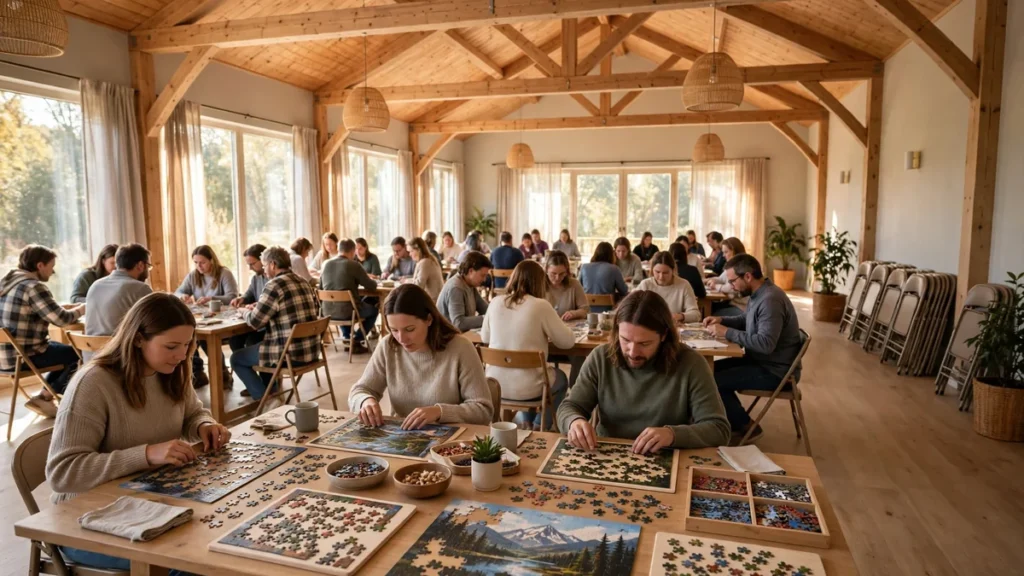
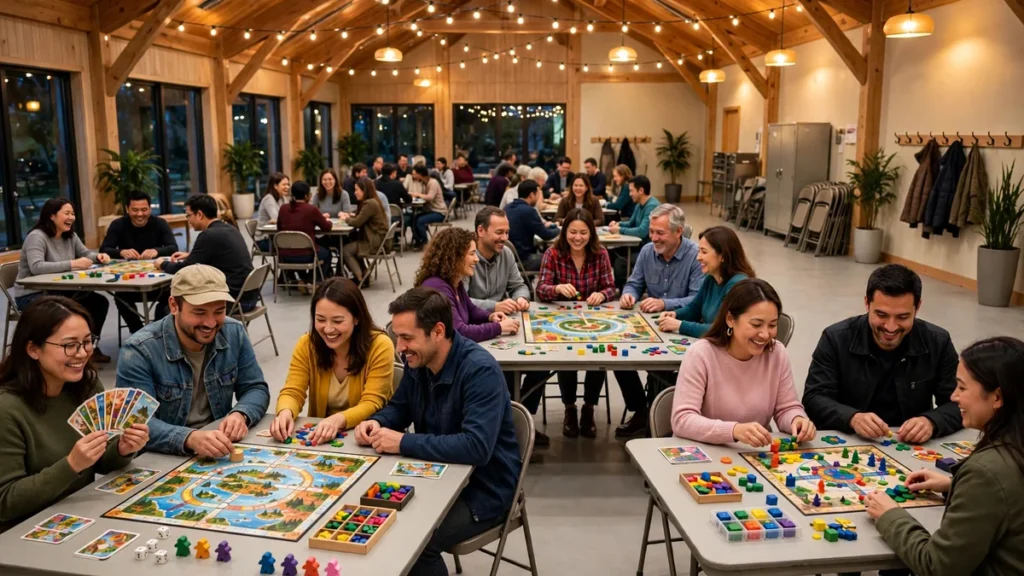
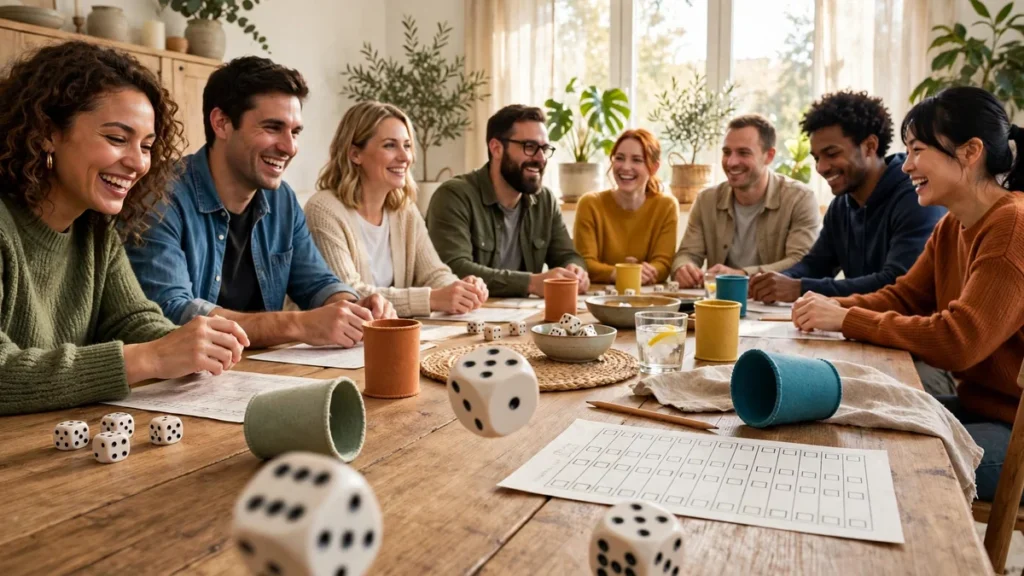
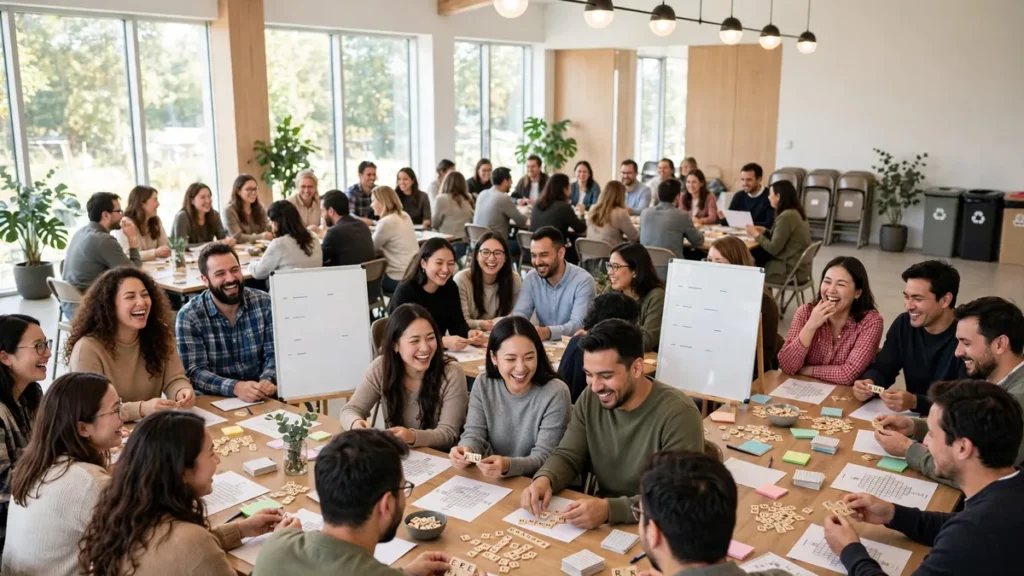
Finding the best puzzle games for 47 players is a different kind of challenge from choosing a puzzle for a quiet evening at home. No single jigsaw box or puzzle board is built for 47 people to crowd around at once, and any guide that pretends otherwise is selling a fantasy. The real question is how to give 47 people a genuinely satisfying puzzle experience, and the answer lies in team formats, parallel stations, and a running order that keeps everyone solving instead of watching.
A group of 47 is large enough to feel like a real event and small enough to organise with a little planning. It is the size of a big classroom, a company department, a youth group, or a family reunion. With the right setup, 47 players can enjoy jigsaw relays, escape-room challenges, crossword races, scavenger hunts, and logic puzzles all in the same session.
This guide covers the best puzzle games for 47 players in every sense that matters: the formats that genuinely support huge groups, the specific games that work best at this scale, and the equipment and timing that keep the evening moving. Everything here has been chosen for a group of exactly this size, not adapted from advice meant for four people around a kitchen table.
Key takeaways
- No single puzzle game seats 47 players at one table; the best puzzle games for 47 players work through teams, parallel stations, or relay formats.
- Split 47 players into teams of five to eight, because teams of that size keep everyone involved without turning turns into long waits.
- Jigsaw relays, escape-room challenges, and crossword races scale best, since every team works on the same puzzle at the same time.
- Plan for about 90 minutes of play, with three or four rounds of 20 to 25 minutes each, plus short breaks between rounds.
- Score every round the same way, keep a visible leaderboard, and finish with one short final round that every team can win.
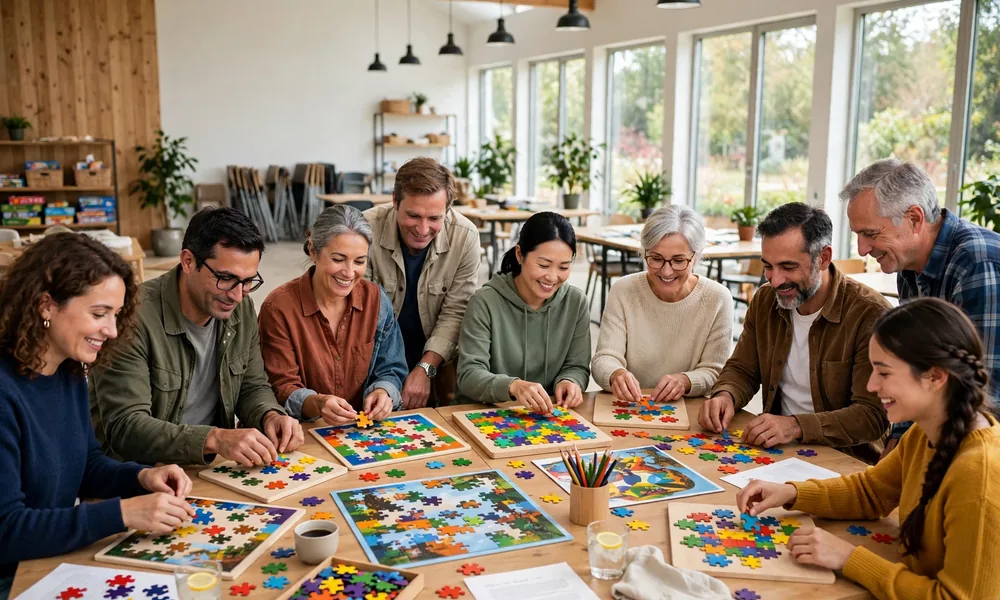
Why 47 Players Changes Puzzle Games Completely
Most puzzle games are designed for one to six players: a jigsaw expects a small group at one table, a crossword expects one solver, and an escape room expects a team of four to eight. Put 47 people in front of any of these in its standard form and most of them will be standing around with nothing to do.
The fix is not to find a bigger puzzle. The fix is to change the structure. When 47 players are split into six or seven teams, each team becomes a normal-sized puzzle group, and the event becomes a tournament between teams rather than one oversized game. The puzzles stay the same size, the players stay engaged, and the competition between teams supplies the energy that a single table never could.
Team size matters more than most hosts realise. Teams of five to eight work best: smaller teams mean more copies of each puzzle to prepare, while larger teams push quieter players to the edge and let stronger players take over. Six teams of seven or eight, or seven teams of six or seven, are both good shapes for 47 players.
How to Run Puzzle Games for 47 Players
Running puzzle games for 47 players is mostly a logistics job, and the logistics are simple once they are written down. You need one puzzle set per team per round, a timer everyone can see, a scoring sheet, and a host who keeps the rounds moving. The host matters more than the puzzles: a good host starts rounds on time and answers rule questions quickly.
Set up the room before anyone arrives: one table per team, spaced so teams cannot see each other’s answers, with the first round’s materials face down on each table, along with pens, answer sheets, and a team name card.
Keep the same teams for the whole event: re-forming teams wastes time and breaks the friendly rivalries that make a tournament fun. Let teams choose their own names and update the leaderboard after every round.
The Format That Works Best
The most reliable format for 47 players is a rotation of three or four puzzle rounds, each lasting 20 to 25 minutes, with a different type of puzzle in each round. One round might be a jigsaw relay, the next a crossword race, the next an escape-room challenge, and the last a scavenger puzzle hunt. Different puzzle types let different players shine: visual thinkers win the jigsaw round, word lovers win the crossword round, and lateral thinkers win the escape room.
Score each round on the same scale, for example 10 points for first place, 7 for second, 5 for third, and 3 for every other team that finishes. Identical scoring keeps the leaderboard fair and easy to follow, and it means a team that loses the first round can still win the night. Announce the scores after every round and update the leaderboard where everyone can see it.
Timing a Puzzle Night for 47 Players
A full puzzle night for 47 players takes about 90 minutes of play, plus arrival and wrap-up time. Plan for a ten-minute welcome, three or four rounds of 20 to 25 minutes, five-minute breaks between rounds for scoring and resetting tables, and a ten-minute finale with prizes. That adds up to roughly two hours from doors open to goodbye.
Do not let rounds overrun: every extra five minutes in round one steals five minutes from round three. Use a loud timer, give a two-minute warning, and call time firmly.
Best Puzzle Games for 47 Players Compared
The table below compares the puzzle formats that work best for 47 players, so you can pick the mix that suits your group, your budget, and your room.
| Puzzle format | Teams needed | Time per round | Cost per team | Best for |
|---|---|---|---|---|
| Jigsaw relay | 6 to 7 | 20 minutes | Low | Visual thinkers and mixed ages |
| Escape-room challenge | 6 to 7 | 25 minutes | Medium | Teams that love clues and codes |
| Crossword race | 6 to 7 | 20 minutes | Very low | Word lovers and quiet rooms |
| Scavenger puzzle hunt | 6 to 7 | 25 minutes | Low | Active groups and larger venues |
| Logic puzzle sprint | 6 to 7 | 20 minutes | Very low | Analytical players and classrooms |
| Trivia puzzle hybrid | 6 to 7 | 20 minutes | Very low | Mixed groups and general knowledge |
The Best Puzzle Games for 47 Players
These are the puzzle games that genuinely work for 47 players, chosen because they scale through teams, need little special equipment, and keep every player involved from the first minute to the last.
1. Jigsaw Relay
The jigsaw relay is the simplest large-group puzzle game and one of the most satisfying. Each team gets an identical 100-piece or 200-piece jigsaw puzzle, and the first team to complete it wins the round. Give every team the same puzzle so the race is fair, and choose a puzzle with a clear, colourful image rather than a mostly blue sky, which turns the race into a frustrating search for identical pieces.
For 47 players, buy seven identical puzzles, one per team, or six if you run six teams. A relay variation works well too: only two players from each team work on the puzzle at a time, swapping every three minutes, so everyone gets a turn at the table and the table never gets crowded.
2. Escape-Room Challenge
An escape-room challenge for 47 players is really seven small escape rooms running side by side. Each team gets the same set of five or six puzzles: a coded message, a locked box with a combination, a hidden object, a logic grid, and a final riddle that combines the answers. The first team to crack every puzzle and open the final box wins.
You can build an escape-room challenge from printed puzzles and cheap combination padlocks, which keeps the cost low. Print the same puzzle set for every team, hide the clues around each team’s table area, and give each team a locked box or envelope as the finish line. A good set takes about 25 minutes for a strong team.
3. Crossword Race
A crossword race is the cheapest puzzle game on this list and one of the most competitive. Every team gets the same large crossword, printed big enough for the whole team to read, and the first team to complete it correctly wins. Use a crossword with a theme your group will enjoy, such as films, food, sport, or general knowledge, and avoid cryptic crosswords unless your group specifically loves them.
The trick to a good crossword race is the size of the print. A normal newspaper crossword is too small for seven people to share, so print it on A3 paper or project it on a screen. Teams that divide the grid into sections and work in parallel finish much faster than teams that solve clue by clue in order.
Crossword races are quiet, focused, and surprisingly tense in the final minutes, when two teams are both one answer away from finishing. They work best as the second or third round, when teams have warmed up and the leaderboard is starting to matter. For a group that already enjoys word games, the step from a crossword race to the wider world of puzzle games for 46 players is a natural one, with more formats to try at a similar group size.
4. Scavenger Puzzle Hunt
A scavenger puzzle hunt sends teams around the venue solving a chain of puzzles, each answer leading to the next location. One clue might be a rebus that names a room, the next a riddle hidden under a chair, the next a code that opens a box. The first team to complete the chain and return to the start wins the round.
This format needs a venue with enough separate spaces to hide clues, such as a community hall with several rooms, a garden, or an office floor. Keep the hunt to six or seven stops so it fits in 25 minutes, and make sure every clue is solvable without specialist knowledge.
Scavenger hunts are the most active puzzle format on this list, which makes them a good choice for the round after a long sitting round. Laminate the clue cards, since they survive rain, pockets, and excited handling far better than plain paper.
5. Logic Puzzle Sprint
A logic puzzle sprint gives every team the same set of short logic puzzles, such as grid puzzles, Sudoku variants, sequence puzzles, and deduction problems, and scores teams on how many they solve correctly in 20 minutes. It is a pure brainpower round, with no luck and no physical element, which makes it the fairest round of the night.
Print the puzzles as a booklet, one per team, with the answers on a separate sheet that the host keeps. Teams work through the booklet in any order, which lets them skip a puzzle that stumps them and come back later. Award one point per correct puzzle, with a bonus for the first team to finish the whole booklet.
Logic sprints suit classrooms, work teams, and groups that enjoy a quiet challenge. They are also the easiest round to prepare, since the puzzles can be printed the day before and the only equipment is pens and paper.
6. Trivia Puzzle Hybrid
A trivia puzzle hybrid mixes quiz questions with puzzle mechanics: each correct answer reveals a letter, and the letters spell out a final answer that teams must guess to win the round. For example, ten questions might each reveal one letter, and the ten letters anagram to a word that names the prize. Teams must solve the questions and then crack the anagram, which adds a puzzle finish to a quiz round.
This format rewards both knowledge and puzzle skill, so a team that is weak on trivia can still win by being fast at the anagram. It also keeps the host involved, since the host reads the questions aloud and the whole room plays together. A trivia hybrid is a strong choice for the final round, when the leaderboard is close and the room is loud.
If your group enjoys mixing formats, look at how other large-group games handle the same problem: the team structures in our guide to board games for 47 players use the same team sizes and scoring ideas, and they transfer neatly to puzzle nights.
Setting Up the Room for 47 Puzzle Players
Room setup decides whether a puzzle night for 47 players feels smooth or chaotic. One table per team is the minimum, with a chair for every player and enough elbow room for puzzle pieces, papers, and drinks. Leave a clear lane between tables for the host to walk around, check progress, and hand out the next round’s materials.
Lighting matters more for puzzles than for most games: jigsaw and crossword rounds need bright, even light over every table, so check the room in advance and bring extra lamps if the corners are dim. Keep the leaderboard where everyone can see it and update it after every round.
Scoring Puzzle Games Fairly for 47 Players
Fair scoring is what separates a good puzzle night from an argument. Use the same scoring scale in every round, write the rules on a card at each table, and have the host check disputed answers against a printed answer key rather than from memory. If two teams finish at the same moment, give them the same points rather than trying to judge who was a second faster.
For timed rounds, score on completion order; for accuracy rounds, such as a logic sprint, score on correct answers, with completion time as the tiebreaker. Tell teams the scoring system before each round starts. Keep a small prize for the winners and a fun prize for the last-placed team, such as a wooden spoon or a puzzle book.
Common Mistakes to Avoid
The most common mistake is choosing puzzles that are too hard. A puzzle that takes a team of four an hour to solve will take a team of seven about 40 minutes, which is too long for one round. Test every puzzle with a small group first, and aim for a winning time of 15 to 20 minutes, so most teams finish inside the round.
The second mistake is running out of materials: print one spare copy of every puzzle and keep spare pens on the host table. The third mistake is forgetting the quiet players. The relay format and the split-the-grid approach in crosswords both help, because they give everyone a defined job.
Checklist: Running Puzzle Games for 47 Players
- Split 47 players into six or seven teams of five to eight, and keep the same teams for the whole event.
- Prepare one complete puzzle set per team for every round, plus one spare copy of each puzzle.
- Set up one table per team with chairs, good lighting, pens, answer sheets, and a team name card.
- Print the scoring rules on a card at each table and keep a visible leaderboard updated after every round.
- Use a loud timer with a two-minute warning, and call time firmly so rounds never overrun.
- Plan three or four rounds of 20 to 25 minutes, a short break between rounds, and a finale with prizes for the winners and the last-placed team.
Frequently Asked Questions
Can one puzzle game really work for 47 players?
Yes, but only through teams. No single puzzle is built for 47 people at one table, so the best puzzle games for 47 players split the group into six or seven teams that each play the same puzzle at the same time. The competition between teams is what makes the format work.
What is the best team size for puzzle games with 47 players?
Teams of five to eight work best. Smaller teams mean more sets of materials to prepare, while larger teams leave quieter players with nothing to do. For 47 players, six teams of seven or eight, or seven teams of six or seven, are both good shapes.
How long does a puzzle night for 47 players take?
About two hours in total. Plan for a ten-minute welcome, three or four rounds of 20 to 25 minutes, five-minute breaks between rounds, and a ten-minute finale. The play itself takes about 90 minutes.
What equipment do I need for puzzle games for 47 players?
One puzzle set per team per round, pens, answer sheets, a timer, a leaderboard, and a table per team. Jigsaw rounds need identical puzzles, escape-room rounds need printed clues and a few padlocks, and paper rounds need only printing.
Are puzzle games for 47 players suitable for children?
Yes, with the right puzzles. Jigsaw relays and scavenger hunts suit mixed-age groups well, since they need no specialist knowledge. For groups with children, choose simpler puzzles, shorten rounds to 15 minutes, and mix ages within each team so adults can help younger players.
What if some teams finish much faster than others?
Give early finishers a bonus puzzle, such as a short riddle or a mini crossword, worth a few extra points. This keeps fast teams engaged while slower teams finish, and it stops the room from going flat in the last five minutes of a round. If your group also enjoys faster, louder games between puzzle rounds, our guide to party games for 46 players has formats that work at almost the same group size.
The Bottom Line
The best puzzle games for 47 players are not the biggest puzzles you can buy. They are the formats that turn 47 people into six or seven teams, give every team the same fair challenge, and keep the whole room solving at the same time. A night that mixes three or four of them gives every kind of thinker a round to win. Split the group well, keep the rounds on time, and score every round the same way.