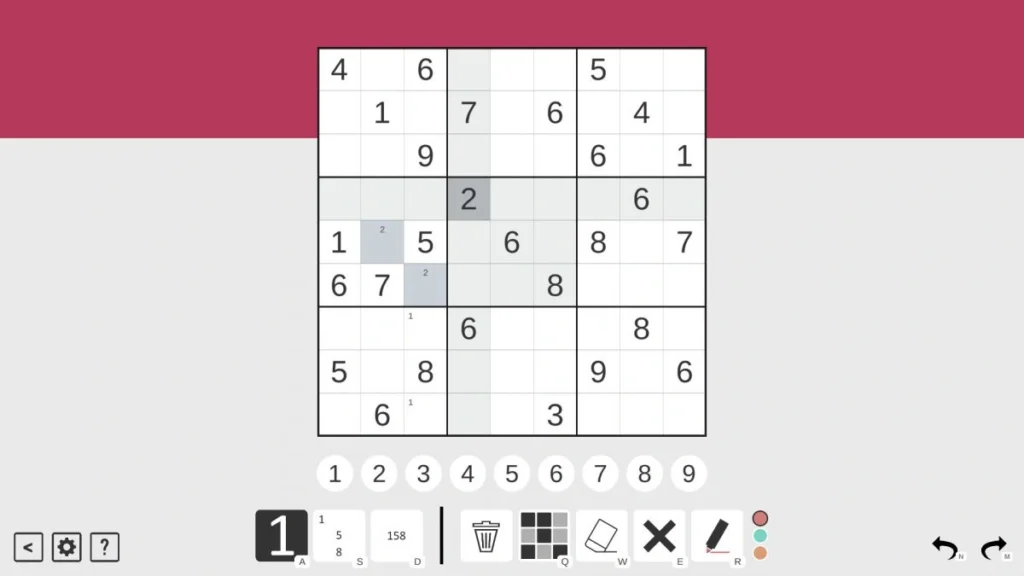
Sudoku is one of the world’s most popular logic-based number-placement puzzles. The objective of classic Sudoku is simple: fill a $9 \times 9$ grid with digits so that each column, each row, and each of the nine $3 \times 3$ subgrids (also called blocks or regions) contains all of the digits from 1 to 9.
Unlike many math challenges, solving a grid relies purely on logic, pattern recognition, and patience, no arithmetic required. If you are brand new to the game, learning fundamental Sudoku rules, basic Sudoku tips, and simple deduction techniques will help you tackle your first Sudoku puzzles with ease and confidence.
Why Playing Sudoku Benefits Your Mind
Engaging with Sudoku for beginners offers far more than just a pleasant way to pass the time. Studies show that regular logic puzzle practice keeps your brain active and builds structural thinking habits.
| Benefit | Description | Target Audience |
| Logical Deduction | Sharpens step-by-step reasoning and process-of-elimination skills. | Beginners & Students |
| Focus & Concentration | Enhances attention span by requiring sustained visual tracking. | Adults & Seniors |
| Memory Retention | Improves short-term working memory through tracking candidate numbers. | All Ages |
| Stress Relief | Delivers a calming, screen-free routine that reduces daily anxiety. | Casual Solvers |
Essential Sudoku Rules Every Beginner Must Know
Before placing your first number, you must understand the basic framework. A standard grid consists of 81 total squares organized into rows, columns, and internal blocks.
-
Use Digits 1 Through 9 Only
Every cell in the grid must contain a single digit from 1 to 9.
-
No Duplicate Numbers in Any Row
Each of the 9 horizontal rows must contain every number from 1 to 9 without repeating a digit.
-
No Duplicate Numbers in Any Column
Each of the 9 vertical columns must also contain every number from 1 to 9 without repeating a digit.
-
No Duplicate Numbers in Any 3×3 Block
Each of the nine $3 \times 3$ outlined subgrids must contain all digits from 1 to 9 without repeats.
-
Rely on Logic, Not Guessing
Every well-formed puzzle has exactly one unique solution that can be reached strictly through logical deduction.
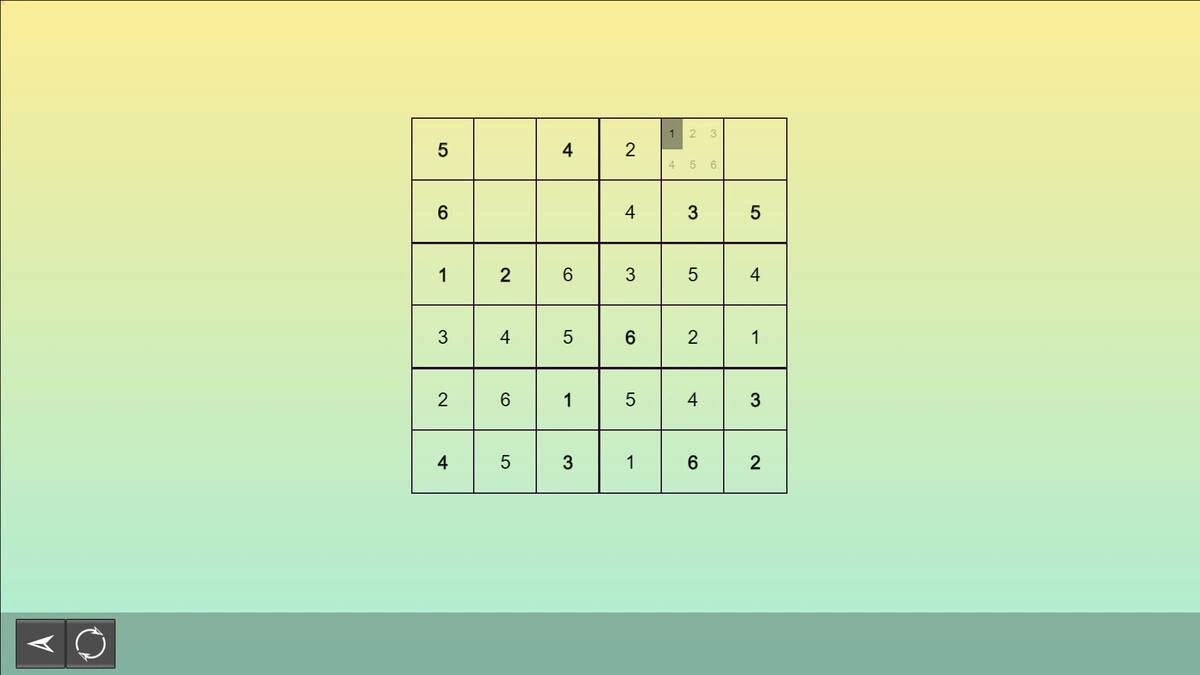
Practical Sudoku Tips and Strategies for Beginners
Mastering a basic Sudoku strategy relies on identifying easy targets before attempting complicated setups. Here are key techniques to jumpstart your solving speed.
1. Look for Easy Hits (Naked Singles)
Scan the grid for rows, columns, or $3 \times 3$ blocks that are almost complete. If an area already has 7 or 8 numbers filled in, cross-reference the missing digits against intersecting lines to place the remaining numbers instantly.
2. Cross-Hatching Technique
Focus on a single number at a time (for instance, the number 1). Trace its appearance across adjacent rows and columns in a $3 \times 3$ block. By eliminating rows and columns where that number already appears, you can quickly narrow down the exact cell where it belongs.
3. Pencil-In Candidate Numbers
When you cannot immediately place a definitive digit, lightly jot down small candidate numbers in the corners of empty cells. Pencil marking prevents mental overload and helps you spot emerging patterns.
4. Avoid Guessing at All Costs
If you guess a number and make a mistake early on, it will cascade through the entire grid, forcing you to erase your progress. If you get stuck, re-scan completed rows or pivot to a different digit.
Advanced Beginner Solving Techniques
Once you master basic cross-hatching, you can step up to intermediate candidate elimination methods. These techniques do not require complex math, but they do require keen visual tracking.
Hidden Singles
A hidden single occurs when a candidate digit can physically fit into only one available cell within a row, column, or block, even if that cell has multiple other candidate pencil marks. Finding hidden singles requires systematically scanning each region for isolated candidate placements.
Naked Pairs
When two cells within the same row, column, or $3 \times 3$ block contain the exact same two candidate numbers (for example, 3 and 7), no other cell in that region can hold those numbers. Consequently, you can safely eliminate 3 and 7 as possibilities from all other cells in that shared line or block.
Pointing Pairs and Triples
If candidate numbers within a $3 \times 3$ block are confined strictly to a single row or column, those candidates cannot appear anywhere else in that entire row or column outside the block. Thus, you can erase those candidates from the rest of the intersecting line.
Common Sudoku Mistakes to Avoid
Even experienced solvers occasionally run into brick walls due to preventable bad habits. Avoiding these simple mistakes keeps your solving flow smooth and enjoyable.
-
Fixating on One Area Too Long: If a specific $3 \times 3$ block yields no clues after a few seconds, move on to another region immediately. Fresh eyes often reveal obvious connections you missed before.
-
Overcrowding Your Pencil Marks: Jotting down every possible number in every empty cell creates visual clutter. Only write pencil marks when a cell has 2 or 3 valid candidates.
-
Ignoring Intersecting Lines: Always look at how perpendicular rows and columns interact with your target $3 \times 3$ block. Many answers hide in intersecting rows rather than the block itself.
-
Forgetting to Update Candidate Notes: When you successfully place a definitive number, immediately erase that digit from the pencil marks of all surrounding cells in the same row, column, and block.
Sample Beginner Sudoku Puzzles to Practice
To practice your skills, examine these structured mini-grid examples and step-by-step logic deductions.
Example 1: The Single Missing Cell
Imagine a $3 \times 3$ subgrid contains the following numbers: [1, 2, 3, 4, 5, 6, 7, 8, _].
-
Deduction: Since every block must contain digits 1 through 9 exactly once, the missing number must be 9.
Example 2: Row Elimination Strategy
Suppose Row 1 needs the number 4.
-
Cell A1 sees a 4 in Column 1.
-
Cell B1 sees a 4 in Column 2.
-
Cell C1 is the only remaining empty space in Row 1 that does not intersect with another 4.
-
Deduction: The number 4 must be placed in Cell C1.
Example 3: Candidate Deduction via Intersecting Columns
Imagine Block 1 (top-left) needs the number 7.
-
Column 1 already has a 7 placed near the bottom.
-
Column 2 already has a 7 placed in the middle.
-
Block 1 has three empty cells in Column 3.
-
Deduction: Because Columns 1 and 2 are blocked by existing 7s, the 7 in Block 1 must be located in one of the open cells in Column 3.
Step-by-Step Daily Solving Routine for Beginners
Developing a systematic approach ensures you solve grids faster and with fewer mistakes. Follow this clear step-by-step routine every time you open a new puzzle.
-
Perform a Full Grid Scan (1-9 Order): Start with 1 and scan across all nine blocks to see where you can place definitive numbers using cross-hatching. Repeat this process systematically for digits 2 through 9.
-
Target High-Density Regions: Identify rows, columns, or blocks that already contain 5 or more filled digits. Focus your deduction on those almost-complete zones first.
-
Begin Minimal Pencil Marking: When cross-hatching narrows a number down to just two candidate cells in a block, pencil those numbers in neatly.
-
Execute Line-Cell Checks: Compare empty cells against intersecting rows and columns to find naked or hidden singles.
-
Clean Up and Repeat: Whenever you enter a definitive number, immediately update your pencil marks across the entire row, column, and block, then repeat your scan.
Recommended Tools and Gear for Sudoku Enthusiasts
While all you truly need is a grid and a writing implement, having the right setup makes your solving experience much more satisfying.
| Item | Best Choice | Why It Helps |
| Pencil | Mechanical Pencil (0.5mm HB lead) | Keeps pencil marks crisp and legible in small cells. |
| Eraser | High-polymer block eraser | Erases cleanly without smudging or tearing newsprint. |
| Puzzle Books | Spiral-bound beginner collections | Lies completely flat on tables for comfortable extended play. |
| Digital Apps | Clean, ad-free mobile apps | Offers automatic error checking and smart pencil marking. |
Conclusion
Learning Sudoku for beginners is a deeply rewarding journey that builds critical thinking, sharpens focus, and offers endless mental satisfaction. By mastering basic Sudoku rules, avoiding common traps, and applying consistent process-of-elimination techniques, you will be solving grids with ease and speed in no time.
If you are ready to expand your puzzle skills with daily brain teasers, logic challenges, and word games, head over to riddlepuzzle to tackle your next mind-bending grid!
Frequently Asked Questions
Do you need math skills to play Sudoku?
No. Although Sudoku uses numbers, it requires zero mathematical calculation. You could replace the numbers with letters, shapes, or colors, and the game would function identically.
What is the best way for beginners to start?
Start with easy Sudoku puzzles for beginners that offer plenty of given numbers (usually 30 or more pre-filled digits). Focus on cross-hatching one digit at a time and filling in nearly finished rows or blocks first.
What should I do when I get stuck on a puzzle?
Take a step back and scan for numbers that appear frequently on the board. Double-check your pencil marks, re-examine rows or columns that have 6 or more numbers filled in, or pause for a brief break to refresh your eyes.
Is guessing ever acceptable in hard Sudoku puzzles?
In classic Sudoku, guessing is never necessary. Every valid puzzle has a logical path to a single unique solution. Advanced puzzles simply require deeper logic techniques like X-Wings or Y-Wings rather than trial and error.
Where can I find daily Sudoku puzzles and brain teasers?
You can practice daily number grids, logic challenges, and word puzzles online at websites like riddlepuzzl.