Looking to master the quick crossword and speed through your daily puzzle routine? Whether you pick up a print newspaper or solve a daily quick crossword online during your morning coffee break, quick crosswords are the ultimate way to keep your mind sharp without sinking hours into a single grid.
Unlike cryptic crosswords that rely on anagrams, hidden wordplay, and complex mechanical instructions, a quick crossword puzzle tests direct definition recall, vocabulary, and association skills. This complete guide provides actionable techniques for parsing quick crossword clues, managing letter grids, and finding reliable quick crossword answers when you get stuck.
What Is a Quick Crossword?
A quick crossword is a concise, straightforward word puzzle designed to be solved in 5 to 10 minutes. Featuring direct definitions rather than cryptic wordplay, quick crosswords focus on synonyms, general knowledge, geography, science, and popular cultural references.
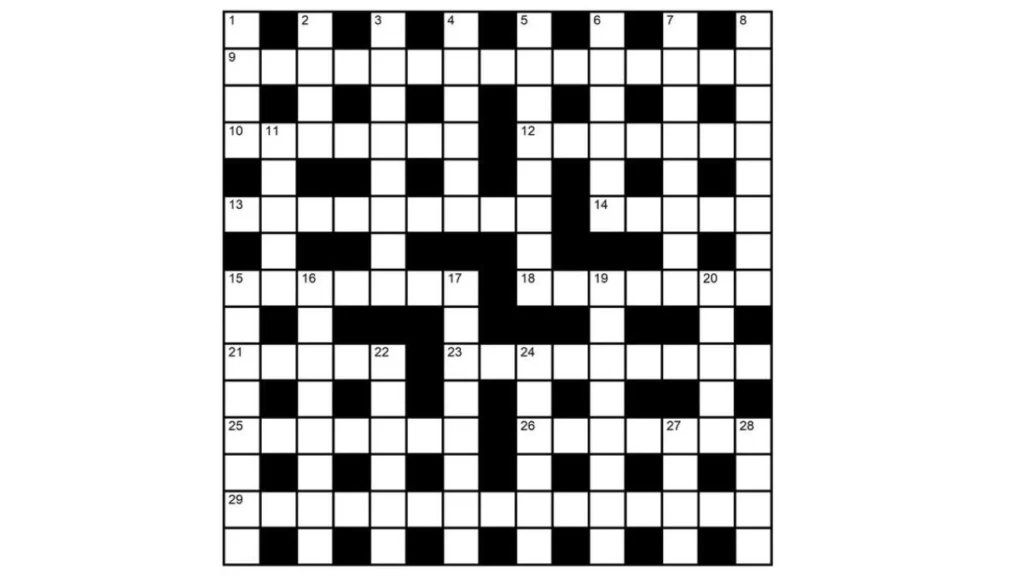
Because the clues are direct, these puzzles serve as an ideal entry point for beginners while providing experienced solvers with a fun, fast-paced mental warmup. They are constructed around standard symmetric grids, typically ranging from 11×11 to 15×15 squares, offering a balanced mix of short anchor words and longer, thematic entries.
Quick Crossword vs. Cryptic Crossword: What’s the Difference?
Understanding the distinction between puzzle styles helps you choose the right approach when reading clues and analyzing grid patterns. If you’re ready to level up from quick crosswords, our detailed cryptic crossword beginner’s guide breaks down anagrams and wordplay step-by-step.
| Feature | Quick Crossword | Cryptic Crossword |
| Primary Focus | Direct definitions & synonyms | Hidden wordplay & dual meanings |
| Average Solve Time | 5 – 10 minutes | 20 – 45+ minutes |
| Clue Style | “Ocean vessel (4)” | “Disturbed cat named giant mammal (7)” |
| Solving Approach | Rapid vocabulary recall | Mechanical decoding & lateral logic |
| Error Rate | Low (intuitive vocabulary) | Moderate to High (tricky surface grammar) |
Proven Strategies for Solving Quick Crossword Clues
Even when clues are direct, setters use clever phrasing, double meanings, and varied vocabulary to challenge your speed. Here is how to approach quick crossword clues systematically.
Match Parts of Speech and Tense
Your target answer must always match the exact part of speech, tense, and pluralization of the clue provided by the compiler:
-
Past Tense Verbs: If the clue reads “Ran fast (7)”, look for a past-tense verb like SPRINTED or DASHED.
-
Plural Nouns: If the clue asks for “Small rodents (4)”, the answer will almost certainly end in an S or represent a plural form (e.g., MICE or RATS).
-
Adjectives: If the clue is “Extremely cold (8)”, search for descriptive adjectives like FREEZING or FROSTBIT.
-
Gerunds (-ING): If the clue is “Walking casually (8)”, the answer will end in -ING, such as STROLLING or AMBLING.
Watch Out for Double Definitions and Puns
While quick crosswords avoid complex cryptic mechanics, setters frequently use words with multiple meanings to create gentle misdirection without breaking standard rules.
-
Example Clue 1: “Barking animal or part of a tree (4)”
-
Target Answer 1: BARK (referring both to a dog’s sound and tree covering).
-
Example Clue 2: “Financial institution or river side (4)”
-
Target Answer 2: BANK (referring to money storage and geographic river edges).
7 Essential Tips to Speed Up Your Daily Quick Crossword
If you want to solve a daily quick crossword faster and consistently hit 100% completion rates, apply these strategic habits to your workflow:
1. Start with the Shortest Words First
Fill in 3-letter and 4-letter entries before tackling long phrases. Short words have a limited pool of possibilities in the English language. Completing them early gives you guaranteed crossing letters for longer entries.
2. Work from Intersections
Never tackle clues in total isolation. Once you solve one entry, immediately pivot to the crossing Across or Down clues that share its letters. Building outward from solved clusters creates momentum across the entire board.
3. Pencil In Common Word Endings and Prefixes
When you encounter clues specifying plural nouns, past actions, or ongoing states, pencil in high-frequency letter combinations immediately:
-
Endings: -S, -ED, -ING, -MENT, -TION, -NESS
-
Prefixes: UN-, RE-, PRE-, DIS-, MIS-
4. Scan for Direct Synonyms Methodically
If a clue reads “Joyful (5)”, list common 5-letter synonyms mentally (e.g., HAPPY, EAGER, LUCKY) until one fits your grid’s intersecting letters perfectly. For quick reference while practicing, tools like the Merriam-Webster Thesaurus can help you build a mental bank of common synonyms.
5. Utilize Fill-in-the-Blank Clues First
Fill-in-the-blank clues (e.g., “Rock and ___ (4)” or “Once upon a ___ (4)”) are usually the easiest entries in any grid. Spotting these early gives you free letters to jumpstart difficult sections.
6. Keep an Eraser or Digital Undo Ready
Don’t hesitate to remove tentative guesses if intersecting words aren’t making sense. Sticking stubbornly to an incorrect guess is the single biggest cause of getting stuck near the end of a puzzle.
7. Build a Mental Bank of “Crosswordese”
Crosswords frequently rely on short, vowel-heavy words that fit easily into tight grid spaces. Memorizing these common terms saves valuable seconds.
Common Quick Crossword Clue Categories
Recognizing standard clue patterns makes finding quick crossword answers much easier during time-capped solving sessions.
How to Find Quick Crossword Answers When Stuck
Getting stuck on a final clue or two happens to every solver. Before giving up on your grid or reaching for reveal buttons, try these recovery techniques:
Re-Verify Intersecting Letters
Check every intersecting letter you have already written down. A single wrong letter in a crossing word can make an otherwise easy clue feel impossible to solve.
Step Away for a Short Break
Stepping away from the puzzle for 10 to 15 minutes gives your brain a chance to reset. Solvers frequently spot obvious answers immediately upon returning with fresh eyes.
Read Clues Aloud
Reading a clue out loud changes how your brain processes language, often breaking the mental loop caused by silently misinterpreting a word’s intended part of speech.
Use Pattern Lookups for Vocabulary Building
If you are practicing to expand your active vocabulary, use crossword solver tools or letter-pattern lookup utilities (L _ V _ N _ E R) to check target letter sequences without spoiling the whole grid.
Daily Crossword Practice Schedule for Skill Building
Building crossword speed requires consistency. Here is a recommended weekly routine to hone your solving abilities:
-
Monday – Wednesday: Focus on speed. Try to complete standard 11×11 daily quick crosswords in under 5 minutes without looking up references.
-
Thursday – Friday: Challenge your vocabulary. Tackle larger 15×15 grids that feature broader general knowledge and geography references.
-
Weekend: Test lateral thinking. Transition between quick crosswords and introductory cryptics to sharpen both direct definition recall and structural word analysis.
Conclusion
Mastering the quick crossword comes down to recognizing clue patterns, matching word tenses, and building momentum through intersecting letters. By applying these practical solving techniques, you can comfortably complete any quick crossword puzzle with speed and accuracy.
Ready for more interactive daily brainteasers, word games, and logic puzzles to keep your mind active? Visit riddlepuzzle to start solving today!
Frequently Asked Questions
Where can I play a daily quick crossword online?
You can find quality daily word puzzles, brainteasers, and logic grids online at riddlepuzzle.com.
How many words are usually in a quick crossword puzzle?
A standard quick crossword grid typically contains between 20 and 30 intersecting words, depending on grid size and structure.
Are quick crosswords good for brain health?
Yes! Engaging with daily word puzzles stimulates memory recall, expands active vocabulary, and strengthens problem-solving speed across all age groups.