Some puzzles are easy enough to solve before the school bell rings. Others sit in the back of your mind all day, nagging at you through maths class, lunch, and practice, until the answer finally clicks in the shower or halfway through a bus ride home. That delicious moment of frustration turning into triumph is exactly what hard brain teasers are for, and teenagers are the perfect audience for them. Your brain is fast, curious, and hungry for a challenge, and a truly good teaser rewards the way you think, not just what you already know.
This collection is not a list of baby riddles. These are hard brain teasers for teens with answers, chosen to stretch logic, lateral thinking, wordplay, maths, and pattern spotting all at once. Some will fall in seconds. Others will make you groan when you finally read the answer, because it was hiding in plain sight the whole time. That is the point. The best teasers teach you to slow down, question your first assumption, and look at a problem from an angle nobody else thought of.
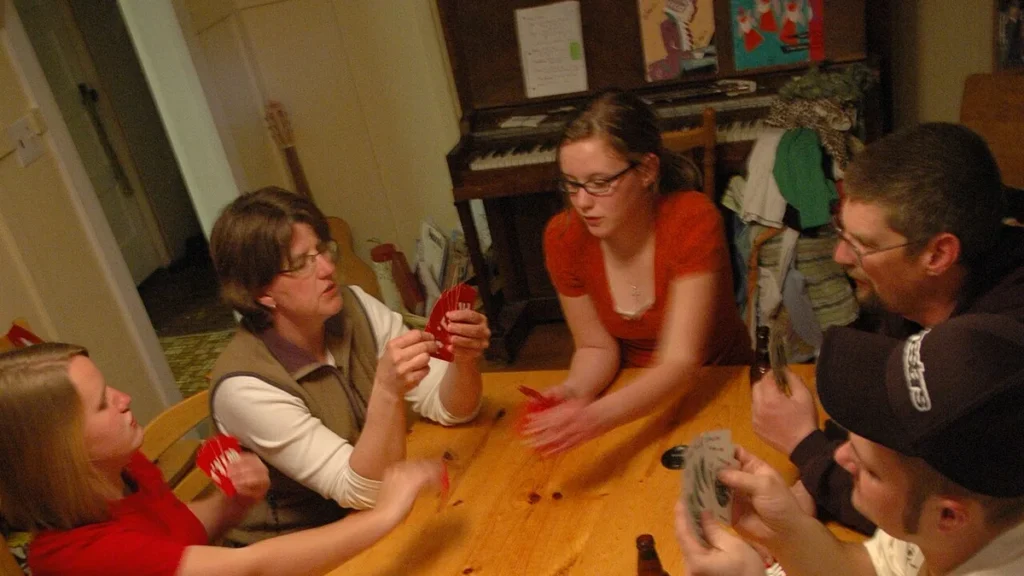
Use this list however you like. Race your friends and keep score, use them as icebreakers at a party or in class, test them on your family at dinner, or work through them alone with a notebook. Every teaser comes with its answer, so you never get stuck forever, and the sections are grouped by type so you can practise the kind of thinking you want to sharpen. Grab a pen, warm up your brain, and see how many of these 56 hard brain teasers you can crack before peeking.
Key takeaways
- This collection has 56 hard brain teasers with answers, grouped into logic, lateral thinking, wordplay, maths, patterns, and trick questions.
- The hardest teasers usually hide the answer in a false assumption, so always question what the question seems to be asking.
- Working through one section at a time builds a specific skill, from spotting patterns to thinking outside the box.
- These teasers work brilliantly as party games, classroom warm-ups, road-trip challenges, and friendly competitions.
- Every answer is included, so you can check yourself, learn the trick, and try the teaser on someone else straight away.
How to Use These Hard Brain Teasers
Before you dive in, here is a quick strategy that makes the whole list more fun and a lot more useful. First, read each teaser out loud or copy it onto paper, because hearing the words often reveals a clue your eyes skipped. Second, give yourself a real thinking window before looking at the answer. Thirty seconds of genuine effort beats ten minutes of staring, and a short break often lets the answer surface on its own. Third, when you do check an answer, ask yourself what trick made it hard, because that trick will show up again in a different disguise later in the list.
If you are playing with friends, take turns asking and keep score. One point for a correct answer, and a bonus point if you can explain your reasoning. If you are a teacher or a parent, the table below shows which sections suit which situation, so you can pick the right teasers for the right moment. And if you love this kind of challenge, you will enjoy our brain teasers for adults too, because many of these tricks get even sneakier when the puzzles get harder.
| Section | What it trains | Best for | Difficulty |
|---|---|---|---|
| Logic Teasers | Deductive reasoning | Classroom warm-ups | Hard |
| Lateral Thinking | Creative problem solving | Party games | Very hard |
| Wordplay | Language and spelling | Road trips | Hard |
| Maths Teasers | Numbers without a calculator | Study breaks | Hard |
| Pattern Teasers | Sequence spotting | Competitions | Very hard |
| Trick Questions | Spotting false assumptions | Quick-fire rounds | Deceptively hard |
Hard Logic Brain Teasers for Teens
1. A teenager has three boxes labelled Apples, Oranges, and Apples and Oranges. Every label is wrong. You may take one fruit from one box, look at it, and then relabel all three boxes correctly. Which box do you pick from?
Answer: The box labelled Apples and Oranges. Since every label is wrong, it must contain only apples or only oranges. If you pull an apple, it is the Apples box, the box labelled Oranges must be the mixed box, and the box labelled Apples must be the Oranges box.
2. Five friends sit in a row. Maya is not next to Leo. Leo is not next to Zara. Zara is on the far left. Who sits in the middle if Noah sits next to Maya and Ava sits next to Leo?
Answer: Leo sits in the middle. Zara is first, so the order must be Zara, Ava, Leo, Maya, Noah, which satisfies every clue.
3. A farmer has 17 sheep. All but 9 run away. How many sheep are left?
Answer: 9 sheep. All but 9 ran away, so 9 remain.
4. You are in a room with three switches outside and three light bulbs inside. You may enter the room only once. How do you work out which switch controls which bulb?
Answer: Turn on switch one for five minutes, then turn it off and turn on switch two. Enter the room. The lit bulb is switch two, the warm but unlit bulb is switch one, and the cold unlit bulb is switch three.
5. A man is looking at a photo. He says, Brothers and sisters I have none, but this man’s father is my father’s son. Who is in the photo?
Answer: His son. My father’s son is the man himself, so the man in the photo is his son.
6. Two guards stand before two doors. One door leads to freedom, the other to a trap. One guard always lies, the other always tells the truth, but you do not know which is which. You may ask one question. What do you ask?
Answer: Ask either guard, What would the other guard say is the door to freedom? Then choose the opposite door, because the truth-teller will truthfully report the liar’s wrong answer and the liar will lie about the truth-teller’s right answer.
7. A clock strikes six in six seconds. How long does it take to strike twelve?
Answer: 13.2 seconds. There are five gaps between six strikes, so each gap is 1.2 seconds. Twelve strikes have eleven gaps, which is 13.2 seconds.
8. Three teenagers, Alex, Ben, and Cara, each like a different subject: maths, history, or art. Alex does not like maths. Ben does not like history. Cara likes art. Alex likes history. Who likes maths?
Answer: Ben likes maths. Cara likes art, Alex likes history, so Ben is left with maths, which fits the clue that Ben does not like history.
9. You have a 3-litre jug and a 5-litre jug. How do you measure exactly 4 litres?
Answer: Fill the 5-litre jug, pour into the 3-litre jug leaving 2 litres, empty the 3-litre jug, pour the 2 litres in, fill the 5-litre jug again, and top up the 3-litre jug, which takes 1 litre, leaving exactly 4 litres in the 5-litre jug.
10. A teenager is 4 years old, and her brother is half her age. When she is 40, how old is her brother?
Answer: 38 years old. Her brother is 2, so he is always 2 years younger than her.
Hard Lateral Thinking Brain Teasers for Teens
11. A man pushes his car to a hotel and tells the owner he is bankrupt. What happened?
Answer: He is playing Monopoly. He landed on a hotel and cannot afford the rent.
12. A woman lives on the 20th floor. Every day she takes the lift to the ground floor, but on the way back she only goes to the 10th floor and walks the rest, unless it is raining. Why?
Answer: She is too short to reach the button for the 20th floor. She can reach the 10th floor button, and on rainy days she uses her umbrella to press the higher button.
13. A man is found dead in a field with an unopened package on his back. What happened?
Answer: His parachute failed to open. The unopened package is his parachute.
14. A father and son are in a car crash. The father dies, and the son is rushed to hospital. The surgeon looks at the boy and says, I cannot operate on him, he is my son. How is that possible?
Answer: The surgeon is the boy’s mother.
15. A cowboy rides into town on Friday, stays for three days, and leaves on Friday. How is that possible?
Answer: His horse is named Friday. He rode in on his horse Friday, stayed three days, and left on the horse Friday.
16. A man is lying dead in the desert wearing a backpack. There are no footprints anywhere. What happened?
Answer: He jumped from a plane and his parachute did not open. The backpack is his parachute pack.
17. A woman shoots her husband, then holds him under water for five minutes, then hangs him. An hour later they go out for dinner together. How?
Answer: She is a photographer. She shot him with a camera, developed the photo in water, and hung it up to dry.
18. A teenager walks into a bar and asks for a glass of water. The bartender pulls out a gun and points it at him. The teenager says thank you and leaves. Why?
Answer: The teenager had hiccups. The shock of the gun cured them, so he no longer needed the water.
19. A teenager is trapped in a room with only a mirror and a table. How does he escape?
Answer: He looks in the mirror and sees what he saw, takes the saw, cuts the table in half, puts the two halves together to make a whole, and climbs out through the hole.
20. Two teenagers are playing chess. They play five games, and each wins the same number of games, with no draws. How is that possible?
Answer: They are not playing against each other. They are playing against different opponents.
Hard Wordplay Brain Teasers for Teens
21. What word becomes shorter when you add two letters to it?
Answer: Short. Add er and it becomes shorter.
22. What five-letter word stays the same when you take away the last four letters?
Answer: Queue. Remove u, e, u, e and you are left with q, which is still pronounced queue.
23. What word is spelled incorrectly in every dictionary?
Answer: Incorrectly. That is how the word itself is spelled.
24. What starts with T, ends with T, and has T in it?
Answer: A teapot.
25. What can you catch but never throw?
Answer: A cold.
26. What has a head and a tail but no body?
Answer: A coin.
27. What word has three consecutive double letters?
Answer: Bookkeeper, which has oo, kk, and ee in a row.
28. What is the longest word in the dictionary?
Answer: Smiles, because there is a mile between the first and last letters.
29. What letter comes next in this sequence: O, T, T, F, F, S, S, E, N, T?
Answer: E. The letters are the first letters of one, two, three, four, five, six, seven, eight, nine, ten, eleven.
30. I am a word of six letters. Take away one letter and twelve remain. What am I?
Answer: Dozens. Remove the s and you get dozen, which is twelve.
Hard Maths Brain Teasers for Teens
31. What is the next number in the sequence 1, 11, 21, 1211, 111221?
Answer: 312211. Each term describes the previous one: one one, two ones, one two one one, and so on.
32. If you multiply all the numbers on a telephone keypad together, what do you get?
Answer: Zero, because the keypad includes zero.
33. A shop sells pencils in packs of 6 and packs of 10. What is the largest number of pencils you cannot buy exactly?
Answer: 14. You can make 6, 10, 12, 16, 18, 20, and every even number above 14, but 14 itself is impossible.
34. How many times can you subtract 5 from 25?
Answer: Once. After the first subtraction you are subtracting from 20, not 25.
35. A teenager has 100 coins in a bag. 90 are heads up and 10 are tails up. Blindfolded, how can she split them into two piles with the same number of tails in each pile?
Answer: Take any 10 coins into a second pile and flip them all over. The number of tails in the flipped pile will always equal the number of tails left in the first pile.
36. What number do you get when you multiply 111,111,111 by 111,111,111?
Answer: 12,345,678,987,654,321. It is a famous pattern that climbs up to nine and back down again.
37. If three cats catch three mice in three minutes, how many cats are needed to catch 100 mice in 100 minutes?
Answer: Three cats. Each cat catches one mouse every three minutes, so three cats catch 100 mice in 100 minutes.
38. A number has three digits. The sum of its digits is 12, the first digit is twice the last, and the middle digit is the largest. What is the number?
Answer: 462. The digits add up to 12, the first digit 4 is twice the last digit 2, and the middle digit 6 is the largest.
39. You have 8 balls that look identical, but one is slightly heavier. Using a balance scale only twice, how do you find the heavy ball?
Answer: Weigh three balls against three balls. If they balance, the heavy ball is among the remaining two, so weigh those. If one side is heavier, weigh two balls from that side against each other to find the heavy one.
40. What is half of two plus two?
Answer: Three. Half of two is one, plus two is three. The trick is the order of the words.
Hard Pattern Brain Teasers for Teens
41. What comes next: 2, 3, 5, 9, 17, 33?
Answer: 65. Each number is double the previous number minus one.
42. What comes next: J, F, M, A, M, J, J, A, S, O, N, D?
Answer: J. These are the months of the year, January to December, and the sequence starts again with January.
43. What comes next: 1, 1, 2, 3, 5, 8, 13?
Answer: 21. This is the Fibonacci sequence, where each number is the sum of the two before it.
44. What comes next: 8, 5, 4, 9, 1, 7, 6, 3, 2, 0?
Answer: The sequence is already complete. These are the numbers zero to nine arranged alphabetically by their English names: eight, five, four, nine, one, seven, six, three, two, zero.
45. What is the next letter: A, C, F, J, O, U?
Answer: B. The gaps between the letters grow by one each time: two, three, four, five, six, then seven letters after U wraps around to B.
46. What comes next: 3, 6, 11, 18, 27?
Answer: 38. The gaps between the numbers grow by two each time: add 3, then 5, then 7, then 9, then 11.
47. What comes next: 1, 4, 9, 16, 25, 36?
Answer: 49. These are the square numbers: one squared, two squared, three squared, and so on.
48. What comes next: O, T, T, F, F, S, S, E, N, T, E, T?
Answer: T. The letters spell out the counting numbers one, two, three, and the next is twelve, which starts with T.
Hard Trick Brain Teasers for Teens
49. How many months have 28 days?
Answer: All twelve months have at least 28 days.
50. A plane crashes on the border between two countries. Where do they bury the survivors?
Answer: You do not bury survivors. They are alive.
51. If a rooster lays an egg on top of a roof, which way does it roll?
Answer: It does not roll anywhere. Roosters do not lay eggs.
52. A doctor gives you three pills and tells you to take one every half hour. How long do the pills last?
Answer: One hour. You take the first pill immediately, the second after half an hour, and the third after one hour.
53. How many animals did Moses take on the ark?
Answer: None. It was Noah who took the animals on the ark, not Moses.
54. You are driving a bus. Ten people get on at the first stop, five get off at the second, and seven get on at the third. What colour are the bus driver’s eyes?
Answer: Your own eye colour. You are the bus driver.
55. What gets wetter the more it dries?
Answer: A towel.
56. What can you keep after giving it to someone else?
Answer: Your word. You can give your word and still keep it.
Your Brain Teaser Checklist
Use this checklist every time you try a new teaser, and you will solve more of them, faster, with less frustration.
- Read the teaser twice before you start solving, because the clue is usually in the exact wording.
- Write down what you know and what you are assuming, then test each assumption one by one.
- Try the opposite of your first idea, because your first idea is often the trap the teaser set for you.
- Draw it out, list the options, or say it out loud, because a different format can unlock the answer.
- Take a short break if you are stuck, because your brain keeps working on the problem in the background.
- After you check the answer, explain the trick to someone else, because teaching it is how you remember it.
If you want more practice after this list, our brain teasers for kids are a great warm-up before you tackle the harder ones again, and our best riddles for adults will push your new skills even further. The more you practise, the faster you will spot the hidden assumption, the wordplay, and the pattern that makes each teaser click.
Frequently Asked Questions
What makes a brain teaser hard for teens?
A hard brain teaser for teens is one that cannot be solved by memory alone. It needs you to combine logic, lateral thinking, and attention to wording, and the answer usually feels obvious only after you hear it.
How many brain teasers should I do each day?
Five to ten a day is a great pace. That is enough to build the skill without turning it into homework, and it leaves time to try the best ones on your friends.
Are brain teasers good for school?
Yes. They strengthen problem solving, reading comprehension, and creative thinking, which help in maths, science, English, and exams, even though they feel like a game.
What is the best way to get better at brain teasers?
Practise one type at a time, learn the common tricks, and always review the answer, even when you solved it, so you understand why your method worked.
Can I use these brain teasers in class or at a party?
Absolutely. They are perfect for classroom warm-ups, party games, youth groups, and family game nights, and they work best when everyone tries them together.
What should I do if I cannot solve a teaser?
Take a break, try a different section, and come back later. Checking the answer is not cheating, because the real learning happens when you understand the trick behind it.
The Bottom Line
Hard brain teasers are not about being the smartest person in the room. They are about being the most curious, the most patient, and the most willing to question your first idea. Every teaser in this list was chosen because it rewards that kind of thinking, and every answer teaches a trick you can use again. Keep practising, keep sharing the best ones with your friends, and keep an eye out for the hidden assumption, because that is where the answer is almost always hiding.
Note: These brain teasers are written for fun, learning, and friendly competition. Answers are included so you can check your work and learn the trick behind each puzzle. If you are using them in a classroom or group, feel free to adapt the wording, add a timer, or keep score to make the challenge your own.