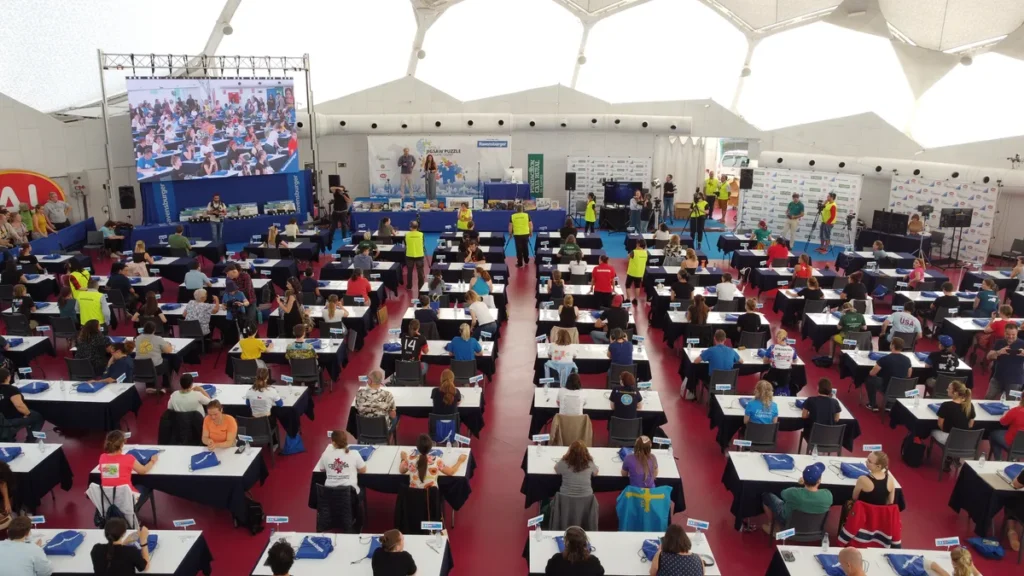
A trivia night for 439 players is a big event, and it works best when the host treats it like a journey around the world rather than a test. With 439 players in the room, the questions need to travel, too, from the longest rivers and the tallest mountains to the driest deserts and the deepest lakes. Geography gives every table a fair start, because everyone has seen a map, crossed a river, or dreamed of standing on a famous island, even if nobody in the room has visited all of them.
This guide sets out nine geography rounds that keep the whole hall involved from the first question to the last. Each round has a single theme, a clear format, and a sample question with an answer, so a host can run the night without writing a single new question. The themes are famous places in the natural world, which means players of every age and background start on level ground, because the planet is the one subject everybody shares.
Before the night begins, read the whole plan once, print the answer sheets, and test the sound in the back row. A large hall forgives small mistakes, but it does not forgive a host who cannot be heard or a scoring system that feels unfair. If you want more practice material first, try the geography trivia questions and answers on this site, and use them to warm up your teams before the big night.
Key takeaways
- 439 players form 44 teams of ten, with one team of nine, so every table has a captain, an answer sheet, and a fair share of the work.
- Geography rounds work for a crowd this size because the answers are places everyone has heard of, from rivers and mountains to islands and deserts.
- Keep every round to ten minutes, with a fifteen-minute written final, so the whole night fits into about two hours.
- Use a loud host, a big screen, a visible scoreboard, and clear round timers that everyone in the hall can see.
- Mix written rounds and buzzer rounds so quiet thinkers and fast talkers both get their moment to shine.

How Trivia Games Work for 439 Players
A trivia night for 439 players is less about one buzzer and more about a system. The room becomes a set of team tables, each playing the same round at the same time, with a host on stage, a big screen showing the questions, and a scoreboard everyone can read. One host, a clear timer, and a visible scoreboard hold the event together, even when the crowd fills a hall or a gym.
The maths is simple. Divide 439 players into teams of ten and you have 44 teams, with one team of nine. Each team needs only one table, one answer sheet, and one captain. A host, a scorekeeper, and one helper for every four or five tables can run the night, as long as the questions are on a screen and the answers are collected in a simple way.
Timing matters just as much as team size. Short rounds of ten minutes keep energy high, and teams that finish early can tackle a bonus question while teams that struggle still earn points for partial answers. Geography rounds suit this rhythm well, because most answers are a single name, a single place, or a single number, and marking them is fast and fair.
Teams and Tables for 439 Players
Teams of ten work best for a crowd of 439. Smaller teams mean more tables to manage and more answer sheets to mark, while larger teams leave quiet players with nothing to do. Ten is the sweet spot: big enough for a mix of strengths, small enough that everyone can hear each other across the table. If you are new to hosting a night this size, the guide to how to run a pub quiz covers the same basics on a smaller scale, and the lessons scale up neatly.
Seat each team with a mix of ages and interests where you can. A table with one map lover, one traveller, and one person who simply enjoys guessing will beat a table of ten identical experts, because geography rewards breadth. Give every table a number, a captain, and a coloured answer sheet, and collect the sheets at the end of each round rather than at the end of the night, so no sheet goes missing.
Scoring That Stays Fair
Fair scoring is what keeps 439 players happy. Award one point for each correct answer, with a bonus point for a perfect round, and never change the rules halfway through. Read the answers aloud after each round, show them on the big screen, and let captains check their own sheets before handing them in. When the room can see the answers, nobody can claim the marking was unfair.
Keep a running scoreboard on the screen, updated after every round, so teams always know where they stand. A tie at the top is settled with a single sudden-death question, asked to the tied captains only, with the first correct answer winning. Ties lower down the table can stand, because the prizes that matter are for the top three teams, and a shared fourth place hurts nobody.
The 9 Best Trivia Games for 439 Players
The nine rounds below follow one theme each, and each theme is a famous feature of the natural world. Rivers open the night because they are the easiest to picture, and glaciers close it because they make a dramatic written final. Between them, the rounds move from water to land, from heat to ice, so the night feels like a journey rather than a list.
| Round | Category | Format | Best for | Difficulty |
|---|---|---|---|---|
| 1 | Famous Rivers | Written | Warm-up knowledge | Easy |
| 2 | Famous Mountains | Buzzer | Fast recall | Easy |
| 3 | Famous Islands | Written | Travellers, map lovers | Easy |
| 4 | Famous Deserts | Buzzer | Quick thinking | Medium |
| 5 | Famous Volcanoes | Written | History fans | Medium |
| 6 | Famous Waterfalls | Buzzer | Crowd energy | Medium |
| 7 | Famous Lakes | Written | Team discussion | Medium |
| 8 | Famous Caves | Buzzer | Surprise answers | Hard |
| 9 | Famous Glaciers | Written final | A dramatic finish | Hard |
The Nine Rounds
1. Famous Rivers
Rivers are the gentlest possible opening round, because almost everyone can name a great river, even if they cannot place it on a map. Ask about the longest rivers, the rivers that run through famous cities, and the rivers that form borders between countries. Keep the questions short and the answers shorter, so the first round finishes on time and the room relaxes.
Sample question: Which river is generally regarded as the longest in the world? Answer: The Nile, at about 6,650 kilometres long.
2. Famous Mountains
Mountains make a lively buzzer round, because the famous peaks are few and the answers come fast. Ask about the tallest mountain on each continent, the mountain that climbers dream of, and the ranges that divide countries. Buzzer rounds suit mountains well, because a team that knows the answer wants to shout it before the team next door does.
Sample question: Which mountain is the tallest above sea level? Answer: Mount Everest, at 8,849 metres above sea level.
3. Famous Islands
Islands are a written round that rewards travellers and map lovers alike. Ask about the largest island in the world, the islands that are also countries, and the islands famous for their wildlife or their history. Written rounds give quieter players time to think, and islands are a topic where a quiet thinker often beats a loud guesser.
Sample question: Which is the largest island in the world? Answer: Greenland, which covers more than two million square kilometres.
4. Famous Deserts
Deserts bring heat to the middle of the night, and a buzzer round keeps that heat moving. Ask about the largest hot desert, the driest place on Earth, and the deserts that appear in famous films and stories. The answers surprise people, because the largest desert of all is not hot at all, and that twist makes a fine bonus question.
Sample question: Which is the largest hot desert in the world? Answer: The Sahara, which covers much of North Africa.
5. Famous Volcanoes
Volcanoes are the most dramatic round of the night, and they suit a written format, because the names are long and the spellings matter. Ask about the volcano that destroyed Pompeii, the volcanoes that are still active today, and the island nations built by volcanic fire. History fans love this round, because every great eruption is also a great story.
Sample question: Which volcano in Italy famously destroyed the city of Pompeii in AD 79? Answer: Mount Vesuvius.

6. Famous Waterfalls
Waterfalls make a strong buzzer round for the second half of the night, when the room needs fresh energy. Ask about the tallest waterfall, the widest waterfall, and the falls that sit on the border between two countries. The answers are spectacular places, and the host can show a photograph of each one on the big screen as the answer is revealed.
Sample question: Which waterfall on the border between Zambia and Zimbabwe is the largest in the world by combined width and height? Answer: Victoria Falls.
7. Famous Lakes
Lakes are a written round that rewards careful team discussion. Ask about the deepest lake, the largest lake by surface area, and the lakes that are famous for the towns on their shores. Teams that talk the question through will do better than teams that guess, because lake questions often turn on a single detail, such as depth, age, or salt.
Sample question: Which is the deepest lake in the world? Answer: Lake Baikal in Siberia, which is more than 1,600 metres deep.
8. Famous Caves
Caves are the hardest buzzer round of the night, and that is exactly why they belong near the end. Ask about the largest cave in the world, the caves famous for their paintings, and the caves that hide underground rivers. Most teams will know one or two answers and guess the rest, so the gap between the leaders and the rest of the room narrows nicely.
Sample question: In which country is Hang Son Doong, the largest cave in the world? Answer: Vietnam.
9. Famous Glaciers
Glaciers close the night as a written final, because they are the most demanding theme and they deserve fifteen unhurried minutes. Ask about the largest glacier, the glaciers that feed famous rivers, and the ice sheets that cover whole continents. A written final gives every team one last chance to catch the leaders, and the room falls quiet in a way that makes the ending feel like an occasion.
Sample question: Which glacier in Antarctica is the largest in the world by area? Answer: The Lambert Glacier.
Running the Night for 439 Players
Run the night in two halves, with a break after round five. Five rounds, a twenty-minute break for drinks and scoreboard updates, then four rounds and the final. The break matters more than it looks, because 439 people need time to stretch, talk, and compare answers, and a host who skips the break will lose the room in round seven.
Keep the host on stage and the questions on the screen at all times. Read each question twice, slowly, and give teams thirty seconds for a written answer and ten seconds for a buzzer answer. If a team disputes an answer, note it, keep the night moving, and settle it during the break, because an argument in front of 439 people costs more time than any single point is worth. For extra practice questions to fill a slow moment, the trivia questions for adults with answers on this site are a handy backup.
Event Checklist for 439 Players
- Print 44 answer sheets per round, one per team, plus spares for late arrivals and damaged sheets.
- Test the microphone, the speakers, and the big screen from the back row before the first team arrives.
- Number every table, name a captain for each team, and keep a master list at the scoring desk.
- Prepare the scoreboard in advance, with all 44 team numbers ready to fill in after each round.
- Set a timer for every round and show it on the screen, so teams can see exactly how long they have left.
- Arrange prizes for the top three teams and a small prize for the best team name, announced before the final round.
Frequently Asked Questions
Can trivia games really work for 439 players?
Yes, as long as the format is built for a crowd. Team tables, simultaneous rounds, a big screen, and simple scoring let 439 people play at once, and geography rounds work especially well, because the answers are short and easy to mark.
How many teams will 439 players make?
Teams of ten give you 44 teams, with one team of nine. Ten is the best size for a night this large, because every player can hear the discussion, and no team is so big that quiet players disappear.
How long should a trivia night for 439 players last?
Plan for about two hours of play, plus a twenty-minute break in the middle. Nine rounds at ten minutes each, with a fifteen-minute written final, fits neatly into that window, with time left over for scoring and prizes.
What equipment do I need for a 439 player trivia night?
You need a microphone and speakers that reach the back row, a big screen for the questions and the scoreboard, printed answer sheets and pens, a timer, and one buzzer set for the buzzer rounds. A scorekeeper and one helper for every four or five tables will cover the rest.
How do I keep scoring fair with so many teams?
Use one point per correct answer, a bonus point for a perfect round, and read the answers aloud after each round so the whole room can check. Collect the sheets after every round, update the scoreboard on the screen, and settle ties with a single sudden-death question.
What is the best final for a large trivia night?
A written final works best, because every team plays at once and nobody is left watching. The glaciers round in this guide is built for that job: fifteen minutes, hard questions, and a quiet room while the last sheets are marked.
Bottom Line
A trivia night for 439 players works when the theme is wide, the rounds are short, and the scoring is fair. Nine geography rounds, from rivers to glaciers, give every table a fair start and every player a question they can answer. Print the sheets, test the sound, trust the format, and the room will do the rest.