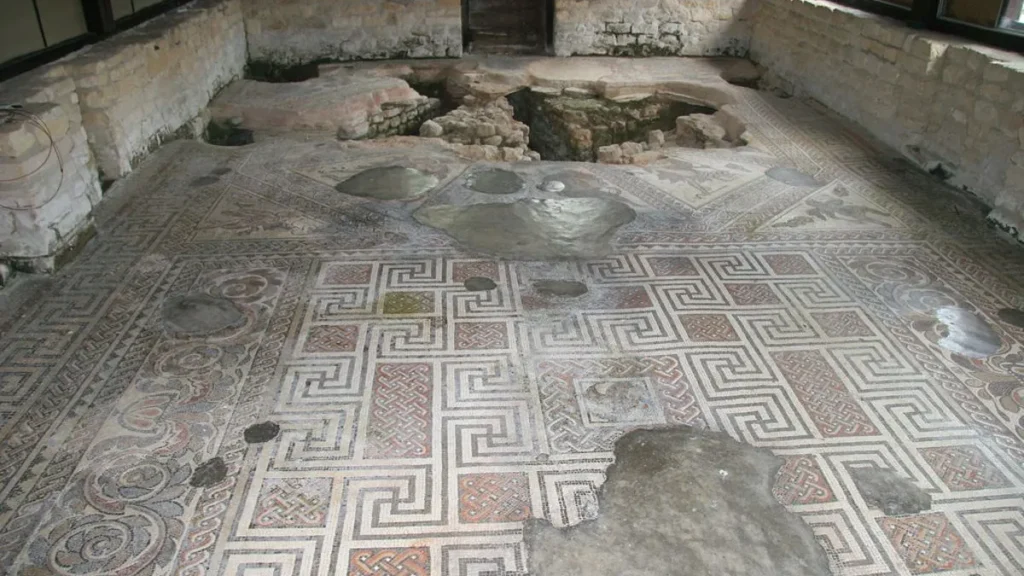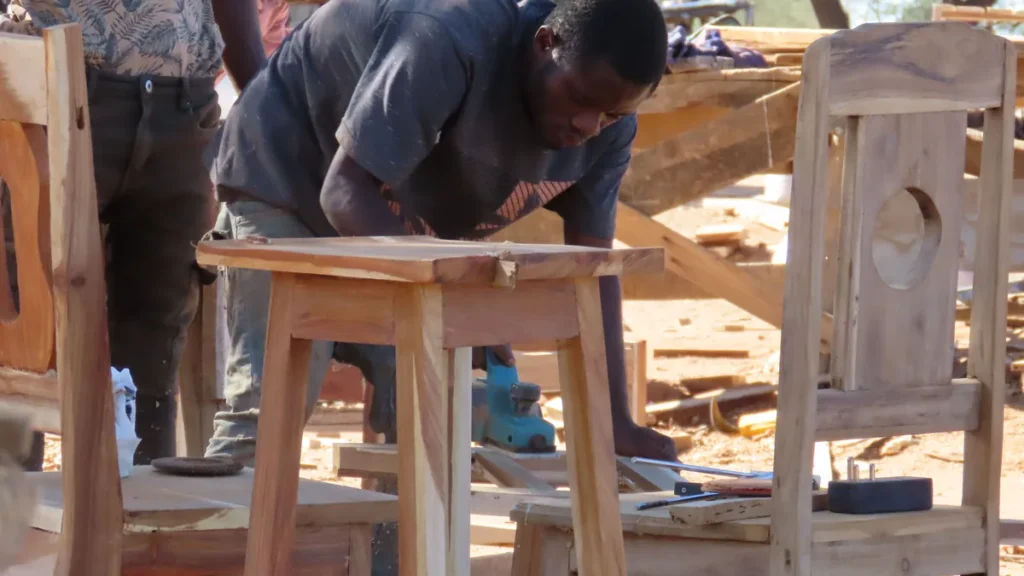
An old village chair-maker’s workshop is a room of warm wood and steady, exact work. Half-finished chairs stand around the room, with spindles, rungs, and backrests waiting to be fitted together. It suits a day of play, because every job in the room is small, clear, and easy to learn, and each one can become a short race for a crowd.
This plan runs nine races for 545 players in one old village chair-maker’s workshop. Twenty-seven crews of twenty players take part, and five tally runners carry the running tally from post to post, so the full count reaches 545. Each crew visits nine posts, spends about half an hour at each one, and takes a turn at a race using only the ordinary materials of the trade: elm, teak, ebony, yew, and boxwood, with veneer, inlay, and the lathe.
Nothing here needs prior skill. A crew that has never made a chair can still turn a spindle, fit a rung, count a backrest, and match a finial, because each race asks for care and teamwork. The host explains each race in under a minute, and the points follow the tally. By the close, every crew has tried all nine races, and the champion crew is the one whose steady work added up best.
Key takeaways
- Nine races in one old village chair-maker’s workshop, using only elm, teak, ebony, veneer, inlay, and the lathe.
- 545 players form 27 crews of 20, with 5 tally runners carrying the running tally between posts.
- Each crew spends about half an hour at each post, with a ten-minute racing turn and time to look on and rest.
- Each race gives up to 10 points, so a crew can earn up to 90 points across the full round.
- No prior skill is needed: short explanations, clear jobs, and one checker at each post keep the day moving.

How 545 Players Fit Into One Day
The day works because the crowd never gathers in one place. Nine posts stand around the workshop, with three crews at each one. While one crew races, the other two look on and rest, so the room stays calm and no post waits for players. After half an hour, all crews move to the next post, and the round continues until every crew has visited all nine.
Five tally runners keep the day honest. Each runner carries a tally paper from post to post and brings the running tally to the host at the close of each round. The host reads the tally aloud, so every crew knows where it stands. The runners also carry fresh materials to the posts, so a post never runs short in the middle of a race.
The joiner’s workshop day in our puzzle games for 535 players runs its crews through nine small jobs in much the same way, with crews moving from post to post and a running tally keeping the day in order. The chair-maker’s day follows the same rhythm, only the jobs change: spindles, rungs, and backrests in place of the joiner’s work, and the lathe nearby.
Timing is simple. A full round takes about four and a half hours: nine posts at half an hour each, with a long midday pause for food after the fifth post. Each race takes about ten minutes per crew, so the checker has time to explain, watch, and record the points without hurry. The day closes with the tally read aloud and the champion crew named.
The Nine Races
Each race below uses one ordinary job from the chair-maker’s trade. The jobs run from a spindle to an inlay, in the order a real chair takes shape. Full points belong to the crew that does the job most neatly and most completely inside the time allowed.
| Race | What crews do | Full points |
|---|---|---|
| Spindle Turn Race | Shape a spindle on the lathe and leave it even from end to end | 10 |
| Rung Fit Race | Fit rungs between two uprights so each one sits firm | 10 |
| Backrest Count Race | Count the turned spindles in the backrest and put the tallies together | 10 |
| Finial Match Race | Pair finials that match in shape and turned profile | 10 |
| Armrest Measure Race | Measure armrests with a folding measure and match the given measure | 10 |
| Castor Roll Race | Roll castors along a straight run and count how far each one rolls | 10 |
| Elm Crest Count Race | Count the elm crests on three tables and put the tallies together | 10 |
| Teak Veneer Sort Race | Sort teak veneer into deep, mid, and pale piles | 10 |
| Ebony Inlay Check Race | Check ebony inlay against the host’s own inlay and remove the ones that do not match | 10 |
1. Spindle Turn Race
The lathe stands at the first post, with a pile of elm wood beside it and the checker watching every turn. Each player shapes one spindle, working from the thick end to the thin one, and the checker looks for an even taper with no flat places along its whole run.
Crews take turns at the lathe, and each player gets one spindle to shape. The work is slow and careful, and the crew that rushes will feel it in the taper. A spindle that runs uneven on the lathe earns no points, so crews learn to watch the shape grow and to stop while it is still true.
Full points go to the crew whose spindles run most evenly from end to end, with neat tapers throughout. The checker runs a finger along each spindle before the points go on the tally paper, and the crew with the truest spindles takes the post.
2. Rung Fit Race
Two uprights stand in a cradle at the second post, ready to take the rungs. Each player fits one rung, easing it into place and testing it to be sure it sits firm. A rung that rocks or moves earns no points, so crews learn to work slowly and check each fit before moving on.
The rungs look alike, but their ends differ a little, and the crew must find the right opening for each one. The checker watches the fit and the order of the work, and a rung forced into the wrong opening costs the crew its points for that turn.
Full points go to the crew that fits all its rungs firmly inside the time allowed, with every rung firm at the close. The checker tries each rung once more before the points go on the tally paper, and the crew with the firmest rungs takes the post.
3. Backrest Count Race
A backrest crowded with turned spindles waits at the third post, and the crew must count every one. The spindles hide behind each other, so crews count two at a time and put the tallies together at the end.
The trick is to count in order and never to count the same spindle twice. One player says the numbers while another keeps the tally paper, and the rest of the crew watches the backrest for any spindle the counters may have missed.
Full points go to the crew whose count matches the checker’s own tally, with no spindle missed and none counted twice. The checker counts the backrest once more before the points go on the tally paper, and the crew with the truest count takes the post.
4. Finial Match Race
Finials lie in a jumble on a table at the fourth post, and crews must pair the ones that match. Two finials match when they share the same shape and the same turned profile from end to end.
The checker holds up a pair and asks the crew to show its match among the rest. The crew spreads the finials out, turns each one over, and looks for the twin of the one the checker holds. A pair that looks close but differs in profile earns no points, so crews learn to look twice before they say a pair is done.
Full points go to the crew that pairs the most finials correctly inside the time allowed, with no pair left unmatched at the close. The checker looks over every pair before the points go on the tally paper, and the crew with the most true pairs takes the post.
5. Armrest Measure Race
A folding measure and a pile of armrests wait at the fifth post, and the crew must measure each armrest and match the given measure. The checker shows one armrest of the right measure before the crew begins, and the crew must find the armrests that match it.
Each player measures one armrest, using the folding measure with care and saying the measure aloud for the tally paper. An armrest a fraction too short or a fraction too wide earns no points, so crews learn to measure twice and to trust the measure over a look.
Full points go to the crew whose measures match the given measure most closely, with every armrest measured and none guessed. The checker measures each armrest once more before the points go on the tally paper, and the crew with the closest measures takes the post.

6. Castor Roll Race
Castors wait in a pile at the sixth post, and crews roll them one by one along a straight run. Each castor must stay inside the run, and the crew counts how far each one rolls before it stops.
A castor that leaves the run earns no points, so crews learn to roll gently and let the castor find its own pace. The run is straight, and the crew that rolls with a steady roll earns the best distances, while a hard roll sends the castor off the run and out of the points.
Full points go to the crew whose castors roll furthest without leaving the run, with every roll counted and the tally put together at the close. The checker looks at the stopping place of each castor before the points go on the tally paper, and the crew with the furthest true rolls takes the post.
7. Elm Crest Count Race
Elm crests rest on three tables at the seventh post, and the crew must count every one. The crests look alike, so crews count slowly and put the tallies together at the end.
Each table holds its own tally, and the crew must keep the three tallies apart until the count is done. One player counts the first table, another counts the second, and a third counts the last, and the crew puts the three tallies together only when all three counts are done.
Full points go to the crew whose count matches the checker’s own tally, with no crest missed and none counted twice. The checker counts the three tables once more before the points go on the tally paper, and the crew with the truest count takes the post.
8. Teak Veneer Sort Race
Teak veneer waits in a pile at the eighth post, and crews must sort it into deep, mid, and pale piles. Some veneer sits between deep and mid, and crews must decide where each one belongs.
The crew spreads the veneer out and looks at each one closely before choosing its pile. One put in the wrong pile earns no points, so crews learn to look twice and to ask the checker when one sits between two piles.
Full points go to the crew that sorts the most veneer into the right piles inside the time allowed, with the checker deciding any close ones. The checker looks over every pile before the points go on the tally paper, and the crew with the truest sort takes the post.
9. Ebony Inlay Check Race
Ebony inlay waits in a pile at the ninth post, with the host’s own inlay beside it for crews to compare. Each player looks over one inlay and compares it with the host’s own, removing the ones that do not match.
Some inlays look right at first glance but sit a fraction too proud, and the crew must catch them before the turn ends. The checker watches the pile shrink as the wrong inlays come out, and a right inlay removed by mistake costs the crew its points for that turn.
Full points go to the crew that removes every wrong inlay inside the time allowed, with none missed and none removed by mistake. The checker looks over the pile that is left before the points go on the tally paper, and the crew with the truest check takes the post.
Running the Day
The host opens the day with a short walk around the nine posts, showing each crew where to stand and what to do. Each post has a checker, a pile of materials, and a tally paper. When every crew stands in place, the first round begins.
The glove-maker’s workshop day in our puzzle games for 541 players keeps its crews moving in much the same way, with short turns at each post and a checker watching every job. The chair-maker’s day borrows that rhythm, because short turns keep a big crowd fresh and the checkers have time to look closely at every job.
If a crew finishes early, it waits at the post and watches the next crew race. No crew may start a race twice, and no crew may move to another post out of turn. The checker keeps the ten-minute turn so the day stays on time, and the tally runners keep the materials coming to the posts that need them.
If a post runs short of materials, a tally runner brings more from the pile at the far end of the room. At the close, the host reads the tally aloud and names the champion crew. Every crew has tried all nine races, and the chairs they helped to shape stand together for all to see.
Your Checklist
- Arrive early and walk the nine posts before the crews arrive.
- Put a checker, a pile of materials, and a tally paper at each post.
- Give every crew a starting post and a turn order.
- Keep turns to ten minutes so the day stays on time.
- Keep a tally runner on the move between the posts.
- Read the tally aloud at the close and name the champion crew.
Frequently Asked Questions
How long does the day take?
About four and a half hours, with a long midday pause for food after the fifth post. Each race takes about ten minutes per crew, so the day moves steadily from post to post without hurry.
Do players need to know chair-making?
No. Each race uses one small job from the trade, and the host explains it in under a minute. A crew that has never made a chair can still turn a spindle, fit a rung, and count a backrest.
What happens if a crew is late to a post?
The crew joins the next round at that post and takes its turn with the crews already there. No crew loses its turn for being late, but the checker keeps the ten-minute turn so the day stays on time.
How are points counted?
Each race gives up to 10 points, so a crew can earn up to 90 points across the full round. The checker records the points on the tally paper, and the tally runners bring the running tally to the host at the close of each round.
Can younger players take part?
Yes. The bookbinder’s workshop day in our puzzle games for 543 players welcomes younger players too, with the same short turns and clear jobs. Here, the youngest crews take the counting races first, and the checker explains each job twice over before the turn begins.
What if the lathe is busy when a crew arrives?
The crew waits at the post and watches the crew ahead finish its turn. The checker uses the wait to explain the race again, so the crew starts prepared and the day loses no time.
The Bottom Line
Nine races, one workshop, and 545 players who all get a turn. The chair-maker’s day works because every job is small, every turn is short, and every crew goes home having tried all nine races. Bring a tally, a checker at each post, and a host who keeps the day moving, and the chairs will take shape along with the points.