Puzzle Games for 536 Players: Teams, Stations and Tournaments
Puzzle games for 536 players work best when a huge crowd is divided into small teams and every team has a clear job to do. This plan is built around a community allotment, where nine beds hold nine different challenges and 536 people rotate through them one after another. Nobody waits around with nothing to do, and every team finishes the day with a full haul of points.
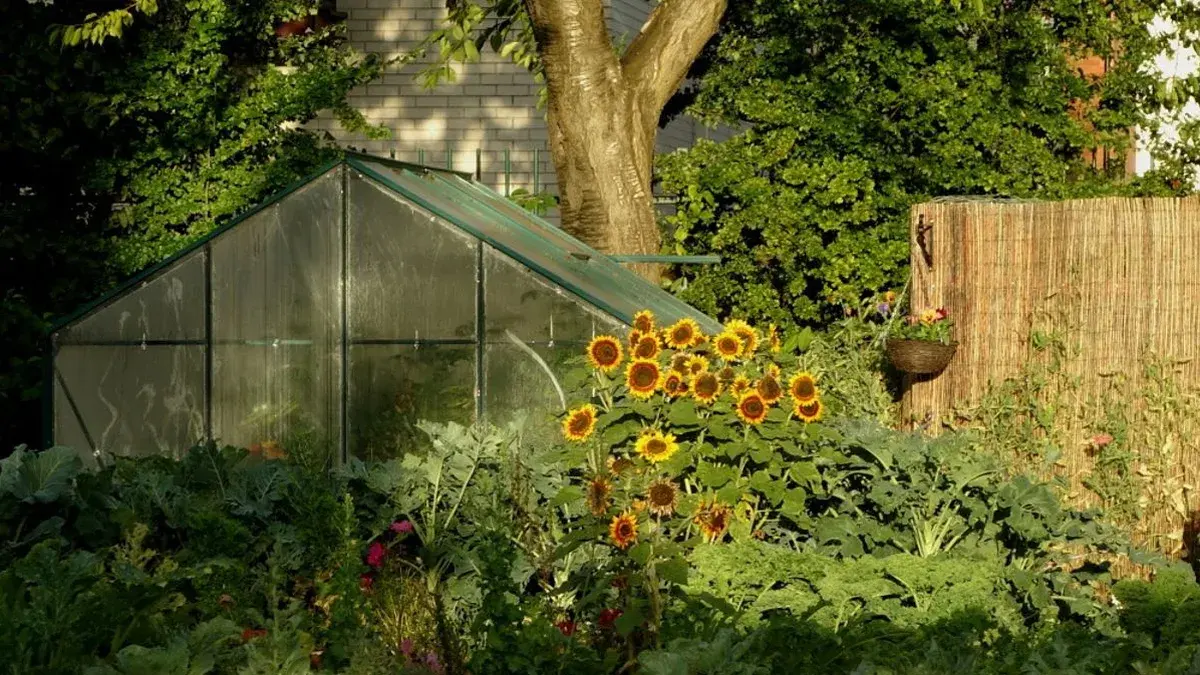
The allotment gives the day its shape. Each bed is wide enough for a team to work around it, each challenge uses crops and hand equipment, and each station sits a short walk from the next one. Teams walk from bed to bed on a buzzer, they work with their hands, and they talk through every answer together before they write it down.
What follows is a complete plan for the day: nine games, a rotation that keeps 536 people moving, a points system that is easy to run, and a closing round that brings every team together in one place. It suits a school fair, a company away day, or a charity fundraiser.
Key takeaways
- Nine stations hold 536 players in teams of about 60, with each team visiting every station once.
- Every game uses crops, soil and hand equipment from the allotment, so there is nothing to buy and nothing to assemble in advance.
- A buzzer moves teams on every 12 minutes, which keeps the whole rotation to just under two hours.
- Points are awarded on a simple 0 to 10 basis at each station, so the table stays easy to understand all day.
- The closing round gathers every team at the shed for one shared challenge and a champion is named there.
At a Glance
| Station | Game | Task | Minutes |
|---|---|---|---|
| 1 | Cabbage Head Weigh Race | Weigh cabbage heads and arrange them by weight | 12 |
| 2 | Leek Stem Count Race | Agree on the number of leek stems in one marked part | 12 |
| 3 | Turnip Root Wash Race | Wash turnip roots clean and arrange them by size | 12 |
| 4 | Parsnip Fork Lift Race | Lift parsnips with a fork without breaking them | 12 |
| 5 | Swede Weight Check Race | Check swede weights against a target weight | 12 |
| 6 | Beetroot Juice Stain Race | Arrange beetroot juice colours from palest to darkest | 12 |
| 7 | Radish Row Count Race | Agree on the number of radishes along a row and write it down | 12 |
| 8 | Onion Skin Sort Race | Sort onions by skin colour into three trays | 12 |
| 9 | Shallot Bulb Order Race | Arrange shallot bulbs from smallest to largest | 12 |
How 536 Players Fit Into One Day
Divide 536 players into nine teams of about 60. That number sounds large for one team, but each team divides into working groups of six or eight at each station, and every working group has its own hands-on job. The team captain keeps the points log, the working groups rotate jobs within the team, and nobody is left without a task for more than a minute or two.
Our step-by-step plan for running puzzle games for 535 players in a joiner’s workshop shows how a craft setting can hold a crowd this size, and the same structure works here: nine stations, one buzzer, and a points log that travels with each team. The allotment version swaps benches and joinery for beds and crops, but the rhythm is the same, and the rhythm is what keeps 536 people moving without confusion.
Allow two hours for the rotation, plus 30 minutes at the start for greetings and team grouping, and 30 minutes at the end for the closing round. Each station runs for 12 minutes, with two minutes to walk to the next bed. Officials stay at their stations all day, so they know each game well and can answer questions quickly. Team captains keep the points logs, and one central official keeps a main table at the shed so the standings are always up to date.
The 9 Allotment Puzzle Games
Each game below is a station. Look at the task, the method and the points together before you start, because the points reward careful work rather than hurried work. A team that rushes will make mistakes, and a team that talks through the job will usually do better. That is what the day is about: the puzzles reward attention, not haste.
Every station needs the same equipment: a points log, a tray, and a buzzer. The crops are already growing in the beds, and the hand equipment is what the allotment holders use every week. Nothing is hidden, and every team faces the same beds in the same rotation, so the points table means something at the end of the day.
1. Cabbage Head Weigh Race
Three cabbage heads sit on a board at the first bed, and the team must arrange them from lightest to heaviest without using a weigher at first. Each working group lifts one head each, feels its weight in both hands, and talks it over. The heads look alike, but one is dense and firm, one is loose and airy, and one sits between the two, so the arrangement is never obvious at a glance.
Once the team has agreed on an arrangement, the official weighs each head on a table weigher and announces the numbers. Ten points are awarded for a correct arrangement, seven for two heads in the right place, and four for one. A bonus point is added when the team can choose the heaviest head before the weigher confirms it, which rewards the group that paid attention to the feel of the crop rather than its size.
2. Leek Stem Count Race
A leek bed holds a dense group of stems, and the team must agree on how many stems are growing in a marked stretch of the bed. The stretch is three paces from end to end, and the team may not take any leeks out of the ground. Working groups work out the number together, one person pointing and one person writing, and then the groups compare numbers before they hand in a single answer.
The official has worked out the number in advance, carefully and twice, so the correct number is known. Ten points are awarded for the exact number, seven for an answer within three of it, and four for an answer within eight. The game rewards an unhurried, methodical approach, because the teams that rush always miss the small stems hiding behind the tall ones.
3. Turnip Root Wash Race
A tray of turnip roots arrives at the third bed covered in soil, and the team must wash them clean in a tub of water and then arrange them by size. The washing matters as much as the arranging, because a root that is still dirty cannot be compared fairly, and the official will refuse any root that has soil left on it. Teams soon learn to wash first, compare second, and argue third.
Points are awarded for cleanliness and arrangement together. Ten points are given when every root is clean and the row runs from smallest to largest without a mistake, seven when the row is right but one root is still dirty, and four when the row has one root out of place. The fastest teams are rarely the best here, because a hurried wash misses soil in the creases and costs points.
4. Parsnip Fork Lift Race
Parsnips grow far down, and the fourth station asks teams to lift six of them with a digging fork without damaging a single one. The fork must be eased into the soil at an angle, the handle must be eased back slowly, and the parsnip must be drawn out by hand once the soil has loosened. Anyone who yanks the fork will damage the parsnip, and the whole team will know it.
Each unbroken parsnip earns a point, up to six, and four extra points are awarded when all six come out whole. The game is quiet and careful by design, and it gives the louder teams a chance to ease off and hear each other. The plan for puzzle games for 534 players in an old village ropewalk uses the same idea of an unhurried, careful task in the middle of a busy day, and it works for the same reason: it changes the pace.
5. Swede Weight Check Race
Five swedes sit on a board at the fifth bed, and the team must choose the one that is nearest to a target weight of 900 grams. No weigher is allowed during the choosing, and the team may lift each swede as often as it likes. The swedes look almost identical, but their weights vary a surprising amount, and the team must use feel rather than size to make the choice.
The official weighs the chosen swede at the end and reads the number aloud. Ten points are awarded when the chosen swede is within 25 grams of the target, seven when it is within 50 grams, and four when it is within 100 grams. The game rewards the team that takes its time and compares each swede against the others.

6. Beetroot Juice Stain Race
Beetroot juice stains white squares in colours that run from pale pink to rich purple, and the sixth station turns that fact into a colour game. The official has prepared nine white squares, each stained with juice from a different beetroot, and the team must arrange them from palest to darkest. The squares are laid out in a jumble, and the team may not change a square once it has been placed in the row.
Ten points are awarded for a perfect arrangement, seven for one square out of place, and four for two squares out of place. The game looks easy from a distance, but the middle colours are very close together, and teams often argue over two squares that look identical. Good light helps, so the station sits where daylight falls across the board without glare.
7. Radish Row Count Race
A row of radishes runs from one end of the seventh bed to the other, and the team must add up how many radishes are showing above the ground. Some radishes sit proud of the soil, some hide under the crop, and some are only visible as a flash of red between the stems. The team may not handle the plants, so the counting must be done by eye alone, with one person saying what they see and another writing it down.
The official has worked out the number in advance and written it in a sealed envelope, which is opened in front of the team. Ten points are awarded for the exact number, seven for an answer within two, and four for an answer within five. The game rewards patience and a second look, because the missed radishes are almost always at the far end of the row.
8. Onion Skin Sort Race
Three trays sit at the eighth bed, labelled pale, mid and rich, and the team must sort a pile of onions into them by the colour of their skins. The onions are a mix of varieties, so the shades do not fall into neat groups, and the team must agree on where the boundary lies between pale and mid, and between mid and rich. Every onion must be placed, and no tray may be left empty.
Ten points are awarded when the official agrees with at least nine out of ten placements, seven for eight out of ten, and four for seven out of ten. The game is a talking game as much as a placing game, because the team must agree on its own rules before it starts, and the teams that agree early usually finish best.
9. Shallot Bulb Order Race
The ninth station holds a tray of shallot bulbs, and the team must arrange them from smallest to largest by eye alone. No measuring equipment is allowed, and the bulbs may not be lined up against each other for a direct comparison until the team has made its first attempt. The bulbs vary by only a few millimetres, so the differences are subtle, and the team must look closely rather than guess.
Once the team is happy with its order, the official measures each bulb with callipers and announces the sizes. Ten points are awarded for a perfect arrangement, seven for one bulb out of place, and four for two bulbs out of place. It is a good end to the rotation, because it asks for the same careful attention that the first station asked for, and the teams that have learned to ease off will do well here.
Running the Closing Round
When the buzzer sounds for the closing time, every team walks to the shed for the closing round. The central official announces the standings, and the three teams ahead are announced so that everyone knows where they are in the table. The closing round itself is a shared challenge: each team must recall the nine games station by station, and then recall the crop at each station. It sounds simple, but after two hours of play, the details blur, and the teams that kept a written reminder do far better than the teams that relied on recall alone.
For another outdoor craft setting, the plan for puzzle games for 533 players in an old village thatcher yard handles a fading afternoon in the same way, with the closing round held in one place so that nobody is left out on a far bed when the champion is named. Here, the closing round is worth 20 points, which is enough to change the places in front without making the earlier stations feel pointless. The champion is named at the shed, the points logs are kept as a reminder, and the crops are left in good condition for the allotment holders.
Checklist for the Day
- Arrive early and walk the nine beds with your officials so that every station is ready before the players arrive.
- Hand each team captain a points log and a copy of the rotation plan at the greetings.
- Test the buzzer from the farthest bed so that every team can hear it clearly.
- Put a tub of clean water and an extra tray at every station that involves washing or placing.
- Keep the main points table at the shed and update it after every rotation.
- Leave the beds tidy at the end of the day, with all equipment returned to the shed.
Frequently Asked Questions
How many people can play at once?
All 536 players take part at the same time, because the nine stations run side by side and each team is at a different station. The rotation keeps everyone busy, and the only time the whole crowd comes together is at the greetings and at the closing round.
What happens if the ground is wet?
The games still work in wet ground, because washing, weighing and placing do not depend on firm soil. Give teams a little more time to walk between beds, put a board down at any station where people must kneel, and keep the white squares for the beetroot game under shelter.
What do teams need to bring?
Teams need nothing except comfortable footwear and a willingness to work with their hands in the soil. All crops, trays, water and points logs are provided at the allotment, and the officials bring the scales, callipers and buzzer with them.
Can younger players join in?
Yes, younger players do well at the leek and onion stations, where a careful eye matters more than strength. Mix ages within each working group so that younger players are paired with older players, and let the team captain assign jobs to suit each person.
How are the points added up?
Each station awards between zero and ten points, and the closing round awards up to 20 points. Team captains keep their own sheets, officials confirm the points at each station, and the central official keeps the main table at the shed. The sum is announced at the closing round.
Can we run this with fewer than 536 players?
Yes, the plan works with any number from about 90 upwards. With fewer players, use smaller teams of about ten and keep all nine stations, because the variety of the games is what makes the day work. The timing and the points system need no change at all.
The Bottom Line
Puzzle games for 536 players work when the crowd is divided, the jobs are clear, and the points are simple. Nine allotment beds, nine different challenges, one buzzer and one points log per team are all it takes to keep 536 people playing together for a whole afternoon.
Start with the cabbage heads, end with the shallot bulbs, and let the closing round at the shed decide the champion. The crops do the teaching, the teams do the talking, and the day ends with everyone knowing exactly how their team did.