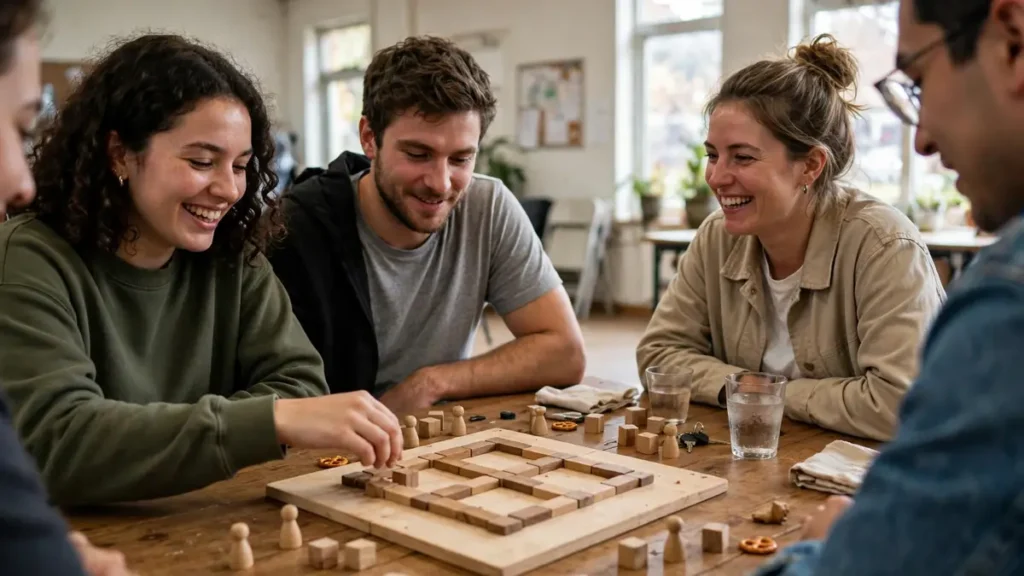
Four hundred and forty-five players, nine puzzle stations, and one hall that has to stay calm while everybody in it is thinking hard. That is the whole challenge of a 445-player puzzle day, and it is entirely solvable. The crowd only feels unmanageable when everyone tries to do the same puzzle at the same time, in the same place, with the same set of pieces. Split the players into small teams and the puzzles into stations, and the hall stops feeling crowded. The number 445 divides neatly into 89 teams of five, which makes the planning simple: five people fit around one table, five people can split a puzzle into useful jobs, and five people can argue about an answer without talking over each other.
This plan needs no screens, no apps, and no special venue. A school hall, a community centre, or a large function room will do, as long as it holds nine stations with room for teams to move between them. The nine formats below are all fresh for this series. Each one uses a different skill, from filling number grids and cracking codes to building bridges out of newspaper and racing through a brain gym circuit, so a team that is slow at one station can still shine at the next. Nobody needs to be good at everything, and nobody is stuck doing the same kind of thinking all day.
The day is built like a festival, not like a single table game. Nine stations sit around the hall, one for each format, and every team starts at a different station. A whistle or a bell starts the round, teams play for 12 minutes, and a second signal sends them to the next station. After nine rounds every team has played every format, and nobody has queued for anything. Print everything the night before, brief nine helpers, and the rotation does most of the organising for you.
Key Takeaways
- Split 445 players into 89 teams of five, and run them in four flights of 22, 22, 22, and 23 teams.
- Run nine stations at once, one puzzle format per station, with every team playing every format.
- Give each round 12 minutes of play and three minutes to move, so nine rounds fit into about two and a quarter hours per flight.
- Score every round out of ten, with a small speed bonus, so a slow start never ends a team’s day.
- Print everything the night before and brief nine helpers, one per station.
How a 445-Player Puzzle Day Works
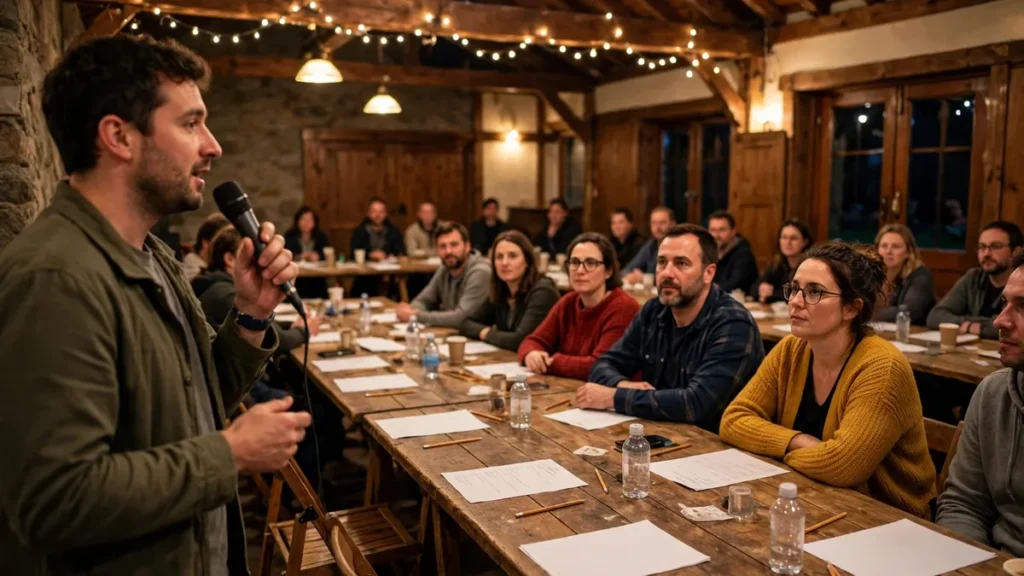
With 89 teams in total, the day runs in four flights of 22, 22, 22, and 23 teams, one in the morning, one around midday, one in the afternoon, and one in the early evening, and each flight follows exactly the same rotation. Inside a flight, two or three teams share a station in each round, and each team gets its own puzzle set, so teams race the clock and each other rather than waiting for a turn. A short welcome at the start of each flight explains the rotation, the scoring, and the one rule that matters most: when the bell rings, stop writing and move.
Each round lasts 12 minutes, and the changeover lasts three minutes, so nine rounds take two hours and fifteen minutes. Add a fifteen-minute welcome, a ten-minute break, and fifteen minutes for results, and each flight fits comfortably into three hours. The station helper at each table explains the rules in under a minute, starts the clock, and records the score when the round ends. Helpers keep a spare set at every station, because a lost piece or a torn sheet should never stop a round.
Inside each team, small jobs keep everyone involved. Every team needs a captain, a scorekeeper, and a timekeeper, and those jobs should rotate between rounds so nobody is stuck writing answers all day. The captain collects the puzzle sheet and hands in the answer sheet, the scorekeeper records the points the judge awards, and the timekeeper watches the clock and calls out the last two minutes. The same team-and-station shape worked well in the puzzle games for 441 players plan, where the flight system kept a very large crowd moving without queues, and the only real change here is the set of nine formats, which are all new. Three smaller rooms work just as well as one big hall, with three stations in each.
The 9 Puzzle Formats at a Glance
Use this table to plan the day at a glance. Every round below runs for 12 minutes, is scored out of ten, and uses printed sheets and simple pieces you can prepare in advance.
| Format | What Teams Do | Main Skill | Round Time |
|---|---|---|---|
| Kakuro Number Race | Fill a number grid so every run adds up to its clue | Number logic | 12 minutes |
| Hitori Grid Challenge | Shade cells so no number repeats in any row or column | Logic and elimination | 12 minutes |
| Bridge Building Challenge | Build a newspaper bridge that spans a gap and holds coins | Engineering and testing | 12 minutes |
| Tower Stack Race | Stack cups and blocks into the tallest standing tower | Balance and steady hands | 12 minutes |
| Code Breaker Relay | Crack a coded message one clue at a time, in relay order | Deduction and teamwork | 12 minutes |
| Treasure Map Puzzle Race | Follow map clues and assemble puzzle pieces to find the treasure | Map reading and assembly | 12 minutes |
| Escape Code Challenge | Solve a chain of small puzzles to open a locked box | Chained logic | 12 minutes |
| Puzzle Piece Relay | Carry puzzle pieces one at a time and build the picture together | Speed and assembly | 12 minutes |
| Brain Gym Circuit | Move through five quick brain teasers at five mini stations | All-round thinking | 12 minutes |
The Nine Races
1. Kakuro Number Race
Each team gets a printed Kakuro grid, a fresh pencil, and a clue sheet. The job is to fill the white cells with digits from one to nine so that every run of cells adds up to the clue number printed beside it, with no digit repeated inside a single run. It looks like a crossword made of sums, and it rewards teams that split the work. One player takes the short runs, another takes the long ones, and a third checks every answer before it is written in ink.
2. Hitori Grid Challenge
Each team gets a square grid filled with numbers and a simple rule: shade some cells so that no number appears more than once in any row or column, shaded cells never touch each other sideways, and all the unshaded cells stay connected in one group. It is a quiet, careful puzzle, and it suits the teams who like to think before they act. One player reads the row aloud, another marks the sure answers, and the rest look for the forced moves.
3. Bridge Building Challenge
Each team gets the same kit: ten sheets of newspaper, a roll of tape, a pair of scissors, and two stacks of books set 30 centimetres apart. The job is to build a bridge from newspaper alone that spans the gap and holds as many coins as possible. Teams may fold, roll, twist, or layer the paper, but they may not tape the bridge to the books, and they may not use anything else from the table.
The teams that do well test early and rebuild fast. A flat sheet sags at once, while a rolled tube or a folded concertina beam holds real weight. Give teams four minutes to build, then load coins one at a time onto the middle of the bridge until it fails. Score two points for every five coins held, up to ten points, with a bonus point for the strongest bridge in the flight. Keep a dustpan nearby, because the failed bridges leave a trail of paper everywhere, and that is half the fun. The hands-on building here feels very different from the quiet paper puzzles, which is why it sits well in the middle of the rotation, and the same mix of building and thinking shaped the puzzle games for 443 players plan, where a card tower station gave the builders their moment.
4. Tower Stack Race
Each team gets a box of plastic cups, a set of wooden blocks, and a flat table. The job is to build the tallest freestanding tower the team can manage in 12 minutes, using cups and blocks in any combination, with no tape, no glue, and no holding the tower up by hand. The tower must stand on its own for ten seconds while the helper counts, and the height is measured from the table to the highest point.
5. Code Breaker Relay
Each team gets a coded message on a sheet, a code wheel, and a set of five clue cards face down on the table. The catch is the relay rule: only one player at a time may work on the code, and players swap every two minutes when the helper calls time. The player leaving the table must leave a short note saying what they tried, so the next player does not repeat the same dead end.
6. Treasure Map Puzzle Race
Each team gets a treasure map printed in pieces, a set of written clues, and a tray of puzzle pieces. The job has two parts: follow the written clues to work out where the treasure is buried on the map, then assemble the jigsaw pieces to reveal the picture of the treasure itself. The clues are riddles about landmarks on the map, such as the old mill, the crooked oak, and the stone bridge, and each correct answer points to one square on the map grid.
7. Escape Code Challenge
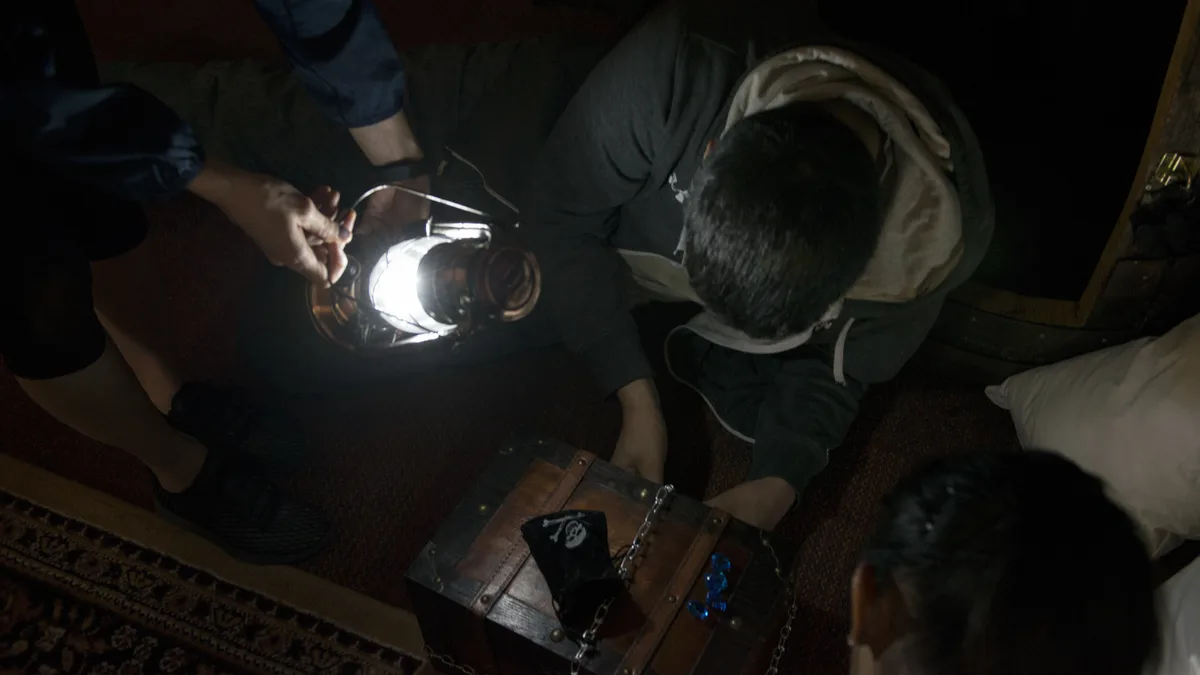
Each team gets a small locked box, a set of four padlocks, and a chain of four small puzzles on cards. Each puzzle opens one lock: a word puzzle gives a three-letter code, a number puzzle gives a three-digit code, a picture puzzle gives a colour order, and a logic puzzle gives the final key word. The box only opens when all four locks are undone, so the team must solve the puzzles in order, and the helper hands over the next card only when the current lock clicks open.
This is the station where the clock matters most. Teams that split up and solve the puzzles in parallel waste time, because the cards only arrive one at a time, so the smart move is for the whole team to crowd around one puzzle, solve it fast, and move on. Score two points per opened lock, plus two points for opening the box, up to ten points, with a bonus point for the fastest escape in the flight. Put a small prize inside the box, such as a badge or a sweet for each player, so opening it feels like a real win. The chained puzzles here build on the same relay-and-code idea that ran through the puzzle games for 442 players plan, where a colour code station rewarded teams that read the helper’s feedback carefully.
8. Puzzle Piece Relay
Each team gets a large picture puzzle in a box and a starting line ten steps from the table. The job is a relay: one player at a time runs to the box, picks up one puzzle piece, carries it back to the table, and places it, then tags the next player. Nobody may carry two pieces, nobody may place a piece that another player is carrying, and the picture must be finished before the clock runs out.
9. Brain Gym Circuit
Each team gets a circuit of five mini stations on one long table, and the team splits into pairs to work through them in order. The five stops are a one-minute word ladder, a one-minute odd-one-out set, a one-minute memory tray, a one-minute number sequence, and a one-minute spot-the-mistake paragraph. The helper times each stop, and the team moves on when the whistle blows, whether the stop is finished or not.
Scoring and the Grand Final
Every round is scored out of ten, with a small speed bonus of one or two points for the fastest finish in the flight. That keeps the scoring simple enough for nine helpers to run without a spreadsheet, and it means a team that has a bad round at one station can still recover at the next. Add the nine round scores together for a maximum of ninety points per team, plus bonuses, and post the running totals on a big board after each flight so teams can see where they stand.
The grand final takes the top two teams from each flight and brings them back for one last race: a mixed relay that uses one short puzzle from each of the nine formats, played head to head on a stage or at the front of the hall. The first team to finish all nine mini puzzles wins the day, and every other finalist keeps the score they earned in their flight. Keep the final short, about twenty minutes, and let the whole hall watch, because a puzzle final is far more exciting to watch than most people expect when the clock is ticking and the last puzzle is a code.

Organiser Checklist
- Print nine puzzle sets per station, plus one spare set at every station, the night before the event.
- Brief nine helpers, one per station, with an answer key, a timer, and a score sheet for each flight.
- Set out 89 team scorecards in advance, numbered clearly, with the flight and starting station marked on each one.
- Prepare the bridge kits, tower boxes, locked boxes, and relay puzzles, and test one of each before the doors open.
- Put up clear station signs, a big clock everyone can see, and a bell or whistle the whole hall can hear.
- Plan the grand final in advance, with the nine mini puzzles ready, so the top teams are not kept waiting.
Frequently Asked Questions
How do 445 players fit in one hall?
They do not play all at once. The 445 players split into 89 teams of five, and the teams run in four flights of 22, 22, 22, and 23 teams. Only one flight is in the hall at a time, so the hall only ever holds about 115 players plus nine helpers, which is a comfortable size for a school hall or community centre.
What if a team has fewer than five players?
Let them play as a team of four and give them the same puzzles. A team of four has fewer hands but also fewer arguments, and in practice it makes almost no difference to the score. Do not let teams merge halfway through the day, because that breaks the scoring and confuses the rotation.
Do teams need any special equipment?
No. Everything comes from printed sheets, newspaper, cups, blocks, and a few locked boxes. The most expensive item is the set of padlocks for the escape code station, and those can be borrowed. Teams should bring a pencil each, and the organiser should bring spares.
How long does the whole day take?
Each flight takes about three hours, including the welcome, the break, and the results. Four flights take twelve hours, so most organisers run two flights in the morning and afternoon on one day and the other two the next day, or they run two halls at once. The grand final adds about twenty minutes at the end.
Can younger children take part?
Yes, with mixed-age teams. The puzzles are written so that a bright ten-year-old can contribute at most stations, and the relay, tower, and brain gym stations suit younger players best. Keep the code and Kakuro stations for the older players in each team, and let the younger ones lead the building and running stations.
What happens if a puzzle set is damaged during a round?
The helper swaps in the spare set and the round carries on. That is why every station keeps a spare set ready. If a lock jams or a bridge kit runs out of tape, the helper notes it on the score sheet and the team is scored on the puzzles they finished, so nobody is punished for broken equipment.
Bottom Line
A 445-player puzzle day works when the plan is simple: 89 teams of five, nine fresh formats, twelve minutes a round, and a rotation that does the organising for you. Print the sets, brief the helpers, ring the bell, and let the puzzles do the rest. The teams will do the hard work themselves, and the hall will be full of the best sound an organiser can hear: four hundred and forty-five people thinking hard, together, and having fun while they do it.