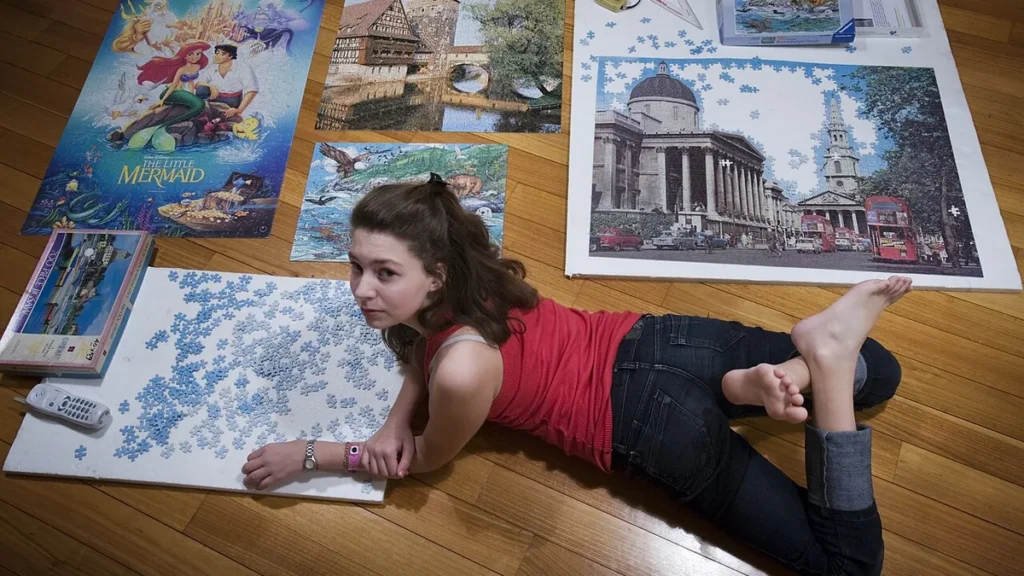
Puzzle games for 402 players sound impossible until you stop picturing one table. Nobody expects 402 people to crowd around a single jigsaw, pass pieces hand to hand, and finish before lunch. The trick is scale: you split the crowd into teams, you spread the work across stations, and you run the whole thing like a tournament. When the structure is right, a group that big does not feel chaotic at all. It feels like a festival, with every table busy.
The number 402 is not a magic limit. It is a way of thinking about the range from 3 players to 402 players, and the games that carry a puzzle event across that whole range. A family of three can play a puzzle game at the kitchen table. The puzzle does not change. Only the organisation around it grows. Divide 402 players into teams of six and you get exactly 67 teams.
This guide lists nine puzzle games that work for 402 players, explains how to set each one up, and shows how to combine them into a day that keeps a huge crowd playing happily. Pick three or four games for a short session, or run all nine across a full day.
Key takeaways
- Think in the 3-to-402 range: the puzzle stays the same, and teams, stations, and tournaments are what scale it up.
- Split 402 players into 67 teams of six, and give every team its own table, puzzle, and job list.
- Mix fast jigsaw relays with slower logic games so every kind of player has a game they enjoy.
- Plan one station for every 12 to 18 players, and keep each round short enough that nobody waits long.
- Score by puzzles finished and pieces placed, not by speed alone, so careful teams stay in the race.
Why Puzzle Games Work for 402 Players
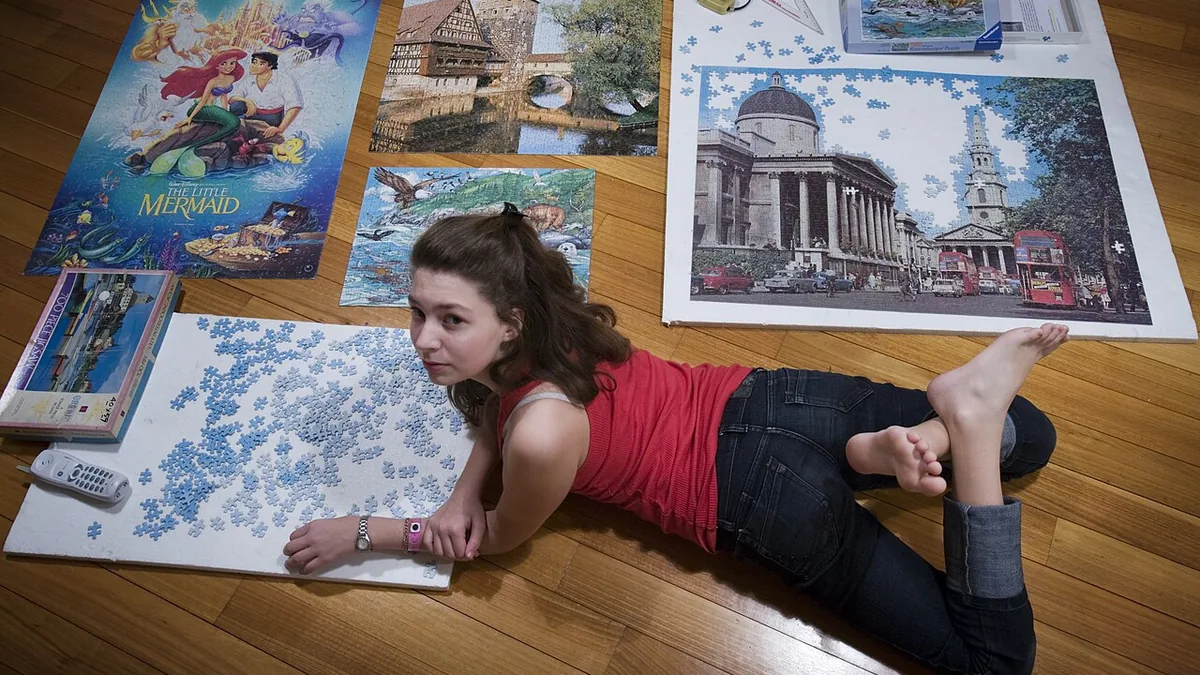
Puzzle games suit very large groups because they need no stage, star performer, or silence. A quiz needs everyone to hear the same question at once, which is a sound problem with 402 players. A puzzle only needs a table, a set of pieces, and a clear goal, and you simply run many copies at once.
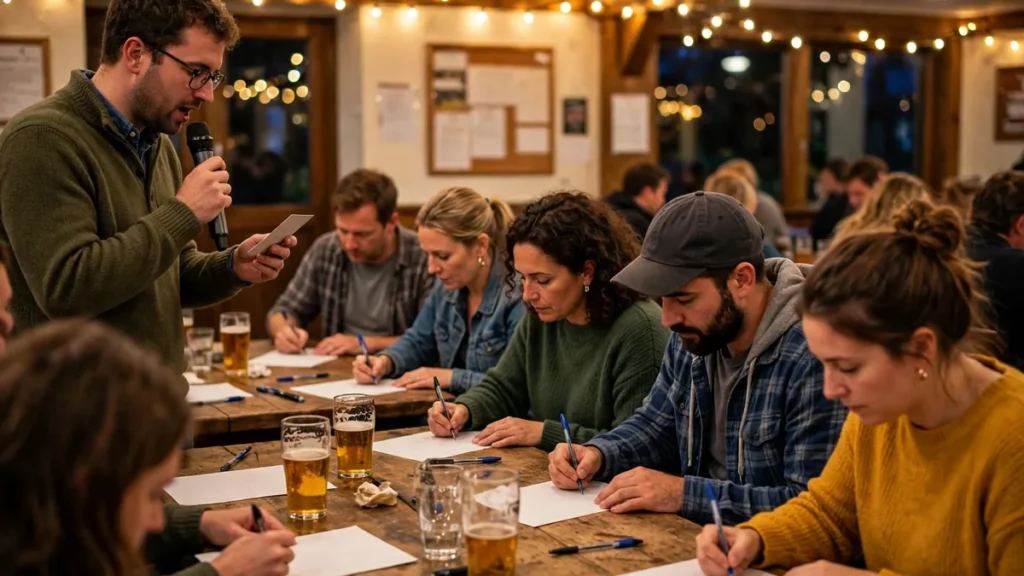
There is also a social reason puzzle games work at this size. In a group of 402 strangers, most people will not speak outside their own table unless the format gives them a reason. A shared puzzle gives them that reason within seconds: someone spots an edge piece, someone else remembers a pattern, and suddenly six strangers are a team. The puzzle does the icebreaking for you, and by the second round the room is loud in the best possible way.
Scale also makes puzzle games cheaper than most large-group entertainment. Printed grids, card sets, tangram pieces, and second-hand jigsaws cost very little per player, and the same sets can be reused round after round. The guide to puzzle games for 400 players shows the same low-cost thinking at a nearly identical scale.
The 3-to-402 Range
Every plan here is built around the 3-to-402 range, the honest way to think about an event this size. At the small end, three players sit at one table and solve a single puzzle together. At the large end, 402 players fill a hall. The bridge is the team: divide 402 into teams of six and you get 67 teams, each just a small group around a table. The event is big, but nobody experiences it as big.
This thinking also protects you from the most common planning mistake: designing for 402 as if it were one group. A single puzzle with 402 people touching it is a queue, not a game. But 67 teams each solving their own puzzle is a real competition, run with ordinary tables and a realistic number of volunteers.
Teams, Stations, and Tournaments
Three scaling methods carry almost every large puzzle event, and most successful events combine at least two of them. Teams are the first method: they turn 402 individuals into 67 units that can be scheduled, scored, and moved around a room. Give every team a name, a number, and a colour.
Stations are the second method: instead of one puzzle for everyone, you set up eight to twelve different puzzle stations around the hall, and teams rotate from one to the next on a timer. A team spends 12 to 15 minutes at a station, scores what it finishes, and moves on when the bell rings.
Tournaments are the third method: heats, semifinals, and a final let you narrow a huge field down to a dramatic finish without asking every team to play every round. The simplest format is a points leaderboard, where every station awards points and the highest total wins. The same thinking drives the guide to running puzzle games for 401 players, where small teams and parallel stations turn a huge crowd into a working competition.
The 9 Puzzle Games for 402 Players
The nine games below cover the full range of puzzle play, from hands-on jigsaw building to quiet logic challenges. Each one is written for a crowd of 402, with a setup that scales and a scoring rule that keeps the result fair.
1. Giant Jigsaw Relay
In a giant jigsaw relay, every team gets the same 100-piece puzzle, and players take turns placing pieces one at a time. The relay rule is what makes it work for 402 players: nobody can dominate the table, and every player touches the puzzle within minutes. The team that finishes first wins, and identical puzzles keep the result fair.
Buy puzzles in bulk and keep the piece count low enough that a team of six can finish in about fifteen minutes. Award points for each completed section as well as for a full finish.
2. Tangram Team Build
A tangram set is seven flat shapes that can be arranged into hundreds of pictures, from animals to letters to houses. Each team gets the same silhouette card and the same seven pieces, and the first team to match the silhouette exactly wins. It is quiet and visual, and completely different from a word or number game, which is why it belongs in the mix.
Print the silhouette cards large enough for six people to see across a table, and use the same card for every team. Tangram pieces are cheap, silent, and almost impossible to break.
3. Word Ladder Relay
A word ladder asks players to change one word into another by changing one letter at a time, with every step a real word. In relay form, each player writes one rung before passing the pen on, so the team must think ahead together. A ladder from COLD to WARM in four steps is a good warm-up.
Use the same ladders for every team and print them in large type. Allow eight minutes per round and score one point per correct rung, with a bonus for a finished ladder.
4. Cryptogram Race
A cryptogram is a short message written in a simple substitution code, where each letter stands for another letter. Each team gets the same coded message and the same clue letters, and the first team to decode the full sentence wins. It feels like detective work, and teams naturally split the job: one player hunts for common words, another tracks letter patterns, and a third writes guesses down.
Choose messages of twenty to thirty words so a team of six can finish in about twelve minutes, and score by correctly decoded words, with a bonus for the full message.
5. Maze Relay
In a maze relay, each team gets the same printed maze, and players take turns tracing one section of the path before passing the pen to the next player. The catch is that the pen cannot lift from the paper, so a wrong turn costs the team time. It is simple to explain, tense to watch, and very easy to score.
Print the mazes on large sheets so six people can follow the path together, and use the same maze for every team. Laminate the sheets so they can be reused for every heat.
6. Pattern Block Challenge
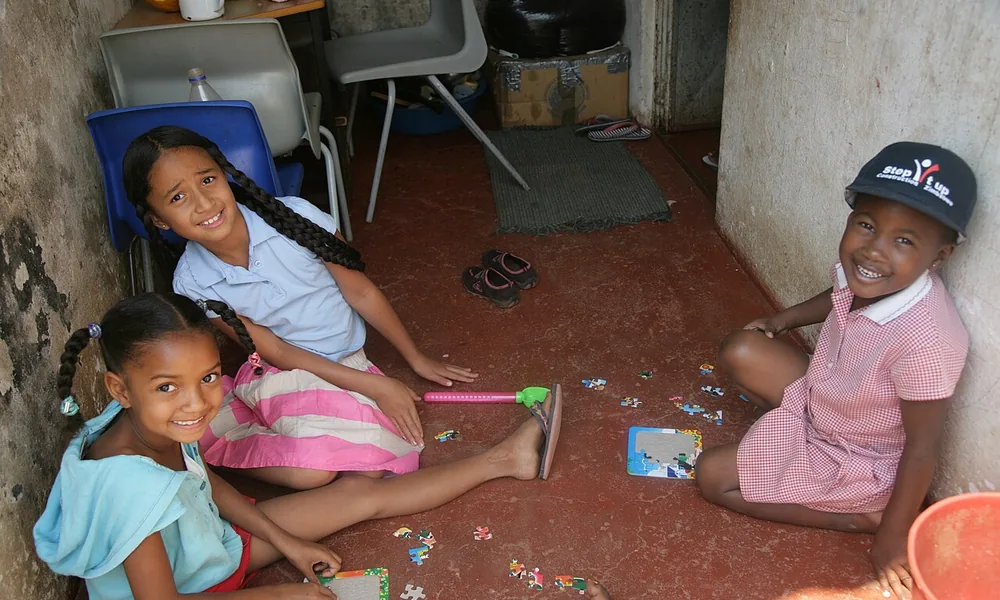
Pattern blocks are coloured wooden shapes that fit together into pictures and patterns. In this challenge, each team gets the same pattern card and the same set of blocks, and the first team to copy the pattern exactly wins the round. It is hands-on and visual, and it rewards players who think in shapes rather than words.
Use patterns with twelve to twenty blocks so a team of six can finish in about ten minutes, and award one point per correctly placed block so partial work still counts.
7. Picture Puzzle Hunt
A picture puzzle hunt hides small puzzle cards around the room, and each team must find them, solve them, and bring the answers back to the scoring table. The cards mix riddles, spot-the-difference pictures, and tiny logic puzzles, so every team member can contribute. It gets people moving after a long day of sitting at tables.
Hide at least twice as many cards as any one team can find, and give every card the same point value so teams choose their own route. Set a strict twenty-minute limit and a clear boundary for the hunt area.
8. Brain Teaser Relay
A brain teaser relay gives each team a set of short lateral-thinking puzzles, one at a time, and the team must solve each one before the next is revealed. The questions are short and strange, which keeps the energy high, and teams argue, laugh, and guess together.
Run ten teasers per round, give each team ninety seconds per teaser, and score one point per correct answer. Test the questions on a few volunteers before the day so they are fair.
9. Escape Room in a Box
An escape room in a box gives each team a locked box, a set of clue cards, and a forty-five-minute limit to open it. The clues chain together: a riddle gives a three-digit code, the code opens a small padlock, and inside is the next clue. It is the most dramatic game on this list, and it works for 402 players because every team gets an identical box at its own table.
Build the boxes in advance from cheap craft boxes, combination locks, and printed clue cards, and test every box twice. Give each team a hint card they can trade for points, so a stuck team can keep moving.
How the 9 Games Compare
Use this table to pick the right mix for your event. Fast games suit short sessions, slow games suit a full day, and every game below works for all 67 teams at once.
| Game | Time per round | Best for | Scoring |
|---|---|---|---|
| Giant Jigsaw Relay | 15 minutes | Warm-ups and finals | Sections finished, then full finish |
| Tangram Team Build | 10 minutes | Visual thinkers | Silhouettes matched |
| Word Ladder Relay | 8 minutes | Word lovers | Correct rungs, bonus for full ladder |
| Cryptogram Race | 12 minutes | Detectives and code fans | Words decoded, bonus for full message |
| Maze Relay | 10 minutes | Quick, tense rounds | Finished mazes, fastest wins |
| Pattern Block Challenge | 10 minutes | Hands-on builders | Blocks placed correctly |
| Picture Puzzle Hunt | 20 minutes | Energy and movement | Cards found and solved |
| Brain Teaser Relay | 15 minutes | Laughs and debate | Teasers solved |
| Escape Room in a Box | 45 minutes | A dramatic finale | Locks opened, fastest full escape |
A Step-by-Step Plan for 402 Players
A crowd of 402 players needs a plan that a single host can run from one central point. The six steps below cover the day from the first table to the final scores.
Step 1: Fix the Numbers and the Room
Confirm 67 teams of six, and book a hall with at least 67 tables plus space for stations, a scoring table, and a stage for the host. Number every table clearly so teams can find their place without asking. The step-by-step plan for 399 players shows the same room-first thinking at a nearly identical scale.
Step 2: Choose Nine Formats and Buy in Bulk
Pick the games from the list above and buy identical sets for every team. Print grids, ladders, mazes, and cryptograms in large type, and sort everything into team kits the night before, labelled with the team number and station.
Step 3: Recruit and Brief Your Volunteers
You need at least one volunteer for every six teams, plus a host, a scorer, and two floaters. Brief them the day before and give each one a printed sheet with the rules for their station.
Step 4: Rehearse the Rotation
Run one full rotation with your volunteers before a single player arrives. Time each station, check that the bell can be heard from every corner, and confirm that teams can move without blocking the aisles.
Step 5: Run the Day in Four Blocks
Split the day into four blocks of about ninety minutes, with a break between each one. Open with the jigsaw relay, run the logic games in the middle blocks, and save the escape room boxes for the final block.
Step 6: Score Simply and Show the Scores
Use one points system for every game, collect answer sheets at the end of each round, and update a live leaderboard that the whole room can see. Announce the top ten teams after every block.
Scoring That Keeps 402 Players Honest
Fair scoring matters more than clever games, because 402 players will notice an unfair result long before they notice a clever puzzle. Use identical puzzles for every team, publish the scoring rules before the first round, and score partial work.
Keep the points simple: one point per finished unit, with a small bonus for the fastest finish. Avoid complicated multipliers, because they slow the scoring table down and invite arguments. For ties, prepare a short tie-break puzzle in advance, such as a five-rung word ladder played head to head.
Common Mistakes That Sink Large Puzzle Events
The first mistake is buying one beautiful puzzle instead of 67 identical ones. A single showpiece leaves 396 players watching, and watching is not playing.
The second mistake is skipping the rehearsal. A rotation that works on paper can fail when the aisles are too narrow, the bell is too quiet, or the answer sheets run out. Ten minutes of rehearsal saves an hour of chaos.
The third mistake is letting rounds run long. A fifteen-minute round that stretches to thirty minutes eats the next station, the break, and the finale. Use a loud timer and collect answer sheets when the bell rings, finished or not.
The fourth mistake is complicated scoring. If the scorer needs a calculator and a rulebook, the queue at the scoring table will grow faster than the scores. One point per unit, one bonus for speed, and a visible leaderboard are all you need.
Checklist: Ready for 402 Players?
- 67 teams of six confirmed, with team names, numbers, and colours assigned.
- Identical puzzle sets bought or printed for every team, sorted into labelled kits.
- Hall booked with 67 tables, wide aisles, a scoring table, and a stage for the host.
- Volunteers recruited, briefed, and rehearsed through one full rotation.
- Timer, bell, leaderboard, and tie-break puzzle tested before the players arrive.
- Answer keys, dictionaries, and spare puzzle sets packed for disputes and breakages.
Frequently Asked Questions
How many teams do 402 players make?
402 players make exactly 67 teams of six, with nobody left over. Teams of six are a good size for puzzle games: small enough that everyone can reach the table, and large enough that different skills can share the work.
How long does a full puzzle games day take?
A full day with all nine games takes about six hours, split into four blocks of ninety minutes with breaks between them. A short session with three or four games takes about two hours.
What if some teams finish much faster than others?
Give fast teams a bonus puzzle to work on while they wait, and score by puzzles finished rather than speed alone, so a slower team still earns points for steady work.
Do we need identical puzzles for every team?
Yes. Identical puzzles are the only way to keep the contest fair when 67 teams play at once, since different puzzles have different difficulties. Buy in bulk, print from the same file, and test every set before the day.
Can children and adults play together?
Yes, and puzzle games suit mixed ages better than most formats. A child can spot a jigsaw edge piece while an adult works out a cryptogram, and both contributions count. Mix ages within teams rather than separating them.
What is the cheapest way to run puzzle games for 402 players?
Print the paper games yourself, buy second-hand jigsaws in bulk, and reuse the same sets round after round. Paper grids, ladders, mazes, and cryptograms cost very little per player, and tangram pieces and pattern blocks last for years.
Bottom Line
Puzzle games for 402 players work when you think in teams, stations, and tournaments instead of one giant table. Split the crowd into 67 teams of six, give every team identical puzzles, keep the rounds short, and score simply on a leaderboard the whole room can see.