Four hundred and forty-four players is not a party crowd. It is a whole school, a company campus, or a small town gathered in one place for a day of play. Most party games were made for a living room, and they fall apart at this size because one set of equipment cannot serve one hundred and eleven teams, one voice cannot reach a whole field, and one slow round can drain the energy from hundreds of people at once. The answer is not to shout louder or to buy a bigger speaker. It is to choose games that split cleanly into teams, run at many stations at the same time, and score in minutes rather than hours.
The nine games in this guide were chosen because they work at exactly that scale. Each one uses simple rules that can be explained in under two minutes, equipment that is cheap to buy in bulk or easy to borrow, and a format that keeps every team playing instead of watching. Some are loud and physical, some are quiet and clever, and some reward steady teamwork more than fast legs. The plan below works for a school festival, a company family day, a community fundraiser, or a very large birthday celebration.
Split 444 players into 111 teams of four, give every team a colour, a name, and a captain, and run the games in heats and parallel stations so nobody waits long for a turn. A team of four is small enough that everyone has a job in every game, and large enough that one shy player never has to carry a round alone. Keep each heat short, post the scores where everyone can see them, and bring all 111 teams back together for a shared final. That rhythm, small teams inside one big crowd, is what turns 444 strangers into one party.
Key takeaways
- Split 444 players into 111 teams of four, each with a colour, a name, and a captain.
- Run every game in heats at parallel stations so all 111 teams play and nobody waits long.
- Mix calm games with active games so energy rises and falls across the day instead of peaking early.
- Use simple scoring, one point table, and a visible leaderboard that every team can trust.
- Plan for shade, water, and rest between heats, because a crowd this size tires faster than it looks.

How 444 Players Actually Play Together
No single game seats 444 people at once, and no sensible host would try to make one do it. Party games for 444 players are never really one game. They are nine games, played in waves, in zones, and in heats, by teams that all feel part of one shared day.
Start with zones rather than games. A flat field holds the throwing and pulling games, a shaded area holds the table and drawing games, and a hall or marquee holds anything that needs dry paper or a still surface. Put four to six stations in each zone and rotate teams through them on a fixed clock, fifteen minutes of play and five minutes to move. A similar zone and heat plan works for a crowd almost exactly this size, as the guide to party games for 442 players shows with its own rotation for 442 players.
Scoring needs to be simple enough for a tired volunteer to run at speed. Give every team a scorecard, award points from ten down to one in each heat, and add the totals on one central board. When the score is visible, teams trust it, and when teams trust it, they keep playing hard all day.
The 9 Best Party Games for 444 Players
The table below gives a quick view of all nine games, so you can plan the day at a glance. Each game lists what it suits best, how many players take part in one heat, and how long a heat takes. Read the full section for each game before you buy equipment, because the setup notes explain how many stations you need to keep 111 teams moving.
| Game | Best For | Players per Heat | Time per Heat |
|---|---|---|---|
| Giant Tug of War Tournament | Raw teamwork and loud cheering | 8 | 10 minutes |
| Giant Scavenger Hunt Challenge | Exploration and quick thinking | 20 | 20 minutes |
| Giant Charades Relay Race | Acting, guessing, and laughter | 8 | 15 minutes |
| Giant Pictionary Drawing Showdown | Creativity and fast guesses | 8 | 15 minutes |
| Giant Musical Chairs Marathon | Music, suspense, and big crowds | 20 | 15 minutes |
| Giant Trivia Tournament | Knowledge and friendly rivalry | 20 | 20 minutes |
| Giant Treasure Hunt Expedition | Clues, maps, and teamwork | 12 | 20 minutes |
| Giant Lawn Bowling Tournament | Calm skill and all ages | 8 | 15 minutes |
| Giant Parachute Play Festival | Whole-group fun and colour | 40 | 15 minutes |
1. Giant Tug of War Tournament
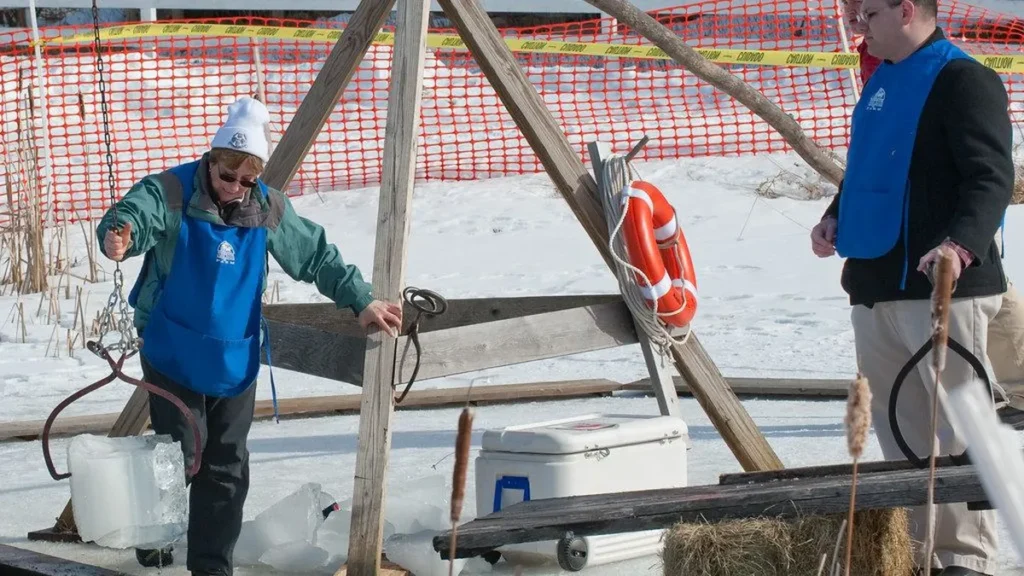
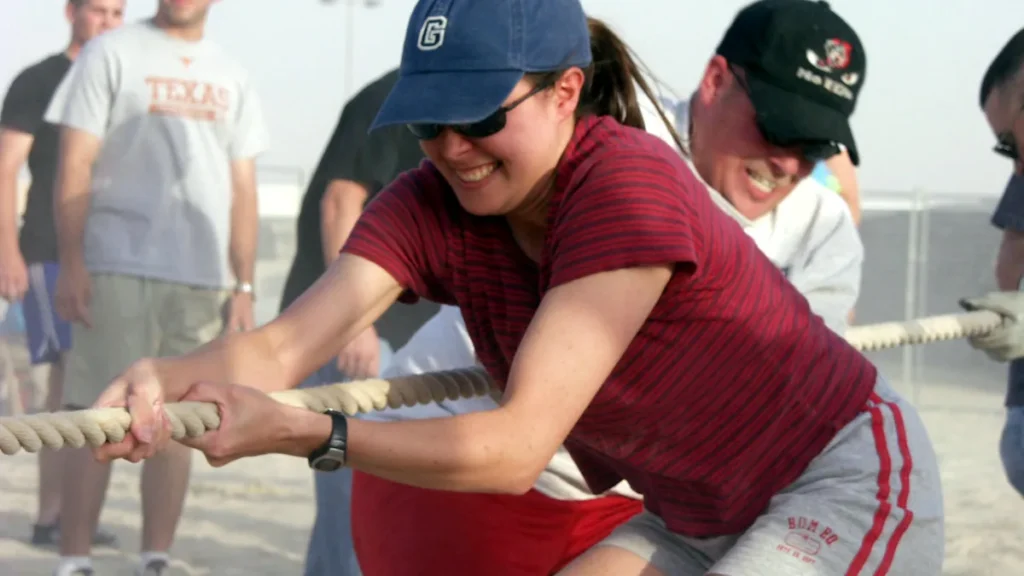
Tug of war is the oldest team game in the world, and it scales better than almost anything else. Two teams of four grip the same rope, dig in, and pull until one side drags the other across the line. There is no skill to learn, no turn to wait for, and no quiet player left standing on the edge, because every hand on the rope matters. The noise alone is worth it, since a whole field of supporters shouting for their team sets the tone for the rest of the day.
Run it as a knockout bracket with four ropes side by side, so eight teams play at once and a full round takes about ten minutes. Use a thick, soft rope with a clear centre marker, mark the winning line with chalk or tape, and give every team a short rest between pulls. Keep a first aid kit nearby and ban wrapping the rope around hands or wrists, because safety rules are what let a rough game stay fun.
2. Giant Scavenger Hunt Challenge
A scavenger hunt turns a whole venue into the game board. Each team gets the same list of twenty items to find, photograph, or collect, from a red leaf to a team selfie with a stranger in a yellow hat, and the first team back with a full list wins. It works at this size because teams spread out instead of queuing, and because the list can mix easy finds with tricky ones so that clever teams can catch up to fast ones.
Send teams out in waves of five at a time so the start line never jams, and give each team a different order for the same list so nobody simply follows the team in front. Set a firm twenty-minute limit, check lists at a single finish table, and award bonus points for the funniest photo. The hunt below shows how much energy a good list can create, and it is a useful model for writing your own clues.

3. Giant Charades Relay Race
Charades is usually a living room game, but it becomes a festival game when you run it as a relay. One player acts out a word, the team guesses it, and the next player runs to the acting spot to take the next card. The running keeps the energy high, and the acting keeps the laughter going, because a grown adult silently pretending to be a washing machine is funny in any language.
Set up five acting stations in a row, each with a deck of simple word cards and a judge who checks the guess. Use words everyone knows, from animals to jobs to everyday objects, and ban sounds, pointing at objects, and spelling with fingers. Give each team two minutes per round, count the correct guesses, and let the fastest teams face each other in a final round in front of the whole crowd.
4. Giant Pictionary Drawing Showdown
Pictionary works on the same relay idea, but with markers instead of mime. One player draws the word on a big board, the team shouts guesses, and the next player takes the pen as soon as the word is guessed. Bad drawings are the whole point, so shy players relax quickly once they see that a wobbly sketch of an elephant still wins points.
Use large whiteboards or paper sheets on easels so the whole team can see the drawing from a few steps back, and give each team the same set of thick markers. Keep the words simple and visual, run the game in two-minute rounds, and award a bonus point for the best drawing of the day as voted by the crowd. Four boards side by side let eight teams play at once without anyone waiting.
5. Giant Musical Chairs Marathon
Musical chairs sounds too small for 444 players, until you run it in waves. Twenty players circle nineteen chairs while the music plays, and when it stops, one player is out. The survivors stay in, new players join, and the chairs keep shrinking until one winner is left standing. It is pure suspense, it needs almost no equipment, and a big crowd watching the final chairs is one of the loudest moments of the day.
Run the marathon as a series of twenty-player heats with a speaker everyone can hear, and use a playlist with sudden stops so nobody can predict the pause. Keep the chairs sturdy and the circle wide enough that nobody trips, and have a volunteer remove one chair after every round. The winners of each heat meet in a grand final, and the last chair of the day deserves a proper cheer.
6. Giant Trivia Tournament
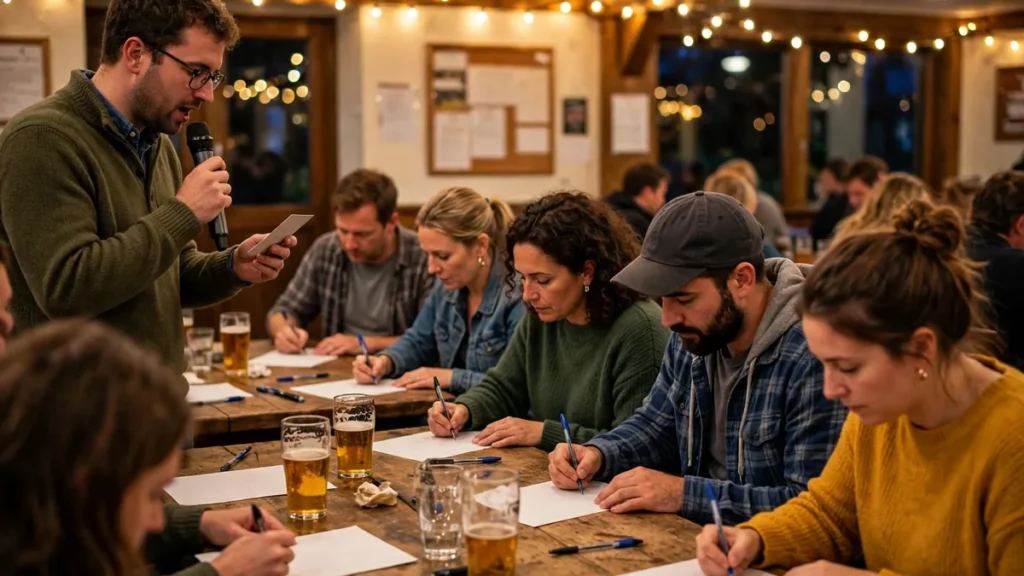
A trivia tournament is the calm anchor of the day, and it is the game where quiet players often shine brightest. Teams of four answer five rounds of ten questions, covering food, music, sport, animals, and general knowledge, with answer sheets handed in after each round. It needs no running, no equipment beyond paper and pens, and it gives tired legs a rest while brains do the work.
Read each question twice, give teams thirty seconds to agree on an answer, and collect the sheets before the next round starts. Mix easy questions with a few hard ones so every team scores something, and save a picture round for the middle of the tournament to keep it visual. Award ten points for a perfect round, and read the leaderboard aloud between rounds so the competition stays alive.
7. Giant Treasure Hunt Expedition
A treasure hunt is a scavenger hunt with a story, and the story is what makes teams care. Each team follows a chain of five clues across the venue, and every clue leads to the next hiding place until the final clue reveals the treasure, a box of small prizes and the day’s champion ribbon. Clues can rhyme, use simple riddles, or point to landmarks like the big oak tree or the blue gate.
Write five different clue chains that all end at the same treasure point, so teams never bunch up behind each other on the same trail. Hide each clue in a marked envelope, station a volunteer at the finish to check the final answer, and set a twenty-minute limit so slow teams still return in time for the next game. The hunt rewards reading, talking, and thinking together, which makes it a good balance after the loud physical games.
8. Giant Lawn Bowling Tournament
Lawn bowling is the gentlest game in this guide, and that is exactly why it belongs here. Players roll a ball along the grass towards a small target jack, and the closest ball scores. It needs no strength, no speed, and no shouting, so grandparents, small children, and tired players can all compete on equal terms with the fittest teams of the day.
9. Giant Parachute Play Festival
A parachute festival is the one game in this guide where forty players play at the same time, and it is the best way to end the day together. Teams grip the edges of a giant coloured parachute, lift it high, and run underneath, bounce balls on top, or make waves that ripple across the fabric. It is simple, it is joyful, and it photographs beautifully, because forty people laughing under one bright canopy is a picture every host wants.
Running the Day: A Schedule That Works
Nine games and 111 teams need a timetable, and the simplest one is three blocks of three games. Start with the loud games, tug of war, musical chairs, and the parachute festival, while energy is high. Move to the clever games, trivia, charades, and Pictionary, after lunch when legs are tired. Finish with the outdoor games, the scavenger hunt, the treasure hunt, and lawn bowling, when the light is softer and teams want fresh air. A similar three-block plan works for a crowd almost exactly this size, as the guide to party games for 440 players shows with its own morning, midday, and afternoon split.
Give every team a printed timetable with their station, their start time, and the name of their zone leader. Zone leaders are the secret to a smooth day, because one person who knows the rules, holds the scorecards, and keeps the clock is worth three extra volunteers wandering without a job. Brief all zone leaders together before the first game, hand them a one-page rule sheet for each game, and give them a whistle and a stopwatch.
Checklist: Before the First Whistle
- Confirm the venue, the zones, and the number of teams, and print 111 team scorecards with colours and names.
- Buy or borrow the equipment for all nine games, and test every rope, ball, chair, and marker the day before.
- Brief the zone leaders together, hand each one a rule sheet, a whistle, and a stopwatch.
- Set up water stations, shade, and a first aid point in every zone before the first team arrives.
- Print the timetables, the clue lists, the trivia questions, and the word cards, and keep spare copies in a folder.
- Put up the leaderboard where every team can see it, and assign one volunteer to update it after every heat.
One more habit is worth copying from hosts who have done this before. When a crowd is this large, the best preparation is a short trial run with a few teams the day before, which is how the guide to party games for 438 players suggests testing a new game before the full crowd arrives. A trial run finds the confusing rule, the missing chair, and the clue that makes no sense, while there is still time to fix them.
Frequently Asked Questions
Can 444 players really play the same game at once?
No, and they do not need to. Every game in this guide runs in heats at parallel stations, with teams of four rotating on a fixed clock. All 111 teams play every game, but they play it in small groups, which is why the day feels like one big party instead of one long queue.
What is the best team size for 444 players?
Teams of four work best, giving 111 teams in total. Four is small enough that everyone has a job in every game, and large enough that one shy player never has to carry a round alone. It also keeps the maths simple, since every heat, every scorecard, and every station divides neatly by four.
How much space do we need for 444 players?
A full-size sports field plus a hall or marquee is ideal, with separate zones for the loud games, the table games, and the hunts. As a rough guide, allow about four square metres per player for the field games, and a shaded area of at least two hundred square metres for the table games and the trivia rounds.
How long does a full day of nine games take?
Plan for about six hours, including breaks. Each game takes fifteen to twenty minutes per heat, with five minutes to move between stations, and three blocks of three games fit neatly into a morning, midday, and afternoon split. Add an hour at the start for welcome and team setup, and thirty minutes at the end for the final and the prizes.
What equipment should we buy first?
Start with the items every game shares, which are scorecards, whistles, stopwatches, markers, and a large leaderboard. Then buy the game equipment in order of cost, starting with the cheap items like ropes, balls, and word cards, and borrow or hire the bigger items like parachutes and bowling sets. Test everything the day before, because a broken rope or a dead speaker is much harder to fix with 444 players waiting.
What if our guest list is smaller than 444 players?
The plan still works. Keep the teams at four players, run fewer heats per game, and drop one station from each zone. The games, the scoring, and the timetable all stay the same, so a party of two hundred players feels just as organised as a party of four hundred and forty-four.
The Bottom Line
A party for 444 players works when small teams play short games at many stations, with simple rules, visible scores, and a timetable everyone can follow. Mix loud games with quiet ones, give every team a colour and a captain, and keep the heats moving so nobody stands around waiting. Do that, and 444 strangers will leave feeling like one big team that played together all day.