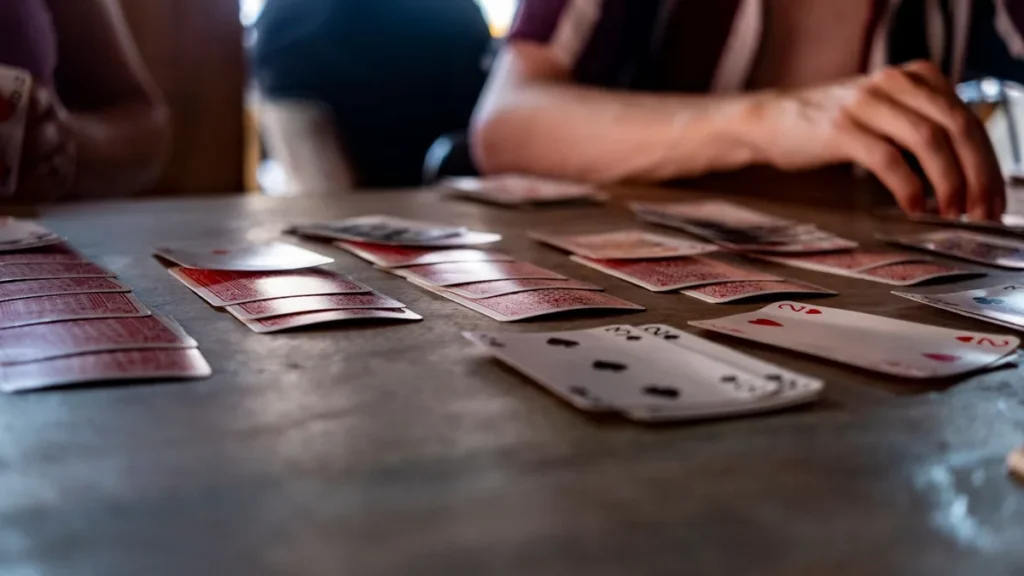
The best board games for big groups solve a problem that small-group games never face: keeping eight, ten, or even twelve people laughing, thinking, and actually involved at the same time. The games in this guide are different. They were chosen because they scale well, keep downtime short, and let everyone contribute on almost every turn, whether you are hosting a holiday gathering, a birthday party, a team social, or a reunion weekend.
Big-group games come in several flavours, and the right choice depends on your crowd. Party games such as Codenames and Wavelength thrive on shouting, guessing, and friendly debate. Social deduction games such as One Night Ultimate Werewolf and Two Rooms and a Boom turn the whole room into a puzzle. Drawing and word games such as Telestrations and Just One work even when players have very different experience levels.
This guide covers twelve proven picks, with honest player counts, playing times, and what each game is actually like at the table. If you are building a collection for gatherings rather than for two-player nights, start here. For more ideas aimed at larger households, our guide to board games for large families pairs well with the picks below, especially when children and adults share the same table.
Key takeaways
- The best board games for big groups support 8 or more players, explain in under five minutes, and keep everyone involved on most turns.
- Codenames, Wavelength, and Just One are the safest first picks for mixed groups because they are simple, funny, and work with almost any crowd.
- Social deduction games such as One Night Ultimate Werewolf and Two Rooms and a Boom are best for lively groups of 10 or more who enjoy bluffing.
- Telestrations and Dixit are strong choices when your group includes children, shy players, or people who prefer creativity over competition.
- For a full evening, pair one fast warm-up game with one longer game, and keep a second short game ready in case energy dips.

Best Board Games for Big Groups at a Glance
| Game | Players | Playing time | Best for | Difficulty |
|---|---|---|---|---|
| Codenames | 4-8+ | 15-20 minutes | Word lovers and mixed groups | Easy |
| Wavelength | 2-12 | 20-40 minutes | Debate and laughter | Easy |
| Just One | 3-7 | 20 minutes | Quick cooperative fun | Very easy |
| Telestrations | 4-8 | 30 minutes | Drawing and family nights | Very easy |
| Dixit | 3-6 | 30 minutes | Creative and quiet groups | Easy |
| One Night Ultimate Werewolf | 3-10 | 10 minutes | Fast bluffing rounds | Easy |
| Two Rooms and a Boom | 6-30 | 15-30 minutes | Very large parties | Medium |
| Monikers | 4-16+ | 30-60 minutes | High-energy parties | Easy |
| Wits & Wagers | 3-7 | 25 minutes | Trivia without trivia experts | Easy |
| Camel Up | 3-8 | 20-30 minutes | Betting and racing fun | Easy |
| Decrypto | 3-8 | 15-45 minutes | Word puzzle fans | Medium |
| Ticket to Ride: Europe | 2-5 | 30-60 minutes | A longer table game | Easy |
What Makes a Great Big-Group Board Game?
A great big-group game passes four tests before it earns a place on the table. First, it must genuinely support a large player count without a watered-down variant. Many boxes claim eight players but play best with four; the games below were picked because their large-player versions are the fun versions. Second, turns must be short or simultaneous. If one player takes a two-minute turn while nine people watch, the energy drains fast. The best large-group designs let everyone guess, draw, vote, or discuss at the same time.
Third, the rules must be teachable in a few minutes. At a party, nobody wants a twenty-minute rules lecture. A good host can explain Codenames, Just One, or Wavelength in about two minutes and let the first round teach the rest. Fourth, the game should reward interaction rather than silent calculation. Big groups gather to talk, laugh, and tease each other, so games built around conversation, guessing what others think, and shared jokes consistently outperform quiet, solitary strategy games when the table is full.
The 12 Best Board Games for Big Groups
1. Codenames
Codenames is the most reliable big-group word game ever published. Two teams compete to find their secret agents on a five-by-five grid of words, guided only by one-word clues from their spymaster. A clue such as “Ocean 3” might point to Whale, Ship, and Wave, but a wrong guess can hand the other team a point or hit the assassin and end the game instantly. That tension keeps every player leaning in, even when it is not their turn to guess. It supports four to eight players, scales to larger teams, and takes fifteen to twenty minutes.
2. Wavelength
Wavelength is a party game about how well you know the people you are playing with. One player draws a target on a hidden spectrum, such as Hot to Cold or Underrated to Overrated, then gives a clue that places a word on that spectrum. The rest of the team debates where the target sits and places a dial, scoring points for accuracy. The clue is only useful if you understand how the clue-giver thinks, which leads to loud, funny arguments about whether a burrito is hot and whether a particular film is overrated. Wavelength supports two to twelve players, plays in twenty to forty minutes, and is at its best with six to twelve players split into two teams.
3. Just One
Just One is a cooperative word-guessing game that takes about twenty minutes and works beautifully with three to seven players, with larger groups easily accommodated by playing in teams. One player tries to guess a mystery word while everyone else writes a one-word clue. The catch is that identical clues are cancelled before the guesser sees them, so obvious answers disappear and players must think of clever, distinctive hints. A mystery word such as “Beach” might lose the clues “Sand” and “Sea” if two people write them, leaving only “Towel” and “Sunburn” to guide the guess. The game is simple enough for children aged eight and up, yet adults enjoy it just as much because the cancelled-clue twist adds real tension. Just One won the Spiel des Jahres in 2019.
4. Telestrations
Telestrations is often described as the game of Telephone played with drawings, and it is one of the funniest games you can put in front of a large group. Each player draws a word, passes the sketchbook on, and the next player guesses what the drawing shows, then the next player draws that guess. By the end of the chain, a word such as “Pirate” may have become “Man with a parrot selling ice cream”, and the reveal is usually met with laughter from the whole table. The standard edition supports four to eight players, while the twelve-player party edition covers bigger groups. A full game takes about thirty minutes, and no drawing skill is needed. It suits family nights and mixed-age groups, because the humour comes from the drawings rather than from knowledge or speed.
5. Dixit
Dixit is a gentle, beautiful storytelling game that suits quieter big groups and creative players. Each player holds a hand of dreamlike illustrated cards. On your turn, you give a clue, a word, a phrase, a sound, or a gesture, for one of your cards, and the other players choose the card from their own hand that best matches your clue. Everyone then votes on which card was yours. You score best when some, but not all, players guess correctly, so clues must be suggestive without being obvious. Dixit supports three to six players in the base game, and larger groups can play in teams or with the Odyssey expansion, which raises the count to twelve. A game takes about thirty minutes. For more relaxed options that suit the whole household, our roundup of family board games includes several titles with a similar easy-going feel.
6. One Night Ultimate Werewolf
One Night Ultimate Werewolf compresses the classic social deduction game into a single ten-minute round, which makes it perfect for big groups that want fast, repeatable play. Each player receives a secret role, such as Villager, Seer, or Werewolf, and during one night phase, some roles act in secret. Then the whole group has a few minutes of discussion and accusation before voting on who they believe is a werewolf. The free companion app handles the night phase with narration, so no moderator is needed. The game supports three to ten players and plays in about ten minutes, so you can run five or six rounds in an hour, with players swapping roles each time. Play with at least seven people so the hidden roles create real uncertainty.
7. Two Rooms and a Boom
Two Rooms and a Boom is the only game on this list built specifically for very large groups, and it can handle six to thirty players, which makes it the go-to choice for big parties, youth groups, and team events. Players are split between two rooms, with one team trying to get the President and the Bomber into the same room at the end, while the other team tries to keep them apart. Players move between rooms in timed rounds, share information, lie about their roles, and try to work out who is who before time runs out. A game takes fifteen to thirty minutes and needs a host plus two separate spaces. If your gathering has more than twelve people and you want everyone playing the same game at the same time, Two Rooms and a Boom is the strongest option available.
8. Monikers
Monikers is a high-energy party game for four to sixteen or more players, built around a simple idea that gets funnier as the game goes on. Players take turns describing, then giving one-word clues for, then miming the names on a shared deck of cards, which include celebrities, fictional characters, and historical figures. Because the same cards come back in every round, the group builds a shared set of in-jokes, and by the miming round, a single gesture can send the whole room into laughter. A game takes thirty to sixty minutes, and it is best with at least eight players, split into two teams. Monikers shines at birthday parties, holiday gatherings, and nights with friends who enjoy performing, but it is less suited to shy groups or very young children, because the card names assume some familiarity with popular culture.
9. Wits & Wagers
Wits & Wagers solves the biggest problem with trivia games: the person who knows the most wins every time. Instead of asking for exact answers, it asks questions with numerical answers, such as how many days a year the average person spends eating, and players write down their best guess. Everyone then bets on which answer they think is closest to the truth, so a player who knows nothing about the topic can still win by betting wisely on someone else’s guess. It supports three to seven players and plays in about twenty-five minutes. It works for mixed-age and mixed-knowledge groups because guessing and betting matter more than knowing facts. The questions are fun, the betting adds tension, and the game moves quickly, with everyone involved in every round.
10. Camel Up
Camel Up is a light, chaotic camel-racing game that supports three to eight players and takes twenty to thirty minutes, making it a great big-group choice when you want something visual, silly, and easy to learn. Players bet on which camel will win a race around a pyramid-shaped track, with camels stacking on top of each other and carrying each other forward, so the leader can change in an instant. Camel Up won the Spiel des Jahres in 2014, and it remains one of the best large-group games for players who want luck, laughter, and a little bit of betting without any real complexity. The rules can be explained in about three minutes.
11. Decrypto
Decrypto is a team word game for three to eight players that feels like a smarter, tenser version of Codenames. Each team has four secret code words, and on your turn you give clues that point to three of them in a secret order. Your teammates must work out the order, while the opposing team listens in and tries to intercept your code. Give clues that are too obvious and the other team will crack your code; make them too obscure and your own team will fail. A game takes fifteen to forty-five minutes, depending on how long teams take to discuss their clues, and it is best with six to eight players.
12. Ticket to Ride: Europe
Ticket to Ride: Europe is the longest and calmest game on this list, and it earns its place as the wind-down or main-event game for a smaller big group. The base game supports two to five players, so it suits the smaller end of a big gathering, perhaps a table of five while the rest of the group plays a party game nearby. Players collect coloured train cards and claim railway routes across a map of Europe, completing destination tickets for bonus points. The rules take five minutes to learn, the pieces are satisfying, and the game takes thirty to sixty minutes. Ticket to Ride is a good choice when part of your group wants a proper board game with a map and pieces, rather than another guessing game.
How to Choose the Right Game for Your Group
Start by counting your players and being honest about the number. For groups of six to eight, Codenames, Wavelength, Telestrations, and Camel Up are the safest bets. For groups of eight to twelve, add Monikers, One Night Ultimate Werewolf, and Just One in teams. For groups larger than twelve, Two Rooms and a Boom is the clear first choice, with Monikers and Wavelength in teams as back-ups.
Next, think about the mood of the evening. A loud, high-energy party calls for Monikers, Wavelength, and One Night Ultimate Werewolf. A relaxed family evening calls for Telestrations, Dixit, Just One, and Ticket to Ride. A group that loves words and puzzles will enjoy Codenames, Decrypto, and Wits & Wagers. A mixed-age gathering needs games with no required background knowledge and no player elimination, which is why Telestrations and Just One are such strong family choices. When you are planning a reunion or a holiday with relatives you only see once a year, our guide to board games for family reunions has more picks chosen for exactly that kind of mixed, multi-generational table.
Finally, plan the evening in three parts: a fast warm-up, one main game, and a short closer. Have a back-up ready, and do not be afraid to stop a game early if the group is not enjoying it.
Tips for Hosting a Big-Group Game Night
Set up the space so everyone can see the table and hear each other, with chairs, light, snacks, and drinks ready before play starts. Explain the rules briefly and let the first round teach the rest. Keep teams balanced, rotate the clue-giver and spymaster roles, and keep the mood light: the point of the night is shared laughter, not winning.
Big-Group Game Night Checklist
- Count your players first and pick a game that genuinely supports that number, not one that merely lists it on the box.
- Choose a warm-up game that explains in under five minutes, such as Just One or Codenames, and start with it.
- Set up the table so everyone can see the board and hear each other, with chairs, light, snacks, and drinks ready before play starts.
- Mix teams so strong, quiet, young, and older players are spread evenly, and rotate the clue-giver and spymaster roles.
- Keep a second short game ready, such as One Night Ultimate Werewolf, in case the main game ends early or energy dips.
- Agree on a relaxed tone before you start: no rules arguments, no sore losing, and stop any game early if the group is not enjoying it.
Frequently Asked Questions
What is the best board game for 10 players?
Wavelength and Monikers are the strongest choices for ten players. One Night Ultimate Werewolf also works well, and Two Rooms and a Boom is best beyond twelve.
What board games work for 12 or more players?
Two Rooms and a Boom, designed for six to thirty players, is the best choice. Monikers, Wavelength, Codenames, and Just One also work in teams at that size.
What is the easiest big-group game to learn?
Just One and Telestrations, with rules that take about two minutes to explain. Codenames and Wavelength are almost as simple.
What is a good big-group game for families with children?
Telestrations, Just One, Dixit, and Camel Up, which need no special knowledge and work for ages eight and up. Codenames Pictures suits older children.
How long should a big-group game night last?
Plan for two to three hours: a twenty-minute warm-up, one longer game, and a few fast rounds to finish. End while everyone is still having fun.
Do I need to buy expansions for big groups?
Usually not. The exceptions are Dixit, which needs the Odyssey expansion to reach twelve players, and Telestrations, which has a twelve-player party edition.
Bottom Line
The best board games for big groups are the ones that keep everyone at the table involved, laughing, and talking, and the twelve games in this guide do that in different ways for different crowds. Start with Codenames, Wavelength, or Just One if you want a safe, reliable pick for almost any group. Choose Monikers or One Night Ultimate Werewolf for a loud, high-energy party, Telestrations or Dixit for a relaxed family evening, and Two Rooms and a Boom when your group is too large for any ordinary game. Pick one warm-up and one main game, set the table up well, keep the tone light, and your next big-group game night will be the one everyone remembers.