Adult social life has a scheduling problem. Everyone is busy, the group chat goes quiet for weeks, and the default plan is always dinner at the same place or drinks at the same bar. So when someone suggests an escape room, it sounds almost too good: an hour, a locked door, a puzzle, and a built-in story for afterwards. I have watched enough grown-ups come out of these rooms, some glowing and some quietly irritated, to answer the question plainly. Yes, escape rooms are good for adults, when the group is the right size, the room suits everyone in it, and nobody is paying venue prices every weekend. Get any of those wrong and the hour turns into one of the priciest ways to feel left out.
The room is seldom at fault. The plan is. If you want the mechanics of a session before you spend anything, our guide to what an escape room is explains the briefing, the hint system, and how the hour usually runs. What follows here is the judgement call: when the idea works for grown-ups, and when it does not.

The case for booking one
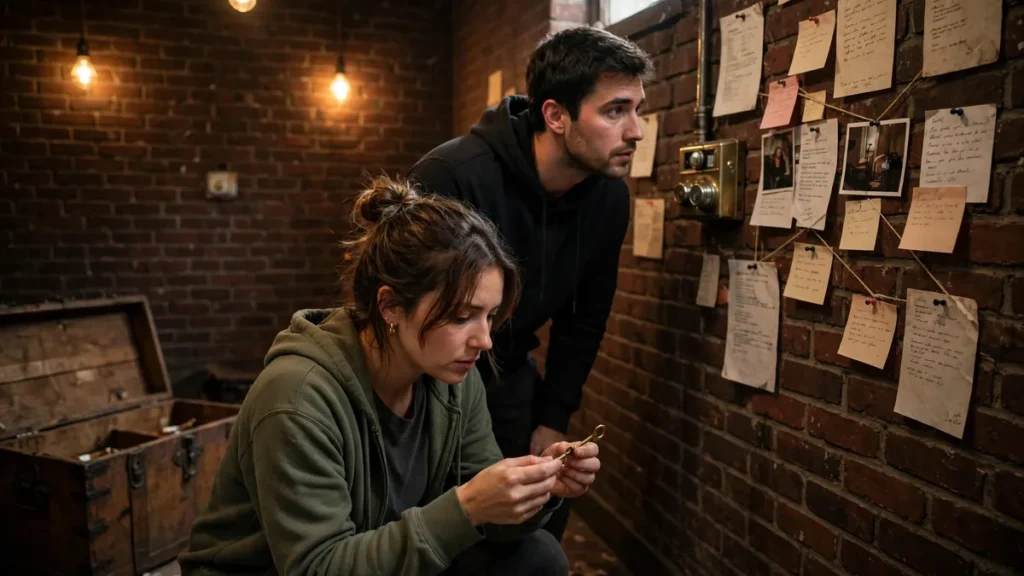
Start with what escape rooms genuinely offer adults, because the appeal is real and it is not hype. A dinner lets you drift. A film lets you sit in the dark and say nothing. A room full of puzzles does not let anyone coast, and for people whose friendships have settled into the same three conversations, that pressure to pay attention can feel like a break from routine. The clues are scattered, the locks call for different sorts of thinking, and a silent group runs out of time. You have to talk, and talking to solve something together is a different kind of conversation from talking about work.
The second thing in their favour is the shape of the hour. You walk out with a shared memory that did not need alcohol or a big budget dinner to create.
The third is that the format suits mixed groups. No one skill carries a team through a good room. The person who is good with numbers opens the code lock, the person who notices details spots the pattern in the wallpaper, the person who is good at searching finds the key taped under a drawer. A well-designed room gives several people a moment to be useful, and that spread of small wins is what makes the hour feel shared rather than watched.
The case against
Now the other side, because a fair verdict has to carry it. The first problem is size. Four to six adults is the number that works. Everyone has a job, nobody is waiting around, and the puzzles split naturally across the group. Go above six and the room thins out: someone is always queuing for the lock, someone else drifts to the back and watches. By eight, three people are playing and five are standing in a crowd. Venues will sell you a room for eight because eight tickets pay better than five, but the experience does not grow with the price. A group bigger than six should split across two rooms and meet for a drink when both doors open.
The second problem is the person every group has: the quick solver who takes over. They spot the clue, crack the code, and open the lock before anyone else has finished reading the puzzle. The rest of the group watches for an hour, and an audience does not come back. If you know who that person is in your group, and you do, say something before you arrive. Agree that whoever finds a clue calls it out, that nobody works a lock alone for long, and that the person who solved the last puzzle leaves the next one to someone else. It feels awkward to say in advance. It feels worse to say nothing and watch half the group switch off.
The third problem is the clock. Sixty minutes sounds generous on the booking page and very short inside the room. For some adults the countdown is the fun: decisions sharpen, talk gets faster, and the last ten minutes carry a real urgency that makes a win feel earned. For others the countdown is the whole problem. If you like to think slowly, if you dislike being watched while you think, if you get flustered under time pressure, the clock makes every puzzle harder than it is. That is not a weakness. It is a preference, and it is worth knowing about yourself before you pay. An escape room measures how well you think in a hurry, in a strange room, while people talk over you. That is a narrower skill than being clever, and the two do not always travel together.
Date nights: high reward, high risk
Two people, one room, an hour, no phones. Couples either love this idea or should avoid it entirely, and the line between the two is thinner than the booking pages admit.
When it works, it works because the room gives a couple something to do together that is not eating or scrolling. You search different corners, you call out what you find, you disagree briefly about a code and then solve it. Afterwards you have something new to talk about over dinner, which is more than most date nights deliver. Couples who already communicate well tend to enjoy it, because the room rewards the habits they already have.
When it fails, it fails because a timed game magnifies how a couple handles pressure, and it does so in a small room with no graceful exit. One person solves fast while the other feels like the assistant. One person freezes and the other gets impatient, and the impatience is what they remember, not the puzzles. Most rooms are also built for four to six players, so a pair has fewer eyes on the problem. Book a room the venue recommends for two, pick the easiest difficulty, and treat a win with minutes left as the goal. A room that beats you outright is a strange thing to carry into dinner.
So: a good third or fourth date, or a good night out for a couple who already know each other. A poor first date. You do not yet know whether the other person likes puzzles, dislikes small spaces, or panics under a countdown, and a locked room is a dramatic way to find out.
Work teams, in brief
Offices book escape rooms constantly, and the promise on the booking page is bigger than the room can deliver. A small team that already works well together will have a good hour and a story for Monday. It can also show a manager that a quiet colleague notices things the loud ones miss. But a room cannot fix a team that is struggling. Poor communication at work becomes poor communication in the room, only faster and more visible. One person who dominates meetings will dominate the puzzles. A team that has just been through a rough patch needs honesty from its leaders, not a locked door. Our longer verdict on escape rooms for team building makes the full case, and the short version is this: the room shows you what your team is like. It does not change it.
The bill
Escape rooms are expensive, and the verdict has to say so. A ticket costs roughly what a cinema ticket and a meal cost, and a room for five adults adds up to a proper day out once you count travel and a drink afterwards. This is a planned spend, not a casual one.
Value depends on the comparison. Against a night in a bar, a room wins on memory: nobody retells a round of drinks for weeks, but people retell the final puzzle they cracked with seconds left. Against a games night at home, the room costs far more and delivers far more spectacle. The sensible approach is to treat the venue as an occasion, a few times a year, and to fill the gaps with cheaper versions of the same idea. Boxed escape games and printable kits deliver the same kind of puzzle-solving at home for a fraction of the cost, and our list of the best escape room games for grown-ups names the ones worth trying between visits. The room is what you came for.

Who should stay home
Some adults are better off skipping it, and their friends should accept that without an argument. Claustrophobia is the obvious one, and it deserves a direct question to the venue before booking, because rooms vary wildly. Some are bright and open, more like a large living room. Others are small, dim, and deliberately cramped. The booking page rarely tells you which you are getting. Ask how big the room is, whether the door is actually locked or simply closed, and whether you can step out and come back.
Anxiety is the quieter one. The locked door, the ticking clock, the camera, the sudden noises in a horror theme: each is manageable alone, and together they can be a lot. If the idea makes your stomach tighten, trust that. A bright mystery room is a gentler first step than a dark horror room, and nobody should be talked into the scary version as a joke. Horror rooms are a different product, not a harder version of the same one: they run on dread, darkness, and surprise, sometimes with actors, and plenty of adults who would enjoy a detective room would hate one.
Access is the part venues mention least. Stairs, narrow doorways, dim light, small print, puzzles that need crouching or reaching: any of these can quietly shut someone out. Check with the actual person in mind before you book. An outing that one person spends dreading is not a group outing.
One more flaw: you can only play a room once
Here is the weakness that only appears after a few visits. Once you have solved a room, it is finished. You know where the key hides, you know the code, you know the twist. There is no second act, which is why new rooms keep opening and old ones keep closing. A group that goes every month will run out of good rooms in its city within a year. A group that goes three or four times a year, in different cities when travelling, keeps finding fresh ones.
The consolation is that the habits travel even when the rooms do not. A group that has played together gets faster at the opening search, better at calling out clues, and quicker to ask for a hint instead of losing ten minutes to a puzzle it has misread. The second room is usually better than the first, because the group has learned how to play. The trick is to enjoy that middle stretch rather than trying to turn it into a weekly habit.
Picking a good one
Start with the group, not the room: four to six people who all want to be there. Ask each person privately whether small spaces, horror themes, or timed games bother them, because people agree to things in a group chat that they would never choose alone. Choose the difficulty a notch below what the group thinks it can handle, and choose a mystery, detective, or heist theme for a first visit. Horror can wait until the group has played one room together and wants something scarier. Book earlier in the day when you can, arrive a little early, and keep an hour free afterwards for a drink and a chat about what happened in there. That conversation is where the evening becomes a memory, and it is the part almost nobody plans.
The bottom line
Are escape rooms good for adults? Yes, provided a few things are true, and those few things matter more than the room itself. They suit a small group of friends who get on well, a couple who already communicate, and an occasion rather than a routine. They give busy adults an hour of real focus, a problem no one person can solve alone, and a story worth retelling.
They do not suit large groups, adults who hate small spaces or ticking clocks, anyone who would rather think slowly than quickly, or a group where one person does the solving while the rest watch. They are not a cheap habit, they cannot be replayed, and they will not repair a friendship or a team that is already struggling. Book them for the right reasons, with the right people, at a sensible difficulty, and the locked door becomes a good evening. Book them in a hurry, for the wrong group, at the wrong price, and it is just a costly hour in a small room that nobody enjoyed. The door was never the interesting part. The people in the room were.