Ever stared at a Sudoku for beginners puzzle, filled with empty grids and isolated numbers, and wondered where to even begin? Learning how to play Sudoku is far easier than it looks. Despite being a game played entirely with numbers, Sudoku requires zero math skills no addition, subtraction, or multiplication required. Instead, it is a pure game of logic, pattern recognition, and elimination.
Whether you want to solve your first daily Sudoku grid over morning coffee or master basic Sudoku tips to speed up your solving time, this complete step-by-step guide breaks down how Sudoku works, fundamental Sudoku rules, and actionable Sudoku strategy for absolute beginners.
What Is Sudoku and How Does It Work?
Before diving into solving strategies, understanding how Sudoku works at a structural level is essential.
A classic Sudoku puzzle consists of a 9×9 grid containing 81 total squares (cells). This main grid is subdivided into nine smaller 3×3 boxes (often called blocks or regions). At the start of a puzzle, several numbers (givens) are already placed inside the grid. Your objective is simple: fill in all remaining empty cells using numbers from 1 through 9. Sudoku is just one example of a pure logic game — if you enjoy this style of thinking, our collection of logic puzzles and riddles offers similar elimination-based challenges.
The 3 Golden Rules of Sudoku
To solve any Sudoku grid legally, you must obey three simple Sudoku rules. Every valid puzzle has exactly one unique solution that satisfies all three conditions simultaneously:
-
Every Row Must Contain Numbers 1 Through 9: Each of the 9 horizontal rows must contain every digit from 1 to 9 without repeating any number.
-
Every Column Must Contain Numbers 1 Through 9: Each of the 9 vertical columns must contain every digit from 1 to 9 without repeating any number.
-
Every 3×3 Box Must Contain Numbers 1 Through 9: Each of the nine 3×3 regions must contain every digit from 1 to 9 without repeating any number.
Sudoku’s origins and mathematical structure are well documented on its Wikipedia page, including how the puzzle evolved from Latin squares.
Fundamental Sudoku Rules & Restrictions at a Glance
Understanding where constraints overlap is the key to making logical deductions rather than guessing.
| Constraint Area | Total Cells | Required Digits | Duplicates Allowed? |
| Horizontal Row | 9 cells | 1, 2, 3, 4, 5, 6, 7, 8, 9 | No |
| Vertical Column | 9 cells | 1, 2, 3, 4, 5, 6, 7, 8, 9 | No |
| 3×3 Box / Region | 9 cells | 1, 2, 3, 4, 5, 6, 7, 8, 9 | No |
| Complete Grid | 81 cells | 9 of each digit (1-9) | N/A (Each cell filled once) |
Core Sudoku Strategy for Beginners
When you open a new Sudoku for beginners puzzle, never guess. Every move must be proven using logic and process of elimination. Here are the four essential techniques that form the foundation of beginner-level Sudoku strategy.
1. Cross-Hatching (Scanning Rows and Columns)
Cross-hatching is the first Sudoku tips technique every beginner should master. Pick a specific number (for example, the number 5) and scan across adjacent 3×3 boxes to see where 5s are already placed.
By projecting imaginary lines along the rows and columns that already contain a 5, you eliminate those entire rows and columns as potential spots within an unsolved 3×3 box. Often, this leaves only a single valid cell for that number.
2. Single Possibility (Naked Singles)
A “Naked Single” occurs when an empty cell has 8 of the 9 digits already accounted for in its intersecting row, column, and 3×3 box.
When analyzing a cell, check its horizontal row, vertical column, and containing box. If numbers 1, 2, 3, 4, 6, 7, 8, and 9 are already visible across those intersecting areas, then 5 is the only logical choice remaining for that cell.
3. Single House Elimination (Hidden Singles)
Sometimes a specific house (a row, column, or box) needs a particular number, and after scanning intersecting lines, only one cell in that house can legally accept it. Even if that cell has multiple candidate options on its own, if no other cell in that row/column/box can hold the number, it must go there.
4. Pencil Marking (Pencil Notes)
As puzzles progress from super-easy to moderate difficulty, keeping track of possibilities mentally becomes tough. Use pencil marking (writing small candidate numbers in the corners of empty cells) to note potential candidates. Limit pencil notes to cells where a number has only 2 or 3 possible locations within a box.
Step-by-Step Guide: How to Solve Your First Sudoku Grid
Ready to solve a puzzle? Follow this systematic walkthrough on how to play Sudoku efficiently from start to finish.
Step 1: Start with the Most Frequent Given Numbers
Scan the initial grid and count which digits appear most frequently as givens. If the puzzle starts with six 7s already placed across the board, start by cross-hatching 7s. Because most 7s are already present, finding the remaining two 7s will be fast and easy.
Step 2: Target “Almost-Full” Houses
Look for rows, columns, or 3×3 boxes that already contain 7 or 8 numbers. When a row has 8 filled cells and only 1 blank space, simple counting reveals the missing number immediately. Filling these almost-complete lines triggers chain reactions across adjacent boxes.
Step 3: Work Region by Region
Focus your attention on a single 3×3 box that contains 5 or more filled digits. Combine cross-hatching from neighboring boxes with row/column checks to solve the remaining empty cells within that specific region.
Step 4: Re-Scan After Every Placement
Every time you write a new number onto the grid, it acts as a new clue! Immediately check the row, column, and 3×3 box where you just placed that digit to see if it unlocks adjacent cells.
5 Practical Sudoku Tips for Beginners
To avoid common pitfalls and enjoy a smooth solving experience, keep these top Sudoku tips in mind:
-
Never Guess: Sudoku is a pure logic puzzle. If you guess a number and make a mistake, that single error will corrupt the entire grid later on. If you get stuck, re-evaluate your pencil notes or scan a different number.
-
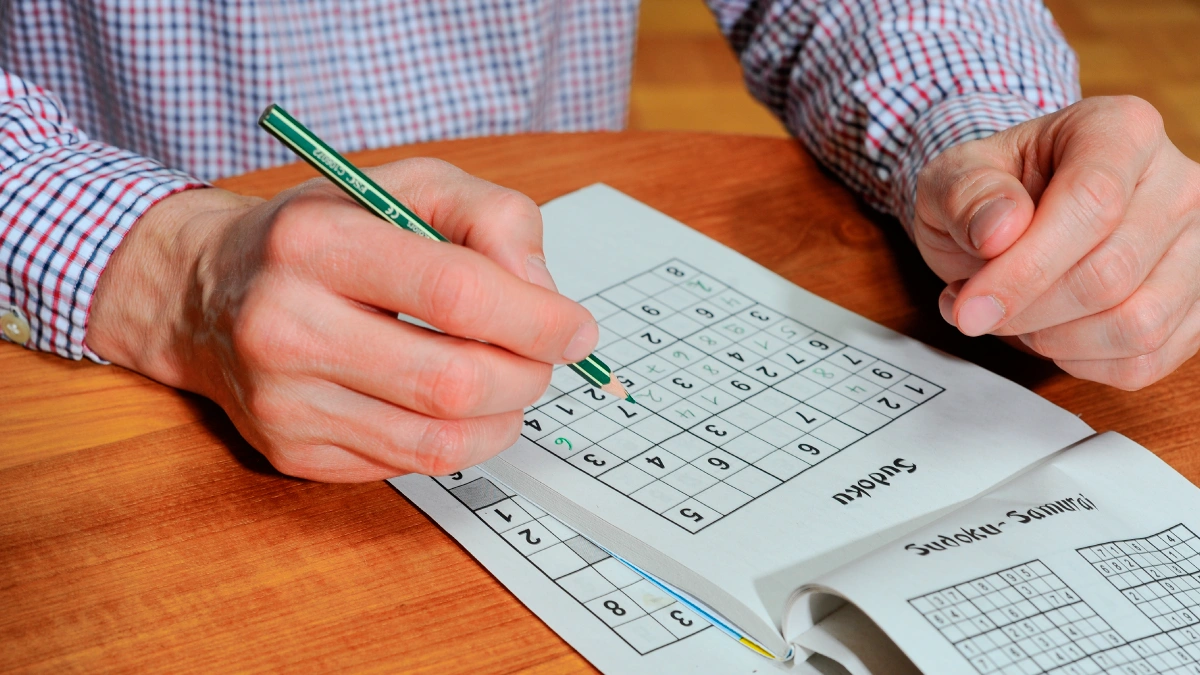
Keep Your Work Clean: Use a pencil with a good eraser when solving paper puzzles, or use digit-highlighting features when playing digital grids online.
-
Patience Over Speed: Don’t rush. Speed comes naturally as your brain gets accustomed to spotting cross-hatching patterns and candidate eliminations.
-
Look at the Big Picture: Don’t stare at a single cell for 10 minutes. If one area isn’t yielding results, move to a different section of the grid.
-
Practice Daily: Solving one simple grid per day builds visual pattern recognition remarkably fast.
Common Beginner Mistakes to Avoid
| Mistake | Why It Hurts Your Solve | How to Fix It |
| Guessing Numbers | Causes subtle errors that ruin the entire grid 20 steps later | Always verify placements with row, column, and box constraints |
| Over-Writing Candidates | Clutters cells with 5+ pencil marks, making grids hard to read | Only write pencil notes when a digit has 2 (or max 3) spots in a box |
| Ignoring New Placements | Misses fresh clues created by your own solved numbers | Re-scan intersecting rows and columns immediately after placing a number |
| Fixating on One Square | Wastes time on low-information cells | Move around the board to high-density rows, columns, or boxes |
Advanced Sudoku Strategies to Learn Next
Once you master basic cross-hatching and naked singles, you can move on to intermediate techniques designed for harder grid layouts:
-
Naked Pairs: When two cells in the same row, column, or box can only contain the exact same two candidate numbers (e.g., 2 and 7), those two digits can be eliminated as candidates from all other cells in that house.
-
Hidden Pairs: When two candidate numbers appear in only two cells within a house, no other numbers can be placed in those two cells.
-
Pointing Pairs: When candidates for a number within a 3×3 box align in a single row or column, that number can be eliminated from the rest of that same row or column outside the box.
Conclusion
Learning how to play Sudoku is one of the most satisfying cognitive exercises you can adopt. By mastering the core Sudoku rules, applying simple cross-hatching techniques, and relying on strict process of elimination, you can solve any beginner-level grid with complete confidence. Looking for more daily logic challenges, brainteasers, and word games to keep your mind sharp? Visit riddlepuzzle to test your skills today!
Frequently Asked Questions
Is Sudoku a math game?
No, Sudoku is not a math game. The numbers 1 through 9 are simply symbols. You could replace the numbers with letters (A through I), shapes, or colors, and the rules and logic would remain identical.
Can a Sudoku puzzle have more than one solution?
A proper, well-constructed Sudoku puzzle has only one unique valid solution. If a puzzle has multiple solutions, it is considered poorly designed.
What is the easiest way to start learning Sudoku?
Start with easy-level grids that provide 35 or more initial given numbers. Practice cross-hatching until you can consistently complete easy puzzles without making errors.
Where can I play daily Sudoku and logic puzzles online?
You can practice daily logic games, brainteasers, and interactive word puzzles online at riddlepuzzle.com.