Key Takeaways
-
Interactive screen-free and digital options
-
Essential cognitive, logic, and memory boosts
-
Simple setup using everyday household items
-
Adaptable challenges for ages 3 to 12
Ever watched your child stare at a screen for hours and wondered how to turn that focused energy into something genuinely useful? We have all been there as parents and educators.
Finding engaging brain games for kids is one of the most effective strategies to keep young minds sharp while keeping the peace at home. These activities seamlessly blend entertainment with deep cognitive development, making daily learning feel like natural play.
AI Overview
Brain games for kids are interactive activities designed to boost memory, focus, problem-solving skills, and critical thinking. They range from simple screen-free paper puzzles and physical challenges to dynamic board games and online riddles. By combining play with fundamental skill development, these activities help children build critical cognitive pathways while keeping their natural curiosity alive and active every day.
Why Cognitive Play Matters for Growing Minds
Children naturally learn best when they do not even realize they are engaged in formal learning. Active play builds neural connections much faster than passive instruction ever could.
When young learners regularly tackle thinking games for kids, they practice essential skills such as patience, emotional regulation, logical deduction, and spatial awareness. Executive function skills form the backbone of a child’s educational journey.
These mental processes enable us to plan, focus attention, remember instructions, and juggle multiple tasks successfully. When kids participate in structured play, they are taking their executive function through a complete mental workout.
Spatial reasoning skills also benefit tremendously from targeted games. When children manipulate blocks, solve geometric puzzles, or navigate mazes, they build mental models of physical space.
Research indicates that early development of spatial skills correlates directly with higher achievement in science, technology, engineering, and mathematics later in life. Pattern recognition is another vital capability nourished through playful challenges.
Spotting visual, auditory, or numerical sequences helps kids make sense of a complex world. It forms the core foundation for early literacy while also preparing children for foundational mathematical concepts like skip counting and algebraic thinking.
Finally, social play introduces an irreplaceable layer of emotional maturity. Playing interactive challenges with parents, siblings, or peers teaches kids how to take turns, win gracefully, cope with temporary setbacks, and collaborate toward a shared goal.
Screen-Free Paper and Tabletop Brain Games
You do not need expensive gadgets or high-tech setups to give your child a rich mental workout. Classic pen and paper configurations offer incredible educational games that require zero battery life or charging cables.
1. Beginner Sudoku
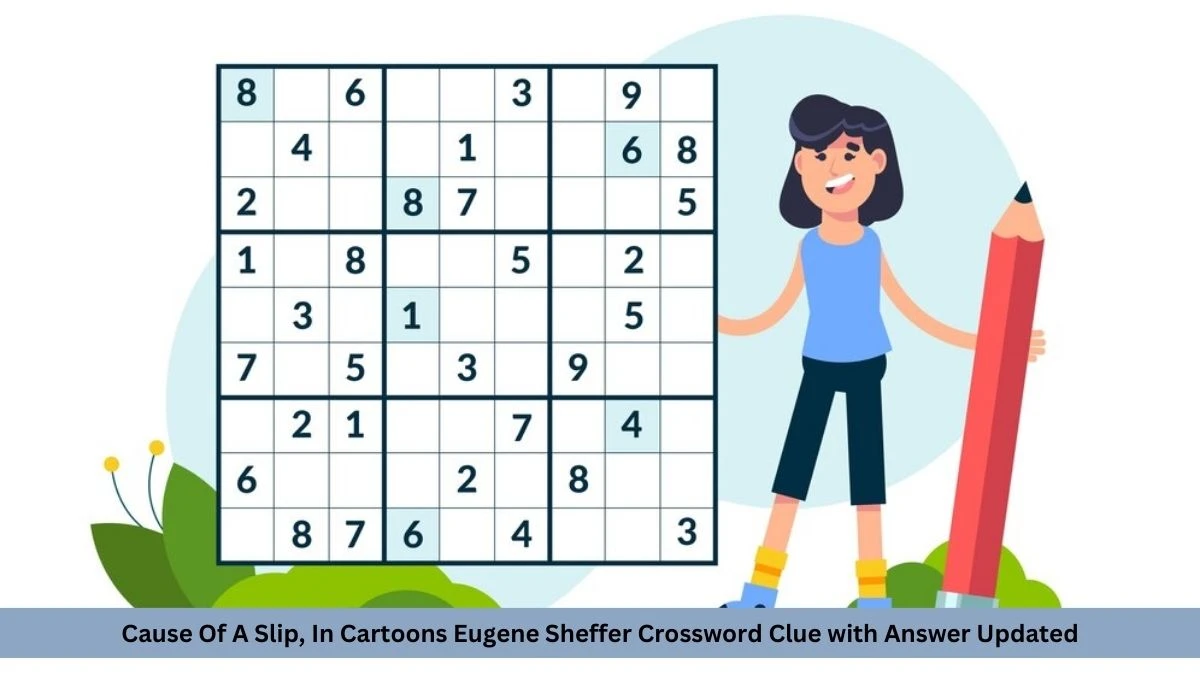
Start young children with a simplified four-by-four grid using distinct colors, basic shapes, or animal stickers instead of standard numbers.
This modification removes numerical intimidation while teaching the fundamental concepts of logical elimination and row-column relationships. As their confidence grows, you can gradually transition them to traditional six-by-six layouts.
2. Detailed Spot the Difference
Visual scanning puzzles force the young brain to slow down and focus intently on subtle details. You can easily print these online or find dedicated activity books suited to your child’s age group.
By scanning systematically from top to bottom and left to right, children strengthen their visual processing speed and short-term visual memory.
3. Word Searches with Clues
Instead of providing a traditional word bank, give your child descriptive clues to figure out what words they need to hunt down.
For instance, write a clue like “a red fruit that grows on trees” rather than simply listing the target word. This twist converts basic vocabulary practice into an engaging riddle and deepens semantic connections in their developing language center.
4. Grid Drawing Copying
Copying an image section by section using a background grid builds spatial awareness and fine motor precision simultaneously.
This exercise forces children to break down a complex subject into smaller, manageable visual units. It teaches them scale, proportion, and attention to detail while reinforcing hand-eye coordination.
5. Custom Hand-Drawn Mazes
Navigating complex pathways on paper strengthens forward-planning skills as kids look several moves ahead to avoid dead ends.
You can easily draw custom mazes on paper or whiteboards, tailoring the difficulty directly to your child’s current ability level. Encourage them to trace the path with their eyes before touching the paper with a pencil to maximize executive function benefits.
Interactive Memory and Focus Booster Games
Memory functions much like a physical muscle; the more children train it through structured practice, the stronger and more flexible it becomes over time.
| Game Name | Target Age | Primary Skill Built | Setup Complexity |
| The Magic Tray Game | 4–10 years | Short-term visual recall | Very Low |
| Cumulative Story Building | 5–12 years | Auditory attention & sequencing | None |
| Auditory Rhythm Echo | 3–8 years | Selective focus & auditory processing | Low |
| Tactile Mystery Bag | 4–9 years | Tactile discrimination & vocabulary | Medium |
6. The Magic Tray Game
Place ten random everyday items on a baking tray, such as a spoon, an eraser, a small toy car, and a key.
Allow your child to study the items for sixty seconds, then cover the tray with a cloth and secretly remove one item. Uncover the tray and challenge them to identify what is missing.
To increase difficulty for older children, add more items or remove two objects at once.
7. Cumulative Story Building
Begin a story with a simple opening sentence. Your child must repeat your sentence word for word and then add their own descriptive sentence to continue the plot.
Take turns passing the growing narrative back and forth. This challenge tests auditory memory, narrative comprehension, and sequential processing in an entertaining, highly creative environment.
8. Auditory Rhythm Echo
Clap a distinct sequence of rhythms and ask your child to listen closely and repeat the pattern back to you accurately.
You can start with simple two-beat claps and gradually progress to complex, multi-beat combinations involving table taps and chest pats. This activity demands total auditory focus and helps develop rhythm and sequence processing crucial for musical and language acquisition.
9. Tactile Mystery Bag
Place various familiar objects with distinct textures and shapes inside an opaque pillowcase or cloth bag.
Ask your child to reach inside without looking, feel one object, and describe its texture, shape, and weight before guessing what it is. This activity fires up tactile perception and encourages children to translate physical sensations into descriptive language.
10. Memory Pattern Replicas
Use colored building blocks or small toys to construct a small, specific tower or structure.
Allow your child to look at your creation for five seconds before hiding it under a box. Challenge them to construct an exact replica from memory using their own set of blocks.
This builds short-term spatial memory and precise visual recall.
Outdoor and Physical Thinking Games
Combining physical movement with cognitive decision-making creates ideal conditions for deep learning. Physical kids brain games keep energy levels high while ensuring that mental focus remains completely engaged.
11. Modified Red Light Green Light
Take the classic playground game and introduce custom rules to test impulse control and flexible thinking.
For example, instruct players that red light means run in place, green light means freeze, and yellow light means walk backward. Frequently changing these associations forces the brain to override automatic responses, strengthening self-regulation skills.
12. Chalk Obstacle Course Coding
Draw a large grid on your driveway or sidewalk using colorful chalk and place small markers or toys inside individual squares.
Let your child program your steps across the grid by laying down a sequence of drawn directional arrows pointing forward, left, right, or backward. This introduces foundational computer programming logic through direct physical movement.
13. Backyard Treasure Map Reading
Draw a basic overhead map of your backyard or local park, marking key landmarks like trees, benches, and patios, with an mark indicating where a hidden object lies.
Reading two-dimensional maps and translating that spatial layout to three-dimensional physical environments builds geographic literacy, orientation skills, and spatial geometry.
14. Scavenger Hunt Riddles
Rather than giving children a standard checklist of items to find outdoors, present them with short riddles that describe each target object.
A clue like “I am green, I need sunlight, and I rustle in the wind” directs them to search for a leaf. Solving these clues requires kids to draw upon their background knowledge, deduct logical answers, and stay active.
Strategy and Logic Board Games
Tabletop board gaming brings families together while offering structured thinking games for kids across every age group and development stage.
Chess remains the ultimate traditional strategy game for teaching foresight, spatial calculation, and long-term planning. It challenges players to anticipate their opponent’s potential moves while weighing the consequences of their own choices.
Regular practice fosters patient reflection and systematic problem-solving strategies. Connect Four provides a fast-paced, accessible lesson in visual logic and tactical defense.
Players must simultaneously execute their own strategy while carefully monitoring their opponent’s row formations. It teaches children to recognize emerging patterns quickly and adapt their plans instantly.
Checkers offers an approachable entry point into tactical board play for younger learners. The simple rules allow kids to focus on foundational principles like piece protection, positional control, and calculated sacrifices.
It reinforces visual planning and spatial awareness in a digestible format. Blokus is a spatial reasoning powerhouse where players fit geometric colored pieces onto a shared board grid.
Each piece must touch another of the same color, but only at the corners. It challenges players to visualize geometry, anticipate space restrictions, and block competitors effectively.
Rush Hour is a sliding block logic puzzle that presents players with traffic gridlock scenarios. Children must slide obstructing vehicles out of the way to clear a path for the primary car to escape.
This single-player game builds systematic deduction habits and spatial navigation skills through progressive levels of difficulty.
Creative Word and Language Challenges
Strong language capabilities form the bedrock of academic confidence, starting with creative verbal expression and rapid vocabulary recall.
15. The Category Blitz
Select a specific letter of the alphabet and a broad topic, such as animals that start with the letter B.
Take rapid turns naming valid items until someone runs out of ideas or the timer expires. This game exercises mental categorizing abilities, verbal fluency, and rapid memory retrieval under light, exciting pressure.
16. Rapid Rhyme Racing
State a simple target word like cat or star and see how many real or playful rhyming words your child can generate within thirty seconds.
Phonemic awareness, which involves identifying and manipulating individual speech sounds, is one of the strongest early predictors of reading success.
17. Two Truths and a Lie
Great for school-aged kids and family dinners, this classic conversation game encourages analytical thinking.
Players share three statements about a topic, two true and one false, while others analyze the logic, facts, and delivery to spot the lie. It sharpens critical listening and evaluation skills.
18. Reverse Dictionary Clues
Read an actual definition directly from a dictionary or online glossary and challenge your child to guess the target word based purely on the description.
This exercise strengthens listening comprehension, expands vocabulary, and turns language acquisition into an interactive mystery.
19. Picture Story Construction
Select three or four random household objects or picture cards and challenge your child to improvise a coherent story that connects all of the elements together logically.
This activity stimulates narrative organization, creative problem-solving, and verbal expression.
DIY Math and Science Puzzles at Home
You do not need specialized laboratory equipment or complex supplies to make fundamental math and science concepts feel exciting and accessible.
20. Homemade Balance Scale
Construct a functional balance scale using a plastic clothes hanger, two paper cups, and some string.
Ask your child to predict how many small plastic blocks will equal the weight of a heavy metal toy car before testing their hypothesis. This simple experiment introduces physical physics concepts, estimation skills, and visual math balance.
21. Tangram Geometry Assembly
A traditional set of seven geometric tangram tiles can be combined to form thousands of unique silhouettes and images.
Working with these shapes provides incredible learning benefits for visual geometry, spatial rotation, and geometric composition. You can print tangram outlines online or make your own set out of durable cardstock.
22. Domino Fraction Alignment
Use standard numbered dominoes as visual representations of mathematical fractions, with the top number as the numerator and the bottom as the denominator.
Challenge children to order a selection of dominoes from smallest numerical value to largest. This translates abstract fractional concepts into tangible, visual objects.
23. Logic Elimination Grids
Set up simple logic puzzles using clues to narrow down options on a small matrix.
For instance, provide clues about three children and their favorite pets, such as “Sarah does not like dogs” and “the cat owner wears blue.” Kids use process of elimination to fill in the grid, building systematic deduction techniques.
24. Experimental Color Mixing
Provide your child with small cups of water dyed with primary food coloring, along with eyedroppers and an empty ice cube tray.
Challenge them to mix specific secondary and tertiary colors based on trial, error, and systematic measurement. This teaches experimental tracking, cause-and-effect thinking, and basic chemical principles.
Online Riddles and Digital Puzzles
When digital screen time is appropriate, steering children toward high-value learning platforms ensures that their time online remains mentally stimulating.
Interactive platforms like riddlepuzzle.com provide carefully structured riddles and logic challenges that encourage critical thinking rather than passive video consumption. Digital kids brain games offer immediate feedback, which allows children to analyze their mistakes and adjust their strategies in real time.
| Platform Type | Core Focus | Primary Cognitive Benefit |
| Paper & Pencil Puzzles | Visual scanning & logic | Fine motor & spatial focus |
| Physical Movement Games | Impulse control & sequencing | Executive function & coordination |
| Interactive Digital Games (riddlepuzzle.com) | Adaptive logic & riddles | Rapid feedback & strategy adaptation |
This immediate loop builds persistence and a growth mindset, helping children realize that initial errors are simply necessary steps toward finding the correct answer.
Combining physical paper-and-pencil tasks, active movement challenges, and digital puzzles on riddlepuzzle creates a well-rounded routine. This balance ensures kids receive diverse cognitive stimuli without suffering from digital fatigue or screen overload.
Conclusion
Integrating a diverse mix of these brain games for kids into your daily family routine transforms standard downtime into valuable opportunities for mental growth. Whether you are working through custom paper challenges together, playing strategy games at the table, or exploring logic puzzles on riddlepuzzle.com, the secret lies in keeping the atmosphere light, collaborative, and full of natural curiosity.
Frequently Asked Questions
What are the best screen-free brain games for young kids?
Classic memory matching cards, basic paper mazes, simple building block pattern copying, and tactile mystery bags work best for younger learners.
How often should kids play educational games for real cognitive benefits?
Just fifteen to twenty minutes of daily playful mental activity provides noticeable improvements in focus, logical reasoning, and problem-solving skills over time.
Can brain games help children improve their school concentration?
Yes, games that require pattern recognition, rule adherence, and impulse control directly strengthen classroom focus, active listening, and overall learning patience.