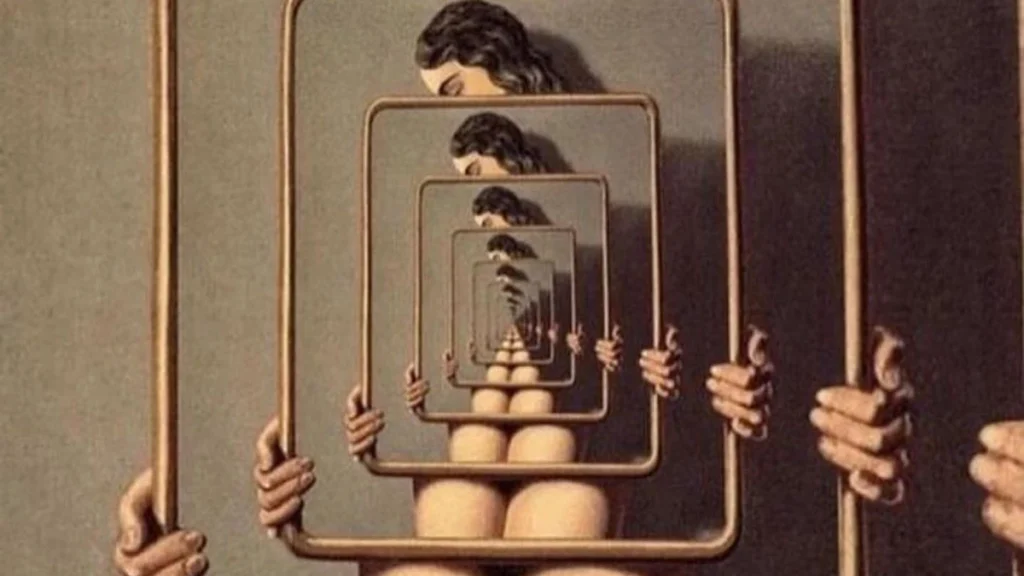
Can you look at a complex shape, flip it across an imaginary vertical line in your head, and predict exactly where its smallest details will land? If you love a good mirror image game or want to measure your spatial reasoning skills, diving into mirror image puzzles is an excellent way to test your processing speed.
To solve a tricky mirror image quiz successfully, you need more than just standard pattern recognition. You must train your brain to reverse orientations, calculate geometric angles, and detect tiny symmetry errors. Therefore, these challenges serve as a highly stimulating workout for adults and an excellent mirror puzzle for kids to develop early mathematical thinking.
When you take on a modern mirror image challenge, you are putting your mind’s rotation abilities to the test. This comprehensive guide breaks down the deep optical science behind reflection puzzles, highlights the main types of brain teasers, and shares expert tips to help you find the correct reflection every single time.
Why a Mirror Image Brain Teaser is the Perfect Cognitive Gym
Many people assume that spatial logic puzzles are just simple visual games meant to pass the time. However, isolating a true reflection changes your cognitive processing dynamic entirely.
When you solve a mirror image brain teaser, you are testing a critical intelligence marker known as mental rotation. You can read more about the science behind this ability on Psychology Today. This is the ability to transform a 2D or 3D object in your mind’s eye without physically touching it.
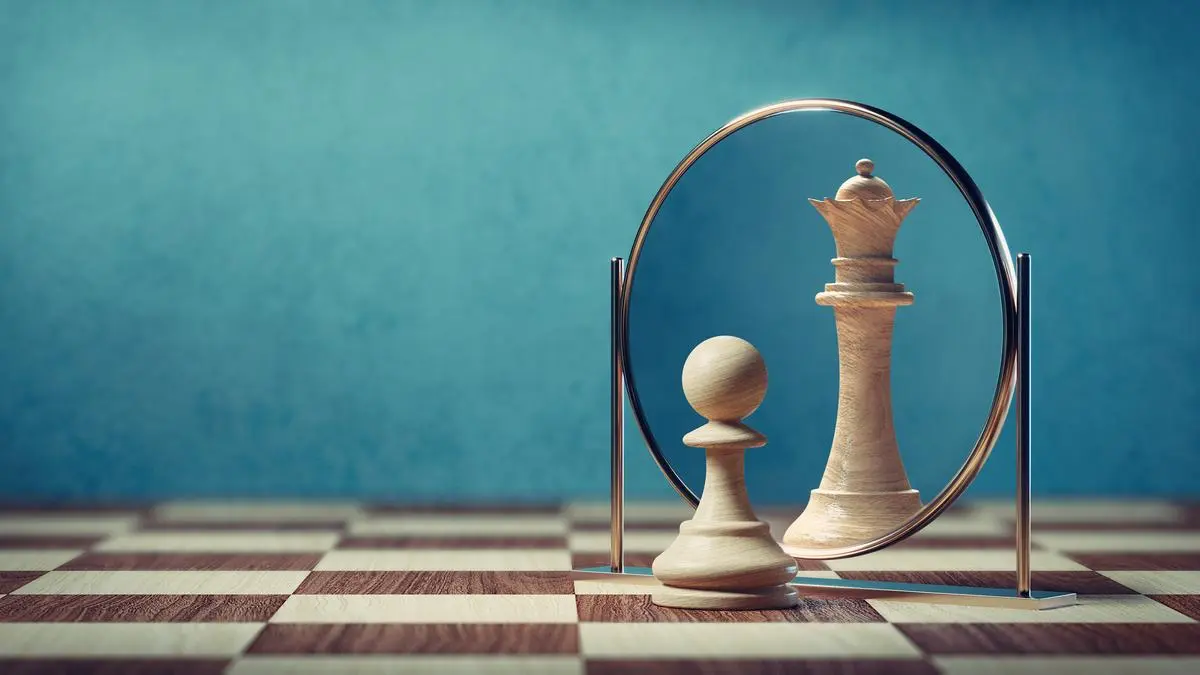
These puzzles train your brain to break away from standard reading habits. By forcing your mind to flip orientations from left to right while keeping the top and bottom perfectly stable, you improve your everyday spatial awareness. This type of mental conditioning directly helps with real-world tasks like reading maps, parking a car, or engineering physical structures.
The Three Main Types of Reflection Puzzles
Not all symmetry challenges use the same framework. Most popular games fall into three major categories, each testing a specific part of your visual system and cognitive processing.
1. Asymmetrical Geometric Matches
These challenges display an intricate geometric shape composed of various interlocking lines, shaded triangles, and small dots. The puzzle presents four similar options, but only one is the mathematically true reflection. This format requires precise detail tracking, as a single flipped line or mismatched shading block will ruin an answer option.
2. Typographical and Text Reversals
These puzzles display words, numbers, or full phrases written in a flipped format. You must mentally read the text as if you were looking at it inside a physical mirror. This setup forces your brain to bypass its natural reading memory, making it an excellent training tool for boosting reading flexibility and working memory. For more text-based challenges, try our rebus puzzles with answers to test a different kind of visual decoding skill.
3. Real-World Object and “Spot the Reflection Puzzle”
This classic setup places a colorful illustration of an active scene like a boat on a lake or a person looking in a mirror next to several potential reflection options. The creator alters micro-details in the incorrect options, such as shifting a shadow, flipping a hand placement incorrectly, or changing the angle of a flag. To win, you must track back and forth between the target and the options to catch the flaws.
Studio Breakdown: Common Traps in Mirror Matching Puzzles
Puzzle designers use several clever layout styles to confuse your eyes and exploit your brain’s natural shortcuts. Let us look at how a modern mirror matching puzzle structures its elements to maximize difficulty.
The Standard Rotational Trap
The most common trick designers use is replacing a true horizontal mirror reflection with a simple 180-degree or 90-degree rotation of the original image. Your brain often mixes up rotation (turning an object) with reflection (flipping an object over an axis), causing you to choose a rotated image that looks correct at first glance but is completely backwards.
Distant Element Compression
When an object reflects across a vertical axis, the details closest to the mirror line must remain closest to the mirror line in the reflection. Designers trap casual players by keeping the overall shape correct but swapping the depths of internal items. This makes the background items appear in the foreground of the reflection, which completely violates optical laws.
Symmetric Camouflage
Designers love to create shapes that are almost entirely symmetrical, except for one tiny, off-center dot or line. Because your brain naturally wants to see symmetry and balance, your eyes will automatically gloss over the single asymmetrical element. This cognitive shortcut causes you to assume all the answer options are correct reflections when only one accurately mirrors that tiny detail. If tiny visual differences are your thing, our spot the difference puzzles offer a similar detail-hunting challenge.
Master Checklist: Tricky Text and Symbol Flips That Fool Most Players
Certain letters and symbols look incredibly similar to other characters when flipped across a vertical mirror line. The table below breaks down the most commonly confused typographical elements used in a reflection puzzle and the exact structural traits to track.
| Original Character | True Vertical Reflection | Common Trap Option | How to Tell Them Apart |
| Letter b | d | p or q | A true vertical mirror flip turns a ‘b’ into a ‘d’. Trap options will flip it upside down into a ‘p’ or ‘q’, which is a vertical inversion, not a reflection. |
| Letter p | q | d or b | Flipping ‘p’ across a vertical line forms a ‘q’. Watch out for options that display a ‘d’, which represents an illegal top-to-bottom rotation. |
| Number 3 | Ɛ (Backwards 3) | 3 (Unchanged) | A ‘3’ must completely reverse its open loops to point toward the left. Trap options leave the ‘3’ untouched, betting that you will ignore it. |
| Letter N | И (Backwards N) | N (Unchanged) | The diagonal center line of an ‘N’ must tilt from the top-left to the bottom-right in a reflection. If it tilts from top-right to bottom-left, it is un-flipped. |
| Number 7 | 𠃎 (Backwards 7) | L or 7 | A ‘7’ must point its top horizontal bar to the left in a mirror reflection. Watch out for trap options that mimic a capital letter ‘L’. |
| Letter Z | S-Style Shape | Z (Unchanged) | A reflected ‘Z’ looks similar to a capital ‘S’ because the horizontal bars swap their starting corners. Ensure the sharp angles remain intact. |
Pro Strategies to Solve a Mirror Image Challenge
If you want to move past random guessing and find the mirror image with answers layouts quickly, you need a systematic method. Use this three-step strategy during your next puzzle session.
Step 1: Use the “Closest-to-the-Line” Rule
Do not look at the mystery image as one massive object. Instead, focus entirely on the items sitting closest to the central mirror axis line. If the original image features a tiny red star on the immediate right edge next to the mirror, your correct reflection must feature that exact red star on its immediate left edge next to the mirror. Eliminate any option that fails this proximity test.
Step 2: Trace the Left-to-Right Vector Lines
Pick a prominent diagonal line or pointing object within the target shape such as an arrow or an outstretched arm. Trace its direction in your head. If the original item points upward and to the right, its true mirror reflection must point upward and to the left. If an answer option points downward or still points to the right, scratch it off your list immediately.
Step 3: Isolate and Verify Key Asymmetric Details
Look for the most unbalanced, unusual feature in the original drawing. It could be a single earring on a character, a lone cloud in a sky, or a small missing corner on a block. Once you locate this asymmetric anchor point, check each answer option to ensure that specific item is perfectly inverted across the central axis line.
The Neuroscience of Mental Inversion
To understand why a spot the reflection puzzle can easily freeze your brain, you have to look at how humans process spatial images. Your brain’s parietal lobe is the primary engine responsible for handling spatial coordinates and calculating object transformations.
When you look at a normal object, your brain naturally saves energy by applying a rule called mirror-image generalization. This means that if you see a dog facing left, your brain easily recognizes it as the exact same dog when it turns to face right.
While this shortcut is fantastic for surviving in the wild, it is the exact reason why a mirror image quiz is so challenging. Solving a reflection puzzle forces your parietal lobe to turn off its automatic left-right generalization shortcut. You have to force your mind to treat the left and right orientations as completely separate, high-priority pieces of structural data. For more brain-training challenges rooted in logic rather than symmetry, check out our logic-based brain teasers.
Summary of Reflection Pattern Recognition
To summarize, successfully conquering a mirror image puzzle comes down to replacing random guessing with a strict, coordinate-based flipping method. By applying the closest-to-the-line rule, tracking the vectors of diagonal shapes, and isolating asymmetric details, you can easily solve even the toughest spatial logic games.
The secret is to look for structural inversion rather than simple rotation, break complex images down into smaller anchor points, and practice your mental rotation skills regularly. Over time, your brain will automatically flip these beautiful geometric configurations with absolute ease and accuracy. for more puzzle visit Riddlespuzzle.
Frequently Asked Questions (FAQs)
Why is a mirror image puzzle for kids so highly recommended by educators?
These puzzles serve as a vital introduction to advanced spatial intelligence, geometry, and structural symmetry. Practicing reflection matching early helps children develop the foundational mental rotation skills required for success in science, technology, engineering, and mathematics (STEM) fields.
Why do mirrors flip things horizontally but not vertically?
A physical mirror does not actually flip things from left to right or top to bottom. Instead, it flips images inside out along a front-to-back axis. Because we look at a mirror horizontally, we perceive this front-to-back inversion as a horizontal left-to-right swap, while our gravity-bound world keeps the top and bottom stable.
How can you tell a reflected image apart from a rotated image instantly?
Look for a sequence of details along a path. If you track three distinct features clockwise on the original object (e.g., top dot, right star, bottom square) and they appear in a counter-clockwise path on the answer choice, you are looking at a true reflection. If the path remains clockwise, it is a rotation.
What is the fastest way to find the correct reflection answer on a screen?
The best approach is to pick a single unique point on the absolute outer edge of the original drawing. Look at its precise distance from the center axis line. Scan the answer options and instantly eliminate any choice where that same feature does not sit at the exact same distance on the opposite side.
Can practicing these games improve your real-world parking and driving skills?
Yes. Studies show that regular spatial reasoning training like solving mental rotation and reflection challenges directly improves your ability to judge distances, calculate angles, and track reversing coordinates. This makes parallel parking and backing into tight spaces much easier.
Thank you for exploring this complete guide to reflection puzzles. For more exciting visual challenges, mind-bending riddles, and interactive geography games, make sure to visit riddlepuzzle.com to keep your mind sharp and active every single day.