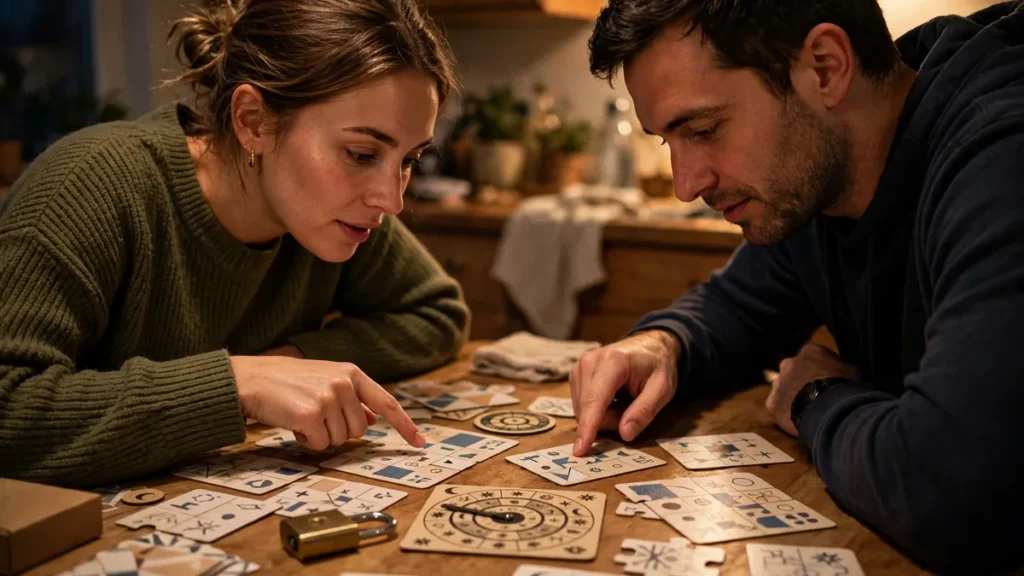
A deck of cards, a coin, and a partner who is willing to be surprised: that is the whole kit for a couples magic night. The tricks below are picked for two people, not for a stage. In every one of them, both partners have a job to do. One of you performs, the other chooses, holds, hides, or guesses, and then you swap. Nobody sits through the evening as a permanent audience, and nobody has to master anything fiddly before the fun starts. Each entry tells you what the people watching will see, what you need from around the house, who does what, and why it lands well when the audience is the person you live with. If you are still deciding whether this hobby fits your evenings at all, our honest look at whether magic tricks suit couples weighs the pleasures against the pitfalls before you buy a single prop.
1. The Torn-and-Restored Napkin
What everyone sees: a paper napkin is torn into small pieces in full view, gathered into a bundle, and then unfolded again completely whole, without a tear in sight. What you need: a stack of plain paper napkins from the kitchen. Who does what: one partner tears and folds while the other holds the bundle steady and watches closely, then the second partner takes the bundle and opens it for the reveal. Why it lands for a couple: it uses something already on the table, it needs no practice with cards, and the torn pieces give the helper a real part to play instead of a seat to sit in. It is also the friendliest possible opener, because even a wobbly first attempt ends with a whole napkin and a laugh.
2. The Card in the Orange
What everyone sees: your partner picks a card freely, remembers it, and loses it in the deck. A few minutes later, an orange that has been sitting on the table all evening is cut open, and the very same card is found folded inside the fruit. What you need: a deck of cards, an orange, and a small knife. Who does what: one partner handles the deck and the orange while the other picks, remembers, and finally cuts the fruit open. Why it lands for a couple: the reveal belongs to the person who picked the card, and cutting into an ordinary piece of fruit feels far more impossible than finding a card in a pocket. Keep the orange in view all evening, and save the reveal for the middle of the night.
3. The Linking Rings
What everyone sees: two solid metal rings are shown separately, tapped together so everyone can hear that they are solid, and then linked into a chain before being pulled apart again. What you need: a set of linking rings, sold as a ready-made set in most magic shops. Who does what: one partner holds a ring out for inspection while the other does the linking, then you swap and try it the other way round. Why it lands for a couple: the rings are big, shiny, and easy for a room to follow, so this is the trick to choose when friends are over and the kitchen-table card work would be too small to see. It also photographs well at parties and anniversaries.
4. The Book Test
What everyone sees: your partner opens a paperback at any page, reads a word silently, closes the book, and you name the word they were thinking of. What you need: any paperback with plenty of pages, ideally one neither of you has memorised. Who does what: the partner with the book does all the choosing, turning pages and picking the word, while the performer stands well away and concentrates. Why it lands for a couple: it needs nothing but a book, it works in a car, a waiting room, or a quiet corner of a party, and the person choosing the word feels like the star, because the whole trick turns on a decision only they made. Pick a book full of vivid words rather than lists of names.
5. Cups and Balls for Two
What everyone sees: three cups and three small balls are set out on the table. The balls vanish from under one cup and appear under another, and at the end a surprising object turns up beneath a cup where nobody expected it. What you need: three cups or mugs and three small balls, or a ready-made cups and balls set. Who does what: one partner works the cups while the other calls out guesses about where each ball is hiding, and then the roles reverse for a second round. Why it lands for a couple: the guessing turns a solo trick into a game, and the partner who is watching gets to be wrong out loud, which is half the fun. The cups can be rearranged a different way every time, so it keeps giving on a long evening.
6. The Sealed Date-Night Prediction
What everyone sees: before dinner, you write something down, seal it in an envelope, and leave it on the table. Later in the evening, after a series of small free choices, the envelope is opened, and what you wrote matches what your partner chose. What you need: an envelope, a pen, and a slip of paper. Who does what: one partner writes and seals the prediction before the evening begins, while the other makes the choices that the prediction will match. Why it lands for a couple: it runs quietly in the background of a whole evening, so the surprise arrives after hours of anticipation rather than in a single minute. It is tailor-made for anniversaries and Valentine’s evenings, and it costs nothing at all.
7. The Cut-and-Restored Rope
What everyone sees: a length of rope is cut cleanly in two with scissors, the two ends are shown apart, and then the rope is whole again, with no join to find. What you need: a length of soft rope and a pair of scissors. Who does what: one partner holds both ends of the rope steady while the other cuts, then the holder keeps the ends in view while the performer restores the rope. Why it lands for a couple: both pairs of hands are busy from the first second, the cut is dramatic enough for a room to gasp at, and the restoration feels like a small miracle at close range. Neither of you can do it alone, which is exactly the point.

8. The Bending Spoon
What everyone sees: an ordinary spoon from the kitchen drawer bends slowly in the performer’s hands, curving as if it were made of something soft, until it hangs limp. What you need: a few ordinary metal spoons, the plainer the better. Who does what: one partner holds the spoon out for everyone to examine first, then hands it over, and the performer does the bending while the partner watches from inches away. Why it lands for a couple: it needs no setup, no table, and no special purchase, so it works at a restaurant, at a friend’s house, or standing in your own kitchen. Let your partner examine the spoon before and after, since holding the spoon themselves is what makes the bend feel real.
9. The Coin Through the Table
What everyone sees: a coin is placed on the tabletop and covered for a moment, and then it is gone from above and sitting in the open hand waiting underneath the table. What you need: a coin and a table with a little space beneath it. Who does what: one partner sits across the table and watches the coin, while the other works above the table and reveals the coin below it. Why it lands for a couple: it turns an ordinary piece of furniture into part of the trick, and the reveal happens in your partner’s own space, under their side of the table, which makes it feel personal. Keep it in reserve for the guest who claims to have seen it all.
10. The Colour-Changing Silk
What everyone sees: a bright silk scarf is shown, folded away into a fist, and pulled out again in a completely different colour, as if the first scarf had never existed. What you need: two silk scarves in different colours, or a ready-made colour-changing silk set. Who does what: one partner holds the scarf out for inspection and folds it away, while the other produces the changed scarf with a flourish. Why it lands for a couple: it is visual, quick, and pretty, so it suits celebrations, and the colour change reads beautifully even to people watching from across the room. The helper’s role is graceful too: handing the silk over and receiving it back.
11. The Floating Pencil
What everyone sees: a pencil stands upright on the performer’s open palm, wobbles for a moment, and then rises slowly into the air on its own, hovering before settling back down. What you need: a pencil and a little patience. Who does what: one partner holds their hand out flat as the stage, while the other guides the pencil upward, and then you swap hands and try it the other way. Why it lands for a couple: it is small, quiet, and strange, the kind of trick that works best when two people are sitting close together with nothing else going on. It needs no room and no audience beyond the two of you.
12. The Invisible Deck
What everyone sees: your partner names any card out loud, any card at all, and you spread the deck face down on the table. One card lies turned the other way among all the rest, and when it is flipped over, it is the very card your partner named. What you need: a deck of cards and a calm, steady voice. Who does what: the partner who names the card does the most important work in the trick, because the whole effect turns on a genuinely free choice, while the performer simply spreads the deck and turns over the one card that stands apart. Why it lands for a couple: it is the perfect closer, because it ends the evening on real wonder, and leaves the person who named the card feeling as if they made it happen. Save it for last.
A simple practice-night plan
Do not try to learn all twelve in one sitting. Pick three for your first night: the torn napkin, the sealed prediction, and one card entry. Give each trick twenty minutes, then stop while it is still fun. Practise the moves with no talking first, then add a line or two of chat, then try the trick on each other as a proper audience. If a trick keeps failing, set it aside for next week. Once a trick works twice in a row, it is ready for guests. And if you catch the bug and want to invent a trick of your own, our guide to making a magic trick from household objects walks through the whole build, from the ending backwards.
Questions couples ask before their first magic night
Do we need to buy a magic set? No. Most of the tricks above use cards, coins, rope, a book, or a spoon, all things you already own. Linking rings and silks are the only purchases here, and both are optional.
What if one of us is much better at it? That is normal, and it is not a problem. Let the quicker learner teach the slower one, one move at a time, and choose tricks where the helper matters as much as the performer. The rope, the cups and balls, and the napkin all give both partners real work to do.
How many tricks should we perform for guests? Two or three, performed well, are plenty for one evening. A short set leaves the room wanting more, while a long run of tricks turns a fun surprise into a show nobody asked for. If you want a longer evening built around your new skills, our guide to what a magic show is covers the running order and the audience side of things.
Start tonight with a napkin, a coin, and a deck of cards. Learn one trick properly, perform it for each other, and laugh when it goes wrong. The best magic nights are not the ones where every trick works. They are the ones where two people spent an evening paying attention to each other, and a card in an orange was only the excuse.