Dice Games for 519 Players That Actually Work for Huge Groups
Dice games for 519 players sound impossible until you see them run well, and an observatory evening is the perfect setting to prove it. Five hundred and nineteen people, one big hall, a dome overhead, and nine dice games that keep every single person rolling, guessing, and cheering at the same time. Nobody waits on the sidelines. The theme gives every game a job: aiming, opening, passing, timing, joining, voyaging, matching hues, reaching a peak number, and moving through phases.
The trick is not the dice themselves. It is the structure around them. With 519 players you cannot run one game for one group and hope the rest stay interested. You split the hall into zones, give every zone a captain, and run every game in every zone at once. A twelve-minute game for twenty people takes twelve minutes for 519 people when twenty-four zones play side by side.
This guide gives you nine complete games built for exactly that format. Each one names its dice, setup, scoring, and timing, and a zone captain can explain each in under a minute. You will also find a setup list, a comparison table, a checklist, and answers to common questions.
Key takeaways
- Split 519 players into zones of about twenty, each with a captain, and run every game simultaneously in all zones.
- All nine games use ordinary six-sided dice, so one bulk box of dice covers the whole evening.
- Each game lasts twelve to eighteen minutes, which keeps the pace brisk and the energy high.
- Nobody is eliminated at any point, so every player stays involved from the first roll to the last.
- One record sheet per zone is all the paperwork you need, and captains hand the sheets in after each game.

How Dice Games Work for 519 Players
Large-group dice games fail for one reason more than any other: the organiser tries to run them as a single game for a single crowd. A caller rolls, a few people near the front react, and four hundred people at the back lose interest. The zone system fixes that completely. Divide 519 players into twenty-four zones of twenty-one or twenty-two, each with dice, a tray, and a record sheet. When the host announces a game, every zone plays at once.
Captains are the next part of the system. Pick confident, friendly people, brief them the day before, and give each one a one-page card for every game. The captain reads the rules aloud, settles disputes, keeps the pace, and writes the zone total on the record sheet. Captains need to be organised and loud enough for twenty people to hear.
Timing is the third half, and yes, there are three halves when the group is this big. Give every game a visible countdown, and have the host announce the start and finish for the whole hall. Zones that finish early compare totals and cheer the neighbouring zone. Zones that run late get a firm half-minute warning and then stop, because the evening only works when all zones move together. If you have run a slightly smaller evening before, the 517-player set offers a ready-made warm-up with the same zone logic and a gentler pace for new captains.
What You Need Before the First Roll
Start with dice. You need two sets of five six-sided dice per zone, which is forty-eight sets for twenty-four zones, plus a spare box of ten sets for lost or damaged dice. Buy one bright colour per zone so a stray die can be returned at a glance. Add one shallow tray per zone, on a soft mat or folded towel so the rolls stay quiet enough for the captain to be heard.
Paperwork is modest but it matters. Print one record sheet per zone with nine rows, one per game, and a column for the zone total. Captains write the total, the host collects the sheets between games, and a scorekeeper adds the running totals on a visible board. Print the game cards too: one card per game per captain, with the rules and scoring in five short lines.
The layout deserves ten minutes of thought. Arrange zones in rows with a clear aisle between them so the host and the scorekeeper can move around the hall. Put the youngest or least confident players near the front. Keep the dice trays on low tables or the floor in the centre of each zone, with spare pencils and record sheets at the host table. Test the sound before anyone arrives: one captain reading aloud from the farthest zone should be audible over the dice.
The 9 Dice Games for 519 Players
Each game below follows the same shape so captains can learn the pattern once and apply it nine times. The first paragraph explains the game, the next explains how it scales to 519 players, and a short tip line gives the captain one practical detail. Dice counts are per zone, and every game assumes twenty-one or twenty-two players per zone.
Dice Telescope Aim
Each zone tapes a large paper target to the wall, divided into nine numbered squares in a three-by-three grid. One player at a time rolls two dice, adds the total, and names the matching square number. The team has ten seconds to agree on the square, and the captain places the marker there. A marked square cannot be used again. Each filled square earns points equal to its number.
Every zone plays its own target at the same time, and the host announces the countdown for the whole hall. The roller changes after every roll, so twenty players each get a roll in a single game. Zones compare totals at the end, and the three highest earn a bonus for the next game.
Tip: Tape the target at shoulder height so every player in the zone can see all nine squares without standing up.
Dice Dome Open
The dome is stuck shut, and only the right rolls will open it. The captain places a marker on the first of six panels drawn on a sheet, and players take turns rolling one die. Four or higher moves the marker on, three or lower leaves it put, and six moves it two panels forward. The zone wins when the marker reaches the sixth panel. Each zone records its roll total, and fewer rolls means a better result.
The game becomes a contest between zones, with the host reading the standings aloud every two minutes. Zones that open their dome early become cheer squads for the zones still rolling, which keeps the hall loud and friendly.
Tip: Use a large marker that the whole zone can see, and move it with a flourish so the progress feels like an event.
Dice Orbit Pass
Players sit in a ring of seats, and two dice move around it. The host starts a countdown of ninety seconds. While the countdown runs, players pass the dice to the person on their left every time the captain claps. When the countdown ends, whoever holds the dice rolls them, and the zone earns points equal to the total. Then the countdown restarts, and the dice move the other way. After six rounds, the zone adds its six totals for its final result.
The passing keeps everyone involved, because nobody knows who will hold the dice when the countdown ends. The captain speeds up the clapping as the game goes on, and the host announces the countdowns for all zones at once.
Tip: Use soft foam dice for the passing rounds so a dropped die never rolls under a chair.
Dice Eclipse Moment
Timing is everything in this game. The captain sets a thirty-second countdown and names a target number between two and twelve. Players take turns rolling two dice, one roll per player, and the zone wants a roll that equals the target exactly at the moment the countdown ends. Early rolls are practice, and the captain notes the closest one. The final roll, made as the countdown reaches zero, is the one that counts, and a perfect hit earns double points.
The host runs one countdown for the whole hall, and every zone aims for the same target number. The hall erupts when a zone announces a perfect hit.
Tip: Give the captain a small horn for the final five seconds so the last roller knows the moment has arrived.
Dice Constellation Join
Each zone receives a large sheet showing twelve numbered dots scattered across the page. Players roll two dice to claim a pair of dots, and the captain draws a line joining the two numbers shown. If the line crosses a line already drawn, the zone loses its go and the next player rolls. The aim is to join as many dot pairs as possible before the countdown ends, and each completed line earns a point. A zone that joins dots to form a closed shape earns three bonus points.
Every zone has a different dot sheet. Captains hold the sheet where the whole zone can see it, and players name the dot pair they hope the dice will reveal before each roll, which turns every roll into a small shared gamble.
Tip: Use a thick marker for the lines so the shape is visible from the back row of the zone.
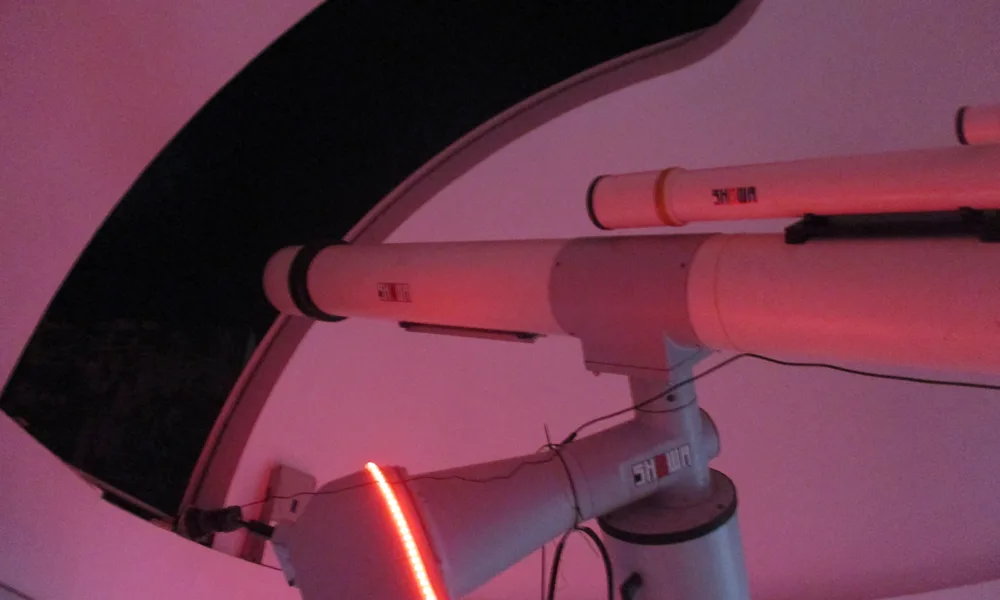
Dice Galaxy Voyage
Each zone has a voyage board with thirty stations in a winding line, and a counter that starts at station one. Players take turns rolling one die and moving the counter forward. A station marked with a circle sends the counter back three places, and one marked with a triangle sends it forward two. The first zone to reach station thirty wins the voyage, and early finishers record their roll total as a tiebreaker.
The voyage board is the same in every zone, so the host can name the zones past station twenty and keep up a running commentary. Players in different zones can compare progress during the break, which builds a friendly rivalry.
Tip: Make the counter large and bright, and move it slowly so the whole zone can follow the voyage.
Dice Nebula Hue
Six hues are laid out as cards in the middle of each zone: violet, indigo, teal, copper, rose, and gold. Each die face pairs with one hue. The roller takes the paired hue card if it is still on the table, until all six are taken. Then the cards are shuffled and laid out again for two more rounds. The zone earns a point for every complete set of six hues it collects across the three rounds, and the zone with the most complete sets wins.
The hue game is the quietest of the nine, a good change of pace after the noisy passing and timing games. Captains lay the cards out neatly, and the hall settles into a focused hum.
Tip: Print the hue cards large, with the hue name written on each one, so nobody has to guess which hue is which.
Dice Zenith Point
The zenith is the highest number a zone can reach, and the game is an ascent towards it. The captain writes a target of fifty on the record sheet, and players take turns rolling two dice and adding the total to a running sum. Landing exactly on fifty wins immediately; passing fifty drops the zone back ten points. A big roll near the top can send the zone backwards, and a small roll can win the game.
The zenith game is ideal near the end of the evening, when the rivalry between zones is warm. Zones groan together when a leader overshoots. The exact-landing rule means no zone wins by luck alone in the final rolls.
Tip: Write the running sum large on a whiteboard so the whole zone can see how close the ascent has come.
Dice Lunar Phase
Eight phases are printed in order on a sheet, from a thin crescent to a full round disc and back again. The zone advances one phase for every odd roll and stays put on every even roll, except that a six advances two phases. The zone must pass through all eight phases in order, and the first zone to complete the full cycle wins. The lowest roll total breaks any tie between zones finishing in the same round.
The phase game makes a gentle finale, because every zone finishes the cycle and nobody is left behind. The hall follows the last few rolls together.
Tip: Read the phase names aloud as the zone advances, so players feel the cycle moving forward.
The 9 Games at a Glance
The table below sums up what a host needs when planning the order of the evening. Put the noisy games early, the quiet hue game in the middle, and the phase game last. For a different setting with the same headcount logic, the 516-player guide describes how another large evening was organised from first roll to final total.
| Game | Dice per zone | Players per zone | Minutes | Best moment |
|---|---|---|---|---|
| Dice Telescope Aim | Two | Twenty-one | 15 | Aiming for the high squares |
| Dice Dome Open | One | Twenty-one | 12 | The final panel opening |
| Dice Orbit Pass | Two | Twenty-two | 15 | The countdown ending mid-pass |
| Dice Eclipse Moment | Two | Twenty-one | 14 | The last roll at zero |
| Dice Constellation Join | Two | Twenty-two | 18 | Completing a closed shape |
| Dice Galaxy Voyage | One | Twenty-one | 16 | Passing station twenty |
| Dice Nebula Hue | One | Twenty-two | 13 | Completing a full hue set |
| Dice Zenith Point | Two | Twenty-one | 15 | Landing exactly on fifty |
| Dice Lunar Phase | One | Twenty-one | 14 | Entering the final phase |
Checklist: Running the Evening Without a Hitch
Work through this list before the doors open. Six items, each one preventing a problem that organisers of huge-group evenings meet most often.
- Verify the dice twice. Lay out forty-eight sets plus ten spares, with one colour per zone.
- Brief the captains the day before. Go through all nine games, hand out the game cards, and answer questions while there is still time.
- Mark the zones clearly. Numbered signs, taped floor lines, and a layout plan at the door stop the confusion that eats the first twenty minutes.
- Test the sound. One captain reading aloud from the farthest zone and one microphone test with dice rolling will reveal every problem before the players arrive.
- Print the record sheets. One sheet per zone with nine rows, plus spare pencils at the host table, keeps the scoring honest and visible.
- Plan the breaks. A short pause after game three and another after game six gives players time to stretch, compare totals, and come back ready.
Frequently Asked Questions
These are the questions hosts ask before their first huge-group dice evening. The answer is almost always the same: split into zones, brief a captain, and keep the countdown visible.
Do we really need twenty-four zones for 519 players?
Yes, and the number is flexible by one or two either way. Twenty-four zones of twenty-one or twenty-two players keep every group small enough for one captain to manage and one tray of dice to serve. Fewer zones mean bigger groups, slower turns, and quieter players fading into the background.
What if a zone loses its dice?
Use the spare box. Ten spare sets cover the usual losses, and the colour-per-zone rule means a lost die is usually found nearby within minutes. If a zone is short a die mid-game, lend it a spare set; never stop the whole hall to search for one die.
Can younger players join all nine games?
Yes. Every game uses adding, matching, or passing, and none of them needs reading beyond the phase names and hue names, which the captain reads aloud. Pair a younger player with an older one for the first game; by the next game most young players roll confidently on their own.
How do we stop one loud zone from taking over the hall?
Keep the games simultaneous and the countdown shared. A loud zone is usually a happy zone, and the shared countdown pulls every zone back together. If one zone finishes early and gets noisy, the captain can start a practice round of the next game.
Do the games work outdoors?
Most of them do, with two changes. Use heavier trays or dice cups against the breeze, and tape the paper targets and dot sheets to boards instead of walls. The hue game and the voyage game adapt best, because their boards sit flat and their pieces are large.
Where can we find more games in this series?
The series covers many group sizes with the same zone system and the same style of play. For the nearest smaller evening, the 515-player collection gives you another nine games to mix into another evening.
The Bottom Line
Dice games for 519 players work when the structure does the heavy lifting. Split the hall into zones, trust your captains, keep one countdown for everybody, and let nine well-chosen games carry the evening. The observatory theme gives the evening its flavour.