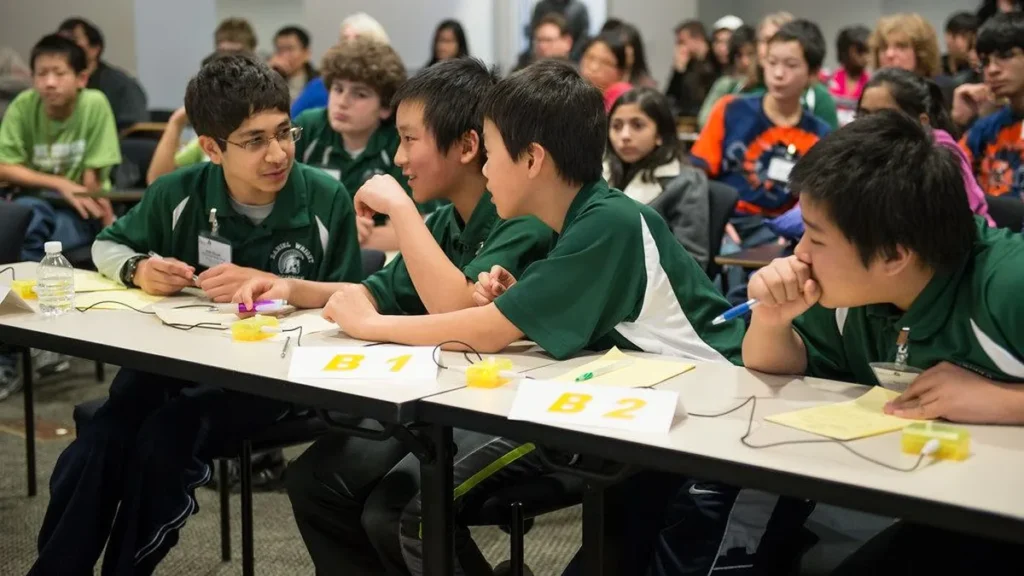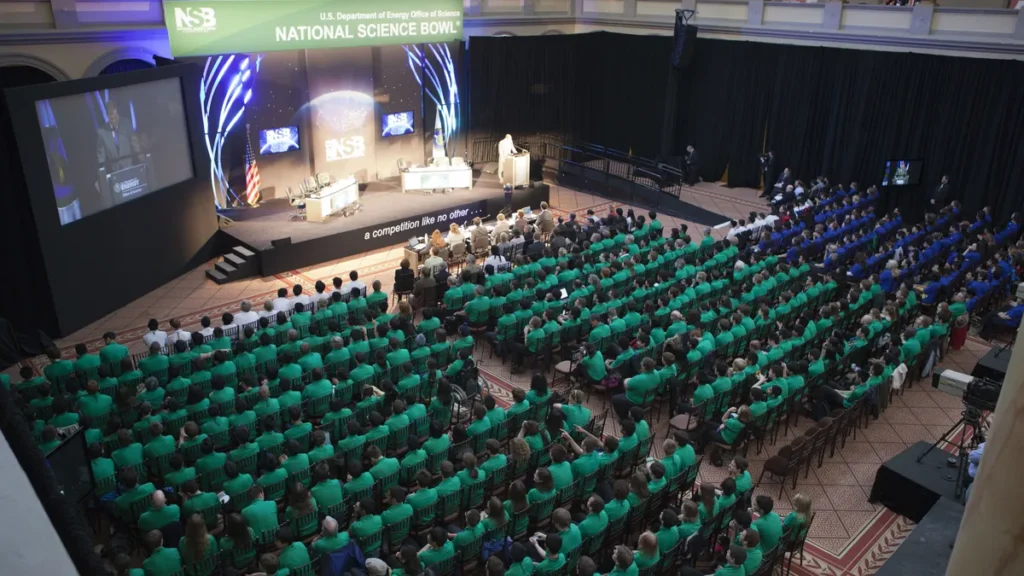
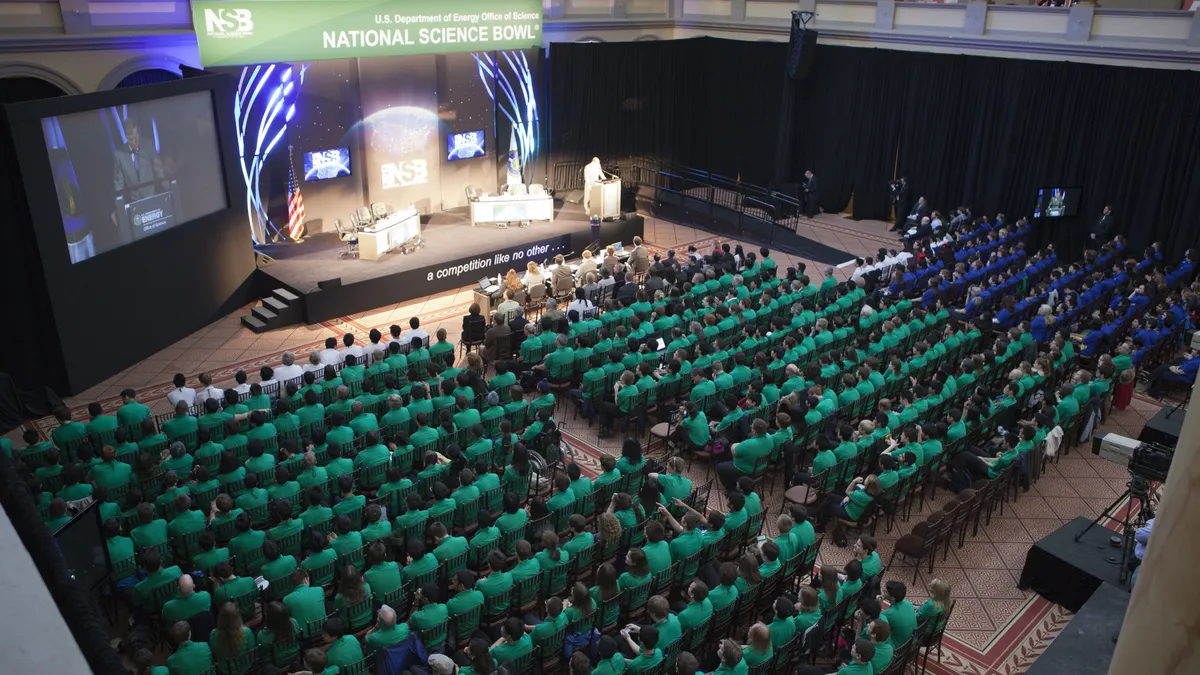
Five hundred and six players in one room is a trivia night at full stretch. That is roughly one hundred teams of five, or eighty-four teams of six, all listening for the same question at the same moment, all scribbling on the same answer sheets, all waiting for the same scoreboard to change. It is loud, it is busy, and it is the most fun a quiz can be, provided the night is built for a crowd this size rather than stretched from a pub quiz format that was designed for thirty people.
The secret is structure. With 506 players, the questions matter less than the system around them: clear zones, a sound setup every table can hear, answer sheets that can be collected and marked fast, and rounds that keep every team in the hunt until the last question. A night that runs on those rails feels smooth even when the room is packed. A night that does not will feel like a queue that never moves.
This guide sets out the format that works: nine rounds built around famous names, places and trades, a scoring system that rewards steady play, and a running order a host can follow without a spreadsheet the size of a wall. Whether you are planning a school fundraiser, a company social or a charity night, the plan below will carry 506 players from the first question to the final scores.
Key takeaways
- Split 506 players into teams of five or six and seat them in marked zones, so answer sheets reach the marking table in minutes, not half an hour.
- Nine rounds of ten questions keep the night moving and give every team a fresh start every fifteen minutes.
- Use a hall sound system with speakers in every corner; a single speaker at the front cannot reach the back tables.
- Score each round as it finishes and show a live top ten, so the room stays noisy and interested all night.
- End with a picture round or a tiebreaker question, so a draw at the top is settled in front of the whole room.
How the Night Is Organised
Start with the room. A crowd of 506 needs a hall, not a bar: roughly one hundred tables if teams sit in fives, or eighty-four if they sit in sixes, with aisles wide enough for collectors to walk without squeezing past chairs. Mark each zone with a letter, A, B, C and so on, and put the zone letter on every answer sheet, so a sheet can be traced back to its table even if it is dropped on the way to the marking table.
Next, fix the team size and stick to it. Teams of five work best at this scale: small enough that everyone gets a say, large enough that a team can cover nine very different rounds. If you are short of a format that fits, the plan behind our trivia games for 505 players runs on the same rails and shows how one fewer player changes almost nothing, because the zones, the timing and the scoring all carry over.
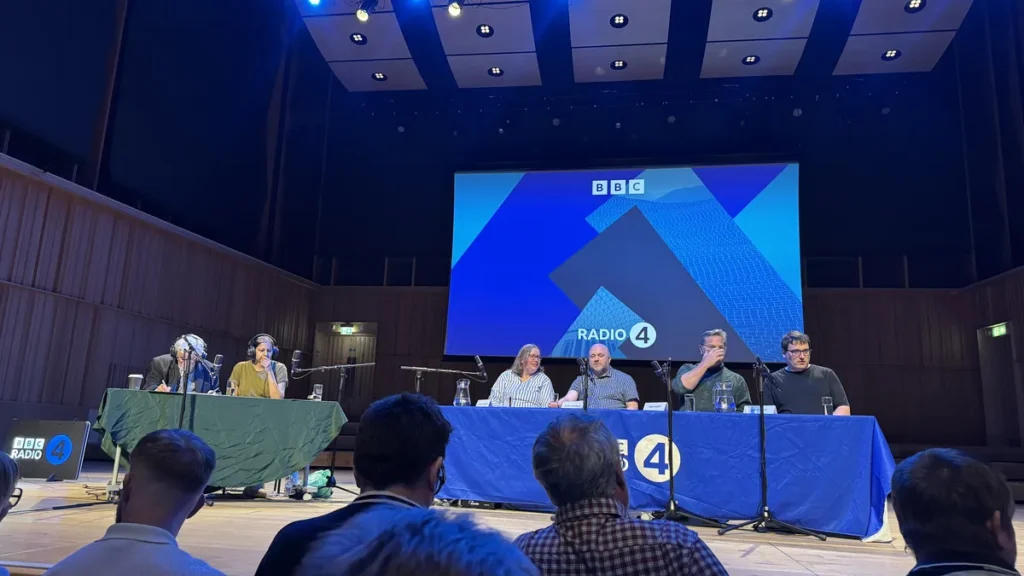
Sound comes next. The host needs a proper public address system with speakers spread through the room, plus a screen at the front showing each question as it is read. Reading every question aloud twice, with a short pause between rounds for marking, keeps the back tables in step with the front. A single handheld speaker and a raised voice will not do it: by table forty, the questions arrive as a murmur.
The 9 Rounds at a Glance
The heart of the night is nine rounds of ten questions, each built around a famous group or a famous place. Every round mixes easy openers with harder closers, so new teams bank points early and strong teams are still tested at the end. The table below gives the shape of the night; each round is then set out in full.
| Round | Category | What the round tests |
|---|---|---|
| 1 | Famous Accordionists | Bandleaders, soloists and tango masters |
| 2 | Famous Drummers | The players behind rock, swing and jazz beats |
| 3 | Famous Harmonica Players | Blues, folk and pop harmonica masters |
| 4 | Famous Lithographers | Poster makers and the pioneers of stone printing |
| 5 | Famous Globe Makers | The makers of the world’s great spheres |
| 6 | Famous Grocers | Shopkeepers who built household names |
| 7 | Famous Peaks | First ascents and famous summits |
| 8 | Famous Passes | Historic gaps through high country |
| 9 | Famous Straits | Narrow waters that shaped trade and travel |
The Rounds in Full
Round 1: Famous Accordionists
The accordion has carried tunes across concert halls, street corners and village halls for nearly two hundred years, and its great players are easy to picture: the smiling bandleader with his orchestra, the soloist in a smoky club, the folk player with a crowd around him. This round tests how well your teams know the names behind the squeezebox, from light-music legends to the fiery tango of Buenos Aires.
Try these three. Which bandleader was famous for “Champagne Music”? Lawrence Welk. Which accordionist played “Lady of Spain” on The Ed Sullivan Show in 1955? Dick Contino. Which Argentine composer wrote “Libertango” for the bandoneon? Astor Piazzolla. Give a point for the surname alone on the first two, and insist on both names for Piazzolla, since his first name is the hard half.
Round 2: Famous Drummers
Every great band is held together by its drummer, and the best of them are famous in their own right: the showmen with huge kits, the jazz players with brushes, the rock players who hit hard enough to be heard over the rest of the band. This round asks teams to name the player behind the beat, from swing-era stages to arena rock.
Which drummer played on Led Zeppelin’s “When the Levee Breaks”? John Bonham. Which Rush drummer wrote most of the band’s lyrics? Neil Peart. Which drummer was famous for the “Sing, Sing, Sing” solo with Benny Goodman? Gene Krupa. A bonus point for any team that can name the band as well as the drummer keeps the room buzzing.
Round 3: Famous Harmonica Players
The harmonica is small enough to fit in a pocket and loud enough to lead a whole band, and its masters come from blues clubs, folk stages and pop studios alike. Some played it as their only instrument; others, already famous for something else, picked it up and made it shine. This round separates the casual listeners from the true fans.
Which harmonica player had a hit with the instrumental “Juke” in 1952? Little Walter. Which Motown star played the harmonica solo on “Isn’t She Lovely”? Stevie Wonder. Which Blues Traveler frontman is famous for fast, melodic harmonica playing? John Popper. Allow “Little Walter” or his real name, Marion Walter Jacobs, and accept either.
Round 4: Famous Lithographers
Before photos filled the papers, pictures were printed from stone. Lithography, invented in 1796, let artists draw straight onto limestone and print their work by the hundred, and it gave the world the poster as we know it: bold colour, big letters, images that could be read across a street. This round covers the poster makers who turned a workshop craft into an art form.
Who invented lithography in 1796? Alois Senefelder. Which French artist made the famous Moulin Rouge posters of the 1890s? Henri de Toulouse-Lautrec. Which Czech artist’s flowing posters defined Art Nouveau? Alphonse Mucha. A point for the surname is enough on all three, but read the full name aloud when you give the answers, because teams love to hear how close they were.
Round 5: Famous Globe Makers
Long before a world map could be called up on a screen, the Earth was studied on a sphere: a globe, painted by hand, standing on a wooden base in a study or a schoolroom. The great globe makers were craftsmen, scholars and showmen at once, and their work still sits in grand houses and collections today. This round asks who made the famous spheres, and when.
Who made the Erdapfel in 1492, the oldest surviving terrestrial globe? Martin Behaim. Which Italian globe maker created enormous globes for Louis XIV of France? Vincenzo Coronelli. Which Flemish globe maker also drew the maps that bear his name? Gerardus Mercator. Accept “Behaim” for the first, but ask for the full name on Coronelli, because it is the one teams usually half-remember.

Round 6: Famous Grocers
Every town once had a grocer who knew every customer by name, and a few of those grocers built great businesses. The names on today’s supermarket signs began as single shops with a counter, a set of scales and a reputation for fair dealing. This round tests teams on the shopkeepers who became household names.
Who founded Tesco from a small stall in London’s East End in 1919? Jack Cohen. Who opened the first self-service grocery store, Piggly Wiggly, in Memphis in 1916? Clarence Saunders. Which grocer’s name is on the tea brand he founded in Glasgow in 1871? Thomas Lipton. Two points for a full name on the Lipton question, since “Lipton” alone is on every tea box in the land.
Round 7: Famous Peaks
High places have always drawn people upward, and the world’s great peaks carry stories of first ascents, lost expeditions and records that stood for decades. Some are famous for their height, some for their shape, and some for the sheer difficulty of reaching the top. This round climbs through them one by one.
Which peak was first climbed in 1953 by Edmund Hillary and Tenzing Norgay? Mount Everest. Which is the highest free-standing peak in the world? Kilimanjaro. Which peak’s first ascent in 1865 ended in tragedy for four of the seven climbers? The Matterhorn. Give the point for “Everest” alone, and accept “Kilimanjaro” with or without its full name.
Round 8: Famous Passes
A pass is a gap through high country, and for centuries these gaps were the only way through: for traders with pack animals, for armies on the march, for travellers crossing from one side to the next. The famous ones have names every schoolchild has heard, and stories to match. This round follows the old roads over the top.
Which pass links Afghanistan and Pakistan? The Khyber Pass. Which pass did the Donner Party cross in the Sierra Nevada in 1846? Donner Pass. Which Italian pass is famous for its 48 hairpin bends? The Stelvio Pass. A bonus point for any team that can name the country on each side of the Khyber will sort the leaders from the rest.
Round 9: Famous Straits
A strait is a narrow stretch of water between two larger seas, and the famous ones have shaped trade, war and discovery for centuries. Whoever held the strait held the route, and the names on the map still carry that history. This round sails through nine of the best known, from warm southern waters to the far north.
Which strait separates Spain and Morocco? The Strait of Gibraltar. Which strait links the Black Sea to the Sea of Marmara? The Bosphorus. Which strait did Ferdinand Magellan sail through in 1520? The Strait of Magellan. Read the full name each time: “Gibraltar” alone earns the point, but the full title is what the round is really testing.
How Scoring Works
Ten questions per round, one point per right answer, gives a maximum of ninety points, and that simple scale is the whole secret. Mark each round as soon as it ends, while the next round is being read, and post a top ten on the screen after rounds three, six and nine. Teams that can see the leaders stay in the game; teams that cannot see the scores drift away.
For ties, keep it simple: a single tiebreaker question, read aloud, with the tied teams writing their answers in secret and the closest answer winning. The format is borrowed from the smaller nights in this series, because our trivia games for 504 players use the same tiebreaker, and it has settled more than one dead heat without a single complaint.
Your Night-Of Checklist
Print this list and hand it to your helpers before the doors open. If every box is ticked by the time the first question is read, the night will run itself. The routine below is the same one behind our trivia games for 503 players, scaled up for a hall of this size.
- Hall booked, tables laid out in marked zones, and the sound system tested from the back row.
- Answer sheets printed, one per team per round, with the zone letter on every sheet.
- Pens, spares and a marking table staffed by at least four helpers.
- Question packs sealed, tiebreaker written, and the picture round ready to show on screen.
- Top-ten scoreboard prepared so scores can be posted after rounds three, six and nine.
- Prizes wrapped, a raffle tin on the door, and a thank-you ready for the helpers.
Frequently Asked Questions
The questions below are the ones hosts ask most often when they first take on a crowd this size.
How long does a trivia night for 506 players take?
Plan for about three hours, including breaks. Nine rounds of ten questions take roughly two hours of play, with fifteen minutes at the start for seating, a twenty-minute break in the middle, and ten minutes at the end for the final scores and prizes. A tight host can shave it to two and a half hours, but a relaxed pace suits a big room better.
How many teams should 506 players form?
Aim for about one hundred teams of five, or eighty-four teams of six. Teams of five are the sweet spot: everyone can hear each other, everyone gets a say, and the marking stays manageable. Teams of eight or more go quiet at the far end of the table, and the same few voices answer everything.
Do we need special equipment for a crowd this size?
You need a public address system with speakers in every corner, a screen the back tables can read, and enough answer sheets and pens for every team. A laptop for the scoreboard helps, and a second microphone for the scorekeeper saves shouting. Nothing else is essential, because the format does the heavy lifting.
How do we stop teams from cheating?
Mix up the seating so rival teams sit apart, collect answer sheets at the end of every round, and ban phones during play with a visible rule and a friendly warning. Most teams police themselves once the rule is clear, and a host who walks the floor between rounds sees everything.
What happens if teams tie at the top?
Read a single tiebreaker question and ask the tied teams to write their answers in secret. The closest answer wins; if they are still tied, a second question decides it. Settle it in front of the whole room, because a tiebreaker played live is one of the best moments of the night.
Can children play in a 506-player trivia night?
Yes, if the rounds suit them. Mix two or three family-friendly rounds into the nine, simple general knowledge, animals and food, and seat children with their families rather than in separate teams. Keep the evening to three hours or under, and the younger players will last the course.
The Bottom Line
A trivia night for 506 players works when the system is stronger than the crowd: marked zones, teams of five, nine rounds of ten questions, scores posted as the night goes on, and a tiebreaker ready for a dead heat. Get those pieces in place and the room does the rest, the noise, the laughter and the last-round comeback that everyone talks about the next day. Book the hall, print the sheets, and let the questions do the work.