Five hundred and four players in one hall sounds like a logistical puzzle, and in a way it is. You cannot seat everyone at one table, you cannot teach one game to a crowd that size, and you cannot keep the evening moving with a single host and a whistle. What you can do is run the night the way large festivals do: break the crowd into small tables, give every table the same start time, and let a team of helpers carry the schedule while you watch the room.
The format in this guide uses 126 tables of four, a shared clock, and nine games that all play in under two hours. Each table picks one game for the round, learns it from a printed teach sheet, and plays while helpers circulate with answers and spare pieces. When the clock ends the round, scores appear on a central board, tables rotate, and the next round begins. Nobody waits long, nobody sits out, and the hall stays loud in the best way.
Below you will find the full plan: a short list of takeaways, a table that matches each game to its table size and round length, a closer look at all nine games, a setup checklist, and answers to the questions every first-time host asks. Bring the nine games below, print the teach sheets, and the night practically runs itself.
Key takeaways
- Split 504 players into 126 tables of four and run every table on one shared clock.
- Pick games that teach in ten minutes and finish inside two hours.
- Print a one-page teach sheet for every table so helpers are free to circulate.
- Post scores on a central board after each round to keep energy high.
- Rotate tables between rounds so fresh faces meet at every new game.

How the 504-Player Format Works
The heart of the night is the shared clock. Every table starts its game at the same minute and stops at the same minute, which means a slow table never holds up the hall and a fast table never sits idle for long. A visible countdown on a screen or a whiteboard keeps everyone honest, and a short break between rounds gives helpers time to reset pieces and answer questions. Two rounds plus a short final is plenty for one evening.
Helpers matter more than hosts here. Aim for one helper per eight to ten tables, each carrying a teach sheet, a spare bag of pieces, and a phone with a timer. Their job is to settle rules questions fast, replace a missing token, and nudge a quiet table back into the game. If you have run a smaller night before, the guide to running board games for 500 players shows the same helper pattern at a slightly smaller scale, and it scales up cleanly to 504.
Scoring stays simple on purpose. Each table reports its winner, or its top two in a four-player game, and a central board lists the leading tables after every round. Keep the points visible and the prizes small: a ribbon, a snack box, or first pick of the game shelf. The board is what turns 126 separate games into one shared evening.
The Nine Games
The nine games below were picked for three reasons: they teach fast, they finish on time, and they feel different from each other, so a table that plays two rounds never feels like it played the same game twice. They cover bidding, tile placement, exploration, negotiation, and head-to-head duels. If you want a broader menu first, the board games for 498 players roundup covers a different shelf of nine, and the table below gives you the quick numbers for this list.
| Game | Players per table | Round length | Best for |
|---|---|---|---|
| Furnace | 4 | 45 minutes | Quick bidding and engine building |
| Red Cathedral | 4 | 60 minutes | Dice placement and careful planning |
| Darwin’s Journey | 4 | 90 minutes | Exploration and long-term planning |
| Messina 1347 | 4 | 75 minutes | Worker placement under pressure |
| Voidfall | 4 | 120 minutes | Epic strategy for patient tables |
| Hegemony | 4 | 120 minutes | Negotiation and asymmetric play |
| Age of Innovation | 5 | 90 minutes | Settlement building and variety |
| Weather Machine | 4 | 90 minutes | Supply lines and sharp timing |
| Tash-Kalar: Arena of Legends | 2 | 45 minutes | Fast head-to-head duels |
1. Furnace
Furnace drops each table into the world of 1800s industrialists, where players bid for factory cards and then run those factories to turn raw materials into goods and points. The twist that makes it sing at a big event is the losing bid: when you lose an auction, you still take a compensation bonus, so no bid ever feels wasted. That keeps new players engaged instead of folding their arms after an early loss.
A round takes about forty-five minutes once the teach sheet is understood, and the teach itself runs under ten minutes because the core loop is just bid, build, produce, repeat. Helpers welcome this one because the rules questions are few and the answers are short. Put Furnace on the tables where you expect the most first-timers, and let its quick pace shape the mood for the night. It also works beautifully as an opening round, since a fast finish gives the hall an early burst of results on the central board.
2. Red Cathedral
Red Cathedral asks players to help raise a famous cathedral in Moscow, placing dice onto workshop boards to claim resources, hire craftsmen, and add ornaments to the growing towers. The dice you place decide what you can do, and the dice other players place can change your plans, so every turn feels like a small puzzle with a social edge. It rewards careful planning without punishing a newcomer for one loose move.
At sixty minutes a round, Red Cathedral sits in the middle of the evening: long enough to feel substantial, short enough that no table drifts. The components are bright and tactile, which helps in a noisy hall where players may be reading the board from across the table. Give this game to tables that enjoy thinking ahead, and keep a helper nearby for the first round of dice placement, since that is the one moment where a quick example clears up everything.
3. Darwin’s Journey
Darwin’s Journey sends players out across the Galápagos islands, sending workers to explore, study wildlife, and record findings while their species adapt across generations. The board is a journey in itself, with workers moving along paths and unlocking new actions as they travel, and the theme does real work here: even players who usually avoid heavier games lean in when the story is about exploration and discovery.
This is the longest teach of the nine, so budget a full ten minutes and a helper who knows the game well. Once it clicks, a ninety-minute round moves briskly, and the table talk stays lively because everyone can see each other’s expeditions unfolding. Place Darwin’s Journey in the second round, after the hall has warmed up, and it will be one of the games people ask about on the way out.
4. Messina 1347
Messina 1347 takes place in a Sicilian port during a plague year, and players must move citizens into quarantine, keep workshops running, and keep the port’s trade moving before the outbreak takes hold. The theme sounds heavy, but the play is brisk and hopeful: every worker you save is a small victory, and the shared threat gives the table something to talk about between turns. It is worker placement with a clock ticking in the background.
A seventy-five-minute round fits neatly between the shorter openers and the longer epics, and the teach sheet can carry the whole game because the actions are printed clearly on the board. Helpers should watch for one common slip: new players sometimes forget to move citizens out of quarantine, so a gentle reminder in the first few turns saves a lot of confusion later. This is a strong pick for tables that like a little tension with their planning.
5. Voidfall
Voidfall is the epic of the nine, a sweeping strategy game about noble houses holding the line against a spreading galactic threat. Players manage fleets, develop technologies, and fight for key sectors, all while a shared crisis track pushes the whole table toward a common deadline. It is the heaviest game here, and that is exactly why it belongs: every big night needs one table where the serious strategists can settle in for a long, absorbing contest.
Reserve Voidfall for your most experienced tables and give it the full two-hour slot with no pressure to finish early. The teach takes a patient fifteen minutes, so assign your best helper to these tables and let them stay put for the whole round. Scores here tend to be close, which makes the final tally on the central board genuinely exciting. One Voidfall table can anchor the whole evening’s sense of occasion.
6. Hegemony
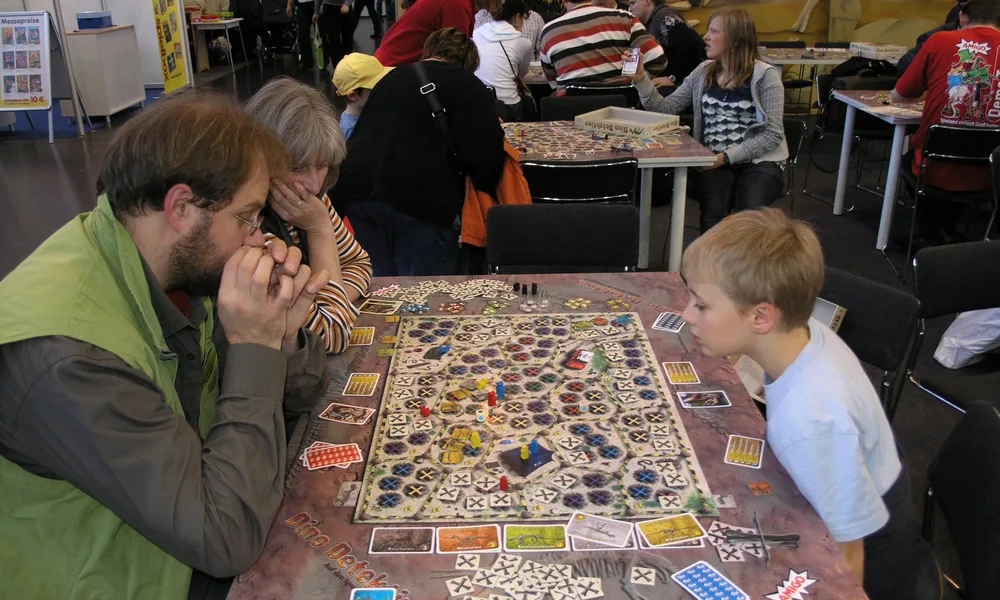
Hegemony hands each player a different role in a nation’s economy: the working class, the middle class, the capitalist class, or the state itself. Every role plays by different rules, earns points in different ways, and needs the others to keep the economy moving, which turns every round into a lively negotiation. It is the most talkative game on this list, and in a hall of 504 people that is a feature, not a flaw.
Because the roles are asymmetric, the teach sheet should include a short card for each role, and helpers should spend the first ten minutes making sure everyone understands their own goals. A two-hour round gives the negotiation room to breathe, and the table talk carries the game even when the rules feel unfamiliar at first. Put Hegemony where your most social players sit, and expect the loudest laughter in the hall to come from these tables.
7. Age of Innovation
Age of Innovation is a settlement-building game in which each faction shapes the landscape in its own way, founding settlements, raising towers, and unlocking new powers as the map fills in. Twelve factions and a stack of variable setup cards mean no two tables play quite the same game, which is ideal when you have over a hundred tables running at once. Variety is built into the box.
This is the only five-player game of the nine, which helps the maths of the night: a hundred tables of five plus one table of four covers all 504 players. A ninety-minute round keeps the pace, and the teach is straightforward for anyone who has played a building game before. Give Age of Innovation to tables that enjoy building something visible together, and watch the maps become the night’s best conversation pieces.
8. Weather Machine
Weather Machine puts players in charge of a research programme that studies and steers the weather, gathering data, supplying laboratories, and publishing findings while rival teams chase the same grants. The mechanics link together neatly: supply the right lab, run the right experiment, publish at the right moment, and the points follow. It is a thinking game with a warm, curious theme that draws people in.
Ninety minutes is the right length, and the teach benefits from a worked example of one full turn, so ask helpers to walk the first turn with each table. The pieces are satisfying to handle, and the board state tells a clear story even from a few seats away. Weather Machine suits tables that like a puzzle with a bit of friendly rivalry, and it pairs well with a late round when the hall is fully warmed up.
9. Tash-Kalar: Arena of Legends
Tash-Kalar: Arena of Legends closes the list with pure head-to-head duels. Two players summon creatures onto a shared board, arrange them into patterns, and strike when the formation is right. The rules fit on a single page, a duel lasts about forty-five minutes, and the game is all about spotting the pattern one move before your opponent does. It rewards bold play and sharp pattern-spotting.
With two players per duel, Tash-Kalar needs the most tables of any game here, so run it as a ladder: winners stay, challengers rotate in, and the central board tracks the longest winning streak. It makes a superb final round or a side event while longer games finish, because a fresh duel can start at any moment. For a hall that loves a crowd around a tense finish, nothing beats a Tash-Kalar table in the last half hour.
Your Setup Checklist
Work through this list in the week before the night, and the evening itself will feel calm even at full capacity.
- Count your copies: 126 tables of four need one copy per table, so borrow, rent, or buy enough copies of each game and label every box with its table number.
- Print teach sheets: one page per table, large print, with the setup steps, the turn structure, and the three most common rules questions answered.
- Recruit helpers: one helper for every eight to ten tables, each with a timer, spare pieces, and a copy of the teach sheet for their assigned games.
- Plan the floor: leave wide aisles between table rows so helpers can move fast and players can find the central board without crossing a game in progress.
- Test the clock: put the countdown where every table can see it, test the sound from the far corner, and agree on the signal that ends a round.
- Prepare the board: put the central score board in place before doors open, with room for 126 table numbers and a marker for the leading tables after each round.
Frequently Asked Questions
Can one board game really seat 504 players?
No single copy can, and that is the point of the format. The night works because 504 players sit at 126 tables of four, each playing its own copy of a game, all on one shared clock. The central score board ties the tables together, so the hall feels like one event rather than 126 separate ones. The same approach powers the board games for 502 players night, where the same table maths and the same shared clock kept a nearly identical crowd moving.
How many tables do 504 players need?
For the nine games here, 126 tables of four cover the crowd, with Age of Innovation taking five per table and Tash-Kalar running as two-player duels. If your venue has fewer tables, run the night in waves: half the crowd plays while the other half watches, snacks, or joins a side duel, then swap. Waves add about an hour, so plan the evening accordingly.
How many helpers do we really need?
Plan for one helper per eight to ten tables, which means roughly thirteen to sixteen helpers for the full hall. Helpers answer rules questions, replace missing pieces, and keep slow tables on schedule. Brief them an hour before doors open, give each one a short list of tables, and make sure every helper knows the teach sheet for their games by heart.
Which game should we start with?
Start with Furnace. It teaches in under ten minutes, finishes in about forty-five, and its compensation rule means nobody feels punished for losing an early bid. An early finish puts the first results on the central board fast, and that visible progress settles the whole hall. Save Voidfall and Hegemony for later rounds, when players are warmed up and ready for a longer contest.
What if some tables finish much faster than others?
Fast tables get a short side activity rather than a long wait. Keep a few copies of Tash-Kalar ready as duels, or let finished tables study the central board and cheer on the remaining games. Helpers can also use the gap to reset pieces for the next round. The shared clock means no table ever waits more than a few minutes, which is the whole reason the format works.
How long does a night for 504 players last?
Plan for about four hours: thirty minutes for seating and teaching, two rounds of sixty to ninety minutes each, a short break between rounds, and fifteen minutes at the end for final scores and prizes. A hall that starts on time and keeps the clock visible will finish on time, and the final tally on the central board is a fine way to close the evening.
The Bottom Line
Running board games for 504 players is a matter of structure, not luck. Split the crowd into tables of four, run every table on one shared clock, staff the floor with helpers, and pick nine games that teach fast and finish on time. The games in this guide do the heavy lifting: Furnace opens the night, Red Cathedral and Messina 1347 carry the middle, and Voidfall, Hegemony, and Tash-Kalar give the evening its drama. Print the teach sheets, test the clock, and open the doors. The hall will do the rest.