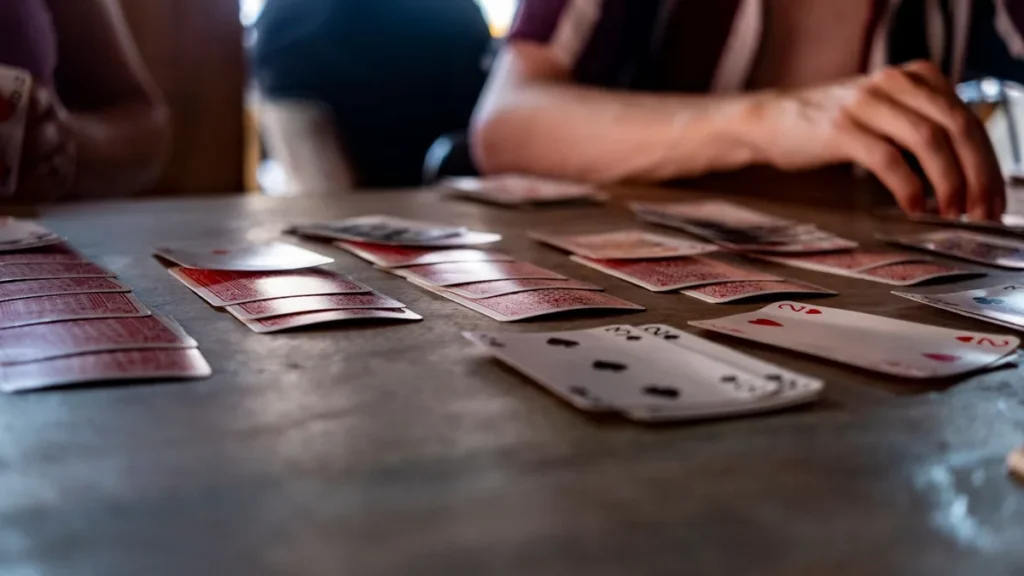
Five hundred players is a crowd, not a table. It is a hall full of teams, a school gym with rows of chairs, or a whole community gathered for one big night of questions. This game is built for exactly that scale. It has nine rounds, nine fresh categories, and a simple scoring system that keeps every team in the hunt until the final question.
Each round follows the same friendly pattern. The host reads a short introduction, asks three questions, and gives every team time to agree on an answer before the next one. The questions are about famous people and famous places, so nobody needs specialist knowledge to enjoy them. A team that knows its history can shine, and a team that simply guesses well can still steal points. If you want to see how the closest earlier edition was put together, the Best Trivia Games for 499 Players guide uses the same team format at a similar size.
The nine categories below were chosen to feel new. Knitters and silhouette artists stand beside saxophonists, flutists, oboists and banjo players, with ice cream makers, mazes and arboretums to finish. Every round mixes a household name with a story worth hearing, so the night feels like a tour of workshops, concert halls and green gardens rather than a school exam.
Key Takeaways
Nine rounds, three questions each, for a total of twenty seven questions plus a tiebreaker.
Every round is built around famous makers, musicians, gardens or mazes.
Teams of four to seven players work best, with one answer sheet per team.
One point per correct answer keeps scoring simple and the leaderboard close.
Read each question twice and allow thirty seconds of team discussion per question.

The 9 Rounds at a Glance
| Round | Category | What the Round Covers |
|---|---|---|
| 1 | Famous Knitters | The great knitters and designers of wool |
| 2 | Famous Silhouette Artists | Portrait cutters in black paper |
| 3 | Famous Saxophonists | The players who made the saxophone sing |
| 4 | Famous Flutists | The golden flutes of stage and studio |
| 5 | Famous Oboists | The double reed masters of the orchestra |
| 6 | Famous Banjo Players | Pickers, pluckers and bluegrass stars |
| 7 | Famous Ice Cream Makers | The founders of the great ice cream houses |
| 8 | Famous Mazes | The hedge puzzles that have baffled visitors |
| 9 | Famous Arboretums | The great gardens of trees from around the world |
The 9 Rounds
Each round below opens with a short story about its category, then asks three questions. Give every team thirty seconds per question, collect the sheets at the end of the round, and read the answers out loud before moving on. The mix is deliberate: hand crafts, music, sweet treats and green places, so every team finds a round that suits it. The questions are written so that a careful listener can often work out an answer from the introduction, which keeps first time players in the game and stops any single team from running away with the night.
Round 1: Famous Knitters
Knitting is one of the oldest crafts in the world, and its great names turned wool into art. In the twentieth century, designers like Kaffe Fassett filled sweaters with bold colour, while teachers like Elizabeth Zimmermann showed home knitters how to make seamless garments that fit beautifully. A hand knitted sweater still carries the patience of its maker in every stitch, and the best knitters are remembered the way painters are remembered, by the patterns only they could dream up.
- Which colourful knitwear designer is famous for his bold Fair Isle patterns? Answer: Kaffe Fassett.
- What is the name for knitting with two colours in the same row, a technique from the Shetland Islands? Answer: Fair Isle knitting.
- Which much loved knitting teacher wrote the classic book Knitting Without Tears? Answer: Elizabeth Zimmermann.
Round 2: Famous Silhouette Artists
Before photography, a silhouette was the cheapest way to keep a portrait of someone you loved. An artist cut a profile from black paper in a few minutes, mounted it on white card, and the likeness was ready to hang. The craft takes its name from Étienne de Silhouette, a French minister whose name became a byword for something cheap and simple. The greatest silhouette artist of all, Auguste Edouart, cut thousands of profiles across Europe and America, and his work still hangs in museums today.
- The art of silhouette portraits is named after which French minister? Answer: Étienne de Silhouette.
- Which French artist cut thousands of silhouette portraits in the nineteenth century? Answer: Auguste Edouart.
- What colour of paper is traditionally used for a silhouette portrait? Answer: Black paper on a white background.
Round 3: Famous Saxophonists
The saxophone is one of the youngest instruments in the orchestra, invented in Belgium in the 1840s by Adolphe Sax. Jazz made it famous: Charlie Parker, known as Bird, played it faster than anyone thought possible, John Coltrane turned it into a voice for prayer and longing, and Stan Getz gave it a soft, breathy sound that filled dance halls. Every team in the room will know at least one of these names, from the jazz clubs of New York to the smooth sounds of the radio.
- Which Belgian instrument maker invented the saxophone in the 1840s? Answer: Adolphe Sax.
- Which jazz saxophonist was known by the nickname Bird? Answer: Charlie Parker.
- Which saxophonist recorded the famous album A Love Supreme? Answer: John Coltrane.
Round 4: Famous Flutists
The flute is the oldest of the woodwind family, and its great players make a simple tube of metal sing like a bird. James Galway, known as the Man with the Golden Flute, filled concert halls with a warm golden sound, while the French master Jean-Pierre Rampal made the flute a star of the concert stage. In rock music, Ian Anderson of Jethro Tull played the flute standing on one leg, proving that the instrument belongs anywhere a tune is welcome.
- Which Irish flutist is known as the Man with the Golden Flute? Answer: James Galway.
- Which French flutist helped make the flute a star of the concert stage? Answer: Jean-Pierre Rampal.
- Which rock frontman famously played the flute standing on one leg? Answer: Ian Anderson of Jethro Tull.
Round 5: Famous Oboists
The oboe is the instrument that tunes the whole orchestra. Before a concert begins, the oboist plays a clear A, and every other player tunes to it. The oboe uses a double reed, two thin pieces of cane that vibrate together, and its sound is bright, a little nasal, and impossible to miss. Swiss oboist Heinz Holliger became one of the great soloists of the twentieth century, and German oboist Albrecht Mayer carries the tradition into concert halls today.
- What note does the oboe play to tune the orchestra before a concert? Answer: The note A.
- What kind of reed does the oboe use? Answer: A double reed.
- Which Swiss oboist and composer became one of the great oboe soloists of the twentieth century? Answer: Heinz Holliger.

Round 6: Famous Banjo Players
The banjo travelled from Africa to America, where it became the bright, plucky voice of bluegrass. Earl Scruggs invented the three finger picking style that still defines the instrument, and his playing on Foggy Mountain Breakdown is one of the most famous banjo recordings ever made. Béla Fleck took the banjo into jazz and classical music, while comedian Steve Martin showed a whole new audience that the banjo can be both funny and beautiful in the same song.
- Which bluegrass legend invented the three finger banjo picking style? Answer: Earl Scruggs.
- Which banjo player leads the band Béla Fleck and the Flecktones? Answer: Béla Fleck.
- Which comedian is also a celebrated banjo player and songwriter? Answer: Steve Martin.
Round 7: Famous Ice Cream Makers
Ice cream has made more than one fortune, and its great makers are household names. Ben Cohen and Jerry Greenfield started Ben and Jerry’s in a converted petrol station in Burlington, Vermont, in 1978, and their chunky flavours changed the way the world eats ice cream. In Italy, gelato makers have perfected a denser, silkier frozen dessert for centuries, and every town in Italy still argues over which gelateria serves the best scoop.
- In which year did Ben Cohen and Jerry Greenfield open their first ice cream shop? Answer: 1978.
- In which Vermont city did Ben and Jerry’s begin? Answer: Burlington.
- Gelato, the dense Italian frozen dessert, comes from which country? Answer: Italy.
Round 8: Famous Mazes
A good maze is a puzzle you can walk through. The hedge maze at Hampton Court Palace was planted in the 1690s and is the oldest surviving hedge maze in Britain, while the great maze at Longleat is the longest hedge maze in the country, with nearly three kilometres of paths. In Hawaii, the Dole Plantation maze is the largest in the world, a giant pineapple shaped puzzle that covers more than a hectare of ground.
- Which royal palace is home to the oldest surviving hedge maze in Britain? Answer: Hampton Court Palace.
- Which stately home has the longest hedge maze in Britain? Answer: Longleat.
- In which American state would you find the Dole Plantation maze, the largest maze in the world? Answer: Hawaii.
Round 9: Famous Arboretums
An arboretum is a garden devoted to trees, and the great ones are living museums. Westonbirt, the National Arboretum in Gloucestershire, holds thousands of trees from around the world and turns gold and red every autumn. The Arnold Arboretum in Boston, run by Harvard University, has been a place of study and quiet walks for more than a century. A walk through an arboretum is a walk around the world, from the cedars of Lebanon to the maples of Japan.
- Which English county is home to Westonbirt, the National Arboretum? Answer: Gloucestershire.
- The Arnold Arboretum in Boston is run by which university? Answer: Harvard University.
- What is an arboretum? Answer: A garden devoted to trees.
How to Run the Night for 500 Players
Split the room into teams of four to seven players and hand each team one answer sheet and a pen. With 500 players you will have around eighty teams, so keep the scoring simple: one point per correct answer, with a single tiebreaker question at the end if two teams finish level. A clear host microphone and a large projected scoreboard help everyone follow the night.
Read every question twice, then give teams thirty seconds to discuss and write their answer. Collect the sheets at the end of each round and mark them while the host tells a short story about the round just played. That pause keeps the energy up and gives the scorekeeper time to catch up. If you want another night at almost the same scale, the trivia games for 498 players guide follows the same nine round pattern.
Between rounds, keep the room involved with a quick leaderboard update and one fun fact from the round just played. Teams love hearing where they stand, and a short story about a maker or a musician gives the scorekeeper a natural pause. With eighty teams in the room, a little ceremony goes a long way: announce the top five teams after round five, and watch the lower teams rally for the second half.
For a grand finale, play the last round as a wager round. Each team writes down how many points it will risk before the questions are read, and the risk is added or lost. It makes the final round tense for the leaders and gives the chasing teams a real chance to win. End the night by reading the final scores from the bottom up, so every team hears its name before the winners are crowned.
Make the night welcoming for first timers and for mixed ages. Put a confident player on each table if you can, and let younger players answer first in at least one round so they feel part of the team. A short welcome at the start, a clear explanation of the scoring, and a promise that nobody will be put on the spot are worth more than any prize. When the room feels relaxed, the answers flow, the laughter is louder, and teams that came for one night start asking when the next one will be.
Checklist Before You Start
- Book a hall that seats 500 players in teams, with a stage and a microphone for the host.
- Print eighty answer sheets, one per team, plus spare pens and a tiebreaker question.
- Test the projector and the scoreboard before the first team arrives.
- Brief two scorekeepers and agree on how answers are marked between rounds.
- Prepare small prizes for the winning team and for the best team name.
- Keep a printed copy of all twenty seven questions and answers with the host.
Frequently Asked Questions
How long does a trivia night for 500 players take?
Plan for about two and a half hours. Nine rounds of three questions, with thirty seconds of discussion per question and a short marking break after each round, fill the evening comfortably without rushing the teams.
How many teams should 500 players form?
Teams of four to seven players work best, which gives you around eighty teams. Smaller teams mean more teams to score, while larger teams leave some players with nothing to do.
Do we need special equipment for a crowd this size?
You need a microphone, a projector or a large screen for the scoreboard, and enough answer sheets and pens for every team. A second microphone for the scorekeeper helps when answers are read out.
How do we stop teams from cheating?
Ask teams to put phones away in bags at the start of the night, seat teams with space between them, and collect answer sheets at the end of each round so nobody can change an answer after hearing it.
What happens if teams tie at the top?
Keep one tiebreaker question ready, ideally a closest wins number question, and play it only if two or more teams finish level. If they are still tied, the team that answered the final round fastest takes the win.
Where can we find more questions for the next quiz night?
Keep a bank of spare questions ready so the night can run longer if the room wants more. The trivia games for 497 players guide is a good place to start, with twenty seven more questions in the same style.
The Bottom Line
Best Trivia Games for 500 Players works because it is simple: nine fresh rounds, three questions each, one point per answer, and a room full of teams who all feel they can win. Knitters, silhouette artists, saxophonists, flutists, oboists, banjo players, ice cream makers, mazes and arboretums give every team a round to love, and the wager finish keeps the ending honest. Gather your teams, read the first question twice, and enjoy the noise when the answers come in.