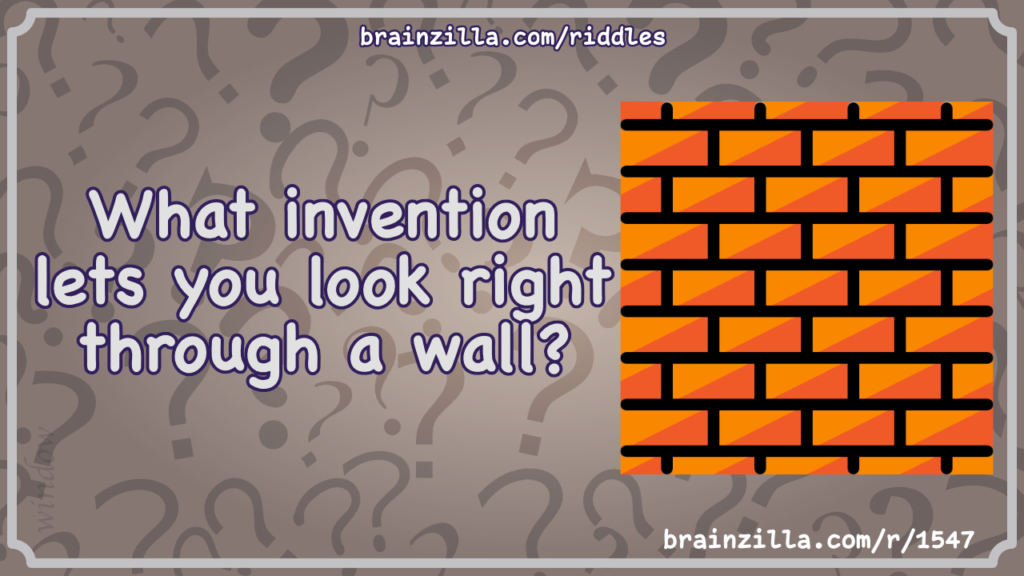
The “Wall Riddle” is a classic lateral thinking puzzle that tricks people into searching for a complex or living answer through misleading clues like “ears” and “faces,” when in reality the solution is simple and literal: a wall. Commonly used in escape rooms, classrooms, and social media, the riddle highlights how our brains overcomplicate problems by relying on patterns instead of direct observation. Its enduring appeal lies in this clever misdirection, reminding us that sometimes the most obvious answer is the correct one.
You’ve likely encountered it in a dimly lit escape room, a viral social media thread, or a cryptic mobile puzzle app: the moment you “hit the wall.” It’s a specific type of brain teaser that seems impossibly simple yet leaves even the sharpest minds second-guessing their logic.
The wall riddle answer is one of the most consistently searched solutions in the world of online puzzles. Why? Because it preys on our brain’s tendency to look for complex patterns when the solution is standing right in front of us. In this guide, we’re going to break down the mechanics of the “Wall Riddle,” reveal the definitive answer, and explain the “trap” that catches so many people off guard.
Section 1: What Is the Wall Riddle Game?
The Wall Riddle isn’t just one single game; it’s a category of lateral thinking puzzles often referred to as a brain teaser wall.
These puzzles are commonly found in:
-
Digital Escape Rooms: Where a code is hidden in plain sight on a virtual wall.
-
Classroom Logic Games: Used by educators to teach students how to challenge their first instincts.
-
Social Media “Stumpers”: Riddles designed to generate hundreds of comments from people debating the logic.
At its core, the Wall Riddle Game is a test of literal vs. figurative interpretation. It forces the player to interact with the concept of a “wall” not just as an obstacle, but as a part of the riddle’s language itself.
Section 2: The Riddle — Exact Wording
While there are several variations, the most iconic version of the riddle goes like this:
“I have two ears but cannot hear. I have no mouth, but I can speak to any room. I stand between you and the world, but I never move. What am I?”
Alternate Version:
“What has four corners, two faces, but no head? It stands between two rooms but never speaks a word until you hit it.”
The exact phrasing is vital. Words like “ears” (referring to the cornices or structural ‘ears’ of a wall) or “faces” (the sides of a wall) are used to personify the object, leading your brain to look for a living creature instead of an architectural feature.
Section 3: The Wall Riddle Answer — Revealed
The definitive wall riddle answer is: A Wall.
It sounds like a “trick,” but it is a classic example of a self-referential riddle. In the puzzle wall game solution, the object is describing its own physical properties using anatomical metaphors.
The Breakdown:
-
“Two Faces”: A wall has two sides (one facing each room).
-
“Between you and the world”: It acts as the boundary of your current space.
-
“Speaks to the room”: Often refers to the “ears” (wall projections) or the way a wall “echoes” sound back to you.
Section 4: The Logic Behind the Answer
The “Wall Riddle” is a masterclass in misdirection.
When we hear “has two ears,” our brain immediately opens a mental folder for “Animals” or “Humans.” By the time the riddle mentions “no mouth,” we are already trying to think of a specific monster or mythological creature.
The puzzle wall game solution becomes obvious only when you stop trying to find a living thing and start looking at the room you are currently sitting in. It uses lateral thinking to hide the answer in plain sight—literally surrounding you as you read the riddle.
Section 5: Common Wrong Answers (And Why People Choose Them)
If you didn’t guess “wall” immediately, you likely fell for one of these common traps:
-
A Cornfield: Because corn has “ears.” This is the most common wrong guess, but it fails the “stands between two rooms” clue.
-
A Mirror: Mirrors have “faces” and show you the “world,” but they don’t have “ears.”
-
An Echo: People choose this because of the “cannot hear” and “speaks” clues, but an echo isn’t a physical object that stands between rooms.
The reason we choose these is pattern recognition. Our brains are trained to find the most “clever” answer, often overlooking the most “obvious” one.
Section 6: Variations of the Wall Riddle
The “Brain Teaser Wall” concept has evolved over the years:
-
The “Pink House” Variation: A classic misdirection where everything in a house is one color, ending with “What color are the stairs?” (Answer: There are no stairs, it’s a one-story house).
-
The “Solid Wall” App Version: Popular in mobile puzzle games, where the user must literally tap the “wall” of the game interface to progress.
-
The “Four-Corner” Riddle: Focuses on the “corners” and “studs” of a wall, often used in construction-themed icebreakers.
Section 7: Tips for Solving Brain Teasers Like This One
To solve a riddle explanation like this in the future, follow these three rules:
-
Be Literal: If a riddle says “What has a head?”, don’t just think of humans. Think of coins, beds, and lettuce.
-
Look Around You: Often, the answer to a riddle is an object in the immediate vicinity of the person asking it.
-
Break the Pattern: If the first three clues sound like an animal, assume the fourth clue will prove it’s an inanimate object.
Section 8: Fun Ways to Use the Wall Riddle
This riddle is a fantastic icebreaker. Try these:
-
Team Building: Give the riddle to a group and see how long it takes for them to realize the answer is the room they are standing in.
-
Social Media: Post the riddle without the answer. The “wall riddle answer” always sparks a debate in the comments.
-
Game Night: Use it as a “door lock” riddle. Players can’t move to the next room until they name the object that separates them.
Section 9: Other Popular Riddles Similar to the Wall Riddle
If you enjoyed the challenge of the brain teaser wall, try these:
-
The Clock: “What has a face and two hands but no arms or legs?”
-
The Piano: “What has many keys but can’t open a single lock?”
-
The Map: “I have cities, but no houses. I have mountains, but no trees. What am I?”
For more mind-bending challenges and full logic breakdowns, head over to riddlepuzzle.com.
Conclusion
The wall riddle answer is a perfect reminder that sometimes the biggest obstacles to solving a problem are our own assumptions. Whether you got it right away or were stumped for hours, remember that riddles are designed to exercise your cognitive flexibility.
The next time you’re stuck on a puzzle wall game solution, take a step back, look at the world literally, and remember: the answer might be right in front of your nose.
Did you solve it on the first try? Share this post with a friend and see if they “hit the wall” too!
Frequently Asked Questions
Q1: What is the most common answer to the “Wall Riddle”?
The most common and direct wall riddle answer is simply “A Wall.” The riddle uses personification—mentioning “ears,” “faces,” or “speaking”—to trick your brain into looking for a living creature, when it is actually describing the physical features of a room’s structure.
Q2: Why do people think the answer is “Corn”?
Many people guess “Corn” because the riddle often mentions having “ears but cannot hear.” While corn does have ears, it usually fails the other parts of the riddle, such as standing between rooms or acting as a physical boundary between people.
Q3: Is the Wall Riddle used in professional escape rooms?
Yes. It is a staple in “brain teaser wall” challenges within escape rooms. Often, players must interact with the actual physical wall of the room—perhaps by tapping it or looking for a hidden compartment—once they solve the linguistic puzzle.
Q4: How does lateral thinking help solve this riddle?
Lateral thinking encourages you to ignore the most obvious, biological interpretation of words like “ears” or “faces.” By viewing these terms as architectural metaphors (like a wall’s surface or structural projections), the puzzle wall game solution becomes clear.
Q5: Are there harder versions of the wall riddle?
Absolutely. Some versions add clues about “studs,” “headers,” or “drywall” to make it more technical, while others use dark humor to imply someone is trapped inside the wall. Regardless of the flavor, the core logic usually leads back to the same inanimate object.