
Ever spotted a used Antminer listed at a price that looks almost too good, then wondered what the final bill actually looks like once fees, freight, and customs are added in? That question is common. The sticker price on a used ASIC miner is rarely the number that matters.
Quick Answer: How much do used ASIC miner marketplaces cost?
There is no single price tag. Used ASIC marketplaces usually charge sellers a negotiated commission or listing fee, while buyers pay the hardware price plus shipping, customs, and sometimes a buyer’s premium at auction. Peer-to-peer boards may cost nothing to list but carry more counterparty risk.
Cost structures differ by venue type. Dealer resale bakes a margin into the price, auction platforms add a premium on top, and classifieds keep fees low but leave verification to you. Hardware itself is quoted in dollars per terahash, a convention rather than a regulated standard.
Before committing, compare the commission or premium, the $/TH rate, shipping weight and freight quotes, import duties and VAT, condition grading claims, and the unit’s power efficiency in J/TH.
Why the Sticker Price Is Only Half the Story
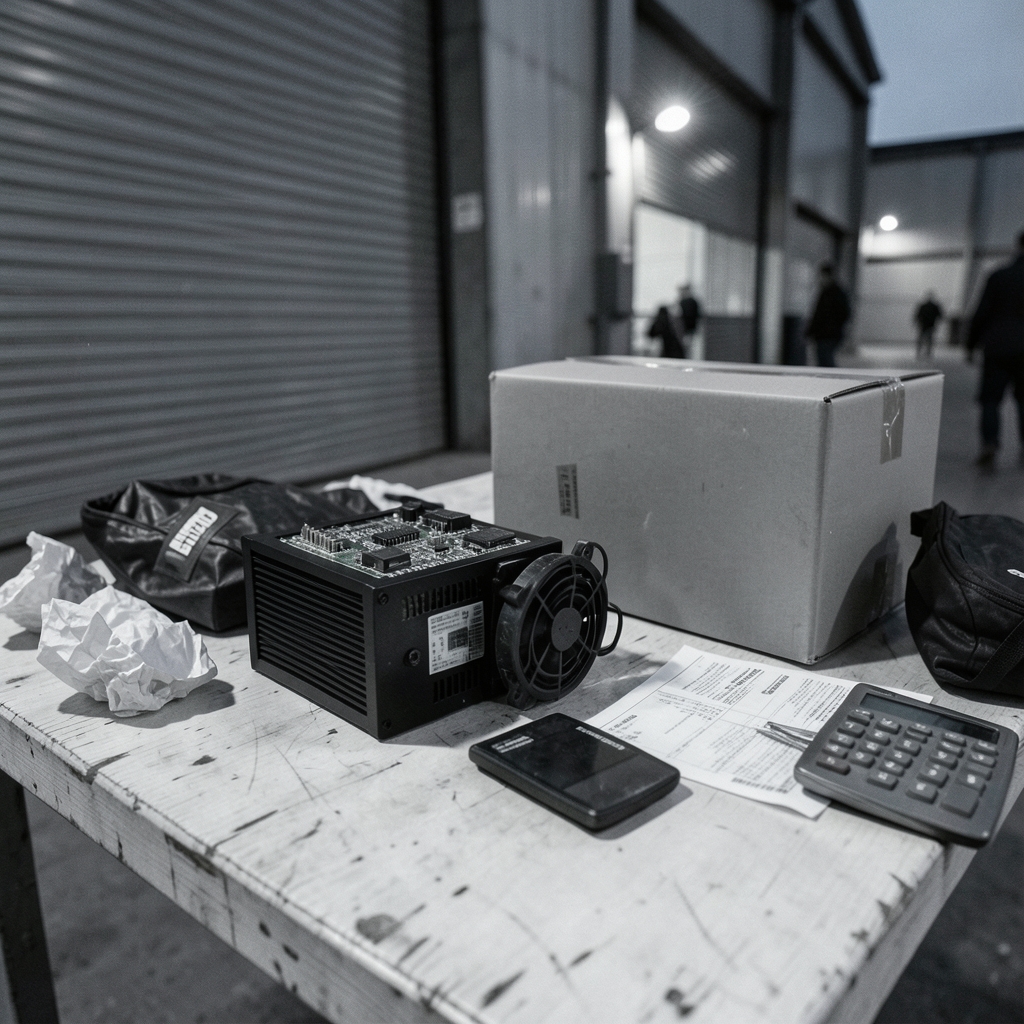
Here is the trap that catches first-time buyers. They compare a used S19-class rig on one marketplace against another and pick the cheaper listing. Then the invoice arrives with freight, duty, and a payment fee attached, and the “deal” evaporates.
Used ASIC marketplaces are not retail stores with published price lists. Most operate as resale boards, dealer channels, or auction-style brokers, and their fee schedules are often negotiated rather than posted. That opacity is the single biggest source of confusion for newcomers. Nobody is hiding anything maliciously; the market simply grew up around private deals, and pricing norms followed.
The practical fix is to stop thinking in sticker prices and start thinking in landed cost. That means the hardware price, the marketplace’s cut, freight, customs, taxes, and an allowance for the risk that the unit arrives with a dead hashboard. Once you add those together, the cheapest listing frequently stops being the cheapest purchase.
The Two Sides of Marketplace Cost
Every used ASIC marketplace charges someone. The question is who, and how much.
| Cost item | Who pays | Typical structure | What to watch |
|---|---|---|---|
| Listing fee | Seller | Flat or free on classifieds | Renewal charges on stale listings |
| Sales commission | Seller | Negotiated percentage | Whether it is baked into the ask |
| Dealer margin | Buyer | Hidden in the price | Compare against $/TH benchmarks |
| Buyer’s premium | Buyer | Added at auction close | Percentage of hammer price |
| Shipping and freight | Buyer | Weight and distance based | Insurance and packaging quality |
| Customs, duty, VAT | Buyer | Jurisdiction specific | Classification of the goods |
| Payment fees | Either | Card, wire, or escrow | Chargeback protection trade-offs |
On peer-to-peer classifieds and forums, fees are low or nonexistent. The trade-off is counterparty risk: you are trusting a stranger’s description of a machine you cannot inspect. Dealer and broker resale flips that equation. You pay more, but the margin you are paying for usually buys some form of testing, warranty, or return window. Auction platforms sit in the middle, charging a buyer’s premium on top of the winning bid, which buyers routinely forget to factor in until the invoice lands.
The honest summary is that no authoritative marketplace fee standard exists. Anyone quoting you a single universal commission rate is guessing. Ask each venue directly what it charges, to whom, and when.
How Hardware Prices Are Actually Quoted
Used miners trade in dollars per terahash ($/TH), not in flat prices per machine. This convention exists because it normalizes across models: a 95 TH rig and a 140 TH rig can be compared on the same scale once you divide price by hashrate.
Two cautions apply. First, $/TH is an industry convention, not a regulated standard, so different marketplaces may calculate it slightly differently or quote it at different moments. Second, the number is volatile. Used prices track Bitcoin’s price and network hashrate rather than following a tidy depreciation curve. When the Bitcoin price falls or difficulty climbs, $/TH for older rigs compresses sharply. In up-cycles it can spike just as fast. A figure you saw last month may be meaningless today, so always ask for a dated snapshot rather than treating any range as current.
This volatility has a practical consequence for negotiation. If you are buying, know the current $/TH band before you open a conversation. If you are selling, understand that your machine’s resale value is being priced against today’s economics, not what you paid for it.
The Costs Marketplaces Rarely Surface
Some of the most expensive parts of a used ASIC purchase never appear on the listing page.
Freight and customs. Cross-border used-miner purchases often carry shipping and import costs larger than buyers expect. S19-class units are heavy, roughly 10 to 15 kilograms each, and power supply handling adds bulk and complexity. Import duties, VAT or sales tax, and country-specific restrictions on crypto mining hardware all change the landed cost materially. Duty rates vary by jurisdiction and change over time, so verify the rules for your own country rather than relying on a forum post from three years ago.
Power efficiency. A miner’s J/TH rating, its joules per terahash, drives resale value more than its age does. Buyers price used units against their local electricity cost, which means the same machine can be a bargain in one region and uneconomic in another. Marketplaces almost never surface this. A rig that looks cheap in dollars may never pay back its purchase price if your power is expensive.
Condition grading. Here is a genuinely frustrating gap: “used,” “refurbished,” and “tested” mean different things to different sellers, and no universal grading standard exists. One dealer’s “tested” means a full burn-in at load. Another’s means it powered on once. That inconsistency directly affects your effective cost through failure rates and hashboard replacement bills.
Regulatory and tax treatment. Import restrictions, VAT treatment, and in some jurisdictions outright limits on mining hardware or operations all shift the final number. This is jurisdiction-specific and worth checking before you wire anything.
If you are building out a lean operation around these purchases, the same cost discipline applies elsewhere. Teams comparing software spend often find the same pattern of hidden fees, which is why roundups of the best low cost email verification tools that actually work on a budget tend to focus on total cost rather than headline pricing. The logic transfers directly: the advertised number is the beginning of the conversation, not the end. (Free low cost technical seo tools alternatives that actually)
Comparing Marketplace Types on Total Cost
Different venues suit different buyers. A hobbyist buying one rig has very different needs from an operator sourcing twenty.
Peer-to-peer classifieds and forums
Low or zero fees, wide selection, and direct negotiation. The cost you save in commission you pay for in diligence. Ask for video of the unit hashing, serial numbers, and a history of the machine’s operating environment. Escrow through a neutral service is worth the small fee.
Dealer and broker resale
Higher headline prices because margin is baked in, but you are buying reduced risk. Ask explicitly what the warranty covers, whether hashboards are original, and what the return window is. Get it in writing.
Auction platforms
Competitive pricing on desirable models, plus a buyer’s premium and shipping on top. Set your maximum bid as a landed-cost figure before the auction opens, not as a hammer price. This one habit prevents most auction regret.
Whichever route you take, the same supporting tooling question comes up. Sellers managing inbound leads from listings often lean on inexpensive stacks, and guides to the best low cost sales engagement tools for lean sales teams make the same point about watching per-seat costs. Small percentages compound quickly when volumes rise.
Practical Tips That Actually Work
Build a landed-cost spreadsheet before you shop. Columns for price, $/TH, freight quote, estimated duty and VAT, payment fees, and a risk allowance. Fill it in for every candidate. The ranking will surprise you.
Ask for a dated $/TH benchmark. Since the metric moves with Bitcoin price and difficulty, a quote without a date is not a quote.
Weigh power efficiency against your own electricity rate. Run the J/TH math against your actual cost per kilowatt-hour. If payback stretches beyond your comfort horizon, the “bargain” is not one.
Insist on condition evidence. Video of the unit hashing at load, photos of every board, and clear statements about what “tested” meant in practice. If a seller resists, that is your answer.
Budget for one failure. Assume at least one unit in any multi-unit order will need a hashboard or PSU replacement, and price that in. Operators who do this are rarely blindsided.
Confirm the tax and import position for your country. Rules on crypto mining hardware and VAT treatment differ widely and change. A few minutes of checking beats a customs surprise.
The common mistake is treating the marketplace fee as the main cost. In practice, freight, duty, and efficiency mismatches usually dwarf it. Buyers who fixate on commission percentages are optimizing the smallest line item.
Conclusion
Used ASIC miner marketplaces do not have a price list, and that is the honest answer to what they cost. Sellers pay negotiated commissions or listing fees, sometimes nothing at all on classifieds. Buyers pay the hardware price in dollars per terahash, plus freight, customs, taxes, payment fees, and occasionally an auction premium, plus an invisible surcharge for condition risk and power efficiency mismatch.
The buyers who do well are the ones who stop comparing stickers and start comparing landed costs. They date their $/TH benchmarks, run the J/TH math against their own electricity rate, demand evidence of condition, and budget for at least one failure per order. None of that requires special expertise. It requires refusing to let a good-looking listing do the thinking for you.
Treat every quote as an opening bid, every fee as negotiable until proven otherwise, and every machine as a business case rather than a bargain. Do that, and the real cost of a used ASIC becomes a number you chose rather than one that ambushed you.
Frequently Asked Questions
Do used ASIC marketplaces charge buyers a fee?
Some do, some do not. Auction-style platforms typically add a buyer’s premium on top of the winning bid, while peer-to-peer classifieds usually charge buyers nothing beyond the price and shipping. Dealer resale hides the margin inside the asking price rather than listing it separately. Always ask the venue directly which fees apply to you and when they are collected.
Is dollars per terahash a standardized measurement?
No. $/TH is an industry convention used to compare machines across models, not a regulated standard. Different marketplaces may calculate or quote it at different moments, and the figure shifts with Bitcoin’s price and network difficulty. Ask for a dated benchmark so you are comparing like with like.
Why is a used miner cheaper in one country than another?
Power efficiency explains most of it. A machine’s J/TH rating is priced against local electricity costs, so the same unit can be economic in a region with cheap power and uneconomic where rates are high. Import duties, VAT, and hardware restrictions add further variation to the landed cost in each jurisdiction.
What does “tested” mean when a seller uses it?
It depends entirely on the seller, because no universal condition grading standard exists. For one dealer it means a full burn-in under load; for another it means the unit powered on. Ask for specifics: how long it ran, at what load, and whether hashboards are original. Video evidence beats adjectives.
How much should I budget beyond the listing price?
Plan for freight, customs duty, VAT or sales tax, payment fees, and a risk allowance for at least one failed component per order. Heavy S19-class units add real shipping weight, and cross-border purchases carry the most variable costs. Building a landed-cost spreadsheet before you shop keeps the comparison honest.
Are marketplace fees negotiable?
Often, yes, particularly on dealer and broker deals where margin is already built into the price. Commission structures on resale boards are frequently agreed privately rather than published. It costs nothing to ask what the fee is, who pays it, and whether it flexes on volume. Sellers moving multiple units usually have room to talk.




