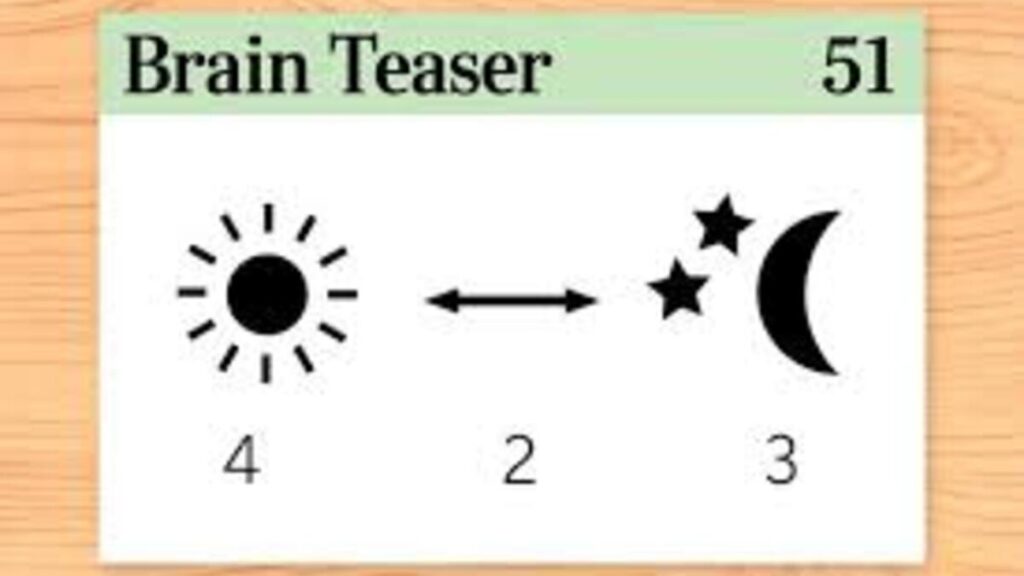
Visual puzzles are one of the most entertaining ways to challenge your brain. Instead of relying only on words or numbers, these puzzles use images, shapes, patterns, and optical tricks to test how well you observe details. Many visual puzzles with answers appear simple at first glance, but the solution often hides behind clever design or perspective.
From picture puzzles with answers to tricky optical puzzles and creative brain teaser visuals, these challenges encourage you to slow down and truly examine what you see. They sharpen observation skills, improve concentration, and help develop logical thinking.
In this guide, you will explore 45 mind-bending visual puzzles that range from easy warm-ups to expert-level brain teasers. Each puzzle is explained clearly so you understand the challenge, and the answers include short explanations that reveal the hidden logic behind the image.
Table of Contents
ToggleWhat Are Visual Puzzles?
Visual puzzles are challenges that rely on images, symbols, or visual patterns instead of written clues. They require your brain to interpret shapes, recognise hidden objects, and notice subtle differences within an image.
These puzzles can take many forms, including optical illusions, hidden object puzzles, counting shapes, and tricky visual riddles. Because they activate both the analytical and creative sides of the brain, they are widely used in learning exercises and cognitive training activities.
How to Solve Visual Brain Teasers Faster
Solving brain teaser visuals becomes easier when you develop a strategy for analysing the image.
First, look for patterns and repetition within the picture. Many puzzles hide their solutions within repeated shapes or symmetrical designs, and identifying these patterns can quickly reveal the answer.
Second, focus on structure rather than colour. Colours may distract the eye, while shapes and outlines usually provide the key clues.
Finally, take a step back and view the image from different perspectives. Sometimes the answer becomes clear only when you imagine rotating or flipping the puzzle in your mind.
Easy Visual Puzzles With Answers (1–10)
1. Hidden Star Puzzle
In this puzzle, a large group of circles fills the image, and they all appear identical at first glance. However, somewhere within the pattern, one small star shape is hidden among the circles.
If you carefully scan the rows and columns, you may notice a shape that slightly breaks the circular pattern.
Answer: The hidden star appears in the upper-right area of the image. Its points blend into the surrounding circles, which makes it easy to overlook at first glance.
2. Spot the Different Triangle
A grid of triangles appears perfectly uniform, and every triangle seems to have the same size and shape. The challenge is to identify which triangle is slightly different from the others.
Look closely at the angles and side lengths of each triangle rather than just their positions.
Answer: One triangle in the bottom row has a slightly longer side than the others. The difference is subtle, but it disrupts the otherwise perfect symmetry of the grid.
3. Count the Squares
At first glance, the image appears to contain a simple 4×4 grid of squares. Most people immediately assume the answer is 16.
However, some squares overlap or combine to form larger shapes within the grid.
Answer: The correct number of squares is 18. Besides the small squares, there are also larger squares created by combining smaller ones.
4. Hidden Number Puzzle
A complex group of lines and curves appears to be randomly arranged. The challenge is to identify the hidden number formed by the overlapping shapes.
Instead of focusing on the entire design, try tracing individual curves with your eyes.
Answer: The hidden number is 8. Once you follow the curved lines carefully, they clearly form two connected loops.
5. Which Line Is Longer?
Two horizontal lines are placed next to each other, each with arrow shapes at its ends. One line appears longer than the other.
This puzzle tests how perspective and surrounding shapes can trick the brain.
Answer: Both lines are exactly the same length. The arrowheads create an illusion that makes one line appear longer.
6. Hidden Letter Puzzle
Several geometric shapes overlap to create a confusing design. At first, the shapes seem unrelated.
If you examine the arrangement of the lines carefully, a letter slowly becomes visible.
Answer: The shapes combine to form the letter A. The angled lines create the sides of the letter, while a horizontal line forms the centre.
7. Spot the Difference
Two images of a park scene appear almost identical. Trees, benches, and birds are arranged in the same positions.
Your goal is to identify the tiny detail that differs between the two pictures.
Answer: One tree in the second image has an extra branch. This small difference is easy to miss unless you compare each tree carefully.
8. Pattern Recognition Puzzle
A sequence of shapes follows a repeating pattern. The challenge is to determine which shape should appear next.
Look for a consistent order or rotation among the shapes.
Answer: The next shape in the pattern is a circle. The sequence repeats after every three shapes.
9. Shadow Match Puzzle
Four objects appear on one side of the image, and four shadows appear on the other. The challenge is to match each object to the correct shadow.
Pay attention to small details such as edges, angles, and curves.
Answer: Object C matches shadow number two. The curved edge of the object perfectly aligns with the shadow’s outline.
10. Hidden Shape Puzzle
Several overlapping squares and rectangles form a complicated structure. The challenge is to identify a hidden triangle within the shapes.
The triangle may not be immediately visible because it is formed by parts of other shapes.
Answer: The triangle appears near the center of the image. Its edges are created by the intersection of three different lines.
Medium Picture Puzzles With Answers (11–25)
11. Parking Spot Puzzle
A row of cars covers several numbered parking spaces. The numbers visible include 16, 06, 68, and 88.
The challenge is to determine the number hidden under the parked car.
Answer: The number is 87. When the image is turned upside down, the sequence becomes logical: 86, 87, 88, 89.
12. Triangle Counting Puzzle
A large triangle is divided by multiple internal lines, creating several smaller triangles within it.
Your goal is to count every triangle in the figure, including overlapping ones.
Answer: There are 18 triangles in total. Many people miss the larger triangles formed by combining smaller sections.
13. Hidden Animal Puzzle
A forest illustration contains trees, branches, and shadows. At first, it looks like a normal landscape.
However, one animal shape is hidden within the patterns of the branches.
Answer: The outline of a fox appears between the tree branches. Once you see it, the shape becomes very obvious.
14. Maze Challenge
A simple maze shows three possible paths leading to an exit. Only one path actually reaches the goal without hitting a dead end.
Following the wrong path leads you back to the start.
Answer: The correct path begins on the left side. The other paths eventually loop back or hit blocked passages.
15. Cube Counting Puzzle
A 3D stack of cubes forms a complex structure. Some cubes are clearly visible, while others may be hidden behind them.
The challenge is to count the total number of cubes in the structure.
Answer: There are 14 cubes in total. Several cubes are hidden from view behind the front layer.
16. Perspective Size Puzzle
This puzzle shows two rectangles placed on different sides of a hallway drawing. Because of the perspective lines of the hallway, one rectangle appears much larger than the other.
Take a closer look at the shapes themselves instead of the background lines. The perspective is designed to trick your brain into judging the sizes incorrectly.
Answer:
Both rectangles are exactly the same size. The hallway perspective lines create a depth illusion that makes one rectangle appear farther away and therefore larger.
Once the background is removed, the rectangles become clearly identical.
17. Hidden Object Desk Puzzle
An illustration of a messy study desk contains books, pencils, glasses, and papers scattered everywhere. At first glance, it looks like a normal workspace.
However, somewhere in the clutter, a small key is hidden. Finding it requires careful observation of the shapes and outlines among the objects.
Answer:
The key is hidden near the stack of books on the right side of the desk. Its shape blends into the outline of a pen and ruler nearby.
Because the colours are similar, most people overlook the key on their first attempt.
18. Overlapping Circles Puzzle
Several circles overlap each other to form a complex pattern. The challenge is to count how many full circles actually appear in the design.
Some circles are partially hidden behind others, which makes the puzzle more confusing than it seems at first glance.
Answer:
There are eight circles in total. Four circles are fully visible, while the remaining four are partially hidden behind overlapping shapes.
Carefully tracing the curved edges helps reveal the circles that are not immediately obvious.
19. Mirror Image Puzzle
A set of five objects is displayed along with their mirror reflections. However, only one reflection accurately matches the object when flipped.
The other reflections contain subtle mistakes, such as reversed details or incorrect angles.
Answer:
The correct reflection is Object B. When flipped horizontally, its features line up perfectly with the original object.
The other options contain small inconsistencies, such as misplaced handles or reversed shapes.
20. Hidden Word Puzzle
A large artistic design made of curved lines and shapes appears abstract at first. But hidden within the design is a short word.
Instead of reading normally from left to right, the word becomes visible only when the viewer focuses on the thicker outlines.
Answer:
The hidden word is “Brain.” The letters are formed by the darker curves in the centre of the design.
Once you identify the first letter, the rest of the word becomes easier to recognise.
21. Shape Rotation Puzzle
Four shapes appear in a sequence where each one rotates slightly compared to the previous one. The challenge is to determine which option should appear next in the pattern.
The key is to track how the angles of the shape change step by step.
Answer:
The next correct shape is the one rotated 90 degrees clockwise from the previous image.
Each step in the sequence follows the same rotation rule.
22. Hidden Number Grid
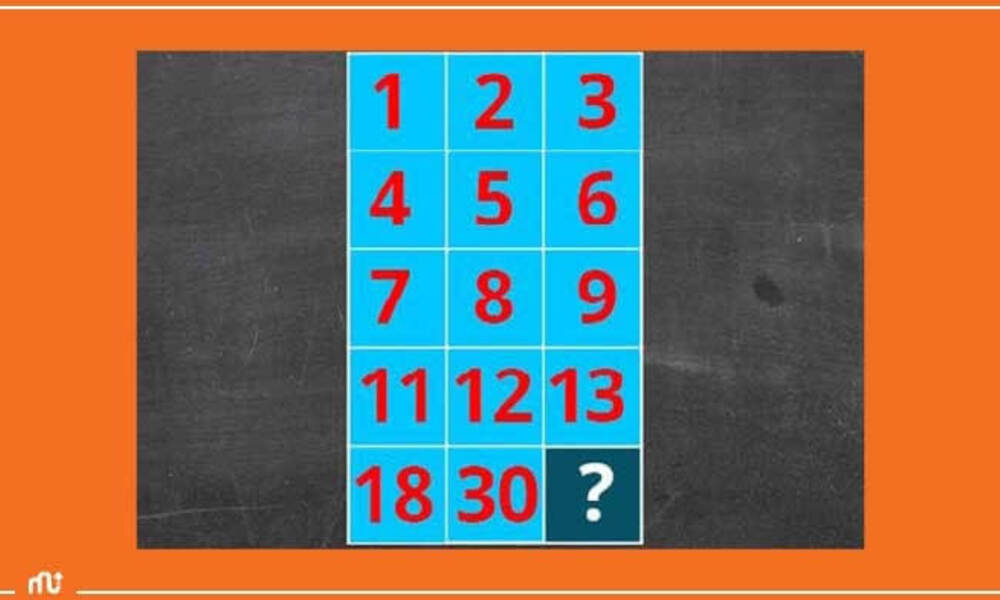
A grid filled with random digits seems chaotic and unorganised. However, a specific number sequence is hidden within the grid.
The sequence can appear horizontally, vertically, or diagonally, so you must check all directions carefully.
Answer:
The hidden number sequence is 529. It appears diagonally from the lower left corner toward the upper right.
Most people miss it because they only search in horizontal rows.
23. Visual Balance Puzzle
Two sides of a scale contain different combinations of shapes. Each shape represents a certain weight.
The challenge is to determine which shape must be added to balance the scale perfectly.
Answer:
Adding a triangle balances the scale. Based on the other combinations shown, the triangle equals the combined weight of the smaller shapes.
By comparing the patterns carefully, the correct balance becomes clear.
24. Hidden Animal Silhouette
A jungle scene filled with leaves, vines, and branches appears very detailed. Somewhere within the shapes, the silhouette of an animal is hidden.
The animal blends naturally into the environment, making it difficult to spot immediately.
Answer:
The hidden animal is a tiger. Its outline appears between the curved vines and the shadowed leaves.
The stripes of the tiger align with the plant patterns, which helps camouflage the shape.
25. Missing Puzzle Piece Challenge
A patterned square has one piece missing from the centre. Several possible pieces are shown below the image.
To find the correct piece, you must examine both the pattern direction and the colour alignment.
Answer:
The correct option is Piece D. It continues both the diagonal pattern and the colour flow from the surrounding pieces.
The other pieces may match the colour or shape individually, but only Piece D fits both conditions perfectly.
Hard Optical Puzzles and Tricky Visual Riddles (26–40)
26. Impossible Triangle
This puzzle shows a triangle that appears normal at first glance. However, the edges seem to connect in a strange way.
When you analyse the angles carefully, something unusual becomes clear.
Answer: The triangle is impossible in real life. Its edges contradict each other in three-dimensional space.
27. Elephant Legs Illusion
An illustration of an elephant shows multiple legs that appear perfectly normal.
However, when you count the feet, something feels confusing.
Answer: The drawing mixes the spaces between the legs with the legs themselves. This creates extra “legs” without proper feet.
28. Disappearing Object Puzzle
An object placed against a patterned background seems to vanish when viewed from a distance.
This puzzle demonstrates how contrast affects visual perception.
Answer: The object blends into the background because the patterns align perfectly with its outline.
29. Hidden Face Puzzle
A detailed landscape scene contains mountains, rivers, and trees.
Hidden within the shading of the image is a human face.
Answer: The face appears when you look at the shadows between the mountains. The nose and eyes form naturally from the shapes.
30. Colour Illusion Puzzle
Two squares appear to have completely different shades of grey.
However, they are placed within different backgrounds that influence how we perceive colour.
Answer: Both squares are actually the same colour. The surrounding patterns trick the brain into seeing them differently.
Expert-Level Visual Puzzles (41–45)
41. Advanced Cube Puzzle
A large cube structure appears to be made of many smaller cubes stacked together.
Some cubes are hidden behind others, making counting difficult.
Answer: The structure contains 27 cubes. Several cubes are hidden in the centre layers.
42. Hidden Animal Illusion
An abstract painting contains many curved shapes and patterns.
At first, it seems random, but one animal shape is cleverly hidden within the design.
Answer: When the image is rotated slightly, the outline of a dolphin becomes visible.
43. Perspective Trick Puzzle
A road in the image appears curved as it moves toward the horizon.
However, perspective lines create a misleading visual effect.
Answer: The road is actually straight. The surrounding lines create the illusion of curvature.
44. Double Image Puzzle
A drawing appears to show a simple landscape scene.
But if you examine the shapes carefully, a second image emerges.
Answer: The picture can be seen as both a face and a landscape. The mountains form the facial features.
45. Motion Illusion Puzzle
A circular pattern appears to move or rotate when you stare at it.
In reality, the image itself is completely static.
Answer: The motion illusion occurs because of alternating colours and patterns that stimulate the brain’s motion detectors.
Conclusion
Solving visual puzzles with answers is both entertaining and mentally stimulating. These puzzles encourage you to slow down, observe carefully, and think creatively about the images in front of you. From simple picture puzzles with answers to challenging optical puzzles and tricky visual riddles, every puzzle trains your brain to recognise patterns and hidden clues more efficiently.
If you enjoyed these challenges, try sharing them with friends or family and see who can solve them the fastest. The more brain teaser visuals you explore, the sharper your observation skills and problem-solving abilities will become.
FAQs
1. What makes visual puzzles so addictive to solve?
Visual puzzles challenge your brain to spot hidden patterns and details that aren’t obvious at first glance. That “aha” moment when you finally see the answer makes them incredibly satisfying and fun.
2. Why do some visual puzzles trick our eyes?
Many puzzles use optical illusions and clever patterns to confuse the brain’s perception system. Your brain tries to interpret the image quickly, which can lead to surprising visual mistakes.
3. Can visual puzzles help improve observation skills?
Yes, solving visual puzzles trains your brain to notice small details and patterns more quickly. Over time, this practice can sharpen focus and improve everyday problem-solving abilities.
4. What types of visual puzzles are the most challenging?
Optical illusions, hidden object puzzles, and shape-counting challenges are often the trickiest. They require careful attention because the solution is usually hidden within the image itself.
5. How often should you solve visual puzzles for brain exercise?
Even spending a few minutes a day on visual puzzles can keep your mind active. Regular practice helps improve concentration, logical thinking, and visual awareness.