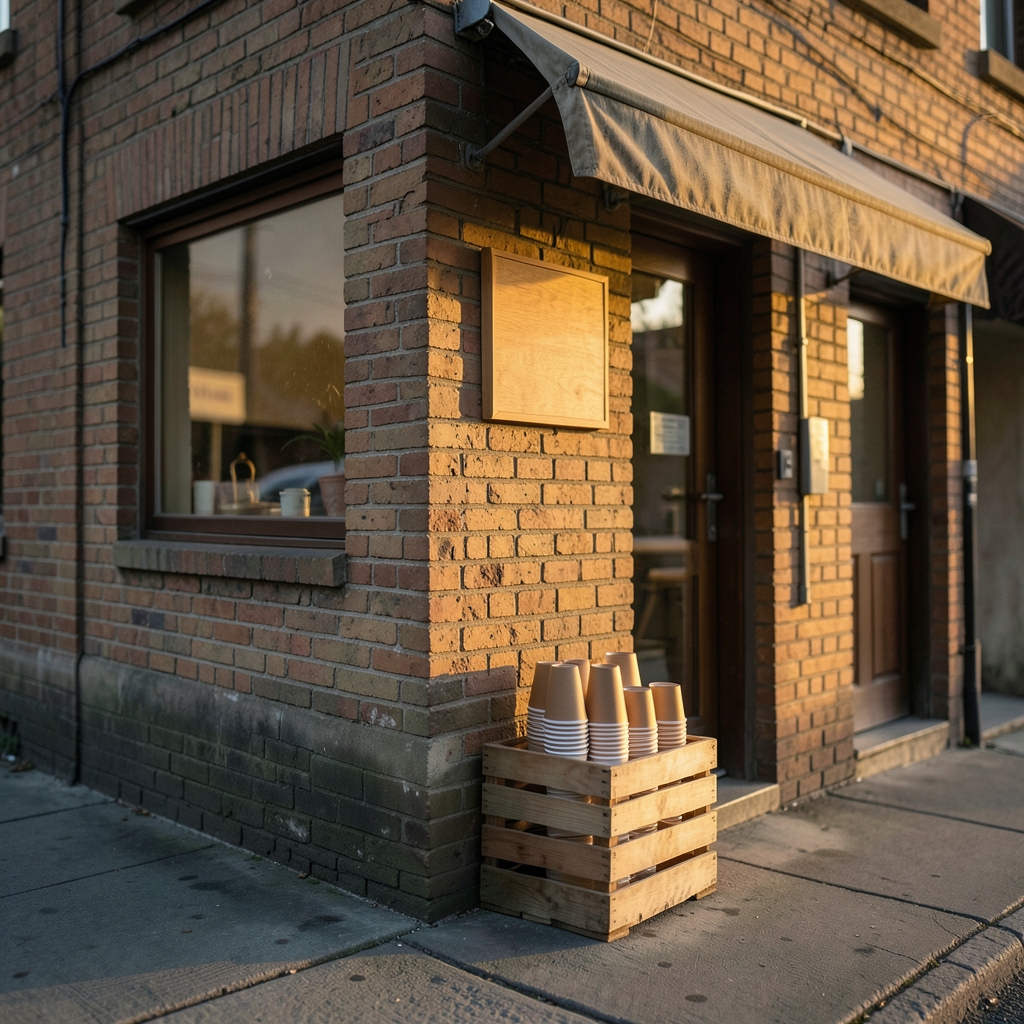
What do you call a coffee shop when the sign is three feet wide, the cup sleeve has room for six letters, and the Instagram handle you want was claimed in 2014? That squeeze is why short coffee shop names have become their own small craft. A name like Brew, Kaff, or Sip has to work harder than a long one, because every letter is doing double duty: it has to be readable from across the street, spellable over the phone, and distinct enough to survive a trademark search.
This guide looks at how short names actually get made, which ones hold up in practice, and where the traps are. It is written for the person staring at a blank page with a lease already signed.
Why short names are harder than they look
The appeal is obvious. Short names fit a logo, a stamp, a chalkboard, and a paper cup without shrinking the type. They are easy to remember and easy to say. But brevity creates a specific problem: the shorter the word, the more likely it already exists.
English is crowded at the short end. Most one-syllable words are taken, and most of the good ones are common nouns. That means a four-letter coffee shop name is usually one of three things: a clipped word, a blend, or a word borrowed from another language. Each route has tradeoffs.
There is also a legal wrinkle. Under United States trademark law, marks that are merely descriptive of the goods or services are harder to register. The Lanham Act allows registration of descriptive marks only on the Supplemental Register or with proof of acquired distinctiveness. In plain terms, calling a coffee shop “Coffee” or “Bean” is a weak position. A made-up short word is a much stronger one, because it is distinctive by default.
The practical takeaway: short is fine, generic-short is not. “Brew” as a standalone name is memorable but crowded. “Brewt” or “Bru” is odd enough to be ownable.
The four reliable ways to build a short name
Almost every strong short coffee shop name comes from one of four moves. Knowing which move you are making helps you judge whether the result is any good.
Clipping
Clipping means cutting a longer word down. Café becomes Caf. Espresso becomes Espo. Roastery becomes Roast. The advantage is that the meaning survives the cut. The disadvantage is that clipped forms can look like typos, so the design has to carry them.
Clipping works best when the shortened form is already familiar. “Caf” reads instantly to anyone who has seen a café sign. “Roa” does not.
Blending
Blending fuses two words. Bean plus bar becomes Beanbar. Drip plus sip becomes Dripsip. Blends are the richest source of short, ownable names because the combination is usually new. The risk is that a bad blend sounds like a medication. Test it out loud before you commit.
Borrowing
Borrowing pulls a short word from another language. Kaffee, caffè, kaffe, kahvi, kawa. These read as coffee-adjacent without being the English word, which gives them a European feel and a better shot at availability. The word café itself is a French loan, ultimately from Italian caffè and Turkish kahve, and English picked it up in the late eighteenth and nineteenth centuries. The accented form is standard in British usage while “cafe” dominates in the US.
One caution with borrowing: check what the word actually means to speakers of that language. A name that sounds charming in English can be an ordinary or awkward word to someone who grew up with it.
Inventing
Inventing means making a short word from scratch. Zuno. Vell. Ova. These are the easiest to trademark and the hardest to remember, because they carry no meaning. The fix is usually a strong visual identity and a subtitle that does the explaining.
If you want a wider pool of examples to react to, browsing lists of funny and creative names is a fast way to find out what you like. Collections like these creative names for friend groups show how much personality a two-word phrase can carry, and the same instinct applies to a shop name.
A comparison of short-name styles
| Style | Example | Strength | Weakness | Best for |
|---|---|---|---|---|
| Clipping | Caf, Brew, Roast | Instantly understood | Crowded, weak trademark | Neighborhood shops with strong signage |
| Blend | Beanbar, Dripsip | Distinctive, ownable | Can sound clumsy | Specialty shops with a playful brand |
| Borrowed | Kaff, Caffè, Kawa | European feel, more available | Meaning may not travel | Cafés with a design-led identity |
| Invented | Zuno, Vell, Ova | Easy to protect | No built-in meaning | Chains and franchise-ready brands |
| Place plus word | Elm Coffee, Dock Brew | Local, trustworthy | Longer than it looks | Shops tied to a specific street or district |
The table is not a ranking. A four-letter invented name and a two-word place name solve different problems. The invented name scales; the place name builds local trust faster.
What actually works in practice
A few habits separate names that survive from names that get changed eighteen months in.
Say it on the phone. The single most common mistake is choosing a name that cannot be spelled aloud. If a customer has to say “B-R-E-W apostrophe S” to book a table, the name is costing you business. Short names with unusual spellings are the worst offenders.
Check the handle before the sign. Short usernames and short .com domains are largely gone. Most new shops solve this by adding a place name or a single letter. Do the search first, then fall in love with the name. Not the other way around.
Watch the double meaning. Short words collide with slang, brand names, and unfortunate translations. This is where the humor lists earn their keep. A roundup of 90 + funny inappropriate names that will make you laugh is a useful stress test: if your candidate appears in that kind of list, you have your answer.
Read it on a cup. A name that looks elegant in a logo file can look cramped on a six-ounce cup. Print it at actual size before you order signage.
Check the trademark register, not the search engine alone. A name can be free online and taken in your class of goods. A short, common word is the most likely to already be registered. This is the one place where spending money early saves money later.
Keep the pronunciation obvious. If two people say the name differently, you have two brands. “Kaff” is fine if everyone reads it the same way. “Caffè” invites a debate about the accent.
Where short names go wrong
The failure modes are consistent enough to list.
The first is the empty short name. Four letters, no meaning, no story. The shop ends up explaining itself in every conversation, which is exhausting for staff and forgettable for customers.
The second is the crowded short name. “Bean,” “Brew,” “Cup,” and “Grind” are all fine words and all heavily used. Standing out requires a modifier, which defeats the purpose of going short.
The third is the unspellable short name. Invented names with silent letters or unusual consonant clusters create a permanent phone problem.
The fourth is the name that fights the brand. A short, sharp, industrial name on a cozy, floral shop creates a mismatch customers feel even if they cannot name it.
The fifth is the name chosen before the domain. This one is so common it is almost a rite of passage. It is also entirely avoidable.
How short should you actually go?
Shorter is not automatically better. There is a floor.
One-word names of three to five letters are the sweet spot for signage and handles. Two words of three to four letters each also work well and are easier to make distinctive, because the combination does the work. Single letters and two-letter names are almost impossible to own and almost impossible to search for.
A useful rule of thumb: the name should be short enough to fit on a stamp and long enough to be findable. If a customer hears it once and can find you online without asking for the spelling, the length is right.
Brevity is also a style choice, not a law. “Roastery” and “coffee bar” remain common because they signal specialty positioning to a certain kind of customer. Short names skew toward design-led, high-turnover, and younger-skewing shops. Neither approach is wrong; they attract different crowds.
Borrowing personality from other naming worlds
Coffee shops are not the only businesses wrestling with short names, and looking sideways helps.
Pet names, for instance, follow the same rules: short, sayable, and memorable. A list of funny pet names for dogs and cats is a masterclass in two-syllable rhythm, which is exactly the rhythm that makes a shop name stick.
Team names show how a short phrase can carry attitude. Sports and trivia leagues lean on punchy, slightly ridiculous names because they are said out loud constantly, and the same test applies to a café name that staff will repeat a hundred times a day. If you want to see how far that logic stretches, the funny team names collections are full of short, high-personality examples.
City names are another angle. A short place name carries instant geography and often a bit of humor. Browsing funny city names that will make you do a double take is a good reminder that a real place name can be more distinctive than an invented one, and it comes with a story built in.
The lesson across all of these: short names work when they carry a second layer, whether that is rhythm, humor, or place.
A quick naming checklist
Before committing, run the candidate through this sequence.
- Say it aloud to three people and ask them to spell it.
- Search the exact name plus your city, and check the social handles.
- Search the trademark register in your class of goods.
- Print it on a mock cup and a mock sign at real size.
- Check the meaning in any language you are borrowing from.
- Ask whether it still sounds good when said in a hurry.
If it survives all six, it is probably a keeper.
Conclusion
Short coffee shop names are a constraint-driven craft. The best ones are not the shortest or the cleverest; they are the ones that survive being said on the phone, printed on a cup, and searched on a phone screen. Clipping, blending, borrowing, and inventing all work, but each comes with a predictable failure mode. Do the boring checks first, keep a second layer of meaning in the name, and let the sign stay simple. A three-letter name with a story behind it will outlast a clever one with no story at all.
Frequently Asked Questions
What is the ideal length for a coffee shop name?
Three to five letters for a single word, or two short words of three to four letters each. That range fits signage, cups, and social handles while staying findable. Anything under three letters becomes very hard to trademark or search for.
Can I use a foreign word like kaffee or caffè for my shop name?
Yes, and it is a common approach because it reads as coffee-adjacent while being more available than the English word. Check what the word means to native speakers first, and decide early whether you will keep the accent, since customers will drop it when typing.
Is a descriptive name like Bean or Brew a bad idea?
It is a weak position rather than a fatal one. Merely descriptive marks are harder to register under US trademark law and are crowded in the coffee market. If you love a descriptive word, pair it with something distinctive so the whole name is ownable.
How do I check whether a short name is already taken?
Search the exact name plus your city, check the social handles, and search the trademark register for your class of goods. Do this before you order signage. A name can be free as a domain and still be registered as a trademark.
Should the name come before or after the domain?
The domain and handle search should come first. Short .com domains and short usernames are largely claimed, so most new shops add a place name or a letter. Choosing the name first and discovering the handle is gone is the most common avoidable mistake.
Does a short name limit what the shop can become?
Only if the name is too generic to protect or too odd to say. A distinctive short name scales well because it is easy to trademark and easy to remember. A vague one limits growth because it cannot be defended or recalled.