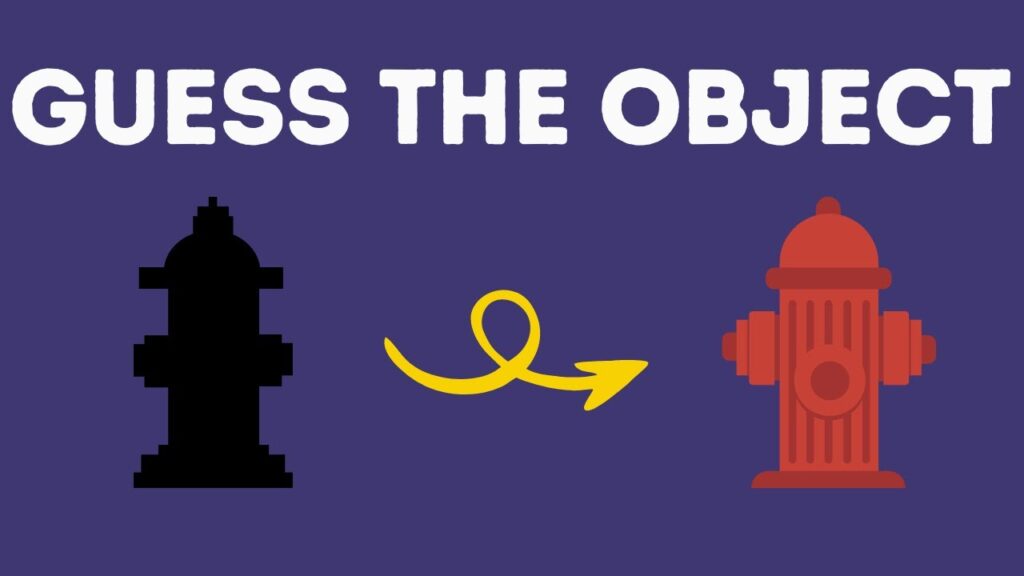
Shadow puzzles challenge your brain to identify everyday objects from simple silhouettes by relying on shape recognition, spatial reasoning, and mental rotation skills. These visual riddles use unusual angles, lighting, and negative space to disguise familiar items, creating rewarding “aha” moments when solved. Regularly playing shadow games can strengthen analytical thinking, visual perception, and problem-solving abilities while providing an engaging mental workout.
Have you ever looked at a dark shape on the bedroom wall and mistaken a simple coat hanger for something mysterious? Our brains are wired to find meaning in darkness, making shadow puzzles guess the object challenges some of the most captivating brain games online. Whether you want to test your visual spatial reasoning or simply pass the time with high-quality visual tests, playing with spatial orientation is an excellent way to keep your mind sharp.
So, how exactly do you solve a visual silhouette challenge? To crack these visual riddles, you must analyze the hard borders of a silhouette, isolate deceptive angles, and look past distorted scale sizes to identify the hidden item casting the shape. On premium brain training platforms like Riddlespuzzle, these visual puzzles range from simple animal outlines to highly complex, multi-angled physical optical illusions.
The Fascinating Psychology of Optical Silhouettes
Our vision relies heavily on contrast, edge detection, and contextual clues to identify items instantly. When you strip away color, texture, and surface depth, you are left with a flat shape that forces your brain’s parietal lobe to work overtime to fill in the missing data blanks.
A classic guess the shadow game plays directly with this cognitive processing gap. Puzzle designers intentionally position everyday objects at strange, unfamiliar angles to mask their signature profiles. By twisting a familiar item just thirty degrees, a common kitchen tool or household plant transforms into an unrecognizable, abstract shape that challenges your logical deductive reasoning.
The Mechanics of Shadow Riddles
Unlike text-based wordplay, shadow riddles use spatial logic to deceive your eyes. A masterfully crafted visual riddle does not rely on blurring or obscuring the outline. Instead, it uses perfect crispness to make you overthink the contour lines.
For instance, an ordinary key might cast a silhouette that looks exactly like a miniature skyline when flipped upside down. These spatial shifts form the core mechanics of top-tier silhouette brain teasers. They push your mind to manipulate shapes mentally, improving your geometric intelligence with every round you play.
Shadow Level Difficulty: Evaluating the Visual Gradients
Not all silhouettes are created equal; the complexity of a shape depends entirely on lighting perspective, overlapping items, and internal negative space.
The structural comparison below breaks down how different difficulty tiers are engineered in a professional visual setup, giving you an idea of what to expect on Riddlespuzzle.
| Difficulty Level | Visual Design Characteristics | Core Cognitive Skill Required | Typical Puzzle Target |
| Beginner | Clear profiles, standard side-view perspective, minimal distortion. | Basic shape matching and object recognition. | Animals, basic tools, common fruits. |
| Intermediate | Rotated perspectives, front-facing angles that hide length. | Mental rotation and spatial orientation analysis. | Household electronics, footwear, complex plants. |
| Advanced | Compounded shapes, overlapping shadows, deceptive light source angles. | Analytical deduction and component isolation. | Bundled keys, abstract sculptures, architectural models. |
As shown in this structural breakdown, climbing the ranks requires you to look beyond initial impressions. Advanced designs often feature multiple small items arranged perfectly to cast a singular, unified illusion, turning a simple collection of junk into a complex work of shadow art.
Decoding Intricate Silhouette Brain Teasers
When tackling advanced levels, the secret lies in identifying anchor points within the silhouette. Look for sharp, distinct edges that cannot be easily faked by alternative objects, such as screw threads, handle loops, or unique geometric symmetry.
Once you isolate a single genuine feature, the surrounding abstract mass often clicks into place instantly. This rewarding “aha!” moment is why innovative silhouette brain teasers remain a dominant trend among puzzle enthusiasts visiting Riddlespuzzle.
How to Solve Advanced Visual Riddles
Mastering these geometric challenges requires a systematic approach rather than random guessing. If you analyze the silhouette methodically, you can deconstruct even the most deceptive configurations step by step.
Pro Tip for Solvers: If you get completely stuck on a challenging level, try squinting your eyes or moving back three feet from your screen. Reducing your peripheral detail focus helps your brain recognize the macro-shape faster, bypassing deceptive micro-edges.
The Digital Rise of the Guess the Shadow Game
With the massive boom in casual browser gaming, visual silhouette puzzles have successfully transitioned from printed children’s workbooks into highly sophisticated digital brain trainers for adults.
Why Digital Platforms Enhance the Experience
Playing a modern guess the shadow game on a digital screen opens up dynamic mechanics that print media simply cannot match. Modern puzzle platforms can introduce interactive light sources, allowing you to slide the lamp position around to see how the silhouette warps in real time.
Furthermore, digital versions incorporate progressive hint systems that reveal subtle internal textures or rotate the object by a few degrees if you find yourself stuck. This interactive progression keeps players engaged without causing unnecessary frustration, making curated web platforms the perfect daily stop for quick mental workouts.
Final Thoughts on Visual Silhouette Art
Cracking complex shadow riddles is an excellent exercise in looking past deceptive first impressions. By training your mind to analyze negative space and light orientation, you develop sharper analytical skills that extend far beyond a digital screen. If you are ready to put your visual detection skills to the test with top-tier interactive levels, dive into the latest collection over at Riddlespuzzle.
Frequently Asked Questions
What makes a shadow puzzles guess the object challenge so addictive?
These games thrive on cognitive dissonance the temporary mental tension created when your eyes see an abstract shape but your brain knows it must be a common item. Solving the puzzle resolves this tension, delivering a small rush of dopamine that leaves you eager for the next round.
How do shadow riddles differ from standard visual trivia?
Standard trivia relies heavily on memory recall and general knowledge facts. In contrast, silhouette challenges test your raw fluid intelligence, processing speed, and three-dimensional spatial manipulation skills, requiring zero prior academic knowledge to solve.
Can playing a guess the shadow game regularly improve real-world skills?
Yes, engaging with spatial training games helps enhance your mental rotation capabilities. This specific cognitive skill is heavily tied to real-world tasks like navigating new environments, reading physical maps, packing cargo spaces efficiently, and visualizing architectural blueprints.
Where can I play high-quality silhouette brain teasers online?
You can access an extensive library of curated visual challenges, spatial riddles, and interactive silhouette levels directly on riddlepuzzle.com, with fresh community designs uploaded regularly.