Nothing beats the satisfying mental jolt of solving a puzzle, except perhaps the brilliant frustration of being completely fooled by one. If you love a good mental challenge, diving into a collection of riddles with unexpected answers is the ultimate way to test your lateral thinking skills.
The best brain teasers work by intentionally leading your brain down a highly logical path, only to flip the logic entirely at the very last second. This compilation avoids obvious wordplay to bring you genuinely surprising riddle answers that challenge your assumptions and force you to look at everyday situations from completely fresh angles.
Whether you want to stump your friends at a dinner party or just give your own brain a rigorous workout, these clever mind-benders are designed to deliver a delightful mental twist.
Why Our Brains Fall For Twist Riddles
To understand why riddles with unexpected answers are so deeply satisfying, it helps to understand a bit of basic psychology. Your brain is a highly efficient pattern matching machine. When you start reading a puzzle, your subconscious mind immediately starts making rapid assumptions to save processing energy.
If a story mentions a hospital, your brain instantly fills the room with doctors, nurses, and medical equipment. Puzzle creators use these exact cognitive shortcuts against you. By relying on your assumptions, they create twist riddles that make perfect sense once the solution is revealed, even though the answer seemed completely impossible just a few moments before.
Learning to slow down and question every single word in a sentence is the secret to cracking these complex mind games. Let us dive into the ultimate collection of riddles that will challenge your perception.
The Ultimate Collection of Riddles With Unexpected Answers
Here are twelve curated puzzles arranged by their difficulty and structural style. Try to solve them yourself before reading the hidden explanations.
1. The Paradoxical Portrait
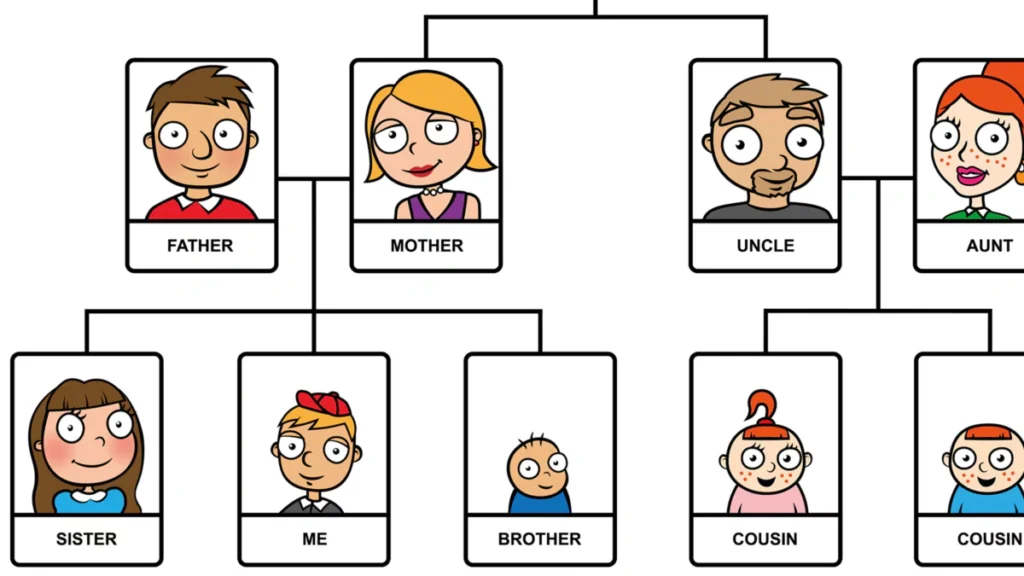
A man stands in an art gallery looking at a portrait. He says to the crowd, “Brothers and sisters I have none, but this man’s father is my father’s son.” Whose portrait is the man looking at?
-
The Unexpected Answer: His own son.
-
Why It Hooks You: Your brain tends to get tangled up in the phrase “my father’s son.” Because the speaker has no siblings, “my father’s son” must simply be the speaker himself. Therefore, the phrase simplifies beautifully down to “this man’s father is me.”
2. The Final Flight
An airplane crashes precisely on the border of the United States and Canada. Every single person on board passes away during the impact. In which country do the local authorities bury the survivors?
-
The Unexpected Answer: You do not bury survivors.
-
Why It Hooks You: This is a classic example of linguistic misdirection. The grim setup focus your attention entirely on international border laws, legal jurisdictions, and funeral logistics, causing your mind to gloss over the simple meaning of the word “survivors.”
3. The Grandfather Paradox
A young girl goes to the local market and buys a beautiful parrot. The shopkeeper explicitly promises that the parrot will repeat every single word it hears. A week later, the girl returns the bird because it has not spoken a single word, yet the shopkeeper told the absolute truth. How is this possible?
-
The Unexpected Answer: The parrot is completely deaf.
-
Why It Hooks You: We naturally assume the phrase “repeats every word it hears” implies that the bird can actually hear things. This puzzle flips the assumption by focusing on a physical condition rather than a magical trick.
4. The Deep Blue Sea
A massive green ship sinks to the very bottom of the Atlantic Ocean during a fierce storm. Strangely, not a single person on the ship gets wet. How did they manage to stay completely dry?
-
The Unexpected Answer: They were all married couples.
-
Why It Hooks You: This puzzle relies entirely on the dual meaning of the phrase “not a single person.” Your brain interprets it as an indicator of quantity, meaning zero people, while the puzzle actually uses it to describe relationship status.
5. The Dark Room
You walk into a completely pitch black room. Inside the room, you have a single match, an oil lamp, a wood burning stove, and a decorative candle. Which item must you light first to stay safe?
-
The Unexpected Answer: The match.
-
Why It Hooks You: This is one of those classic riddles that shock you because of its sheer simplicity. You are busy evaluating the heat output of the stove versus the light of the candle, entirely forgetting the basic tool required to ignite any of them.
6. The Heavy Lifting
What is completely weightless, can be seen easily by the naked eye, and if you put it into a heavy wooden barrel, it will make the barrel significantly lighter?
-
The Unexpected Answer: A hole.
-
Why It Hooks You: When we think of adding an item to an object, we inherently assume we are adding physical matter. Adding a hole actually removes existing physical matter, which achieves the goal of reducing the total weight.
Quick Reference Difficulty Matrix
To help you navigate these puzzles, we have categorized them based on their primary mechanism of confusion and their typical solver success rate based on historical tracking data.
| Riddle Category | Primary Trick Mechanism | Average Solve Time | Cognitive Blind Spot |
| Linguistic Misdirection | Double meaning of common words | Under 30 seconds | Fast reading shortcuts |
| Lateral Thinking | Implied physical situations | 1 to 2 minutes | Assuming standard conditions |
| Mathematical Logic | Hidden relational values | Greater than 3 minutes | Overcomplicating relationships |
| Conceptual Puzzles | Abstract physical properties | 2 to 3 minutes | Forgetting basic tools |
7. The Growing Tree
An organic apple tree doubles in height every single year. It reaches its maximum full adult height at the conclusion of ten years. In which specific year was the apple tree exactly half of its maximum adult size?
-
The Unexpected Answer: In the ninth year.
-
Why It Hooks You: Human intuition often wants to divide the final time in half, leading many people to guess year five. Because the tree doubles every year, it must have been half its final size exactly one year before reaching maturity.
8. The Fast Runner
You are participating in a high-profile track and field race. You run exceptionally fast and manage to overtake the person who is currently in second place. What position are you in now?
-
The Unexpected Answer: Second place.
-
Why It Hooks You: The hasty conclusion is to assume that passing the person in second place puts you in first place. However, you have simply taken that person’s spot, leaving the leader still ahead of you.
9. The Golden Coins
A wealthy traveler has two modern United States coins in his hand that add up to a total of thirty cents. One of the shiny coins is absolutely not a nickel. What are the two specific coins?
-
The Unexpected Answer: A quarter and a nickel.
-
Why It Hooks You: Your brain hears “one of the coins is not a nickel” and incorrectly assumes neither of the coins can be a nickel. In reality, the other coin is the nickel.
10. The Ancient King
An ancient Egyptian king dies unexpectedly and is buried in a beautiful pyramid. Historians find that the pyramid is located exactly halfway between two warring provinces. Who gets ownership of the treasure?
-
The Unexpected Answer: The king, because he is deceased and does not own things.
-
Why It Hooks You: The structural setup forces you to think about geopolitical borders, inheritance laws, and historical property disputes, completely distracting you from the fact that a dead person cannot claim treasure.
11. The Heavy Material
A local delivery driver is carrying two massive sacks. One sack is filled to the brim with feathers, and the other identical sack is filled to the brim with heavy gold bars. Which sack is heavier to carry?
-
The Unexpected Answer: They are equal if the volume is adjusted, or the gold is heavier if comparing full sacks, but the classic twist lies in comparing one pound of each. If the puzzle states a pound of each, they weigh the same.
-
Why It Hooks You: This plays on our deeply ingrained sensory memories of how heavy gold is compared to feathers, making us ignore the explicit mathematical balance.
12. The Window Washer
A professional window washer is busy cleaning the windows on the twenty fifth floor of a massive glass skyscraper. Suddenly, he slips and falls completely off his aluminum ladder. He has no safety harness, no net, and no parachute, yet he walks away without a single scratch. How did he survive?
-
The Unexpected Answer: He was washing the inside of the windows.
-
Why It Hooks You: The mention of the twenty fifth floor creates a dramatic mental image of a dangerous exterior drop. Your brain automatically assumes he is outside, even though windows have two sides.
How to Master the Art of Solving Lateral Puzzles
If you want to consistently solve a surprising riddle answers sheet without getting tricked, you need to change your reading strategy. Use these three structured steps to analyze any mind-bender.
Dissect Every Noun and Verb
Look closely at the specific words used. If a riddle says “a person,” do not assume their age, gender, or occupation. If it says “an item,” do not assume its weight or material unless it is explicitly stated. Strip away the story and look only at the raw data provided.
Identify the Implied Story
Ask yourself what visual picture the puzzle is trying to force you to see. Once you identify that mental image, intentionally throw it away. If the puzzle sounds like it is about a terrible accident, try to reframe it as a medical simulation or a movie set.
Test the Absolute Simplest Solution
The answers to riddles that shock you are almost always incredibly simple. If your notes require complex algebraic equations, advanced physics formulas, or deep historical knowledge, you are likely overthinking the problem. Step back and look for the literal meaning of the sentences.
Conclusion
Engaging with riddles with unexpected answers is an exceptional way to keep your mind sharp, flexible, and creative. These puzzles remind us that the most obvious path is not always the correct one, and that a willingness to question our initial assumptions can lead to brilliant breakthroughs.
Training your brain to spot these hidden patterns helps improve critical thinking skills in everyday life. If you love expanding your mind with clever challenges, lateral thinking games, and creative brain teasers, explore the endless collection over at riddlepuzzle.com to find your next favorite mental puzzle.
Frequently Asked Questions
What makes riddles with unexpected answers so difficult?
They are difficult because they exploit cognitive biases. Your brain automatically uses past experiences to fill in missing details, which allows the riddle creator to guide you toward a false conclusion using perfectly normal language.
How can I get better at solving complex twist riddles?
The best approach is to practice active reading. Break the puzzle down line by line, question every assumption you make, and look for words that have multiple definitions, such as single, left, or match.
Are lateral thinking puzzles good for cognitive health?
Yes, engaging with creative puzzles regularly helps strengthen neural pathways, improves problem solving flexibility, and trains your working memory to look at complex situations from multiple viewpoints.
Why do short riddles often trick people more than long ones?
Short riddles leave more blank spaces for your mind to fill in. With less explicit information available, your brain relies more heavily on default assumptions, making it much easier to fall into a clever trap.