If you love a good mental workout, you have likely run into a matchstick challenge before. These classic riddles have been twisting brains for generations, forcing us to look at shapes, numbers, and patterns in entirely new ways. They offer the perfect mix of visual logic, geometry, and basic arithmetic. Therefore, they remain a favorite pastime for puzzle lovers worldwide.
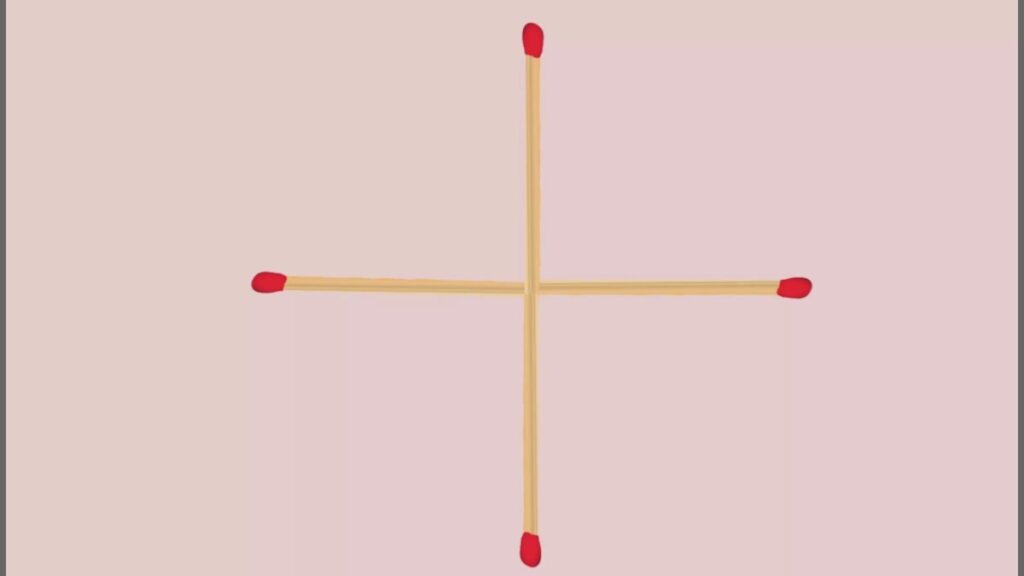
A matchstick puzzle is a brain teaser where you manipulate a set arrangement of matches. Specifically, you solve it by moving, adding, or removing a specific number of sticks to fix a broken equation or alter a geometric shape. The beauty of a move matchstick puzzle is its sheer simplicity. Anyone can play, but finding the solution often requires thinking completely outside the box.
In this comprehensive guide, we have put together a massive collection of matchstick puzzles with answers. This collection ranges from easy patterns for beginners to hard matchstick puzzles that will challenge even seasoned riddle fans. Consequently, you will find plenty of ways to test your creative thinking.
Why Matchstick Brain Teasers Are Great for the Mind
Manipulating physical objects, or even visualizing them on a screen, activates multiple areas of the brain at once. When you tackle a matchstick puzzle game, you are not just passing the time. Instead, you are actively training your brain in several key cognitive areas.
Spatial Reasoning and Visual Logic
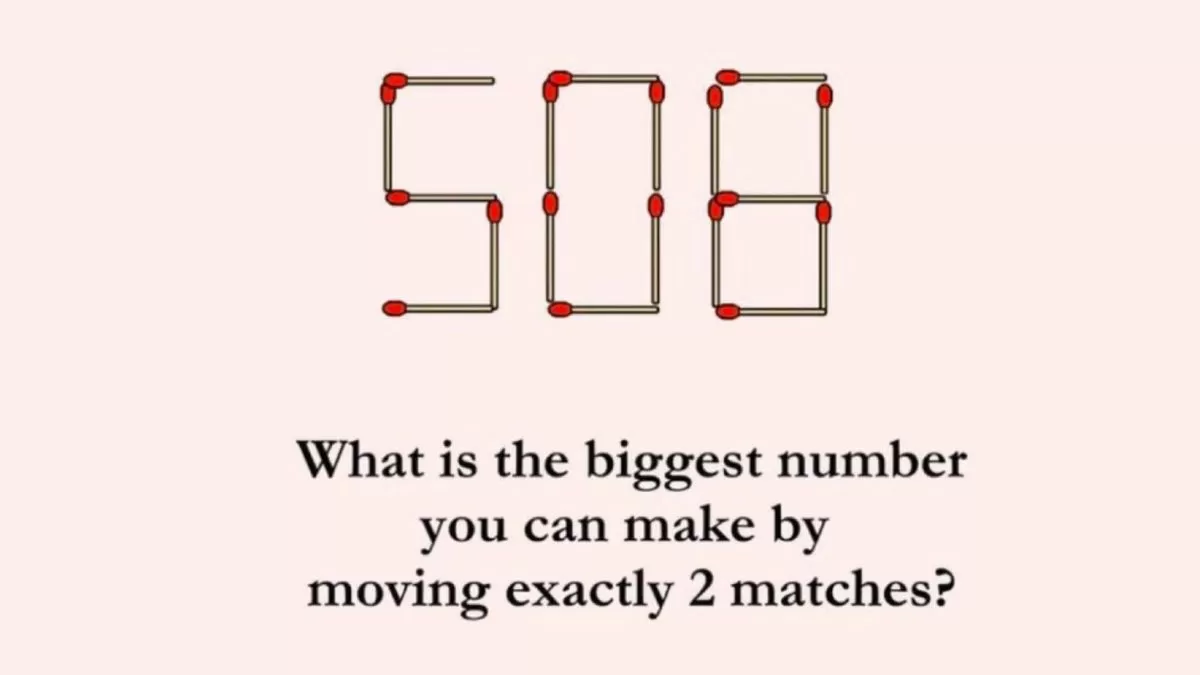
Most puzzles force you to see shapes within other shapes. For instance, a classic grid might ask you to reduce the number of squares by moving just two sticks. Your brain has to mentally simulate the movement of each stick before you even touch it. As a result, this process significantly boosts your spatial awareness.
Research consistently shows that puzzles which require you to rotate and manipulate shapes in your mind are among the best ways to develop spatial reasoning a skill linked to success in fields like mathematics, engineering, and architecture.
Critical Thinking and Creative Problem Solving
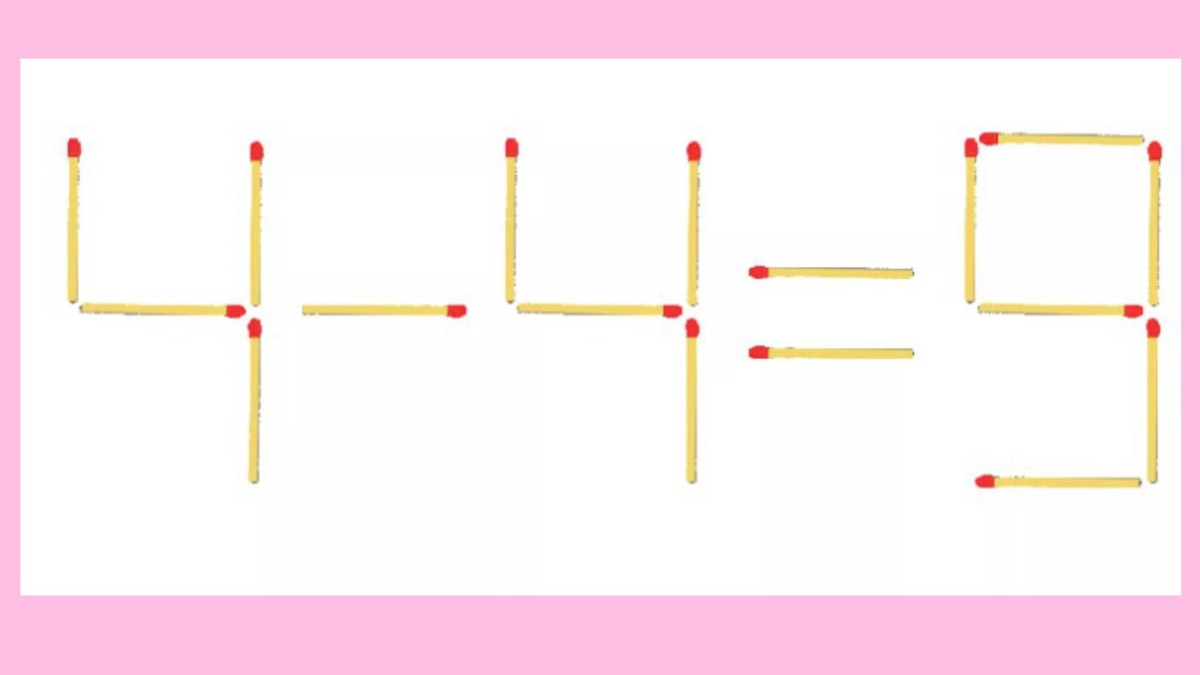
Standard math problems usually follow a linear path. Matchstick equation puzzles, however, require a completely lateral approach. For example, you might need to change a plus sign into a minus sign. Alternatively, you might turn a number 6 into a 0, or transform a square into a completely different geometric form.
Cognitive Benefits Across All Ages
Furthermore, these challenges are highly versatile. We regularly see matchstick puzzles for kids used in classrooms to teach basic geometry and arithmetic. At the same time, the complex variations keep older adults mentally sharp by promoting neuroplasticity, which is the brain’s natural ability to form new neural connections over time.
If you are just starting out with puzzles and find these matchstick challenges a bit advanced, we recommend warming up with our collection of easy brain teasers with answers perfect for building your logic muscles before tackling harder equation riddles.
The Core Rules of the Matchstick Challenge
Before we dive into the actual puzzles, let us establish the standard rules. Unless a specific riddle tells you otherwise, every single puzzle follows these strict guidelines:
-
No broken matches: You cannot snap a stick in half to make two smaller pieces.
-
No overlapping: Matches must sit flat and distinct, rather than stacked on top of one another.
-
No loose ends: Every single match must be part of a complete shape or number. Therefore, you cannot leave a stray stick hanging off the side of an equation or geometric figure.
-
Standard displays: Math variants typically use either classic Roman numerals or standard digital clock styles to represent digits.
Matchstick Math Puzzles: Fix the Equations
Let us start with some matchstick math puzzles that focus on numbers and signs. For these visual representations, imagine the numbers are formed using the classic digital layout on an electronic clock.
1. The Simple Addition Flip
-
The Problem: $6 + 4 = 4$
-
The Goal: Move exactly 1 matchstick to make the mathematical equation correct.
-
The Analysis: Look closely at the numbers. The total on the right is 4, but we are adding two positive numbers on the left. Therefore, we either need to reduce the left side or increase the right side.
-
The Answer: Take the vertical matchstick from the center of the number 6 to turn it into a 0. After that, place that matchstick inside the 4 on the right side to turn it into a 9. The new, correct equation reads: $0 + 4 = 4$.
2. The Minus Sign Shift
-
The Problem: $8 – 3 = 3$
-
The Goal: Move just 1 match stick to solve this matchstick challenge.
-
The Analysis: An 8 minus 3 should equal 5, but we have a 3 on the right side. Consequently, we must figure out how to change the 8 into a different digit.
-
The Answer: Remove the top-left vertical match from the number 8, which transforms it into a 9. Next, take that match and add it to the 3 on the right side to turn it into a 5. As a result, the corrected equation becomes: $9 – 3 = 5$.
3. A Clever Subtraction Correction
-
The Problem: $5 – 7 = 2$
-
The Goal: Move 1 match stick to fix the statement.
-
The Analysis: Five minus seven gives a negative number, so we need to adjust the starting digits or the final result.
-
The Answer: Move 1 stick from the 7 to make it a 1, and then place it on the minus sign to make it a plus. Finally, change the 2 on the far right into a 6 by adjusting its layout. The final equation is $5 + 1 = 6$, which perfectly balances.
Geometric Matchstick Riddles: Reshaping Squares and Triangles
These matchstick riddles move away from pure math and focus entirely on geometry. They require sharp visual skills to spot overlapping patterns. Matchstick geometry riddles share a lot of DNA with visual puzzles with answers both demand that you train your eyes to spot hidden shapes and patterns that your brain overlooks at first glance.
4. The Four Squares Dilemma
Imagine a large grid made of 12 matchsticks that forms a windowpane layout of 4 small squares arranged in a two by two shape.
-
The Goal: Move 2 matchsticks to reduce the number of squares from 4 down to exactly 2, with no leftover sticks.
-
The Hint: To get fewer squares without wasting sticks, you need to create one larger square and leave one smaller square intact.
-
The Answer: Take two adjacent outer sticks from one corner square. Then, move them to form a separate boundary on the opposite side. This leaves you with one large two by two square and one small one by one square sharing a wall.
5. Flipping the Fish
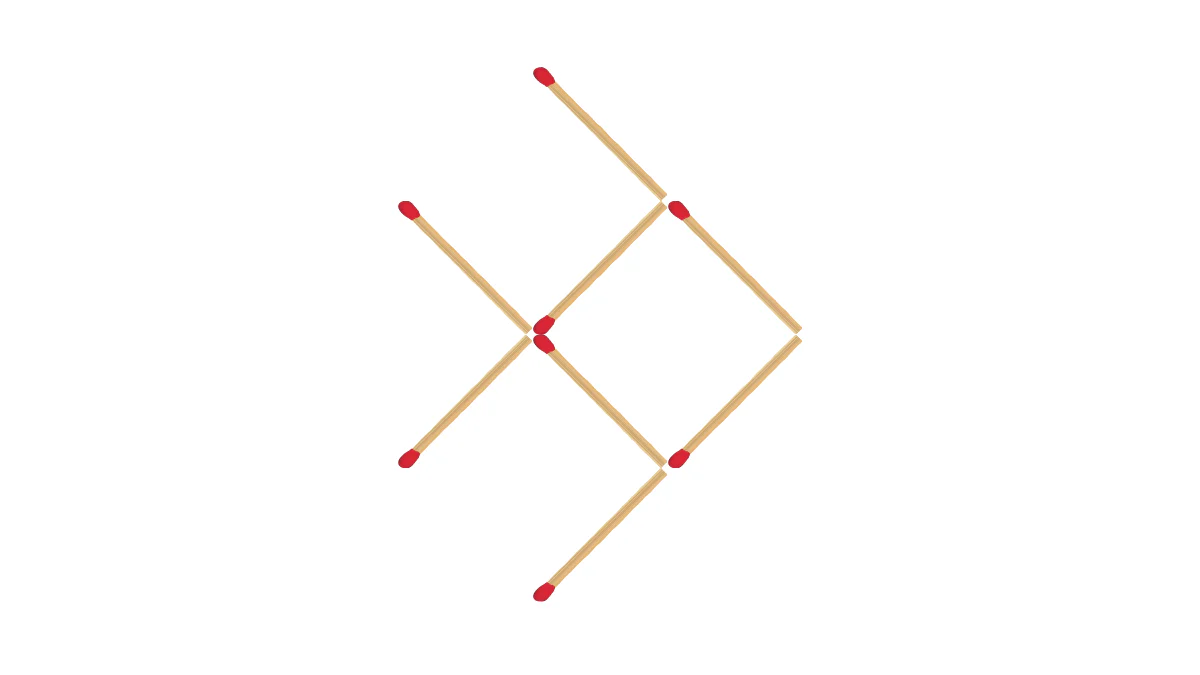
Imagine a fish made of 8 matchsticks swimming toward the left side of your screen. It has a triangular head, a body, and a split tail on the right.
-
The Goal: Move exactly 3 matchsticks so that the fish swims in the opposite direction, toward the right.
-
The Answer: Move the two sticks that form the tail on the far right and position them on the far left side. Next, move the lower line of the fish body to the upper side. This completely mirrors the structure, sending your fish swimming happily to the right.
Hard Matchstick Puzzles for True Enthusiasts
If you breezed through the previous section, these hard matchstick puzzles will give your brain a serious test. They require multiple logical shifts to solve successfully.
6. The Large Roman Numeral Shift
-
The Problem: $VI – IV = XI$
-
The Goal: Move 1 matchstick to make the equation correct. In Roman numerals, this reads as $6 – 4 = 11$, which is completely incorrect.
-
The Answer: Move 1 stick from the XI to make it an X. Then, place it directly onto the minus sign to make it a plus. The equation changes into $VI + IV = X$, which translates to $6 + 4 = 10$.
7. Transforming the Triangles
Imagine you have 6 matchsticks arranged to form 4 small, interlocking triangles. This is usually achieved by creating a three dimensional pyramid shape on a flat surface.
-
The Goal: Remove 2 matchsticks to leave exactly 2 triangles remaining.
-
The Answer: In a flat view of this puzzle, the sticks overlap to create a large outer triangle with smaller ones inside. By removing the two horizontal internal matchsticks, you eliminate the inner partitions. This leaves you with one large outer triangle and one small independent triangle, clearing the puzzle perfectly.
Overview of Popular Matchstick Puzzle Types
To help you choose the best challenge for your skill level, we have broken down the common categories of matchstick brain teasers in the table below.
| Puzzle Category | Common Objective | Best For | Estimated Difficulty Level |
| Matchstick Equation Puzzles | Correct a broken math statement by moving symbols or digits. | Improving mental math and arithmetic speed. | Easy to Medium |
| Geometric Grid Riddles | Reduce or increase the number of shapes like squares or triangles. | Developing spatial awareness and visual logic. | Medium to Hard |
| Directional Layouts | Change the direction an object like a fish or shovel is facing. | Visual thinking and lateral problem solving. | Medium |
| Roman Numeral Shifts | Rearrange classic letters to balance an algebraic statement. | Advanced logic puzzles and history lovers. | Hard |
Tips and Tricks to Solve Any Matchstick Challenge
When you get stuck on a tough puzzle, it is easy to feel frustrated. However, you can use these proven strategies to break through the mental wall.
Focus on the Math Symbols
Sometimes the easiest way to balance an equation is not changing the numbers at all. For instance, turning a plus sign into a minus sign instantly drops the value of your left side. Alternatively, turning a minus into a plus can elevate your numbers to match a high total on the right.
Look for High Impact Digits
Furthermore, always remember that numbers like 8, 9, 6, and 0 are highly fluid. An 8 can easily become a 6, a 9, or a 0 just by removing one single stick. Because of this flexibility, you should always audit these numbers first.
Break Down the Large Shapes
In geometric puzzles, always look for ways to make a single piece serve double duty. Sharing a wall between two shapes is the number one secret to saving sticks. Therefore, try to focus on the inner grid lines rather than the outer borders.
The problem-solving mindset you build here translates directly to other formats if you enjoy thinking sideways, our guide on lateral thinking puzzles explores how this same cognitive skill is behind the most viral brain teasers shared online today.
Conclusion
Whether you are looking for a quick morning mental warm up or trying to entertain your children with educational games, a move matchstick puzzle is an excellent choice. These riddles prove that you do not need expensive apps or complex computers to challenge your critical thinking skills. Ultimately, a simple handful of sticks can provide hours of quality entertainment.
For more mind-bending challenges, lateral thinking games, and word puzzles, be sure to check out our regular updates on riddlepuzzle. Grab a box of matches, start experimenting with the shapes, and see how many solutions you can discover on your own!
Frequently Asked Questions
What are matchstick puzzles?
They are visual logic challenges where you rearrange a set number of matches to alter a shape, fix a mathematical equation, or solve a specific riddle.
Can you use Roman numerals in matchstick math puzzles?
Yes, many advanced puzzles rely entirely on Roman numerals like I, V, and X because they are incredibly easy to build and modify using straight lines.
Are matchstick puzzles good for kids?
They are fantastic educational tools. Playing a matchstick puzzles for kids game helps younger students grasp basic counting, subtraction, addition, and early geometry principles.
What should I do if a puzzle seems impossible?
Try working backward. Look at the final shape or number you need to reach, and figure out what pieces are missing. In addition, changing a math operator like a minus to a plus is also a great shortcut.