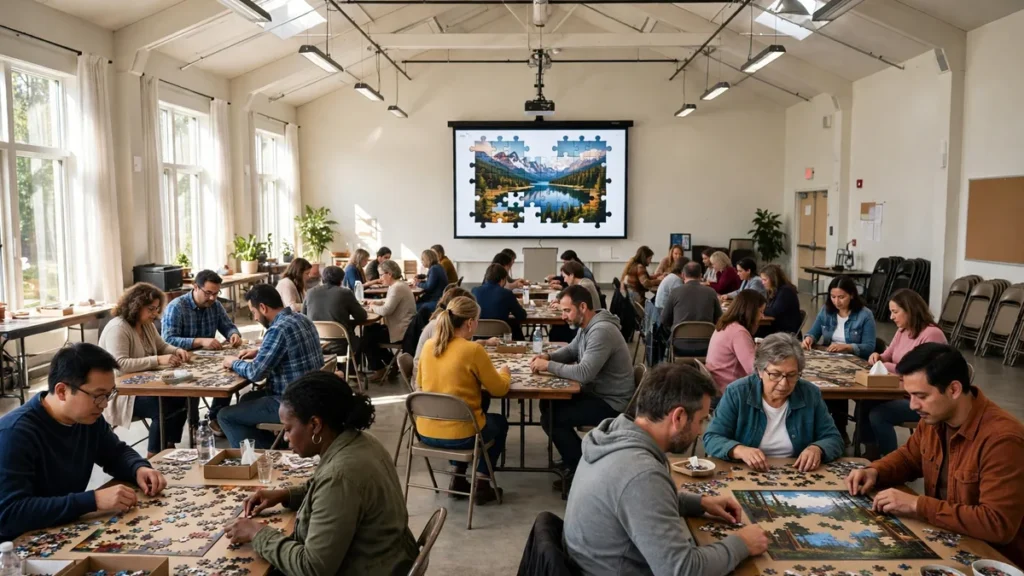
A good puzzle book can turn a rainy afternoon, a long car ride, or a quiet evening at home into hours of happy concentration. The best puzzle books for kids do far more than keep little hands busy: they build vocabulary, sharpen logic, teach patience, and give children the thrill of solving something all by themselves. Whether your child loves mazes, word searches, riddles, sudoku, or spot-the-difference challenges, there is a puzzle book out there perfectly matched to their age and interests.
Choosing the right book matters more than most parents realise. A book that is too easy will be finished in one sitting and forgotten, while one that is too hard can frustrate a child and put them off puzzles altogether. The sweet spot is a book that stretches your child just enough, with a mix of puzzle types, clear instructions, and a sense of progress as the pages turn. In this guide, we look at what makes a great puzzle book for kids, how to choose by age and skill level, and the types of books that children return to again and again.
From first mazes for preschoolers to clever logic puzzles for confident readers, the range available in 2027 is wider and better than ever. Many modern puzzle books mix several puzzle styles in one volume, so children can switch between activities when they get stuck, and plenty now include stickers, colouring pages, and reward charts that make finishing a puzzle feel like a real achievement. Below, we break down everything you need to know before you buy, so the next puzzle book you choose becomes a favourite rather than a forgotten shelf-filler.
Key takeaways
- Match the puzzle book to your child’s age and reading level, not just their age in years — a confident five-year-old may enjoy books aimed at six or seven.
- Look for variety: books that mix mazes, word searches, riddles, sudoku, and spot-the-difference keep children engaged far longer than single-type books.
- Choose books with clear instructions and a gentle difficulty curve, so early puzzles build confidence before harder ones appear.
- Thicker books with 100 or more puzzles offer better value and last through holidays, car journeys, and rainy weekends.
- Reusable and wipe-clean puzzle books are excellent for younger children who love to repeat their favourite puzzles.
Why puzzle books are so good for kids
Puzzle books are one of the rare screen-free activities that children genuinely ask for. A child working through a maze is practising planning and spatial thinking. A child hunting for hidden words is building spelling and pattern recognition without realising it. A child solving a riddle is learning to think laterally, to hold several clues in mind at once, and to enjoy the satisfying click when an answer falls into place.
Teachers and child development experts have long praised puzzles for building what educators call executive function: the ability to focus, plan, remember instructions, and keep going when something is tricky. These are the same skills that help children in the classroom, from following multi-step instructions to tackling maths problems. The difference is that in a puzzle book, the motivation comes from inside the child. There is no test, no grade, and no adult hovering — just the quiet satisfaction of finishing a page and turning to the next one.
Puzzle books also build independence. Unlike many games, a puzzle book needs no opponent, no batteries, and no internet connection. A child can pick one up alone, choose a puzzle that appeals to them, and work at their own pace. That independence matters: children who learn to entertain themselves with a book develop concentration and self-reliance that serve them well beyond playtime. For parents, that also means a genuinely portable, mess-free activity that works in waiting rooms, on aeroplanes, and at restaurants.
There is a social side too. Puzzles are wonderful shared activities. A parent and child working through a riddle together, or siblings racing to finish a word search, create the kind of low-pressure togetherness that busy families treasure. Many families make puzzle books part of their evening routine, with ten minutes of puzzles before bed replacing ten minutes of screen time — and children rarely complain about the swap once they are hooked.
How to choose the right puzzle book by age
Age guidance on puzzle books is a starting point, not a rule. Every child develops at their own pace, and the best guide is your child’s own interests and abilities. That said, the broad age bands below will help you narrow down a shelf full of options to the handful most likely to delight your child.
Ages 3 to 5: first puzzles
For preschoolers, the best puzzle books are big, bold, and simple. Look for chunky mazes with wide paths, spot-the-difference pictures with obvious changes, simple matching games, and colouring puzzles. Books at this age should have large illustrations, minimal text, and puzzles that can be solved in a minute or two. Sticker puzzles are a huge hit with this age group, as are wipe-clean books that let children try again and again without tearing pages. Avoid anything with small print or complicated instructions — at this age, the pictures should do the talking.
Ages 6 to 8: building confidence
Early school-age children are ready for word searches with short words, simple crosswords, easy sudoku with pictures or numbers, and mazes that twist and turn. This is also the age when riddles start to land: children love the wordplay and the joke-like punchlines of a good riddle, and they love retelling their favourites to anyone who will listen. If your child is just starting to enjoy riddles, our collection of easy riddles for kids with answers is a perfect companion to a puzzle book, giving them fresh riddles to try on family and friends. Books for this age group work best when they mix puzzle types, so a child who gets stuck on a crossword can switch to a maze and come back later with fresh eyes.
Ages 9 to 12: real challenges
Older children can handle proper crosswords, number puzzles, logic grids, code-breaking challenges, and multi-step riddles that require real deduction. This is the age when puzzle books can become genuinely absorbing, with children spending an hour or more on a single tricky puzzle. Look for books themed around your child’s interests — detective mysteries, science, space, animals, or fantasy — because a theme they love will carry them through the hardest puzzles. Books that include a story running through the puzzles, where each solved puzzle reveals the next clue, are especially popular with this age group.
The main types of kids puzzle books
Not all puzzle books are alike, and knowing the main types helps you pick one your child will actually finish. Most of the best books combine several types, but it helps to know what each one offers.

Maze books
Mazes are the classic first puzzle, and they never really go out of fashion. Simple mazes suit young children, while older kids enjoy labyrinths with dead ends, multiple routes, and hidden objects to find along the way. Maze books are excellent for developing planning skills and fine motor control, and they are forgiving: there is always a way through, and a wrong turn is easy to undo.
Word search and crossword books
Word searches are the comfort food of puzzle books: relaxing, satisfying, and great for spelling. Themed word searches — animals, food, space, sports — let children hunt for words they already know and love. Crosswords are a step up, requiring children to think about word meanings and definitions, and they are a brilliant way to build vocabulary. For younger children, look for crosswords with picture clues rather than written ones.
Riddle and joke books
Riddle books sit at the intersection of puzzles and play. A good riddle book gives children puzzles they can solve alone and then share aloud, which makes riddles uniquely social. Children who love riddles often become the family entertainer, and the confidence that comes from stumping a grown-up is real. Riddle collections pair beautifully with activity books, and they are a great choice for car journeys, where reading aloud turns a puzzle book into a group game.
Sudoku and number puzzle books
Number puzzles teach logical thinking without feeling like maths homework. Picture sudoku suits younger children, while classic 4×4 and 6×6 grids challenge older ones. Number mazes, magic squares, and sequence puzzles round out the category. These books are a great pick for children who enjoy maths, and a gentle way to build number confidence in children who do not.
Logic and brain teaser books
Logic puzzles ask children to use clues to work out who did what, where, and when. They are the most demanding puzzle type, and the most rewarding. A child who cracks a logic grid feels like a detective, and the skills transfer directly to schoolwork: careful reading, organising information, and checking conclusions. Start with simple two-clue puzzles and work up to full grids.
Spot the difference and search-and-find books
Search-and-find books, where children hunt for hidden objects in busy illustrations, build attention to detail and patience. Spot-the-difference puzzles do the same in a more focused way. These are excellent quiet-time activities and work well for a wide age range, since the pictures can be enjoyed by younger children while older children chase the trickiest hidden items.
Comparison table: which puzzle book type suits your child?
| Puzzle type | Best age | Skills it builds | Best for |
|---|---|---|---|
| Mazes | 3–8 | Planning, spatial thinking, fine motor skills | First puzzle books, quiet time |
| Word searches | 6–12 | Spelling, vocabulary, pattern recognition | Relaxed puzzling, car journeys |
| Crosswords | 7–12 | Vocabulary, definitions, general knowledge | Confident readers |
| Riddles and jokes | 5–12 | Lateral thinking, wordplay, confidence | Sharing aloud, family fun |
| Sudoku and number puzzles | 6–12 | Logic, number sense, patience | Maths lovers, solo focus |
| Logic puzzles | 8–12 | Deduction, careful reading, organisation | Older children who love a challenge |
| Spot the difference | 3–10 | Attention to detail, observation | Younger children, screen-free calm |
| Search and find | 4–10 | Visual scanning, concentration | Busy illustrations, shared solving |
What to look for before you buy
Before you choose a puzzle book, it helps to run through a short checklist of quality signs. The best books share certain features, and spotting them takes only a minute in a shop or while browsing online.
First, check the difficulty curve. Flip through the book: the first puzzles should be noticeably easier than the last ones. A book that starts hard will discourage a child before they have had a chance to enjoy it. Good puzzle books ease children in, then gradually raise the challenge, with occasional easier puzzles sprinkled through to rebuild confidence.
Second, look at the answers section. Every good puzzle book has one, and it should be easy to find but tucked away at the back, so children are not tempted to peek too early. Answers should be clear and complete, with explanations for logic puzzles rather than just a bare solution. A book without answers is a book that ends in frustration.
Third, consider the physical book itself. Thick, good-quality paper matters, because children press hard with pencils and erase often. Spiral binding or a lay-flat design is a bonus, since it keeps the book open on a table. For younger children, a larger format with big print is much easier to work with than a pocket-sized book with cramped pages.
Fourth, think about value. A book with 50 puzzles may look cheap, but a book with 200 puzzles that costs only a little more will keep a child busy for weeks rather than days. Puzzle count, page count, and the variety of puzzle types all feed into value, so compare books on puzzles per page rather than price alone. And remember that a puzzle book makes a wonderful gift — if you are shopping for a young puzzler, a puzzle book paired with a pencil case and a colouring set makes a thoughtful present.
Finally, consider whether the book will grow with your child. The best puzzle books have a range of difficulty inside them, so a child can enjoy the easy puzzles now and return to the harder ones in six months. Books organised into levels or chapters are ideal for this, since a child can visibly progress from level one to level three and feel their skills improving.
How to get the most out of a puzzle book
Buying the book is only the start. A few simple habits can turn a puzzle book from a one-week wonder into a lasting hobby. Start by letting your child choose. Children who pick their own puzzle book — whether for the cover, the theme, or a favourite puzzle type — are far more likely to finish it than children handed a book chosen for them.
Set up a puzzle-friendly space. A clear table, a sharp pencil, a rubber, and good light are all a child needs, but having a dedicated spot signals that puzzle time matters. Some families keep a puzzle basket by the sofa, with a few books and a pot of pencils, so puzzle time can start in seconds whenever a child feels like it.
Encourage pencil, not pen. Puzzles are meant to be tried, erased, and tried again, and a child who fears making a permanent mistake will not experiment. A pencil and a good rubber give children permission to guess, to be wrong, and to learn from it — which is exactly the mindset that makes puzzle-solving so valuable.
Resist the urge to give answers. When a child is stuck, the most helpful thing an adult can do is ask a question rather than supply a solution: what have you tried so far, what do you know for sure, what would happen if you tried the other path? A hint that lets a child finish the puzzle themselves is worth far more than the answer. And when they do finish, celebrate it. A solved puzzle deserves a moment of recognition.
Finally, make puzzles social when your child wants company. Take turns on a crossword, race to find the hidden words, or challenge each other to a riddle duel. Shared puzzling builds memories as well as skills, and it shows children that adults enjoy puzzles too — the best possible advertisement for a screen-free hobby.
Puzzle books for travel and holidays
Puzzle books are the unsung heroes of family travel. They weigh almost nothing, need no charging, and work in cars, on planes, on trains, and on beaches. A single thick puzzle book can cover an entire holiday, and a fresh one bought at the airport can turn a delayed flight from a disaster into a bonus puzzle session.
For travel, choose books that are compact but not cramped, with a mix of quick puzzles for short waits and longer ones for extended journeys. Riddle books and joke collections are especially good for travel, because they can be read aloud to the whole car. Word searches and spot-the-difference puzzles are ideal for bumpy journeys, since they do not require neat handwriting. Avoid books that need a lot of writing in moving vehicles — save the crosswords and sudoku for when you arrive.
Many parents keep a special travel puzzle book that only comes out on journeys, which makes it feel like a treat rather than a chore. Pair it with a small pencil case and a few coloured pencils, and you have a complete travel kit that fits in a handbag. If your child loves hands-on puzzles as well as books, a jigsaw can be a lovely holiday-evening activity — for older children and adults in the family, our roundup of the best jigsaw puzzles for adults is a good place to start when the kids are in bed.
Puzzle books as gifts
A puzzle book is one of the easiest gifts to get right. It suits almost any age, it is inexpensive, and it is easy to match to a child’s interests. For a birthday, choose a book themed around something the child loves — dinosaurs, football, space, animals, or magic. For Christmas stockings, a slim puzzle book is the perfect size and shape. For a child you do not know well, a mixed puzzle book with a broad age range is a safe and generous choice.
If you are buying for a child who already loves puzzles, consider levelling up: a logic puzzle book, a code-breaking book, or a detective mystery book where puzzles drive the story. These make a wonderful next step for a child who has outgrown simple mazes and word searches. And if you are shopping for the adults in a puzzle-loving family too, do not forget that grown-ups love puzzle books just as much — our guide to the best riddle books for adults is a great companion gift for parents and grandparents.
Checklist: choosing the best puzzle book for your child
- Match the age guidance and difficulty to your child’s actual reading and puzzle level, not just their age.
- Pick a book with a mix of puzzle types so your child can switch activities when they get stuck.
- Check that the book has a complete answers section at the back, with explanations for logic puzzles.
- Look for a gentle difficulty curve, with easy puzzles first and harder ones later in the book.
- Choose thick, good-quality paper and a binding that lies flat, so the book survives enthusiastic erasing.
- Consider value: a thicker book with 100 or more puzzles will last far longer than a slim one.
Frequently asked questions
What age should a child start puzzle books?
Children can start with simple puzzle books from around age three, with big mazes, matching games, and spot-the-difference pictures. The key is to choose books designed for preschoolers, with large illustrations and very simple instructions, and to let the child set the pace.
Are puzzle books good for children’s development?
Yes. Puzzle books build concentration, logical thinking, vocabulary, spelling, spatial awareness, and patience. They also build independence and confidence, since children solve puzzles on their own and experience the satisfaction of finding an answer unaided.
How many puzzles should a good puzzle book have?
For younger children, 50 to 100 puzzles is plenty. For children aged six and over, look for books with 100 or more puzzles, so the book lasts beyond a single weekend. Very thick books with 200 or more puzzles offer the best value for keen puzzlers and for holidays.
What is the best type of puzzle book for a reluctant reader?
Start with mazes, spot-the-difference, and search-and-find books, which need very little reading. Then introduce picture-based word searches and riddle books with short, funny riddles. Once a child associates books with fun rather than effort, they are usually happy to try crosswords and word puzzles too.
Should I buy a puzzle book with answers included?
Always. A puzzle book without answers leads to frustration, especially for logic and number puzzles where a child may be unsure whether their solution is correct. Check that the answers section is complete before you buy, and teach your child to check answers only after they have had a proper try.
Are wipe-clean puzzle books worth it?
For children under six, absolutely. Wipe-clean books let younger children repeat their favourite puzzles many times, which is exactly how they learn. They are also excellent for travel, since they need no pencils and make no mess. For older children, regular puzzle books offer more variety and a greater sense of progress.
Bottom line
The best puzzle book for kids is the one your child actually wants to pick up. Match the difficulty to their level, choose a book with plenty of variety, and look for good paper, clear answers, and a gentle difficulty curve. Whether your child loves mazes, word searches, riddles, or logic puzzles, the right book will keep them happily absorbed, build real skills, and maybe even become the start of a lifelong love of puzzles. Start with one book, let your child choose the next, and enjoy watching their confidence grow one solved puzzle at a time.
Note: This guide describes puzzle book types in general terms by age and skill level. Individual books vary in content and difficulty, so always check the age guidance and sample pages for any specific book before buying, and choose what suits your child’s interests and abilities best.