Planning party games for 384 players sounds impossible the first time someone says the number out loud. Most party games are written for eight people around a living room, not for a crowd the size of a small school. Yet huge parties happen all the time: company picnics, school festivals, community days, family reunions, youth camps, and wedding weekends regularly gather hundreds of guests who all expect to have fun together. The good news is that party games for 384 players do not need 384 chairs, 384 cards, or one game that somehow fits everyone at once. They need a plan that treats 384 as a range, not a single table.
The trick is to think of your guest list as a sliding scale from 3 to 384 players. The same classic games work at every size, but the format changes as the crowd grows. Three friends can play charades in a circle. Thirty guests split into teams. One hundred and fifty guests rotate through stations. Three hundred and eighty-four guests play in heats, zones, and a short tournament that ends with a final everyone can watch. Once you understand that scaling method, almost any party game becomes a big-group game, and the party stops feeling like crowd control and starts feeling like a celebration.
This guide gives you the games that scale best, the formats that keep hundreds of people playing instead of standing around, and a practical plan for running the whole event. You will find a comparison table to help you choose, a checklist to keep the day on track, and answers to the questions every host asks before a giant party. Whether your final headcount lands at 40, 200, or the full 384, the ideas below will help every guest play, laugh, and feel part of the day.
Key takeaways
- Party games for 384 players work best when you treat 384 as a 3-to-384 range and scale the format, not the game itself.
- Teams, stations, and tournaments are the three scaling methods that turn small-group games into huge-group games.
- Musical chairs, trivia, charades, scavenger hunts, and tug of war are the most reliable games for very large crowds.
- One game at a time for everyone only works up to about 30 players; beyond that, run parallel heats and a shared final.
- Simple scoring, clear zones, and a loud host matter more than fancy equipment when hundreds of people are playing.

Why Party Games for 384 Players Need a Different Plan
A party for ten people runs itself. Someone suggests a game, everyone joins in, and the evening flows. A party for 384 people does not run itself, because the problems multiply faster than the guest list. Sound does not reach the back of the field, instructions get lost between groups, and half the guests cannot see what is happening, so they drift toward the food table or their phones. The game that delighted twelve people can bore three hundred if it is played the same way, because most of the crowd spends the game waiting for a turn that never comes.
The 3-to-384 Range: How the Same Games Scale
3 to 12 Players: One Circle, One Game
With a dozen players or fewer, keep it simple. Everyone plays at once in a single circle or around one table. Charades, two truths and a lie, twenty questions, and card games all work beautifully here, because every player gets frequent turns and everyone can see every other player. There is no need for teams, heats, or a scoreboard, and the host can explain the rules in thirty seconds.
13 to 60 Players: Teams Take Over
Once the group passes a dozen, split it into teams of six to ten. Team play keeps everyone involved while giving the game a structure the host can manage. Trivia becomes a team quiz, charades becomes a relay between teams, and a scavenger hunt becomes a race between squads. Give each team a name, a colour, and a captain, and suddenly sixty strangers feel like six friendly rivals competing for points on a visible scoreboard.
61 to 200 Players: Stations and Heats
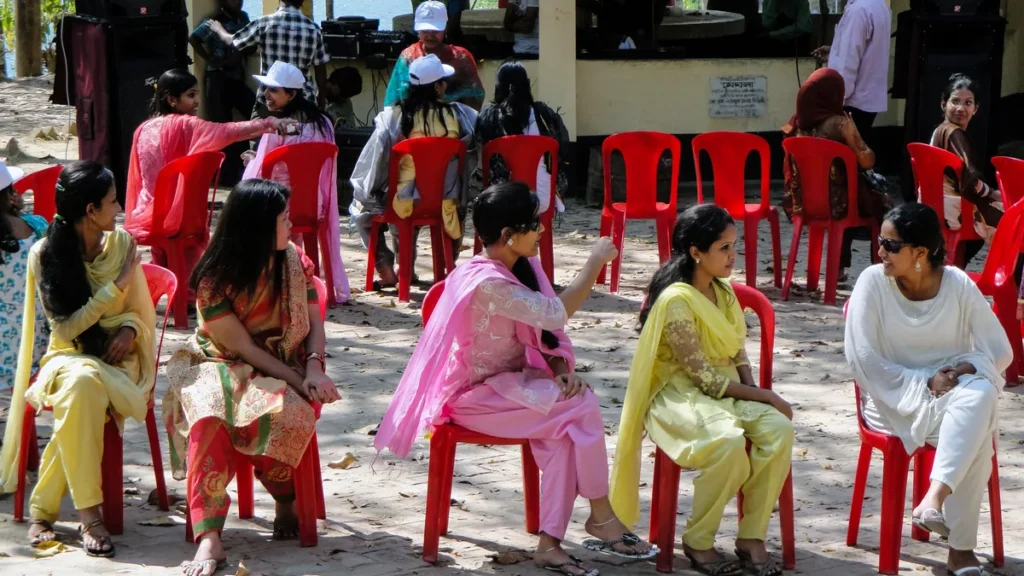
Between sixty and two hundred players, one game at a time stops working. The answer is stations: four to eight game stations spread around the venue, with teams rotating every fifteen minutes. One station runs musical chairs, another runs a quiz round, another runs a relay race. Every team plays every station, nobody waits long, and the party feels busy and alive from every corner.
201 to 384 Players: Tournaments and Zones
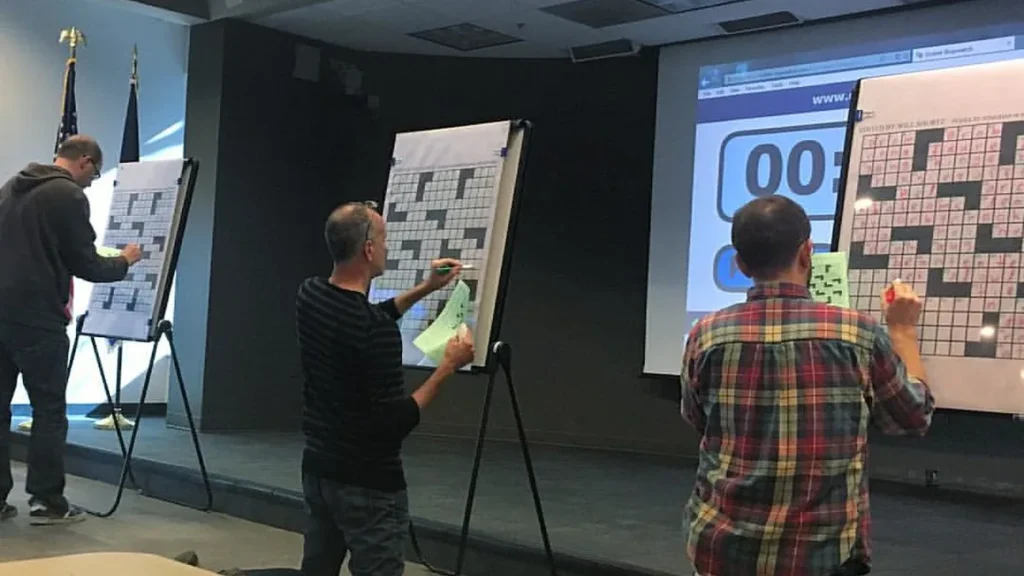
At the top of the range, you are running a small festival. Divide the venue into zones, each with its own host and its own game, and run heats that feed into a grand final. Two hundred players might play trivia in heats of fifty, with the top teams meeting in a final on a stage. The final should be short, loud, and visible, so the whole crowd can gather, cheer, and share the ending together.
The Best Party Games for 384 Players
1. Musical Chairs Relay
Musical chairs is the classic large-group party game, and it scales better than almost anything else. For a huge group, run several rings at once as heats, with the winners of each ring meeting in a final. A ring of twenty chairs takes two minutes a round, and six rings running side by side can move more than a hundred players through the game in fifteen minutes. Use a playlist everyone knows and a host with a microphone.
2. Giant Trivia Tournament
Trivia is the easiest game to scale to hundreds of players, because answering a question costs nothing and takes seconds. Split the crowd into teams, hand out answer sheets, and run rounds of ten questions mixing general knowledge, music, pictures, and local questions about the group itself. Heats of fifty players narrow the field, and the final round on a stage gives the party a thrilling finish. The trivia games built for 379 players show how heats and finals work when the crowd is nearly this large.
3. Charades Championship
Charades works for any number of players because only one person performs at a time while everyone else guesses. For a large party, run it as a championship: teams take turns sending a performer to the front, with a strict sixty-second limit per turn. Use categories that suit your crowd, such as films, songs, animals, and everyday jobs, and keep the prompts on cards so the game never stalls. A big scoreboard keeps the whole room involved.
4. Scavenger Hunt
A scavenger hunt is perfect for a huge venue because it spreads players out instead of crowding them together. Give each team the same list of twenty items or photo challenges to find within a set area and a time limit of thirty to forty-five minutes. Include easy finds, creative photo tasks, and challenges that need teamwork, such as a photo of the whole team jumping at the same time. Teams return to base, points are counted, and the best photos are shown on a screen.
5. Tug of War
Tug of war is the simplest team game ever invented, and it is made for huge groups. All you need is a long, strong rope, a marked centre line, and a flat stretch of ground. Run it as a knockout tournament: teams of ten pull against each other in short rounds, winners advance, and the final takes place in front of the whole crowd. Keep rounds short, rotate players so nobody is exhausted, and make sure the ground is dry and clear.
6. Bingo Blitz
Bingo is often overlooked at parties, but it is one of the few games where 384 people can genuinely play at the same moment. Print cards in advance, give every guest a card and a pen, and call the numbers over a speaker system. Play short rounds with small prizes, such as sweets, vouchers, or silly trophies, and mix in picture bingo for children. Because everyone plays simultaneously, there is no waiting, no elimination, and no guest left out.
7. Relay Race Festival
Relay races turn a field into a playground. Set up a course with simple challenges: an egg and spoon leg, a sack race leg, a three-legged leg, and a sprint finish. Teams of eight run the course in heats, and the fastest times go on a leaderboard. Relays work because only a few people run at once while the rest of the team cheers, which keeps the energy high without chaos. They suit outdoor parties, school festivals, and company picnics.
8. Two Truths and a Lie
Two truths and a lie is a gentle game that helps large groups of strangers get to know each other. Each player writes down two true facts and one false fact about themselves, and the team guesses which one is the lie. For a huge crowd, play it in teams: each team picks its best three statements and presents them to the whole group, who vote on the lie. It works well as an opening game while guests are still arriving and finding their teams.
9. Pictionary Relay
Pictionary is charades with a pen, and it scales the same way. Set up large pads or whiteboards at the front, one per team, and run a relay: one player draws for thirty seconds, then the next player takes over the same picture. Teams guess as their picture grows, and the first correct guess wins the point. For a very large crowd, run heats of four teams at a time while the rest of the audience watches and shouts guesses.
10. Dance-Off and Freeze Dance
Music is the fastest way to get 384 people moving together. A dance-off needs no equipment beyond a speaker and a playlist, and it works as a series of short heats: teams send their best dancer forward, the crowd cheers, and judges or a noise vote pick the winners. Freeze dance is even simpler: everyone dances while the music plays and freezes when it stops, and anyone caught moving sits down. Both make a perfect closing game before the final prizes.
Party Games for 384 Players at a Glance
| Game | Best group size | Space needed | Setup time | Energy level |
|---|---|---|---|---|
| Musical Chairs Relay | 20 to 384 | Large hall or lawn | 15 minutes | High |
| Giant Trivia Tournament | 30 to 384 | Hall with seating | 20 minutes | Medium |
| Charades Championship | 10 to 200 | Stage or open floor | 10 minutes | Medium |
| Scavenger Hunt | 20 to 384 | Whole venue or park | 30 minutes | High |
| Tug of War | 40 to 384 | Flat outdoor ground | 10 minutes | Very high |
| Bingo Blitz | 50 to 384 | Seated hall | 20 minutes | Low |
| Relay Race Festival | 40 to 300 | Outdoor field | 25 minutes | Very high |
| Two Truths and a Lie | 6 to 200 | Any room | 5 minutes | Low |
| Pictionary Relay | 12 to 200 | Stage or open floor | 10 minutes | Medium |
| Dance-Off and Freeze Dance | 20 to 384 | Open floor | 5 minutes | Very high |
How to Run a 384-Player Party Without Chaos
Build Teams Before the Party Starts
Do not wait until the day to divide 384 people into teams. Send team lists in advance, or hand out coloured wristbands and badges at the entrance so guests can find their group in seconds. Aim for teams of eight to twelve players, with a mix of ages and abilities in each one, and appoint a captain for every team. Captains collect their team, keep the score sheet, and report to the host, which means the host only needs to manage thirty captains instead of 384 individuals.
Run Stations, Not One Big Game
When the crowd passes sixty players, stop trying to run one game for everyone at once. Set up four to eight stations, give each one a host and a clear set of rules, and rotate teams every fifteen minutes. A whistle or a bell signals the rotation, and a printed timetable tells every captain where to go next. Stations keep waiting time short and spread guests across the venue. The guide to hosting board games for 382 players uses the same station idea, and it works just as well for party games.
Keep Score Simple and Visible
Complicated scoring kills a big party. Use one point per win, or ten points per station, and put the totals on a big board where everyone can see them. Update the board after every round, and have the host announce the top three teams regularly to keep the competition alive. Simple scoring also prevents arguments, because nobody can dispute a single point for a win. At the end of the day, add up the board, announce the winners, and hand out prizes quickly.
Your 384-Player Party Checklist
- Confirm the final headcount, book a venue with room for zones and stations, and arrange seating, shade, and toilets for the full crowd.
- Divide guests into teams of eight to twelve, appoint a captain for each team, and prepare coloured wristbands or badges for easy identification.
- Choose four to eight games from the list above, balancing quiet games with high-energy games and sitting games with running games.
- Prepare all equipment in labelled boxes per station: chairs, ropes, cards, answer sheets, pens, buzzers, and a printed rules sheet for each host.
- Test the speaker and microphone, mark the zones with cones or bunting, and print the rotation timetable and scoreboard before the day.
- Plan prizes for the winning team, small prizes for round winners, and a short closing ceremony so the party ends together with a cheer.
Frequently Asked Questions
Can you really play party games with 384 players?
Yes, but not all at once in a single circle. Party games for 384 players work when you use teams, stations, heats, and a tournament final. The games stay the same; the format changes. With thirty teams of about twelve players and a rotation of stations, every guest plays every game, and the final brings the whole crowd together.
What is the best party game for a very large group?
Trivia is the most reliable choice, because hundreds of people can answer at the same time and nobody waits for a turn. Musical chairs run in heats and tug of war run as a tournament are close behind, because they are simple, dramatic, and easy to watch. The best parties mix one quiet game like trivia or bingo with one loud game like tug of war or a dance-off.
How many games should we plan for a 384-player party?
Plan four to eight games across two to three hours. Fewer than four games feels thin, and more than eight is hard to run well. A good pattern is one opening game for everyone, four station games in rotation, and one grand final. That gives every guest a full afternoon of play without exhausting the hosts or the players.
How do you keep score with hundreds of players?
Keep it as simple as possible. Give one point per win or ten points per station, and record the totals on a large visible board. Team captains report their results to a central scorekeeper after each round, and the host announces the leaders every half hour. Simple scoring prevents disputes and keeps the competition exciting.
What if it rains on an outdoor party for 384 players?
Have an indoor backup plan ready before the day. Move trivia, bingo, charades, pictionary, and two truths and a lie indoors, and run musical chairs in a hall if the floor is safe. Keep tug of war, relays, and scavenger hunts for dry weather, and check the forecast the day before so you can warn guests and move equipment under cover in time.
How do you make sure shy guests join in at a huge party?
Team play is the answer. Shy guests rarely volunteer in front of 384 strangers, but they will answer a question for their team of ten or hold a rope in a tug of war. Choose a mix of games so that quiet skills like knowledge, drawing, and observation count as much as loud skills like running and shouting, and let captains encourage every member to take at least one turn.
Bottom Line
Party games for 384 players are not about finding one magical game that fits everyone. They are about taking the classic games people already love and scaling them with teams, stations, heats, and a final that the whole crowd can share. Start with the 3-to-384 range, pick four to eight games that suit your space and your guests, build your teams before the day, and keep the scoring simple and visible. Do that, and a crowd of 384 stops being a logistics problem and becomes the best part of the party: hundreds of people laughing, competing, and celebrating together. The party games guide for 382 players shows the same approach at nearly the same scale, and it is a useful companion if you want a second set of ideas before the big day.