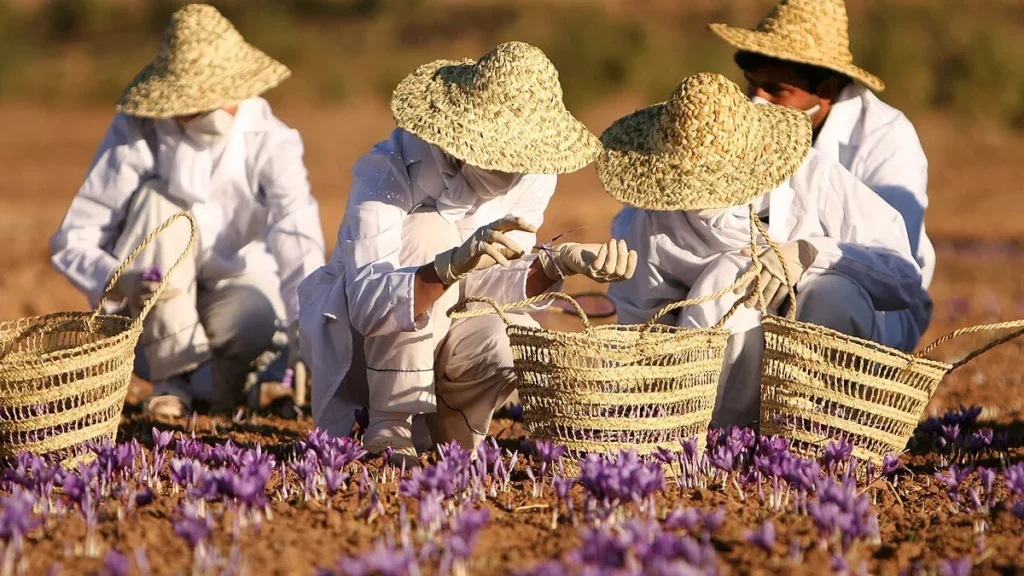
Five hundred and sixty-eight players is a crowd, not a group you can hold in one place. No single game can hold that many people at once, and no host should try. The trick is to divide the crowd into small teams, give every team the same nine games, and let the points travel from station to station while the players stay where they are. That is exactly what this guide does, and it does it among old village saffron beds, where low purple flowers, woven baskets, and small jars of red threads give every game a job to do.
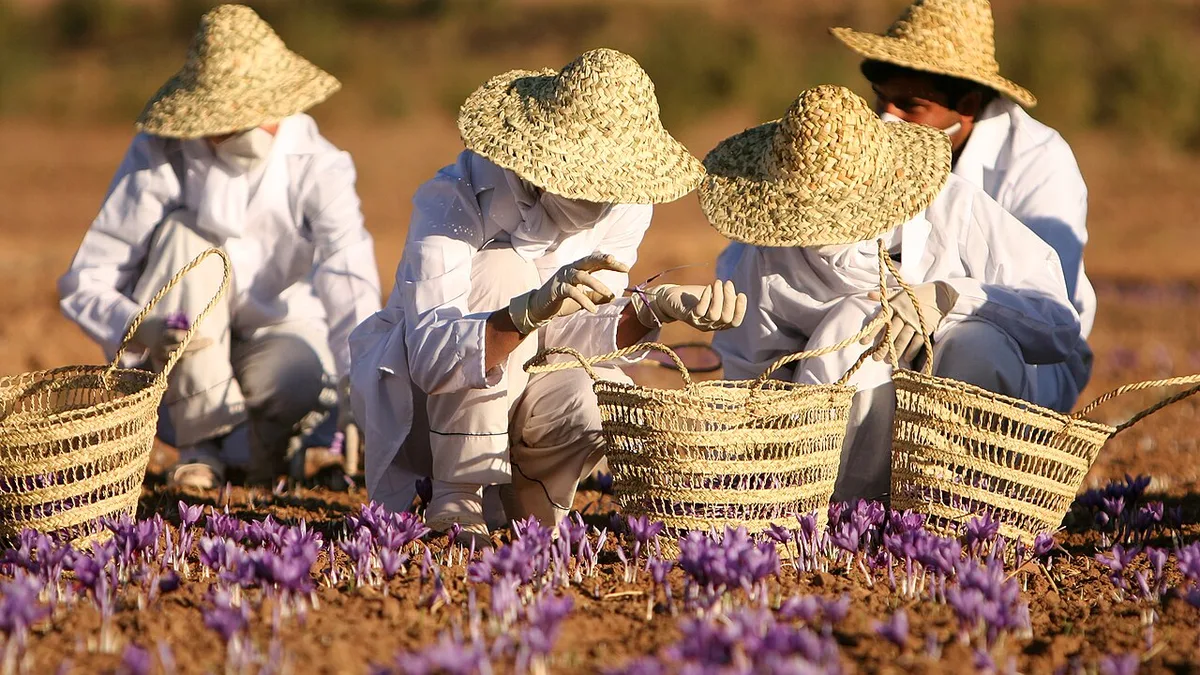
Saffron beds suit a crowd of this size because the work itself is gentle and close at hand. Nobody needs to run or hurry from one end of the place to the other. Each game asks for hands, dice, and a little patience, and each one ends with something you can see: a basket of picked flowers, a tray of red strands, or a jar of dried threads. The beds also give the day a clear beginning and a clear end. You begin with purple flowers low on the ground and end with dried threads in small jars, so even players who arrive late can tell how far the day has gone.
The nine games below all use the same kit: a handful of dice, a few baskets, trays, small jars, and one small balance. Nothing here needs special skill, and nothing here asks a player to perform in front of the whole crowd. Each game takes about ten minutes, each one can run at its own station at the same time as the others, and each one hands its points to a shared tally at the end. If you enjoy workshop days, the pottery games for 567 players use the same team-and-station pattern in a different setting, working clay where this guide picks flowers.
Key takeaways
- 568 players work best as 71 teams of eight, each with its own station and its own host.
- All nine games use the same kit: dice, baskets, trays, small jars, and a small balance.
- Every game takes about ten minutes, so a team can play all nine in about ninety minutes.
- Points go to a shared tally, and the winning team is the one with the most points at the end of the day.
- No game needs special skill, and nobody has to perform in front of the whole crowd.
| Game | What you need | Minutes |
|---|---|---|
| Dice Saffron Pick | One basket and one die | 10 |
| Dice Saffron Stigma | Picked flowers and one die | 10 |
| Dice Saffron Thread | Dried threads, a tray, and one die | 10 |
| Dice Saffron Dry | Damp threads, a tray, and one die | 10 |
| Dice Saffron Jar | Six dried threads, a jar, and one die | 10 |
| Dice Saffron Weigh | Dried threads, a small balance, and two dice | 10 |
| Dice Saffron Bloom | A strip of the bed and one die | 10 |
| Dice Saffron Field | A host list of eight needs and one die | 10 |
| Dice Saffron Sort | Dried threads, a tray, and two dice | 10 |
How 568 Players Fit Into One Day
Five hundred and sixty-eight players divide neatly into seventy-one teams of eight. Nine stations run at the same time, one game at each station, and eight teams play at every station side by side. That makes seventy-two places for seventy-one teams, so one station runs with seven teams and the short station changes each round. A team spends ten minutes at a station, then shifts to the next one. Nine rounds of ten minutes add up to ninety minutes, and by the end of that time every team has played all nine games. Nine station hosts look after the games, and one day host looks after the tally and the timing.

The morning works best for the nine games, with a short pause after the fifth round so hands can be washed and fresh trays can be put out. Points are written on one sheet per team at the end of each round, and the day host adds them up while the next round is being played. That way nobody waits around for a result, and the final tally is ready as soon as the last game ends.
The 9 Dice Games
Each game below follows the same pattern. A player rolls one die or two dice, the number on the dice decides what happens next, and the team earns points for a job well done. The host at each station explains the game, keeps an eye on the play, and writes the points on the team sheet.
1. Dice Saffron Pick
The first game is the heart of the saffron beds. A player from the team steps up to a strip of the bed with an empty basket, and rolls one die. The number on the die is the number of purple flowers the player must pick. Each flower comes away with a soft tug of the fingers, and the player puts each one in the basket as it is picked.
When the flowers are picked, the host looks in the basket. If every flower is whole, with its petals still in place, the team earns the number on the die in points. If even one flower is missing a petal or has been torn, the team earns nothing for that turn, and the next player starts again with a fresh strip. Three players from each team take a turn, and the team adds up the points from all three turns.
2. Dice Saffron Stigma
Inside each purple flower sit three thin red strands, and those strands are the saffron itself. In this game, a player rolls one die and then takes that many picked flowers from the basket. The job is to take the red strands out of each flower, one flower at a time, and put them side by side on a tray. The strands are tiny, so the work needs a steady hand and slow work.
When the strands are laid out, the host looks at the tray. If every strand is whole and none has been left inside a flower, the team earns the number on the die in points. If a strand has been torn or left behind, the team earns nothing for that turn. Two players from each team take a turn, and the team keeps the better of the two results.
3. Dice Saffron Thread
Dried saffron threads are long, thin, and easy to tangle, so this game asks for patience. A player rolls one die and then takes that many dried threads from a tray. The job is to put the threads side by side on a fresh tray, with no thread touching another thread, and no thread lying across another thread.
The host looks at the tray when the player is done. If every thread lies on its own, clear of all the others, the team earns the number on the die in points. If two threads touch or lie across one another, the team earns nothing for that turn, and the threads stay on the tray for the next player. Two players from each team take a turn. A slow hand beats a fast one every time.
4. Dice Saffron Dry
Fresh strands hold water, and they must be dried before they can be kept. In this game, a player rolls one die, and the number on the die is the number of damp strands the player must take from a wet tray to a dry tray. The player has thirty seconds, and the strands must be moved one at a time, with the fingers only.
When the seconds run out, the host looks at the dry tray. If every strand the player moved is on the dry tray, and none has fallen on the ground, the team earns the number on the die in points. If a strand has fallen, the team earns nothing for that turn. Two players from each team take a turn, and the team keeps the better of the two results.
5. Dice Saffron Jar
A jar of saffron is a small thing, and this game is all about a steady hand. A player rolls one die, and the number on the die is the number of seconds the player has to put six dried threads into a jar, one at a time. The jar sits on a tray, and the player holds each thread above the jar before letting it go.
If all six threads land inside the jar when the seconds run out, the team earns the number on the die in points. If even one thread lands on the tray instead of in the jar, the team earns nothing for that turn. Three players from each team take a turn, and the team adds up the points from all three turns.
6. Dice Saffron Weigh
Saffron is weighed in tiny amounts, and this game turns the balance into a game of luck and care. A player rolls two dice and adds the numbers together. The total is the number of pinches of dried threads the player must place on a small balance. The host has already placed the same number of pinches on the other side of the balance.
The host looks at the balance when the player is done. If the two sides are the same weight, the team earns the dice total in points. If one side is heavier than the other, the team earns nothing for that round. Each team gets two tries at this game, and the better try decides the points. A pinch too many is as bad as a pinch too few.
7. Dice Saffron Bloom
Not every flower in the bed is out at the same time, and this game is a game of looking closely. A player rolls one die and then looks down a strip of the bed. The job is to count the purple flowers that are out, one by one, until reaching the number on the die, and then to say which flower is the last one counted.
The host then counts the same strip. If the player stopped on the flower the host counts as the last one, the team earns the number on the die in points. If the player stopped one flower too early or one flower too late, the team earns nothing for that turn. Two players from each team take a turn, and the team keeps the better of the two results.
8. Dice Saffron Field
This game is the only one of the nine that asks for knowing things instead of doing things. A player rolls one die, and the number on the die is the number of things the player must name that a saffron bed needs to grow well. The host holds a list of eight needs: soil, water, bulbs, autumn days, dry days, careful picking, fresh trays, and small jars.
Each thing the player names must be on the host list. If every thing named is on the list, the team earns the number on the die in points. If the player names a thing that is not on the list, the team earns nothing for that turn. Two players from each team take a turn. The game is quick, it needs nothing but a die and a list, and it gives every player the same chance to help the team.
9. Dice Saffron Sort
The last game is the most satisfying one of the nine. A player rolls two dice and adds the numbers together. The total is the number of dried threads the player must sort into two piles on a tray: whole threads in one pile and broken threads in the other pile. The player has thirty seconds, and the threads must be sorted one at a time.
When the seconds run out, the host looks at both piles. If every thread is in the right pile, the team earns the dice total in points. If even one thread is in the wrong pile, the team earns nothing for that round. Each team gets two tries at this game, and the better try decides the points.
What You Need
The kit for the day is short, and most of it is already sitting near the saffron beds. You need at least twenty dice, with a few extras in case one rolls into the soil and cannot be found. You need baskets for the picking game, trays for the drying and sorting games, small jars for the jar game, a small balance for the weighing game, and plenty of purple flowers and dried threads for all nine games.
Keeping the Points Honest
One sheet per team and one host per station is all it takes to keep the points honest. The host writes the points on the sheet at the end of each round, where the whole team can see it, and the team can ask to see the sheet at any time. A similar points tally keeps the lantern-maker games for 566 players moving, and the same idea works here: one sheet per team, one host per station, and no arguing about the numbers.
If two teams end level at the end of the day, the day host settles it with one extra roll. Each of the level teams rolls one die, and the team with the higher number takes the higher place. If the dice show the same number, the teams roll again until one team comes out ahead.
Checklist
- Put out the dice before the day starts: at least twenty, with extras.
- Give every station its own host and its own sheet.
- Keep the dried threads dry: a little water goes a long way, and only where it belongs.
- Let every team play all nine games before any points are added up.
- Keep filled jars on a tray where nobody can knock them over.
- Leave ten minutes at the end for the final tally and the winning team.
Frequently Asked Questions
Can 568 people really play dice games in one day?
Yes, and the trick is teams and stations rather than one big game. Seventy-one teams of eight play the same nine games at nine stations, ten minutes at a time, and the whole day takes about ninety minutes of play plus a short pause in the middle. Nobody waits long for a turn, and nobody has to watch from the side while others play.
Do players need to know anything about saffron?
No. Every game in this guide can be learned in a minute, and the host at each station explains it before the team starts. The games use flowers, strands, threads, trays, and jars, but they ask for steady hands and a little patience, not for growing skill.
What if a team has fewer than eight players?
A team of six or seven works just as well. The team simply takes one fewer turn in the games where three players take a turn, and the points still add up the same way.
How many dice do we need?
At least twenty dice will do for nine stations, with two dice at each station and a few extras in case one rolls away. Ordinary six-sided dice are all you need: no special dice, no coloured dice, and no dice with pictures on them.
Can children play?
Yes, and the picking game and the bloom game suit younger players best, because they are gentle and easy to get right. The weighing game needs an adult nearby, because a small balance is easy to upset and tricky to read. Put children in mixed teams with adults where you can, and let the adults take the weighing turns while the children take the picking and bloom turns.
What happens to the dried threads?
Players take home the small jars they filled, and the threads left over go into jars for cooking, where a pinch at a time will flavour meals for months. If your group enjoys making things with their hands, the horn comb-maker games for 565 players offer another workshop day built the same way, with horn and combs in place of saffron and threads.
The Bottom Line
Dice games for 568 players work when the crowd becomes seventy-one small teams, the day becomes nine short games, and every game ends with something real to look at. Saffron beds give that pattern for free: purple flowers at the start, steady hands in the middle, and dried red threads in small jars at the end. Bring enough dice, keep the threads dry, let every team play all nine games, and the points will look after themselves.


