
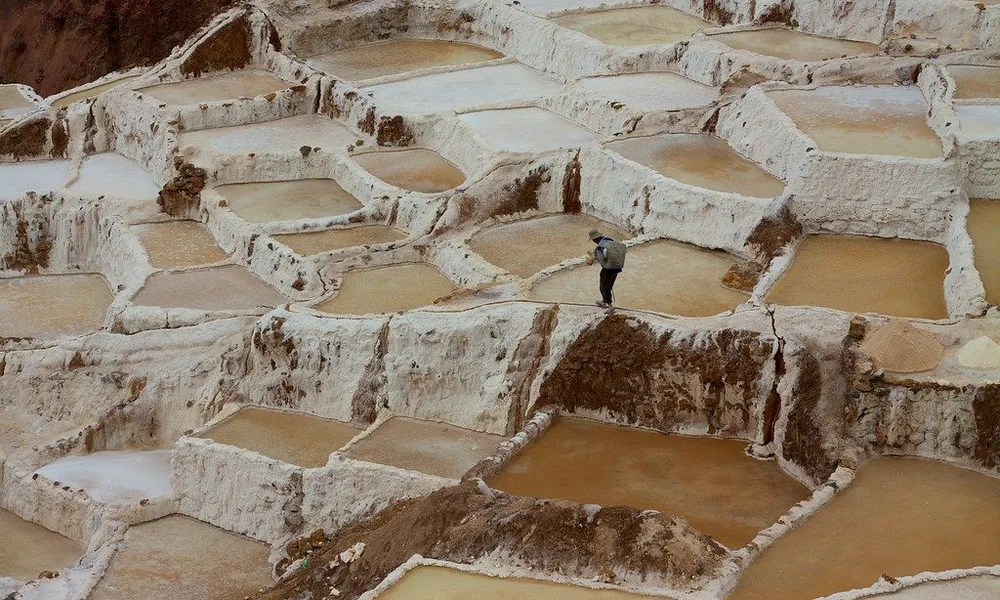
Welcome to the old village salt works, where brine from the well is poured into shallow pans, left under sunlight, and raked into pale heaps by the end of the afternoon. This guide turns that slow, hands-on work into nine dice activities for five hundred and forty-four players, so a whole village can share one working yard without anyone standing idle. Every activity uses ordinary kit, a handful of dice, and points alone, and every activity can be learned in about two minutes.
If you enjoyed the hands-on workshop feel of the weaver’s workshop games in our dice games for 543 players, this day will feel familiar: real tools, real materials, and dice deciding what happens next. The difference here is the setting. Instead of thread and shuttles, players work with brine, shallow pans, and salt crystals, and the yard smells faintly of the well water that feeds every pan.
Nine posts stand in a loop around the yard, each one hosting about sixty players, and four roving helpers carry spare dice and score sheets between them. Each group appoints two of its own members to run the post while the others play, so nobody is stuck hosting all afternoon. Read the guide once, lay out the kit, and the dice do the remaining work.
Key takeaways
- Nine hands-on activities make an old village salt works into a full day of dice play for 544 players.
- Players split into nine groups of about sixty, plus four roving helpers who carry spare dice and score sheets.
- Dice decide every move, and no activity needs prior knowledge or special skill.
- Everything is played for points alone, and the group with the highest tally at the end of the day wins.
- Bring paper, pens, jars, tubs, mesh trays, wooden scrapers, and at least two dice per post.

How 544 Players Fit Into One Day
Five hundred and forty-four divides neatly into nine groups of sixty, which makes five hundred and forty, plus four roving helpers. Each group visits every post once, spending about twenty minutes at each one, which fills three hours of play with time to catch breath in the middle. The four helpers keep the dice moving, hand out fresh score sheets, and settle any dispute about a tally.
Groups move around the loop in the same direction, so no two groups arrive at the same post together. When a group reaches a post, two of its members step forward to run it: one reads the instructions aloud, and the other keeps the tally. After twenty minutes, the hosts rejoin their group, two new members take over, and the group moves on. By the end of the day, everyone has hosted at least once and played every activity.
Points are simple. Each activity awards up to ten points per group, and the tally is written on a score sheet that travels with the group. There is no prize beyond the tally itself, which keeps the mood friendly and the focus on the work. A host who is unsure about a ruling asks a roving helper, and the helper’s word is final.
The Nine Salt Works Activities
Each activity below takes about twenty minutes and needs only the kit listed at its start. Dice are rolled where everyone can see them, and each roll is announced before anyone acts on it. The activities follow the working day in order, from filling the pans to scraping the finished salt.
1. Dice Brine Pan
Two players carry a tub of brine to a shallow pan while the others in the group watch the notched ruler. One player rolls two dice, and the total decides how deep the brine should sit in the pan: a low total means a thin layer, and a high total means a deeper one. The carriers pour slowly until the brine reaches the depth the dice asked for, and the host looks over the ruler to judge how close they came.
Points go to the group whose pour lands nearest the depth the dice named, with ten points for landing exactly on the depth and fewer points as the gap widens. The activity teaches a steady hand and a patient pour, because brine poured too fast sloshes over the rim and has to be mopped up with paper. Three pours per group keep the pace brisk, and the deepest pan of the day is left to dry in the sunlight for the later activities.
2. Dice Salt Rake
Once the brine has begun to dry, pale crystals appear along the edges of the pan, and this activity is about gathering them into tidy furrows. One player rolls a single die, and the number decides how many furrows the group must rake before the next roll: one furrow for a one, six furrows for a six. Players share the wooden rake, each raking one furrow before handing it on, drawing slow, even furrows through the crystals.
The host awards points for furrows that run straight and stay evenly spaced, with ten points for a pan that looks like it was combed by a careful hand. A furrow that wanders or collapses earns nothing, so players learn to rake slowly rather than quickly. The raked salt is left in the pan to dry further, and the neatest pan of the day is photographed and shown in the village hall.
3. Dice Evaporation Tray
Shallow trays of brine sit in a row under the sunlight, each one at a different stage of drying. One player rolls a die to choose which tray the group will sample, and then the group must guess how much salt the tray will leave behind once its water has gone. Players discuss the colour of the brine, the thickness of the crystals forming at the edges, and how long the tray has been sitting out.
After the guesses are written down, the host lifts the tray into the drying shed and weighs its salt once the tray is fully dry, comparing the result with every guess. Ten points go to the closest guess, and five points go to the next closest. The activity rewards careful observation over loud opinions, and groups that look closely at the crystals usually beat groups that guess at random.
4. Dice Crystal Heap
Salt crystals come in three sizes here: fine grains, medium grains, and coarse lumps. One player rolls a die, and the number decides which size the group must heap next: odd numbers mean fine grains, even numbers mean coarse lumps, and a roll of six means medium grains. Players sort the crystals through mesh trays and heap each size into its own small mound on a flat surface.
Points are awarded for heaps that hold their shape and contain only one size of crystal, with ten points for a perfect heap and fewer points when sizes are mixed. The wheelwright’s workshop games in our dice games for 542 players also make everyday workshop kit into dice challenges, and the same spirit applies here: simple tools, clear rules, and dice deciding the order of work. A heap that topples over earns nothing, so players build low and wide rather than tall and slim.
5. Dice Salt Scoop
Each group receives an empty jar and a wooden scoop, and the aim is to fill the jar as close as possible to a target weight without using any weighing gear. One player rolls two dice, and the total decides how many scoops the group may take: two scoops for a low total, twelve for a high one. Players scoop salt from a tub, judging each scoop by hand, and tip it into the jar.
Once the scoops are done, the host lifts the jar and compares it with a reference jar of the target weight, judging the difference by hand. Ten points go to the jar that feels closest to the reference, and the host announces the result before the next group begins. The activity is harder than it looks, because a heaped scoop can hold twice as much as a level one, and players who scoop gently usually finish nearer the target.
6. Dice Drying Shed
Trays of damp salt are carried into the drying shed, where sunlight and mild air finish the work. One player rolls a die to decide how long each tray stays inside: a low roll means a short stay, and a high roll means a long one. Players place their trays on the shelves in the order the dice gave them, then wait while the shed does its quiet work.
While the trays dry, the group guesses which tray will be driest when the time is up, writing each guess on the score sheet. Ten points go to the group that names the driest tray, and five points go to the group that names the next driest. The activity teaches patience, because a tray pulled out too early is still damp.
7. Dice Brine Dip
A strip of paper is dipped into brine, lifted out, and left to dry, and as it dries, salt crystals bloom across its surface in patterns no two players can predict. One player rolls a die to decide how deep the dip should be: a shallow dip for a low roll, and a deep dip for a high one. The player lowers the strip slowly, holds it steady for five slow beats, and lifts it out without shaking it.
Points go to the strip with the clearest, most even spread of crystals once it is fully dry, with ten points for a strip where the crystals spread evenly from edge to edge. A strip that drips or folds earns fewer points, so a steady hand matters more than a quick one. The finished strips are arranged in a row for everyone to admire, and the prettiest strip of the day earns its group a bonus of five points.
8. Dice Salt Weigh
Three jars of salt sit on a surface, each one filled to a different weight, and the group must put them in order from lightest to heaviest by lifting them alone. One player rolls a die to decide which jar is tested to begin with, and the group discusses each lift before agreeing on the order. No jar may be unsealed, and no jar may be lifted twice by the same player, so everyone gets a chance to feel the weight.
Ten points go to a group that orders all three jars correctly, and five points go to a group that gets two of the three in the right place. The saddler’s workshop games in our dice games for 541 players also ask players to feel the weight of leather pieces by hand, and the same careful touch helps here. Players who lift slowly and compare each jar against the others usually finish ahead of players who rush.
9. Dice Pan Scrape
The final activity of the day is the most satisfying: scraping the dried salt from the edges of the pans where the crystals have clung the hardest. One player rolls a die to decide which edge of the pan the group will scrape, and then players share a wooden scraper, each working one edge before handing it on, working the salt loose in thin, even strokes. The scraped salt falls into a tub below, ready for the jars.
Points go to the group that fills its tub the fullest in the time allowed, with ten points for the fullest tub and fewer points as the tubs grow lighter. A scraper pressed too hard can scratch the pan, so the host watches for gentle strokes and deducts points for rough handling. When the final pan is scraped, the day’s salt is gathered together, and the group with the highest tally is announced before everyone heads home.
What to Bring and How to Arrange the Pans
Each post needs two dice, a score sheet, a pen, a tub of brine, a shallow pan, a notched ruler, a wooden rake, a wooden scraper, and a handful of jars. The drying shed needs shelves, mesh trays, and strips of paper for the dip activity, while the heaping post needs three mesh trays and a flat surface for the mounds. Bring spare dice, because at least one die will end up in a pan of brine before the day is over.
Arrange the nine posts in a loop around the yard, with the brine well at the centre and the drying shed at the far side. Leave a wide walkway between posts so groups of sixty can get by without crowding, and put the heaping and weighing posts beneath shelter, where sunlight will not dazzle players who are judging fine crystals by eye. A roving helper walks the loop all day, topping up brine tubs and handing out fresh score sheets.
The Day at a Glance
Here is the day in brief, with the kit and the minutes for each activity.
| Activity | What you need | Minutes |
|---|---|---|
| Dice Brine Pan | Brine, shallow pan, notched ruler | 20 |
| Dice Salt Rake | Wooden rake, shallow pan, crystals | 20 |
| Dice Evaporation Tray | Shallow trays, brine, sunlight | 20 |
| Dice Crystal Heap | Mesh trays, flat surface, crystals | 20 |
| Dice Salt Scoop | Wooden scoop, jars, tub of salt | 20 |
| Dice Drying Shed | Trays, shelves, mild air | 20 |
| Dice Brine Dip | Paper strips, brine, pegs | 20 |
| Dice Salt Weigh | Three jars, flat surface | 20 |
| Dice Pan Scrape | Wooden scraper, pan, tub | 20 |
Checklist for the Day
- Pour brine into every pan before the opening group arrives, so no group waits for a fill.
- Hand each group a score sheet, a pen, and two dice at the opening post.
- Place a roving helper at each end of the loop to keep groups moving on time.
- Keep spare dice, paper strips, and jars in a tub near the brine well.
- Photograph the neatest raked pan and the prettiest dipped strip before the afternoon ends.
- Gather every score sheet at the final post and add up the tallies before announcing the winner.
Questions About the Day
Can children take part in the salt works day?
Yes, children can take part in every activity, and the dice make the day fair for all ages. Younger players may need a hand lifting a full tub of brine, so each younger player works beside an adult for the carrying activities. The dipping and heaping activities suit smaller hands especially well.
Do we need real brine from a well?
Real brine from a well is ideal, because it dries into proper crystals, but a strong salt solution mixed in a tub works just as well. Dissolve as much salt as the water will take, stir until no more will dissolve, and let the mixture sit before pouring it into the pans. The activities play the same either way.
What if the day grows damp?
A damp day slows the drying, so move the evaporation trays and the dipped strips beneath shelter and give them extra time in the drying shed. The raking, heaping, scooping, weighing, and scraping activities all play the same beneath shelter, so only the two drying activities need adjusting. Keep the score sheets dry by slipping each one inside a jar lid or a folded sheet of paper.
How do we keep the tally honest?
Each group carries its own score sheet, and the host at each post writes the points down and signs beside them. A roving helper looks over the sheets halfway through the day and again at the end of the day, and any sheet without a host signature is compared with the host’s memory. The system is simple, and in practice disputes are rare.
What happens if two groups tie on points?
If two groups finish level on points, the tie is settled with a single roll of two dice at the final post, with the higher total taking the day. Both groups roll in front of everyone, and the result stands. Ties are uncommon, because nine activities rarely produce identical tallies.
Can we play indoors?
Most of the day can move indoors if the yard is unavailable, as long as there is a bright room for the evaporation trays and the dipped strips. The drying shed can be any mild, airy room with shelves, and the pans can sit on surfaces covered with paper. Only the brine well itself stays outside, so carry the brine in sealed tubs.
The Bottom Line
A day at the old village salt works gives 544 players nine honest activities, real materials, and dice deciding every move. Groups of sixty move around the loop, hosts change at every post, and the tally decides the winner without fuss. Lay out the pans, fill the tubs, hand out the dice, and let the salt do the teaching.