Four hundred and eighty seven players, one hall, and a box of dice. That sounds impossible until you see it work. Dice games scale better than almost any other kind of group game because the rules fit in one sentence, the equipment fits in one pocket, and nobody has to wait long for a turn. When the group is this large, the game is not the star. The system around the game is the star: clear signals, simple scoring, and a theme that gives everyone something to shout about.
Superheroes are the perfect theme for a crowd this size. Everyone knows what a cape does, everyone can strike a hero pose, and nobody needs a briefing on villains. The nine games below turn that shared knowledge into nine different kinds of fun: saving the city, fluttering capes, unmasking heroes, and one very loud hero pose at the end. Each game uses ordinary six sided dice, each one works with the whole hall at once, and each one can be explained in under a minute.
This guide is built for real rooms full of real people: school halls, camp days, family reunions, youth groups, and community festivals. You do not need a stage, a screen, or a sound system. You need dice, a loud voice, a few helpers, and 487 people ready to be gloriously noisy. Here is how to make it work, game by game.
Key Takeaways
- Nine superhero dice games work for 487 players at once, with no waiting and no elimination.
- Every game uses ordinary six sided dice and a rule you can explain in under a minute.
- Split the hall into zones with a helper in each zone, and run every game at the same time.
- Score by table, team, or zone, not by individual, so nobody is left watching from the side.
- End with the hero pose, because a loud shared finish beats a quiet winner every time.
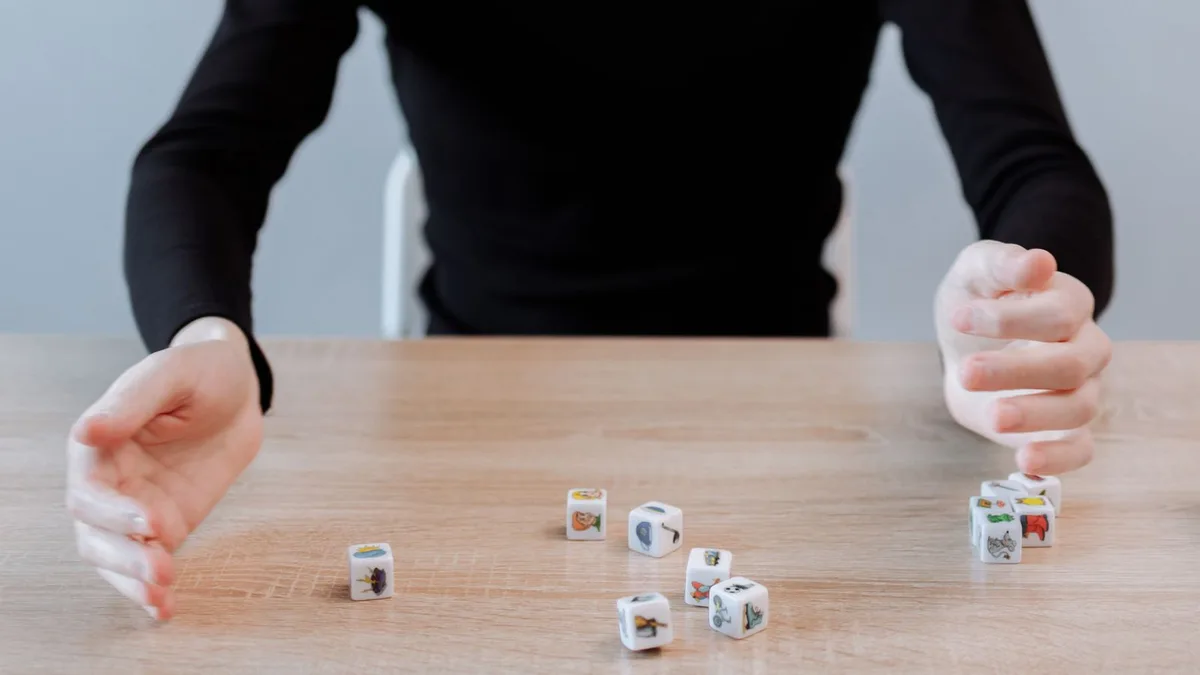
The 9 Superhero Dice Games at a Glance
Use this table to plan your session. Start with a loud game, follow it with a calm one, and keep the hero pose for the end. Every game uses the same zone system, so you can move on without rearranging the room.
| Game | Dice | Best for |
|---|---|---|
| Dice Superhero Save | 1 per player | Loud openings |
| Dice Cape Flutter | 1 per player | Calm moments |
| Dice Masked Hero | 2 per table | Quiet focus |
| Dice Power Punch | 1 per player | Big reactions |
| Dice Sidekick Spot | 1 per player | Mixed ages |
| Dice Villain Trap | 2 per team | Team spirit |
| Dice Gadget Grab | 2 per table | Fast finishes |
| Dice Hero Flight | 1 per player | Gentle movement |
| Dice Hero Pose | 1 per player | Grand finales |
How to Run Dice Games for 487 Players
Divide the hall into zones of about twenty to thirty players, and put one helper in charge of each zone. The helper rolls with the zone, calls out the results, and keeps the score for that zone. You stay at the front, call the start and stop signals, and keep the energy up. When every zone plays the same game at the same time, 487 players feel like one big game instead of twenty small ones. If your group loves a mystery twist, the detective themed dice games for 484 players show how a strong theme can carry a whole hall.
Dice supply is the only real problem to solve in advance. One die per player is ideal, and bulk bags of dice are cheap enough that most organisers buy a fresh set for the day. If you are short, one die per pair works fine, because partners take turns to roll and cheer each other on. Pack spares in a separate bag, because dice roll under tables and into corners, and a missing die should never stop a game. Keep a big visible scoreboard at the front, and update zone totals after every game.
Plan the noise as carefully as the games. Loud games need a clear stop signal, such as a raised hand or a whistle blast, and every helper must know it first. Give the hall a short rest between loud games, with water available and chairs ready. Start with the loudest game while energy is high, use a calm game to settle the room, and finish with the hero pose, when everyone is on their feet together.
The 9 Superhero Dice Games
Each game below lists what you need, how a round works, and how to pick a winner. Read the rule aloud once, show one quick example with a helper, and then let the zones play. If a rule is not working, simplify it on the spot.
1. Dice Superhero Save
Every player rolls one die at the same time. A six is a save, and everyone who rolls a six stands up, shouts their hero name, and earns a point for their zone. A one is a wobble, worth a smile and nothing else. Three rounds make a full game, and the zone with the most saves wins the round. Helpers count the standing players in their zone and call the total to the front, which keeps the pace fast and the counting honest.
This is the best opening game in the set because it is loud, simple, and impossible to get wrong. Shy players can shout quietly, bold players can shout like thunder, and nobody is singled out, because half the hall is standing. If you want a second round, change the save number to five and watch the hall adjust in seconds. Keep the rounds short, and move on while energy is still high.
2. Dice Cape Flutter
Everyone stands with their arms out like a cape caught in the wind. On your count, each player rolls one die. The number rolled is the number of seconds the player must flutter without stopping, so a six means six long seconds of fluttering and a one means a single quick flutter. Helpers watch their zone and count the players still fluttering at the end of each round. The zone with the most flutterers still going at the end wins the round.
Cape Flutter is the gentle game in the set, and it works best straight after a loud one. Players laugh at their own fluttering, the room settles without anyone being told to be quiet, and the movement is soft enough for players of every age. For younger players, let a whole zone flutter together and cheer each second as a team. For older players, add a twist: a six means a spin as well as a flutter, which keeps the finish close.
3. Dice Masked Hero
Each table gets a set of hero clue cards placed face down, and one hero identity card hidden among them. Players take turns to roll two dice. An even total reveals one clue card, and the table reads it aloud and talks about which hero it could be. An odd total means the mask stays on, and play passes on. The first table to name the masked hero correctly wins the round, and the helper checks the identity card before the table celebrates.
Masked Hero is the thinking game in the set, and it works because the clues do the heavy lifting. Nobody needs to know comic books to play, because every clue is a plain fact, such as a red cape or a lightning badge. Tables lean in, players whisper their guesses, and the room feels clever without feeling like a test. For younger players, use three clues only, so the answer comes quickly. For older players, a double reveals two clues at once.
4. Dice Power Punch
Everyone rolls one die on your count. A five or six is a super punch, worth two points for the zone. A two, three, or four is a fair punch, worth one point. A one is a soft tap, worth nothing but a laugh. Play five rounds, and let the helpers add up their zone totals, because the zone with the most points wins. The punches are always aimed at the air, never at another player, and the helper reminds the zone of that rule before the first roll.
Power Punch works because the reactions are big and the rules are tiny. Nobody can fall behind, because every round starts fresh. The game also teaches the hall your signals without a lecture: your raised hand means roll, your whistle means stop, and your voice sets the pace. Use it early in the session, and the hall will follow your lead for the rest of the day.
5. Dice Sidekick Spot
Before each round, the helper in every zone picks a secret number from one to six and writes it down where nobody can see it. Every player in the zone rolls one die at the same time. Anyone who rolls the secret number has spotted the sidekick, and stands up so the helper can count them. The first zone to count three spotters wins the round, and the helper reveals the secret number so everyone can see how close they were.
Sidekick Spot is the best game in the set for mixed ages, because younger children can roll and stand while older children do the counting and the planning. Keep the rounds quick, about one minute each, and change the secret number every round, which stops anyone from gaming the system. Play five rounds, then gather the hall and let each zone call out its best round.

6. Dice Villain Trap
Teams work together to build a trap for the villain, and they need six trap pieces to spring it. The first player rolls two dice. A total of seven or more adds one trap piece to the team pile. A total of two or three means the villain slips past, and the team loses one piece from the pile. Any other total means the trap holds steady, and the dice pass on. The first team to reach six pieces springs the trap, and the whole zone cheers them home.
Villain Trap is pure team spirit, and it works because everyone builds the same trap, not just the fastest player. Slow rollers still help the team, and the lost pieces keep the finish tense until the last roll. Keep the target at six pieces, so that every team finishes within a few minutes. Groups that enjoy team games also enjoy the train themed dice games for 485 players, which use the same zone system with a railway twist. If a team finishes early, let them guard their trap and cheer for the teams still building, which keeps the hall together instead of splitting it into winners and watchers.
7. Dice Gadget Grab
Each table gets a pile of gadget cards and two dice. Players take turns to roll both dice. An even total means the player grabs one gadget card from the pile. An odd total means the player passes the dice on with nothing grabbed. A double means the player grabs two cards at once. Play for five minutes, then count the cards, and the table with the most gadgets wins the round.
Gadget Grab is the fastest game in the set, and it works best near the end of the session, when attention starts to wander. The rounds take seconds, the doubles make everyone cheer, and the pile shrinks in front of your eyes, which gives the game a natural finish. Keep the gadget cards simple, with a picture and a name, so counting is quick. If a table runs out of cards, the helper tops the pile up, and the game keeps going.
8. Dice Hero Flight
Everyone stands with their arms out like wings, ready to fly in formation. On your count, every player in the zone rolls one die at the same time. If nobody in the zone rolls a one, the formation holds, and the zone earns a flight point. If anyone rolls a one, the formation wobbles, and the zone must try again in the next round. The first zone to earn three flight points flies the highest, and the whole hall applauds the formation.
Hero Flight is the recovery game, and you should use it after the trap or the punch, when the hall needs to breathe. The movement is gentle, the rules are kind, and nobody is rushed, because the whole zone succeeds or wobbles together. The game teaches teamwork without a lecture: one wobble is not a failure, it is just a reason to try the formation again. Play two rounds if the hall is enjoying it, and let the zones swap wing positions.
9. Dice Hero Pose
Each zone picks a hero pose and a hero shout. Zones roll one die each to decide the pose order, with the highest roll leading the hall. Then the whole hall strikes poses in order, zone by zone, while helpers lead their zones and keep the line moving. At the end of the round, every zone performs its pose and shout together, and the hall votes by cheering for the loudest zone.
The hero pose is the only right ending for a day like this, because it turns 487 separate players into one hall full of capes and courage. No score matters, no zone loses, and every player is part of the finish. If your crowd loves performing, the theatre themed dice games for 483 players turn the same hero pose energy into a stage show. Let the poses run long, let the noise peak, and let the day end on the loudest note you can manage.
Huge Group Checklist
Run through this list the night before, and the day itself will feel easy. Most huge group games fail on small details, not on big ideas.
- Count the dice the night before, and pack spares in a separate bag.
- Mark the zones with tape or cones, and put a helper in each one.
- Practise your start and stop signals before the first game begins.
- Keep a big visible scoreboard so every zone can see the totals.
- Plan water and rest breaks between the loud games.
- Save the hero pose for last, and let every zone join in.
Frequently Asked Questions
Can 487 players really play at the same time?
Yes, if you split the hall into zones and run every zone at the same time. No game in this set needs a single player to act alone, and no game needs the whole hall to watch one person. Helpers run the game inside their zone, you run the hall from the front, and the zones play in parallel. The trick is to keep the rules short and the rounds quick, so no zone falls behind.
How many dice do we need?
One die per player is ideal, and two dice per table is the minimum for the games that ask for a pair. For 487 players, that means about 500 dice, which sounds like a lot until you price bulk bags. If your budget is tight, one die per pair works well, because partners share the roll and the excitement. Whatever you do, pack spares, because dice wander off in a big hall.
What ages are these games for?
The games suit players from about five years old upwards, and they work best when ages are mixed. Younger children love the capes, the poses, and the shouting, while older children enjoy the counting, the tactics, and the team races. For very young players, let the whole table roll together and celebrate as a team. For teenagers, add the twists, such as doubles counting double in Masked Hero.
Do we need a microphone?
A microphone helps in a big hall, but it is not essential. What matters is a signal that everyone can see, such as a raised hand, and a signal that everyone can hear, such as a whistle. Helpers repeat your calls inside their zones. Practise the signals before the first game, and the hall will follow them without thinking.
What if some players have never played dice games?
That is fine, because every game here has a rule you can explain in one sentence and show in one example. Roll a six and save the city. Roll an even total and reveal a clue. Roll high and punch harder. New players learn by watching their neighbours, and the zone system means help is always close by. Start with Superhero Save, which has the simplest rule in the set, and confidence will follow.
How long does the full set take?
About ninety minutes with breaks, if you give each game five to ten minutes. Loud games take less time than you expect, because the hall is ready to move on while the energy is high. Calm games take a little longer, because tables settle into the counting. Add ten minutes at the start for the zone split and the signal practise, and ten minutes at the end for the hero pose.
The Bottom Line
Dice games for 487 players work when the rules are short, the zones are clear, and the theme gives everyone a reason to join in. Superheroes do that job well, because every player arrives already knowing the cast. Pick your dice, mark your zones, trust your helpers, and let the hall cheer. Start with the save, flutter the capes, trap the villain, and finish with a hero pose that nobody in the room will forget.