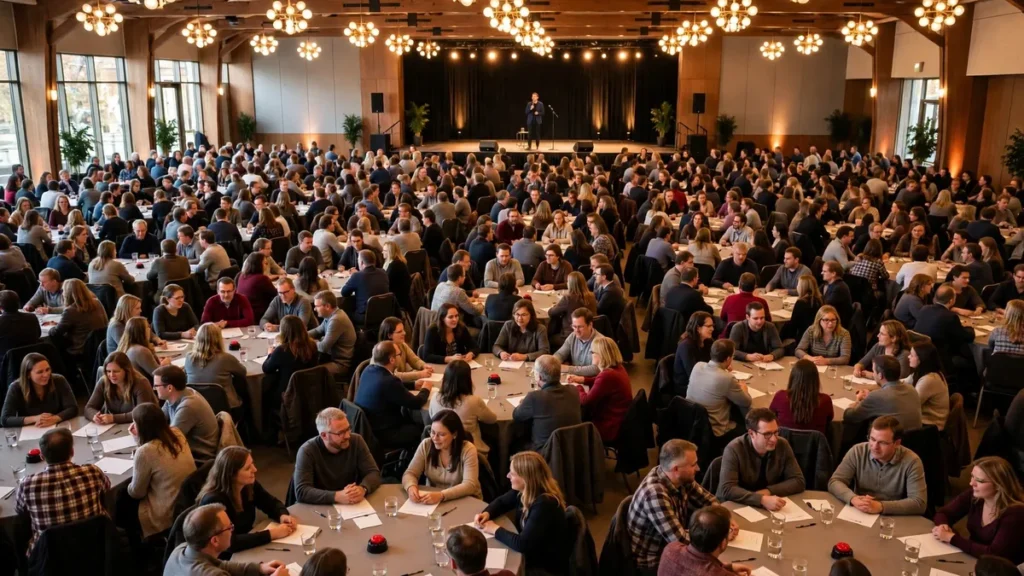
Finding the Best Dice Games for 260 Players sounds impossible at first. Two hundred and sixty people is not a game night, it is a crowd, and most dice games are built for a single table of four to eight friends. Yet dice are one of the few game tools that scale beautifully, because a roll takes seconds, the rules fit on a card, and everyone can play at the same time without waiting for a turn. With the right format, 260 players can roll, cheer, and compete together in a single evening.
The secret is to think of many small games running in parallel. Split the crowd into tables of six to ten, give every table the same game and the same number of rounds, and collect the scores on one shared leaderboard. The best games are fast, simple, and fair across dozens of tables, so a great roll at table 3 means exactly the same as a great roll at table 31. Add a host with a microphone and a visible scoreboard, and the room feels like one event.
This guide covers the formats that actually work at this scale, from multi-table tournaments and team dice battles to giant-dice party games and relay races. You will find a comparison table to pick the right game for your group, a checklist for running the night smoothly, and answers to the questions every organiser asks before an event this size.
Key takeaways
- Split 260 players into tables of six to ten and run the same game at every table, then compare scores on one shared leaderboard.
- Choose games with rounds under five minutes and rules that fit on a single card, so no table falls behind the rest of the room.
- Use identical dice sets and identical round counts at every table to keep the competition fair.
- Appoint one host, one scorekeeper per table, and a visible scoreboard to keep a huge room moving together.
- Mix one quiet scoring game with one loud party game so the evening has both focus and energy.

Why Dice Games Work for 260 Players
Dice games have three advantages that almost no other game type can match at this scale. First, they are fast. A single roll takes only a few seconds, so a full round finishes in three to five minutes even with ten people at a table. That speed matters when 30 tables must stay in step. Second, they are cheap. A set of five dice costs very little, and a full event for 260 players needs only about 30 identical sets, plus score sheets and pencils. Third, they are easy to learn. Most games in this guide need one short explanation and one practice roll before everyone is playing confidently.
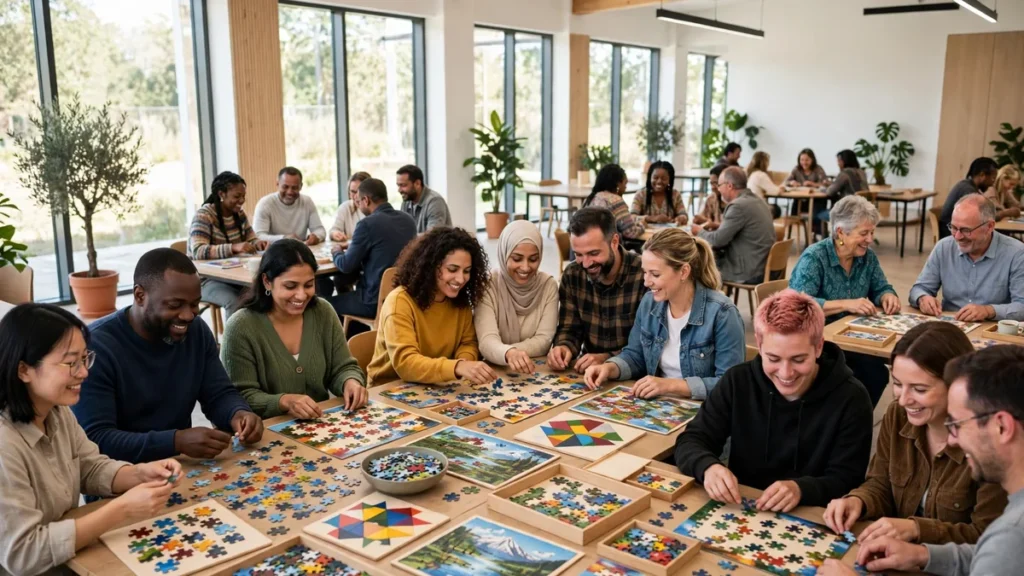
Dice also level the playing field in a way that helps a mixed crowd. Age, experience, and gaming knowledge matter far less when the dice decide the outcome, so a first-time player can beat a seasoned gamer on a lucky roll. That fairness keeps people engaged, because nobody is eliminated early. For a school event, a company social, or a large family gathering, that inclusive feel is exactly what you want. If you have run a slightly smaller event before, the ideas in our guide to the best dice games for 259 players use the same table structure and scale up cleanly to 260.
The other advantage is flexibility. Dice games work indoors in a hall or outdoors on picnic tables, and they need no screens, no internet, and no special equipment beyond dice and paper. If one table finishes early, the players can start a quick bonus round while they wait. If the schedule slips, you can drop a round without breaking the competition.
How to Run a 260-Player Dice Event
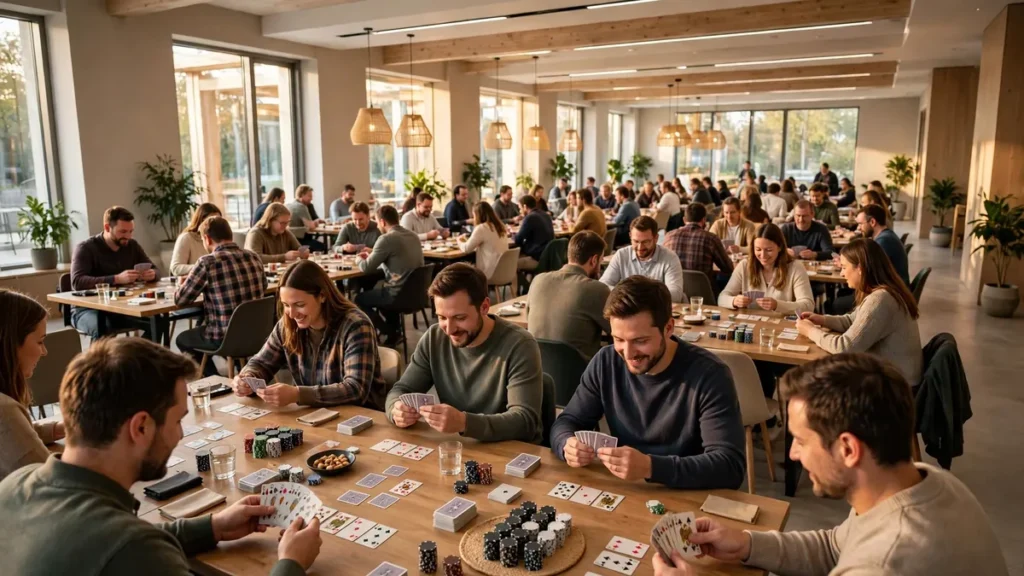
Start with the room layout. Arrange 26 to 30 tables with six to ten chairs each, and leave wide aisles so the host and helpers can move freely. Number every table clearly, and place a table kit at each one before anyone arrives: five matching dice, a dice cup or tray, score sheets, pencils, and a one-page rules card. Matching dice matter, because different dice can roll differently, and identical sets remove any argument about fairness. A tray at each table also keeps dice from rolling onto the floor.
Next, set the schedule and share it with the room. A good evening runs for about 90 minutes of play, broken into three games of roughly 25 minutes each with short breaks between them. Open with a warm-up game, move to the main tournament game, and finish with a loud, fast party game. The host announces each round and calls time clearly, so all tables begin and end together, and a screen or whiteboard showing the top ten scores keeps the competition visible.
Scoring needs one simple system that every table can follow. Each table appoints a scorekeeper who records every player’s total and reports the table’s top score to the central scoreboard. The overall winners are the highest individual scores across the whole room, with a separate prize for the best table average so teamwork matters too. Keep the prizes light and fun, such as small trophies, gift cards, or silly titles like Dice Champion and Luckiest Roller.
Best Dice Games for 260 Players Compared
Use this table to choose the right mix for your event. Play time is per game, and the energy rating shows whether the game is calm or loud.
| Game | Players per table | Play time | Energy | Best for |
|---|---|---|---|---|
| Tenzi Tournament | 6 to 10 | 20 minutes | High | Fast warm-up |
| Bunco Bonanza | 8 to 12 | 30 minutes | High | Social mixing |
| Farkle Frenzy | 6 to 8 | 25 minutes | Medium | Main tournament |
| Giant Dice Bingo | 10 to 20 | 20 minutes | Medium | Whole-room play |
| Liar’s Dice League | 6 to 8 | 25 minutes | Medium | Bluffing fans |
| Dice Relay Race | 8 to 10 | 15 minutes | Very high | Grand finale |
| Yahtzee-Style Showdown | 6 to 8 | 30 minutes | Low | Quiet scoring |
The Best Dice Games for 260 Players
1. Tenzi Tournament
Tenzi is the perfect warm-up for a huge room because it is the fastest game on this list. Each player gets ten dice and one target number, and the goal is to roll all ten dice to match that number as quickly as possible. The host calls a number, every table starts at once, and the first player at each table to finish shouts Tenzi and wins the round. A full game takes about 20 minutes across six short rounds, and because every player rolls their own dice, nobody waits for a turn.
To run Tenzi for 260 players, give each table ten dice per player and a score sheet that records the winner of each round. Award three points for a round win, two for second place, and one for third. Rotate the target number each round, and use Tenzi as the opening game, because it wakes the room up and shows the host that every table understands the instructions.
2. Bunco Bonanza
Bunco is a classic party dice game that was practically designed for large groups. Players sit in groups of four, roll three dice, and try to match the target number for the round, scoring points for each matching die. After each round, winners move to the next table and new partnerships form, so players meet new people throughout the night. With 260 players, that rotation turns a huge crowd into a sociable mixer.
Set up Bunco with 12 rounds, one for each target number from one to six played twice, and keep each round to about two minutes. Table hosts stay put while other players rotate, which keeps the movement orderly even with 30 tables. Score one point per matching die, five points for three of a kind, and 21 points for a Bunco, which is three dice matching the round number. The player with the most points at the end wins, with extra prizes for the most Buncos and the most losses.
3. Farkle Frenzy
Farkle is the strongest choice for the main tournament because it mixes luck with real decisions. Each player rolls six dice, sets aside scoring combinations, and decides whether to bank the points or risk another roll for more. Roll a Farkle, which is no scoring dice at all, and the turn scores zero. That push-your-luck tension keeps every table quiet and focused, and a tournament of five rounds, with a target of 500 points per round, fits neatly into 25 minutes.
The scoring combinations are simple enough to print on the rules card: ones are worth 100 points, fives are worth 50, three of a kind is worth 100 times the face value, and a straight of one to six is worth 1,500 points. Because every table uses the same target and the same number of rounds, the leaderboard is genuinely fair. Farkle also plays well as a team variant, where table partners combine their scores. For a similar competitive format at almost the same scale, see the best dice games for 258 players, which uses the same five-round tournament structure.
4. Giant Dice Bingo
Giant Dice Bingo lets the whole room play one game together, which makes it ideal for the middle of the evening. Every player gets a bingo card with numbers from two to twelve, and the host rolls two oversized foam dice on a stage where everyone can see them. When the dice land, the host calls the total, and players mark that number on their cards. The first players to complete a row, column, or full card call out and win the round.
Run three bingo rounds of about six minutes each, with a fresh card for every round and a different winning pattern each time, such as a straight line, four corners, or a full house. Giant dice, usually about 15 centimetres across and made of soft foam, are cheap to buy in bulk and safe to roll on a stage. This game needs no table scoring at all, which gives the scorekeepers a rest and lets the host run a prize draw or announce the leaderboard. It is also the best game on this list for mixed ages, because the rules are so simple that children and grandparents can play side by side.
5. Liar’s Dice League
Liar’s Dice adds bluffing to the evening, and it works surprisingly well with 260 players when each table runs its own league. Every player gets five dice and a cup, rolls in secret, and bids on how many dice of a certain number are showing across the whole table. The next player must raise the bid or challenge it, and the loser of a challenge loses a die. The last player with dice remaining wins the table, and the winners from all tables advance to a champions round on stage.
Keep each table league to about 25 minutes by starting with four dice per player instead of five, which shortens the game without changing the feel. Print a short bidding guide on the rules card so new players know that a bid of three fours means at least three dice showing four across the table. Liar’s Dice rewards reading people rather than rolling well, so it suits players who enjoy conversation and psychology more than pure luck.
6. Dice Relay Race
The Dice Relay Race is the loudest, fastest, and most physical game on this list, which makes it the perfect grand finale. Divide each table into two relay teams, and set up a rolling station at the end of each table. One player at a time runs to the station, rolls a die, and must roll a six before running back to tag the next team member. The first team to get every member through the station wins the heat, and the winning teams race again in a semi-final and a final on stage.
Safety and space matter more here than in any other game, so clear the aisles before the relay begins and use soft foam dice at the rolling stations. Keep the course short, about five metres each way, so that players of all ages and abilities can take part comfortably. The relay works best as the last game because it releases the energy built up during the quieter scoring rounds, and it gives every table one final chance to win as a team.
7. Yahtzee-Style Showdown
A Yahtzee-style showdown is the calm, classic scoring game that balances the louder party games. Each player gets a score sheet with 13 categories, from ones through sixes to three of a kind, full house, small straight, large straight, and five of a kind. Players roll five dice up to three times per turn, keeping the dice they like and re-rolling the rest, then record the result in one empty category. The game takes about 30 minutes, and the completed score sheets give the clearest ranking of any game in this guide.
Print the score sheets in advance with the category values clearly listed, and give each table a worked example so new players can see how a full house or a straight is scored. The upper section bonus of 35 points for scoring 63 or more adds a strategic goal that experienced players will chase, while beginners can simply fill in the boxes and enjoy the rolling. Because this game is quiet and thoughtful, it works well as the second game of the night, after the Tenzi warm-up. If your group also enjoys non-dice party formats, the best party games for 258 players offers more large-group ideas that pair well with a dice tournament.
Checklist for a 260-Player Dice Night
Use this checklist in the week before your event.
- Book a hall with space for 26 to 30 tables, wide aisles, and a stage or raised area for the host.
- Buy or borrow 30 identical sets of five dice, plus spare dice, dice cups, trays, score sheets, and pencils.
- Print one-page rules cards for each game, with scoring combinations and a worked example on every card.
- Recruit one host, one central scorekeeper, and one helper per five tables to keep the room moving.
- Prepare a visible leaderboard, whether a whiteboard, a projector screen, or a large printed chart.
- Plan the prizes, the schedule, and a short practice round so every table starts the first game confidently.
Frequently Asked Questions
How many dice do you need for 260 players?
You need about 150 dice in total, which is 30 sets of five, one set per table. Buy identical sets so every table plays with the same dice, and add at least 20 spare dice for any that roll away or go missing. Dice cups and trays are just as important, because they stop dice from bouncing off tables and keep each round moving quickly.
How long does a 260-player dice night last?
Plan for about two hours from doors opening to the final prize, including 90 minutes of play and time for welcome, breaks, and results. Three games of 20 to 30 minutes each, with five-minute breaks between them, is the most reliable structure. If your schedule is tight, drop one game rather than rushing all three.
Can children play dice games with 260 players?
Yes, and dice games are one of the best choices for a mixed-age crowd of this size. Tenzi, Giant Dice Bingo, and the Dice Relay Race all work well for children, because the rules are simple and the games are fast. For family events, seat children with an adult at each table and use foam dice for any running game.
What is the best game to start with?
Start with Tenzi, because it takes two minutes to explain, gets everyone rolling at once, and shows the host immediately whether every table understands the instructions. A fast, noisy warm-up wakes the room up and gives late arrivals a chance to join without missing anything important.
How do you keep scoring fair across 30 tables?
Use identical dice sets, identical round counts, and identical score sheets at every table, and have the host start and end each round for the whole room at the same time. Appoint a scorekeeper at each table who checks the totals before reporting them, and display the top scores publicly so any mistake is easy to spot.
What prizes work best for a dice night?
Keep prizes light, fun, and plentiful, so that many players win something rather than one person taking everything. Small trophies, gift cards, board games, and silly titles such as Luckiest Roller or Best Bluffer all work well. Offer a prize for the best individual score, the best table average, and the most entertaining player, because a 260-player event should celebrate the room, not just the winner.
The Bottom Line
The Best Dice Games for 260 Players are the ones that are fast, fair, and fun at every table at once. Split the crowd into tables of six to ten, run the same game everywhere, and let a shared leaderboard turn 30 small games into one big event. Start with Tenzi to wake the room up, play Farkle or a Yahtzee-style showdown for the main tournament, add Giant Dice Bingo for a whole-room moment, and finish with a Dice Relay Race that sends everyone home cheering.