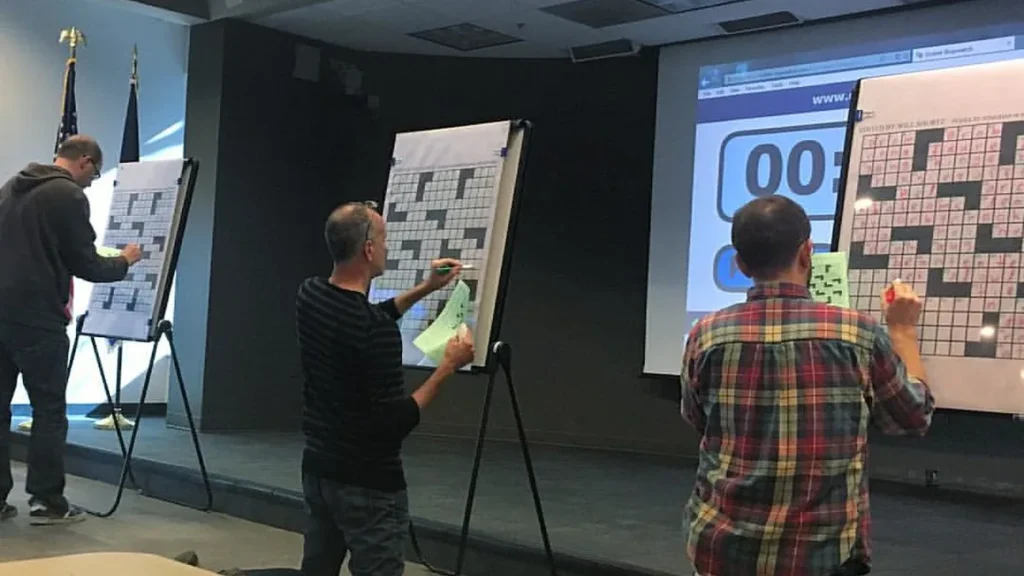
Running board games for 380 players sounds impossible until you stop picturing one table. Nobody seats 380 people around a single board, waits for one turn to come around, and calls that a game night. The real picture is different and far more fun: dozens of tables running at once, teams moving between stations, and a tournament bracket that turns a whole hall into one connected event. When you plan board games for 380 players this way, the number stops being a problem and starts being the point.
The trick is to treat 380 as a range, not a single fixed headcount. Your event might draw 300 people on a quiet night and the full 380 when word gets around, so every part of the plan has to flex. You need games that work with three players at a side table and the same games, or their team versions, working for a hall full of people. You need enough copies, enough hosts, and a schedule that keeps nobody waiting more than a few minutes. Get those three things right and a giant game night feels just as lively as a living-room one, only louder.
This guide walks through the whole job, step by step. You will learn how to pick games that scale, how to set up teams, stations, and tournaments, how many copies and hosts you actually need, and how to run the night so that every one of your 380 players is playing, not watching. It is written for school halls, community centres, company socials, church gatherings, and festival organisers, and it works whether your budget is generous or close to nothing.
Key takeaways
- Never seat 380 people at one game. Split them into teams, stations, and tournament brackets so everyone plays at the same time.
- Pick games that scale: short rounds, simple rules, and team play beat long, complex games at this size.
- Plan for the full 3-to-380 range. Your setup should work with a small turnout and still hold together at full capacity.
- Count on one host for every 20 to 30 players, and one game copy for every 6 to 10 players at a station.
- Keep rounds to 15 minutes or less, rotate teams on a bell, and announce scores often so the whole room stays in the event.

Why 380 Players Changes Everything
A normal game night has a host, a table, and a box. A 380-player game night has a floor plan, a timetable, and a team of volunteers. The games themselves do not change much, but everything around them does. Sound carries badly in a big hall, instructions take longer to reach the back rows, and a single slow table can hold up the whole evening if the schedule depends on it. Planning for 380 players means planning for those logistics first and choosing the games second.
The second mistake is choosing games that are too long or too complicated. A strategy game that takes two hours and needs twenty minutes of explanation works beautifully for four friends. For 380 players, it is a traffic jam. You need games where a new player can learn the rules in two minutes, finish a round in fifteen, and feel they had a real chance to win. Short games also solve the late-arrival problem: a newcomer can join the next round instead of waiting an hour for a seat to open.
The 3-to-380 Range: How Scaling Actually Works
Think of your event as a range from 3 to 380 players, not as a single number. At the small end, three friends can play almost any board game straight out of the box. At the large end, 380 players need structure. The games that work across the whole range are the ones with simple cores that can be played in pairs, in small teams, or as a whole-room contest. A word game, for example, can be a quiet duel between two people, a team race at a table of eight, or a hall-wide shout-out round with 380 voices.
Teams: Many Players, One Game
Teams are the simplest scaling tool you have. Instead of six people playing a game, you have six teams of six people playing it, with each team discussing its move and one person making it. Team play keeps the game moving at the same speed while multiplying the number of players by five or ten. It also fixes the shy-player problem: people who would never take a turn alone will happily argue for a move inside a team.
Stations: Many Games at Once
Stations are how you get 380 people playing at the same time. Set up twenty or thirty tables, each with a different game, and let teams rotate between them on a bell. Each station runs a short round, usually ten to fifteen minutes, and then the bell rings and every team moves to the next table. Nobody waits, nobody is stuck with a game they hate for an hour, and the room stays in motion.
Tournaments: One Winner From 380 Players
A tournament gives a big night a spine. Run heats at the stations, take the top team from each table into a semi-final, and bring the finalists together for a last game in front of the whole room. The crowd that watched the early rounds suddenly has favourites to cheer for, and the final becomes a shared moment rather than a private one.
Choosing Board Games That Scale
Not every board game survives the jump to 380 players, and the ones that do share a few traits. They have rules you can explain in under two minutes. They finish a round in fifteen minutes or less. They let many people take part at once, or they split neatly into teams. And they produce a clear score, so you can compare teams across different tables and different games.
Party games are the natural backbone of a large night. Word games, drawing games, guessing games, and trivia-style board games all work well because they are built around groups shouting, voting, and laughing together. A drawing game that works for six people works for six teams of six with almost no changes: each team draws, each team guesses, and the fastest correct answer scores. The energy scales up; the rules stay the same.
Strategy games need more care. A long strategy game with a single board and four players cannot be stretched to 380 people, but its ideas can. Run several copies at once as a tournament, with the winner of each table advancing. Or pick strategy games designed for large groups, where players act at the same time instead of waiting for a turn. Simultaneous play is the secret ingredient: if everyone acts at once, nobody waits, and the game stays fast even with a full hall.
If you have run smaller versions of this night before, the step up is mostly about copies and hosts rather than new games. The games that worked for a room of 40 often work for a room of 380 once you add stations and teams, and the earlier guide to board games for 378 players covers many of the same titles and shows how they behave when the crowd is nearly this large.
Board Game Formats Compared
The table below compares the four formats most organisers use for very large groups. No single format is best for every event, and the strongest nights usually combine two of them: stations for the main session and a tournament final to close the night.
| Format | Players at once | Round length | Hosts needed | Best for |
|---|---|---|---|---|
| Team stations | All 380 | 10 to 15 minutes | One per station | Mixed crowds, first-time events |
| Tournament brackets | All 380 in heats | 15 to 20 minutes | One per table, plus a referee | Competitive players, a clear winner |
| Whole-room game | All 380 together | 20 to 30 minutes | One main host, plus helpers | Openings, finales, icebreakers |
| Free play hall | As many as turn up | Players choose | A few floaters | Relaxed socials, drop-in events |
Formats That Work for 380 Players
The Station Rotation
The station rotation is the workhorse format for 380 players. Divide the room into stations, divide the players into teams, and rotate the teams every fifteen minutes. With twenty stations and twenty teams, every team visits every station over the course of the night, or visits a good share of them if time is short. Keep the rotation simple: teams always move one station clockwise, so nobody needs a map or an announcement to find the next table.
The Grand Tournament
A grand tournament suits a crowd that likes competition. Every team plays the same set of games in heats, earns points, and the top teams advance to semi-finals and a final. The final should be a game the whole room can follow, with a large board, a scoreboard everyone can see, and a host who narrates the action. When the final is good, even the teams that were eliminated early stay to watch it.
The Whole-Room Opener and Finale
Start and end the night with everyone together. A whole-room game at the start breaks the ice and teaches the crowd how the night will work. A simple guessing game, a giant quiz round, or a team word challenge all work, as long as every team can answer at the same time. Ten to fifteen minutes is enough: the opener should warm the room up, not wear it out.
Party games deserve a special mention here, because they are often the best whole-room games and the best station games at the same time. If you want ideas that are built for noise, laughter, and big teams, the guide to party games for 378 players is a useful companion to this one, and many of its games slot straight into a station rotation.
Planning the Room, the Copies, and the Hosts
Start with the room. A hall for 380 players needs about one table for every six to eight players, plus walking space between tables, a registration desk near the door, and a clear front area for announcements and the final. That usually means thirty to forty tables of eight, or fifty tables of six, depending on the games. Walk the room before the event and sit at the worst table: if you cannot see the host or hear the announcements from there, neither can your players.
Count your copies next. A station with one copy of a game serves one table at a time, so the number of copies you need equals the number of tables running that game. If you want the same game at four stations, you need four copies. Borrow, rent, or ask players to bring a copy from home, and label every box with its owner and its station. Keep a spare box of the most popular game behind the registration desk, because one box will always go missing or lose a piece at the worst moment.
Hosts are the third number to get right. One host per station is the minimum, and one host for every twenty to thirty players is a good rule of thumb. That means twelve to nineteen hosts for 380 players, plus a main host who runs the whole room, a scorekeeper, and two or three floaters who cover breaks and sort out problems. Recruit more hosts than you think you need. A spare host can run an extra station, cover a no-show, or simply help a table that is struggling with the rules.
Checklist: Running Board Games for 380 Players
Use this checklist in the week before your event, and again on the morning of the night itself.
- Venue booked with space for 380 players, tables, walking room, and a front area for announcements and the final.
- Games chosen and copies counted: one copy per table running that game, plus a spare of the most popular title.
- Hosts recruited and briefed: one per station, a main host, a scorekeeper, and floaters, each with a printed rules card.
- Teams planned in advance: four to eight players per team, with names, starting stations, and printed scorecards.
- Run sheet printed for every host, with round times, the bell signal, the break, and the tournament bracket.
- Sound, scoring, and prizes ready: microphone, visible scoreboard, pens, a bell, and a prize for the winning team.
Common Mistakes to Avoid
The most common mistake is underestimating setup time. Setting out forty tables, laying out forty games, and briefing nineteen hosts takes far longer than setting out four tables for a family night. Arrive at least two hours early, and do a full rehearsal of the first round with your hosts. If the rehearsal feels rushed, your opening will too.
The second mistake is letting one table hold up the night. A game that overruns, a dispute about the rules, or a missing piece can freeze a whole rotation if the schedule waits for it. Give every station a strict time limit and a simple rule for disputes: the host decides, the game moves on, and the score stands. Players accept a quick decision far more happily than a long argument, especially when the next round is about to start.
Frequently Asked Questions
Can one board game really work for 380 players?
Yes, but not by seating 380 people around one board. One game works for 380 players when it is played in teams, across many stations, or as a tournament with heats. The game stays the same; the format is what scales. Pick a game with short rounds and simple rules, and the crowd size becomes a feature instead of a problem.
How many copies of each game do I need?
You need one copy for every table running that game at the same time. If a game runs at four stations, you need four copies. As a starting point, plan one game copy for every six to ten players at a station, and keep one spare copy of your most popular game behind the registration desk for emergencies.
How many hosts do I need for 380 players?
Plan on one host per station, which usually works out to one host for every twenty to thirty players, plus a main host, a scorekeeper, and two or three floaters. For 380 players, that is roughly twelve to nineteen station hosts. Brief them before the doors open and give each one a printed rules card for their game.
What is the best format for a first large game night?
The station rotation is the best format for a first large event. Every team plays a short round at each station, moves on the bell, and earns points along the way. It is forgiving when a table runs long, it lets everyone try many games, and it ends naturally with a points total you can use for a final. Trivia-style rounds also work well as stations, and the guide to trivia games for 378 players shows how quiz rounds behave at almost this scale.
How long should a 380-player game night last?
Three hours is a good length: thirty minutes for arrival and warm-up, about two hours of rounds with a break in the middle, and thirty minutes for the semi-finals, the final, and the prize announcement. Shorter nights feel rushed with this many people, and longer nights tire the room, the hosts, and the volunteers.
What if far fewer than 380 people turn up?
That is exactly why you should plan for the 3-to-380 range. If only 60 people arrive, run the same stations with fewer teams, merge tables, and let teams play more rounds at each station. If only a dozen arrive, drop the stations and play the same games around a few tables. The games, the hosts, and the run sheet all still work; only the number of tables changes.
Bottom Line
Running board games for 380 players is a logistics job with a joyful payoff. Split the crowd into teams, run many stations at once, and finish with a tournament final the whole room can watch. Choose games with short rounds and simple rules, recruit one host for every twenty to thirty players, and keep the bell ringing on time. Do that, and 380 players will not feel like a crowd to manage. They will feel like a room full of people playing together, which is exactly what a great game night should be.