What if you could hand a tool three seconds of audio and get back a voice that sounds like you? That is the promise behind modern AI voice cloning tools, and it is why so many buyers get lost comparing feature grids that look nearly identical. The real differences hide in the details: how much audio a clone needs, how consent is handled, whether the output carries a provenance marker, and what happens when someone tries to detect the fake.
This guide walks through the features worth comparing, the claims worth doubting, and the practical mistakes that trip up first-time buyers.
Start With the Cloning Method, Not the Demo
Most voice cloning tools fall into two technical camps, and knowing which camp a product sits in tells you a lot before you ever listen to a sample.
The first camp is zero-shot cloning. These systems clone a voice from a short reference clip, often just seconds of audio. Microsoft’s VALL-E research, published in January 2023, framed voice cloning as a language-modeling task using discrete audio codec tokens and reported cloning from a roughly three-second enrollment sample. That figure is a research claim, not a product guarantee, but it set the expectation that buyers now carry into every evaluation.
The second camp is fine-tuning. Here, the tool trains or adapts a speaker embedding on minutes of audio. It takes longer and usually costs more, but it can capture quirks that short-clip systems miss.
Why does this matter for comparison? Because a vendor advertising “instant cloning” is selling the first camp, and a vendor advertising “studio-grade likeness” is usually selling the second. Ask which one you are buying before you compare anything else.
How Much Audio Does a Clone Really Need?
This is the single most overhyped number on any product page. Vendors love to quote a minimum, and that minimum is almost always measured under ideal conditions: clean studio audio, one speaker, no background noise, no accent shifts.
In practice, the audio you feed a tool matters more than the quantity. A practical checklist that separates workable clones from muddy ones:
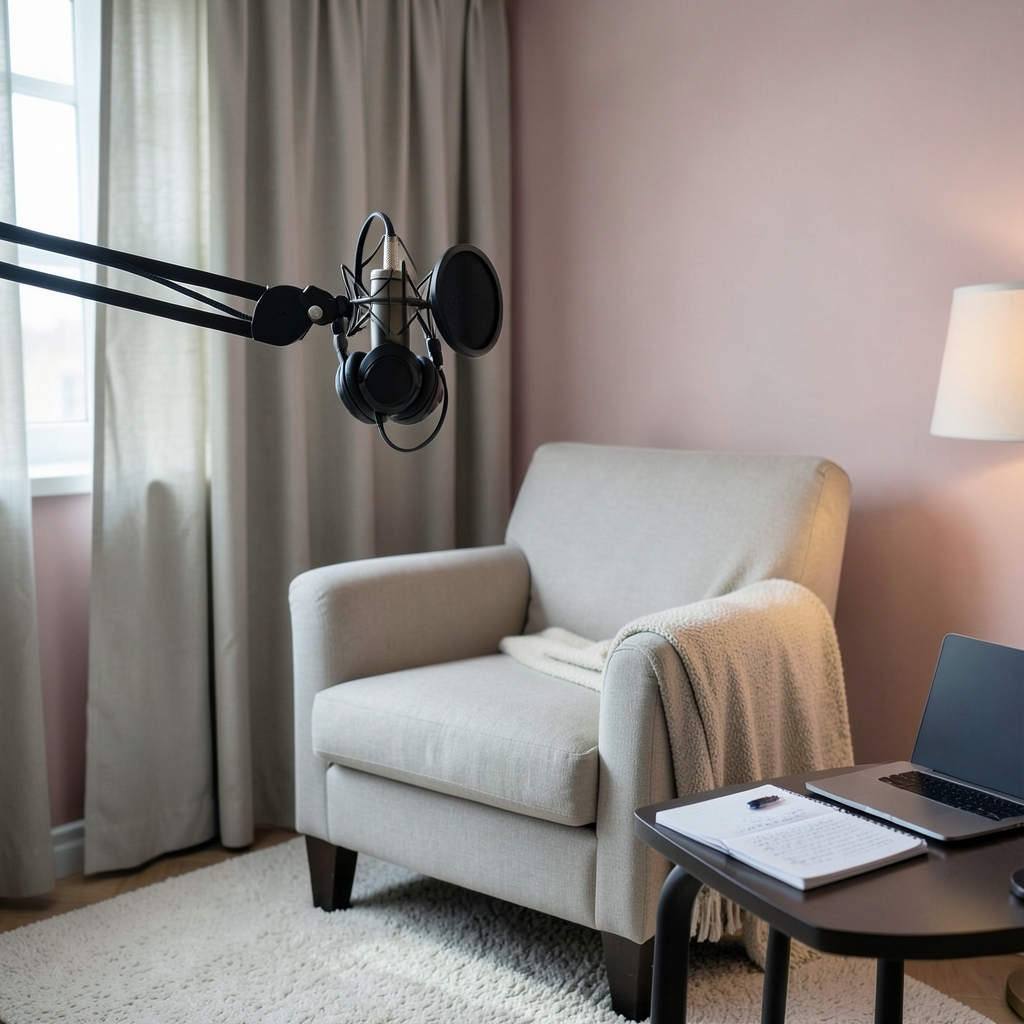
- Record in a quiet room with soft furnishings, not a tiled bathroom or a glass-walled office.
- Keep a consistent distance from the microphone across every clip.
- Avoid background music, keyboard clatter, and air conditioning hum.
- Use the same microphone for every sample, since tonal shifts confuse the model.
- Speak naturally rather than performing a “radio voice,” which often produces a clone that sounds stiff.
A common mistake is uploading a podcast episode where the speaker laughs, interrupts, and moves around. The tool learns all of that. Another mistake is feeding the model audio that has already been compressed by a video call platform. Compression artifacts get cloned too.
Speaker Similarity, Intelligibility, and Naturalness
Once you have samples, how do you judge output without a research lab? Three metrics dominate the technical literature, and they translate reasonably well into buyer questions.
| Metric | What it measures | How to test it yourself |
|---|---|---|
| Speaker similarity | How close the clone sounds to the original | Play samples blind to a colleague who knows the speaker |
| Word error rate | Whether the words are intelligible | Run output through a transcription tool and count errors |
| Mean opinion score | Perceived naturalness | Ask several listeners to rate clips from 1 to 5 |
These measures appear in TTS research papers, including the VALL-E work, but they are not standardized across vendors. That is a real uncertainty for buyers: two companies can both claim “high similarity” while measuring it in completely different ways. Treat any single number as a marketing signal, not a benchmark.
Watermarking and Content Provenance
Here is a feature that separates serious tools from casual ones. Content provenance means the output carries a record of how it was made. The Coalition for Content Provenance and Authenticity publishes technical specifications for these content credentials, and the C2PA 2.0 spec arrived in 2024.
Tools differ sharply here. Some embed a C2PA manifest in the file. Some add an inaudible audio watermark. Some do neither. When you compare products, ask directly:
- Does the tool attach provenance metadata to exported audio?
- Is the watermark robust to re-encoding, or does it vanish the moment someone converts the file?
- Can you remove the watermark, and should you be able to?
That last question matters because watermark robustness claims are rarely tested independently. A vendor saying “watermarked” tells you almost nothing until you know how the mark survives editing.
Detection Is Imperfect, So Plan for It
Buyers often assume that if a tool can clone a voice, a detector can catch it. The research says otherwise. The ASVspoof challenges, run biennially by a research consortium with editions in 2019, 2021, and 2024, benchmark spoofing and anti-spoofing systems. A consistent finding across those challenges is that detectors degrade when they encounter synthesis methods they were not trained on.
For a buyer, this has a practical consequence. Do not build a workflow that depends on detection as a safety net. If your organization plans to publish synthetic audio, the safer approach is disclosure and consent logging upstream, not detection downstream.
Consent, Licensing, and the Compliance Features Buyers Forget
Regulation is now a genuine product feature. In the European Union, the AI Act, Regulation (EU) 2024/1689, entered into force on 1 August 2024 and imposes transparency obligations for deepfakes and synthetic audio, with obligations phasing in over 2025 to 2027. In the United States, the FCC issued a declaratory ruling on 8 February 2024 stating that AI-generated voices in robocalls count as “artificial” under the TCPA.
Those rules change what you should compare. Look for:
- Verified consent workflows that require the speaker to confirm authorization rather than only ticking a checkbox.
- Consent logs with timestamps, useful if a dispute arises later.
- Disclosure options that let you label synthetic audio automatically.
- Licensing terms that state clearly whether commercial use is allowed.
The 2023 SAG-AFTRA strike settlement, ratified in December 2023, included AI voice and likeness consent and compensation terms for union work. That is a useful reference point for anyone hiring voice actors: the question is no longer whether consent matters, but whether the tool makes consent easy to document.
Latency, Streaming, and Real-Time Use
If you plan to use cloned voices in call centers, live dubbing, or interactive agents, latency becomes a headline feature. Research systems and commercial APIs differ widely, and published latency figures are rarely comparable across vendors because nobody tests them the same way.
A practical approach is to run your own test with your own network conditions. Generate a short sentence, measure the round trip, and repeat at peak hours. A tool that feels instant in a demo can feel sluggish once it is behind a queue.
Open Weights Versus Closed APIs
Another fork in the road is licensing model. Open-weights models give you control and portability. Closed APIs give you convenience and, usually, better support.
One caution: the open-source landscape shifts. XTTS-v2, released by Coqui in November 2023, was a widely used multilingual cloning model supporting roughly 17 languages from short reference clips. Coqui shut down in early 2024, which means tools built on that model may be unmaintained. Before committing to any open-weights stack, check whether the project is actively developed and read the current license text, since open model licenses often restrict commercial use in ways that differ from API vendor terms.
A Comparison Framework That Actually Works
Rather than scoring dozens of checkboxes, narrow the field with a shortlist of questions that map to real risk.
| Feature area | Question to ask | Why it matters |
|---|---|---|
| Cloning method | Zero-shot or fine-tuned? | Determines audio needs and likeness quality |
| Audio requirements | Minimum clip length under real conditions? | Sets your recording workload |
| Provenance | C2PA manifest or audio watermark? | Supports disclosure and trust |
| Consent | Verified speaker authorization? | Reduces legal exposure |
| Detection | Does the vendor claim detection? | Treat claims cautiously |
| Latency | Measured round trip on your network? | Decides real-time viability |
| Licensing | Commercial use clearly permitted? | Avoids surprises after launch |
Fill this in for three tools, and the decision usually becomes obvious. The grid matters less than the discipline of asking the same questions of every vendor.
Common Mistakes That Cost Buyers Time
A few patterns show up again and again when people evaluate voice cloning tools.
The first is judging by the demo reel. Demos use pristine audio and cherry-picked sentences. The second is ignoring the export format, then discovering the tool only outputs compressed audio that degrades on re-encode. The third is skipping the consent question until legal review, which can stall a project for weeks. The fourth is assuming a watermark equals protection, when the mark may not survive editing.
What actually works is boring: record your own test audio, run the same five sentences through each candidate, have two colleagues listen blind, and check the licensing and consent terms before you fall in love with the output.
Conclusion
Comparing AI voice cloning tools is less about counting features and more about matching capabilities to risk. The cloning method tells you what the tool can do. The audio requirements tell you how much work it demands. Provenance, consent, and licensing tell you whether you can use it without creating problems later. Latency decides whether it fits real-time work.
Start with the questions in the comparison framework, test with your own voice and your own network, and treat every vendor claim about minimum audio, watermark strength, and detection accuracy as unproven until you have checked it yourself. The tools that survive that process are usually the ones worth keeping.
How much audio do I need to clone a voice?
It depends on the method. Zero-shot systems can clone from seconds of reference audio, and Microsoft’s VALL-E research reported cloning from a roughly three-second sample. Fine-tuned systems typically need minutes of clean audio. In practice, audio quality matters more than length, so a quiet recording beats a long noisy one.
Are AI voice cloning tools legal to use?
Legality depends on jurisdiction and use case. In the EU, the AI Act imposes transparency obligations for synthetic audio, phasing in between 2025 and 2027. In the US, the FCC ruled in February 2024 that AI-generated voices in robocalls are “artificial” under the TCPA. Always secure consent from the speaker and check local rules before publishing.
Can cloned voices be detected reliably?
Not reliably. Detection systems benchmarked in the ASVspoof challenges consistently degrade when they encounter synthesis methods they were not trained on. Detection can help flag obvious fakes, but it should never be your only safeguard. Disclosure and consent records are more dependable.
What is C2PA and why does it matter for voice tools?
C2PA stands for the Coalition for Content Provenance and Authenticity, which publishes technical specifications for content credentials. The C2PA 2.0 spec was released in 2024. Tools that embed these manifests attach a verifiable record of how audio was created, which supports disclosure and helps audiences judge authenticity.
Is open-source voice cloning better than a paid API?
Neither is inherently better. Open weights give you control and portability, but maintenance can lapse, as happened when Coqui shut down in early 2024, leaving users of its XTTS-v2 model to check whether forks remain active. Paid APIs offer support and updates but lock you into a vendor’s terms. Match the choice to your team’s capacity.
What should I test before buying a voice cloning tool?
Record your own audio in your own environment, run the same five sentences through each candidate, and have colleagues rate the results blind. Then check the licensing terms, the consent workflow, the provenance features, and the measured latency on your network. Demos rarely reflect any of these conditions.






