Finding ways to keep conversations engaging can sometimes feel like trying to solve a complex equation. Whether you are a teacher looking to liven up a classroom, a parent hoping to inspire a love of learning, or a self-proclaimed geek searching for the perfect intellectual icebreaker, a reliable collection of science jokes is the ultimate tool to have in your laboratory.
Laughter is an incredible catalyst for bonding, reducing everyday stress, and making complex academic concepts highly accessible. In this ultimate guide, we have compiled an exhaustive science jokes list packed with atomic wordplay, evolutionary giggles, and classic one-liners. Every single entry here is completely wholesome, making this the perfect repository of funny science jokes for nerds of all ages.
Why Science Puns Make the Absolute Best Smart Comedy
Humor thrives on unexpected connections, and academic comedy operates on a completely efficient set of rules. Understanding why these intellectual gags work so well reveals why they remain timeless staples of the classroom.
The Natural Beauty of Literal Wordplay
The vocabulary of physics, chemistry, and biology is filled with words that have double meanings in everyday English. For example, terms like “matter,” “element,” “bond,” and “reaction” can effortlessly substitute for common phrases. Consequently, when you use nerdy science puns, the punchline relies on a sudden, brilliant twist in logic that makes the listener experience a brief moment of joyful mental victory as they decode the double meaning.
Enhancing Memory and Conceptual Learning
Based on available educational observations, humor actively improves information retention. When a student laughs at a clever joke about the periodic table or cellular division, their brain associates the core scientific concept with a positive emotional response. Therefore, using science jokes for kids is not just about entertainment; it is a highly effective mnemonic device that helps students recall complex definitions during exams.
Hilarious Chemistry Jokes That Matter
You do not need to be a Nobel Prize winner to appreciate the beauty of molecular comedy. On the contrary, these elemental punchlines are universally understood and guaranteed to get a positive reaction.
-
Why can you never trust basic atomic particles? Because they make up absolutely everything.
-
What did the thermometer say to the graduated cylinder? You may be graduated, but I have many more degrees.
-
Why did the two charged particles get married so quickly? Because they discovered they had incredible chemistry.
-
What do you do with a sick chemist? If you cannot helium, and you cannot curium, you will probably have to barium.
-
Why are noble gases so incredibly lonely at parties? Because they completely refuse to react with anyone else.
-
What did one charged atom say to the other after an accident? I think I lost an electron! The other asked: Are you positive?
-
Why did the organic carbon compound break up with the hydrogen atom? Because it felt like their bond was way too weak.
-
What is the absolute show-off element in the periodic table? Gold, because whenever it walks in, everyone shouts, Au!
-
Why did the chemist coat his shoes with thick silicone rubber? Because he wanted to reduce his carbon footprint.
-
What did the judge say when a chemist was convicted? We are going to have to sulfur a very long time.
Brilliant Physics Jokes to Shift Your Momentum
Accelerate your mood with these high-energy physics jokes that test the laws of gravity, motion, and relative perspectives.
-
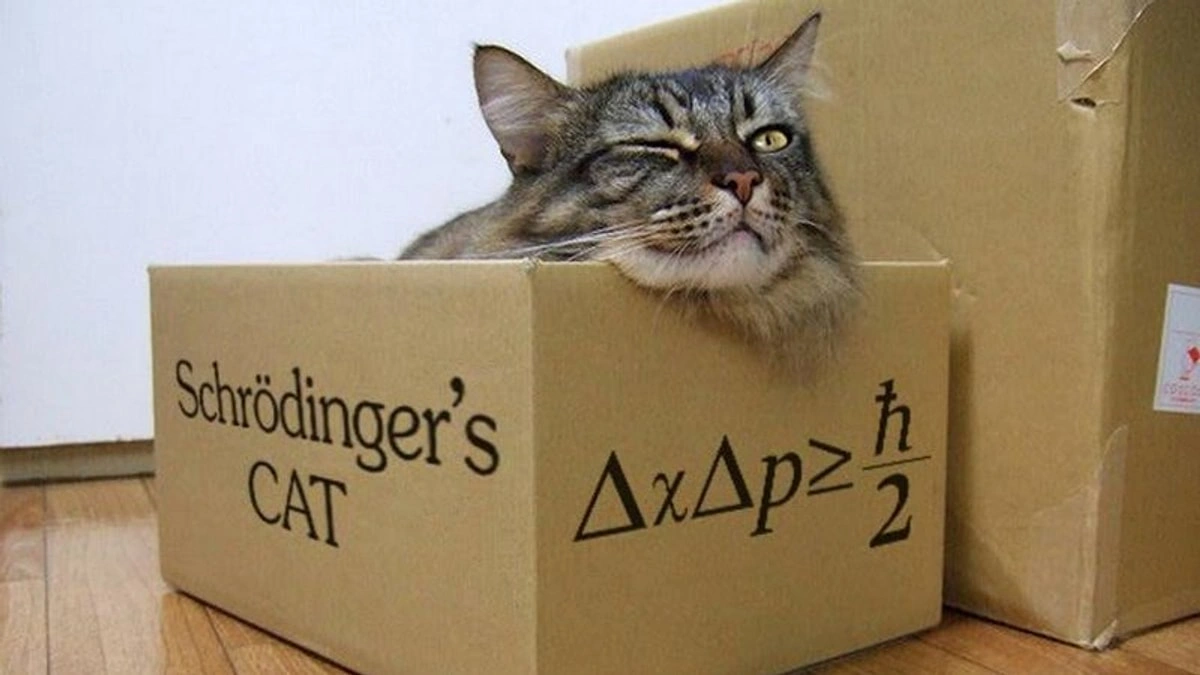
Why did the subatomic particle cross the road? It was both on this side and the other side until someone observed it.
-
What did the massive star say when it wanted to be left alone? Give me some space.
-
Why is gravity such a terrible salesperson? Because it keeps dropping everything it tries to hold.
-
What did the light bulb say to the electric generator? I find you incredibly attractive, let us keep current.
-
Why did the textbook on classic thermodynamics look so incredibly sad? Because its internal energy was completely winding down.
-
What is an astronaut’s favorite key on a computer keyboard? The space bar.
-
Why did the rolling stone refuse to stop at the bottom of the hill? Because it had way too much momentum.
-
What did the subatomic particle say when it was asked if it knew its speed? No, but I know exactly where I am.
-
Why did the primary color wavelengths decide to hang out together? Because they wanted to make a bright impression.
-
How do you accurately describe a classic joke about static electricity? It is completely shocking.
Wholesome Biology Jokes for Early Learners
If you want to teach your children to appreciate the natural world, you have to start with simple, punchy concepts. These science jokes and answers feature basic anatomical and environmental vocabulary, making them highly accessible for younger minds.
Cell and Plant Adventures
-
What did the bossy cell say to his sister cell when she stepped on his foot? Mitosis!
-
Why did the mushroom get invited to every single social event? Because he was a fun-gi.
-
What do you call a flower that loves to ride fast motorcycles? A petal to the metal fan.
-
Why are frogs always so incredibly happy in the biology lab? Because they eat whatever bugs them.
-
What did one tectonic plate say to the other after a sudden bump? It is not my fault.
Animal and Human Giggles
-
What do you call a sleeping dinosaur? A dino-snore.
-
Why don’t elephants ever use office computers? Because they are absolutely terrified of the mouse.
-
What do you call an alligator wearing a fancy lab coat? An in-vest-igator.
-
Why did the cookie go to the local hospital? Because it was feeling incredibly crummy.
-
What do you call a pig that knows martial arts and studies anatomy? A pork chop.
Structured Nerdy Comedy Reference Table
If you are trying to craft the ultimate comedic strategy for your next STEM event, classroom lesson, or social media post, having a structured guide based on target topics can save you plenty of time. This table provides a quick look at the best science jokes for easy reading.
| Scientific Discipline | The Initial Setup | The Final Answer |
| Chemistry | Why did the acid go to the gym? | It wanted to become a buffet buffer. |
| Astronomy | How do you organize a space party? | You planet early. |
| Geology | Why are rocks always so incredibly confident? | Because they are rock solid. |
| Mathematics | Why did the dollar bill look so sad? | Because it had way too many problems. |
| Biology | What is a marine biologist’s favorite song? | Salmon-chanted evening. |
| Meteorology | What did the tornado say to the sports car? | Let us take a quick spin around the block. |
| Optics | Why did the lens get sent to the principal’s office? | It was completely out of focus. |
How to Master the Art of the Smart Delivery
As any veteran educator or storyteller will tell you, the success of intellectual humor depends entirely on how you present it. You can transform a simple pun into a legendary classroom moment by practicing a few basic habits.
Commit Completely to the Setup
The absolute worst thing you can do is look embarrassed by your own material. Instead, you must deliver the question with absolute seriousness and confidence. Act as though you are sharing a deeply profound piece of academic wisdom rather than a quick pun.
Capitalize on the Perfect Timing
Furthermore, do not rush the punchline out of pure excitement. Let the initial question hang in the air for just a brief second. Allow your audience the micro-moment to process the vocabulary, which makes the sudden twist in logic much more satisfying when it finally drops.
Use Visual Scaffolding
Finally, whenever you are sharing these jokes with younger students, try to use physical props or whiteboard drawings. Pointing to the periodic table while telling a chemistry joke or gesturing out the window during an environmental pun helps bridge the gap between abstract text and immediate understanding.
Conclusion
Laughter truly is the shortest distance between two people, and it serves as the ultimate tool for keeping life light, fun, and memorable. By integrating a steady supply of classic science jokes into your daily routine, you are doing much more than just telling simple puns; you are actively breaking the ice, creating joyful memories, and showing the people around you that it is perfectly okay to share a quick laugh anytime.
From rapid-fire chemistry one-liners at the office water cooler to clean biology puns at the family dinner table, these wholesome word puzzles are guaranteed to leave an impression. For an even wider array of engaging riddles, interactive word games, brain teasers, and family challenges designed to keep your mind sharp, make sure to explore riddlepuzzle.com. Keep practicing your favorite setups, embrace the quick punchlines with pride, and enjoy spreading smiles wherever you go!
Frequently Asked Questions
What makes a joke qualify specifically as a true science joke?
Based on available cultural definitions, a proper science joke must establish its premise using real academic terminology, properties, or laws, and deliver its punchline within one to two sentences. It relies heavily on rapid wordplay, homophones, or instant twists in logic rather than extended storytelling.
Why is brief intellectual humor so effective for public speaking?
It instantly breaks the ice without consuming valuable presentation time. Speakers frequently use quick one-liners to grab wandering attention, reduce room anxiety, and establish an immediate human connection with their audience.
Can teachers use a science jokes list safely in early classrooms?
Yes, absolutely. Educators frequently use clean one-liners as quick transitions between school subjects or morning warm-ups. They reduce student stress, keep young minds focused, and build a positive, warm learning environment for young minds.