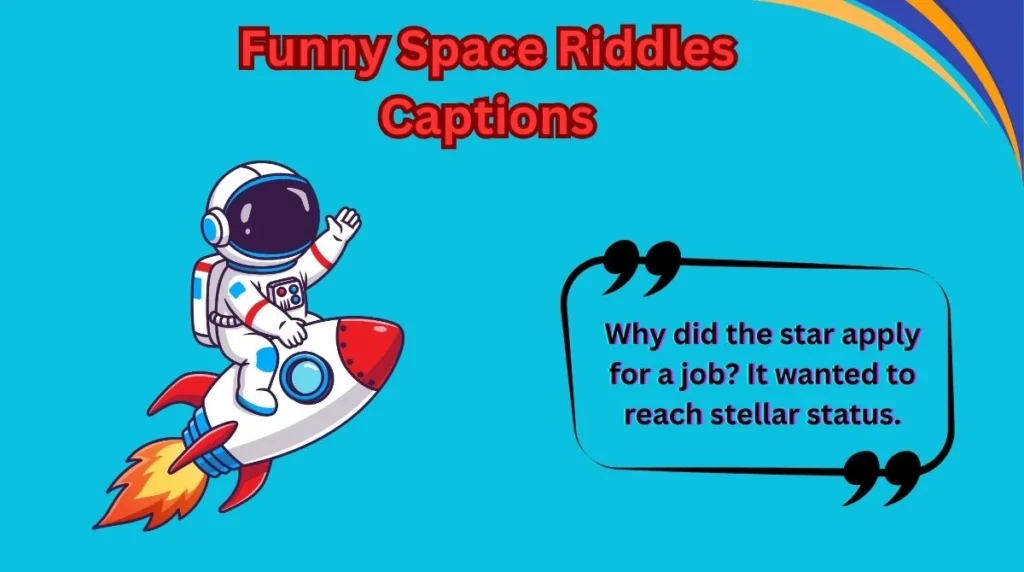
The universe is full of massive mysteries, dark voids, and glittering stars. Exploring the cosmos does not always require a massive rocket ship or a high-powered telescope. Sometimes, all you need is a sharp mind and a great collection of space riddles to unlock the secrets of the night sky. These word games offer a brilliant way to challenge your logic while traveling through the solar system from the comfort of your couch.
This ultimate collection delivers the best space riddles and answers for cosmic explorers of all ages. You will find tricky word puzzles, educational teasers, and stellar jokes to brighten your day. Whether you are a teacher planning a science lesson or a parent looking for entertainment, these puzzles will boost your brainpower. Let us blast off into this ultimate collection of cosmic brain games.
Why a Space Riddle Game Is Cosmic Fun for Everyone
Learning about astronomy can feel overwhelming with so many massive numbers and complex concepts. A family space riddle game breaks down these massive ideas into fun, bite-sized challenges. It encourages players to think critically about how planets, stars, and galaxies interact.
Word games keep minds active during weekends, holidays, or long road trips. They help build a strong scientific vocabulary without relying on boring memorization tactics. Solving puzzles together creates great moments of shared discovery for the whole family.
Stellar Starters: Simple Space Riddles for Kids
Let us launch our journey with accessible puzzles designed for younger astronauts. These space riddles for kids use simple clues and familiar cosmic objects. They ensure that even the youngest players can successfully guess the right answers. If your young space explorers want to keep the cosmic theme going after these puzzles, a dedicated collection of astronaut riddles offers over a hundred funny and educational questions that dive deeper into life in orbit and beyond.
The Midnight Lamp
-
Riddle: I have no light of my own, but I reflect the sun. I change my shape every week and control the ocean tides. What am I?
-
Answer: The moon.
The Fiery Tail
-
Riddle: I am a giant ball of dirty ice and rock flying through dark space. When I get close to the hot sun, I grow a beautiful glowing tail. What am I?
-
Answer: A comet.
The Bright Blanket
-
Riddle: We are billions of tiny blinking lights scattered across the dark night sky. You can only see us when the bright sun goes down. What are we?
-
Answer: Stars.
Solar System Secrets: Clever Planet Riddles
Our cosmic neighborhood is filled with unique worlds made of rock, gas, and ice. These planet riddles focus on the distinct features of the worlds revolving around our sun. Test your knowledge of the local solar system with these targeted clues.
The Ringed Wonder
-
Riddle: I am a massive gas giant famous for my dazzling tracks of spinning ice and dust. I am the sixth world from the hot sun. What am I?
-
Answer: Saturn.
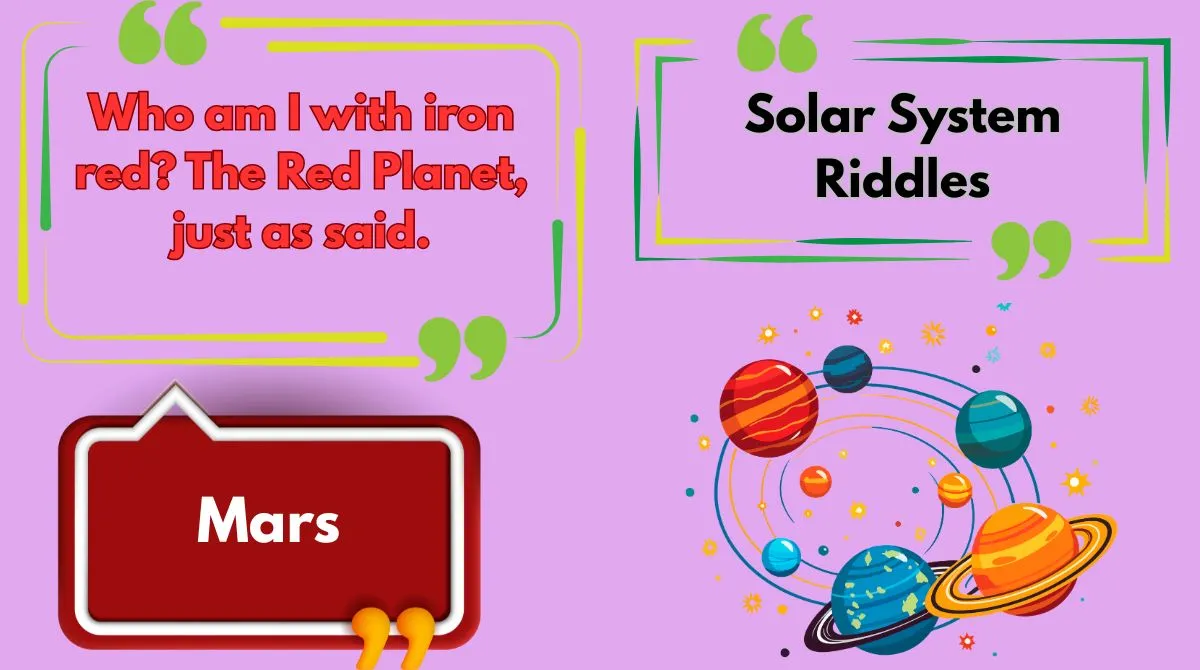
The Red Neighbor
-
Riddle: My rusty, iron-rich soil gives me a distinct crimson color in the night sky. Scientists send rolling robotic rovers to explore my dusty valleys. What am I?
-
Answer: Mars.
The Fast Runner
-
Riddle: I am the smallest planet in our solar system and the closest one to the sun. I zip around the sun faster than any other world. What am I?
-
Answer: Mercury.
The Great Stormer
-
Riddle: I am the largest planet of all, and I have a giant red spot that is actually a swirling storm. What am I?
-
Answer: Jupiter.
Celestial Wonders: Deep Astronomy Riddles
Let us look deeper into the field of scientific discovery with these advanced astronomy riddles. They focus on the tools, structures, and cosmic anomalies that astronomers study every single day.
The Cosmic Eye
-
Riddle: I have a giant glass lens but I cannot see on my own. I point toward the dark sky to bring distant planets into clear view. What am I?
-
Answer: A telescope.
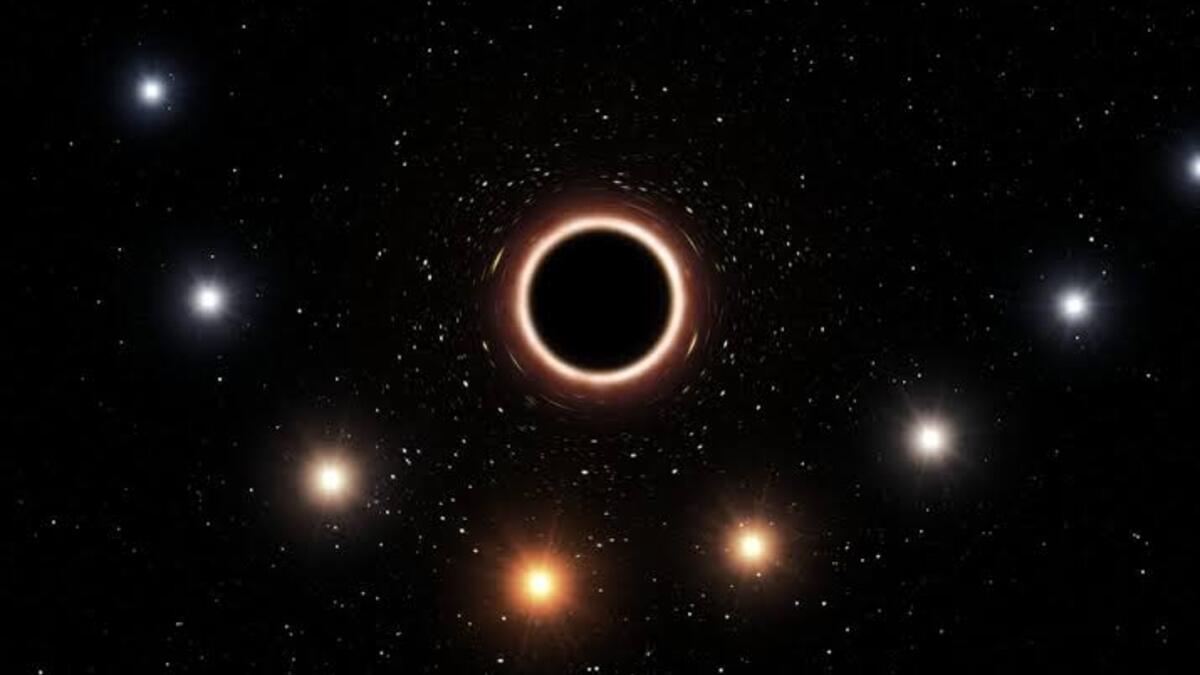
The Invisible Trap
-
Riddle: I am a place in deep space where gravity pulls so tightly that even fast light cannot escape. I am born when a massive star collapses. What am I?
-
Answer: A black hole.
The Neighborhood
-
Riddle: I am a collection of eight planets, dozens of moons, and countless rocky asteroids spinning around one bright star. What am I?
-
Answer: The solar system.
Shining Bright: Brilliant Star Riddles
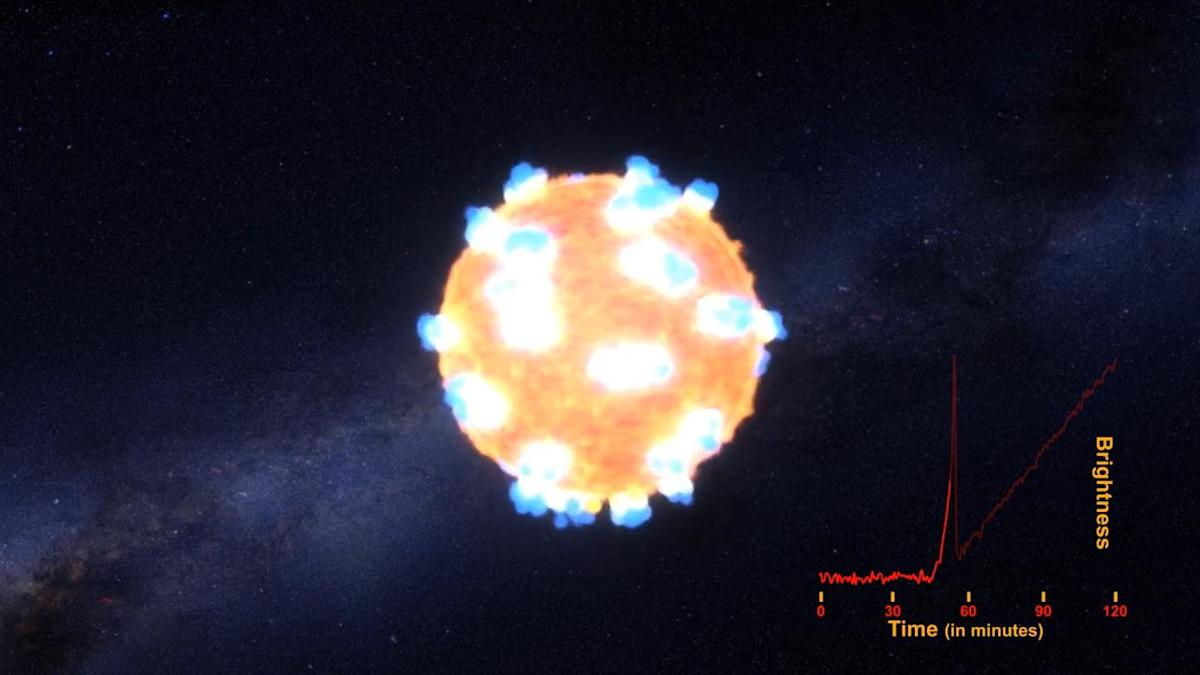
Stars are the heavy engines of the universe, producing heat, light, and heavy elements. These star riddles celebrate the glowing spheres that populate the night sky.
The Centerpiece
-
Riddle: I am the closest star to planet Earth. Without my warm light, our entire world would be a frozen ball of dark ice. What am I?
-
Answer: The sun.
The Sky Picture
-
Riddle: We are groups of bright stars that ancient people connected like dots to draw animals, hunters, and mythical monsters. What are we?
-
Answer: Constellations.
Cosmic Laughs: Funny Space Riddles and Jokes
Giggling makes learning about the deep universe even better. These funny space riddles combine scientific facts with clever puns and silly punchlines. They are guaranteed to bring a smile to your face.
The Cosmic Menu
-
Riddle: What kind of delicious, round food do hungry astronauts love to order while orbiting in outer space?
-
Answer: Launch meat.
The Starry Party
-
Riddle: How does a distant star or a tiny planet organize a massive celebration in deep space?
-
Answer: They planet carefully.
The Weightless Diet
-
Riddle: Why did the glowing moon decide to skip its evening meal for three days straight?
-
Answer: Because it was already completely full.
Deep Mind Benders: Complex Galaxy Brain Teasers
Get ready to stretch your critical thinking skills to the absolute limit. These galaxy brain teasers and advanced space brain teasers require logical deduction to solve correctly.
The Moving Target
-
Riddle: An astronaut travels into deep space at incredible speeds. The further he goes, the older he gets, but his twin brother on Earth ages much faster. How is this possible?
-
Answer: This is due to time dilation based on Einstein’s theory of relativity.
The Endless Spiral
-
Riddle: I am a massive swirling collection of gas, dust, and billions of burning stars. The planet Earth lives on one of my curved outer arms. What am I?
-
Answer: The Milky Way galaxy.
Conclusion
Exploring the universe using space riddles is a fantastic way to boost your cosmic knowledge. From quick star riddles to tricky mind games, these puzzles make astronomy accessible and fun. They prove that you do not need a rocket ship to travel through the solar system.
For more exciting brain games, head over to riddlepuzzle. You will find an endless supply of fun word puzzles for every subject. Keep your mind exploring the universe.
Frequently Asked Questions
Why are solar system riddles effective for teaching science to young kids?
Puzzles turn dry scientific facts into active problem-solving games. They encourage kids to remember key traits of planets, such as Saturn’s icy rings or Mars’ red soil, through memorable wordplay.
What are some good examples of space brain teasers for classrooms?
Great classroom options include puzzles about gravity, telescopes, or black holes. These topics require students to apply real scientific concepts to solve the clever word problem.
How can I host an entertaining space riddle game at home?
You can create a trivia night by dividing your family into two competitive teams. Read the puzzles aloud and award points for every correct cosmic answer. Use the simple kids’ options first before moving to advanced galaxy teasers.
Where can I find a massive collection of space riddles and answers for my next family game night?
You can find an endless library of cosmic brain games online at riddlepuzzle.com. The platform offers dedicated categories for planetary word games, advanced science brain busters, and quick interactive puzzles tailored for all age groups.
Are these space riddles for kids suitable for elementary school science lessons?
Absolutely. Teachers can integrate these puzzles into astronomy units to make learning about the solar system highly engaging. They serve as excellent warm-up activities or quick lesson review tools that help reinforce key scientific terms naturally.