
Five hundred and seventy-four players, one old village walling ground, and nine races built around stone, patience and teamwork. That is the shape of this day: a dry-stone waller’s ground turned into a puzzle ground, where every team works with real stone, real weight and a real wall growing longer by the hour. Nobody needs walling experience to join in, and nobody sits out for long, because each race is short, hands-on and easy to learn in under a minute.
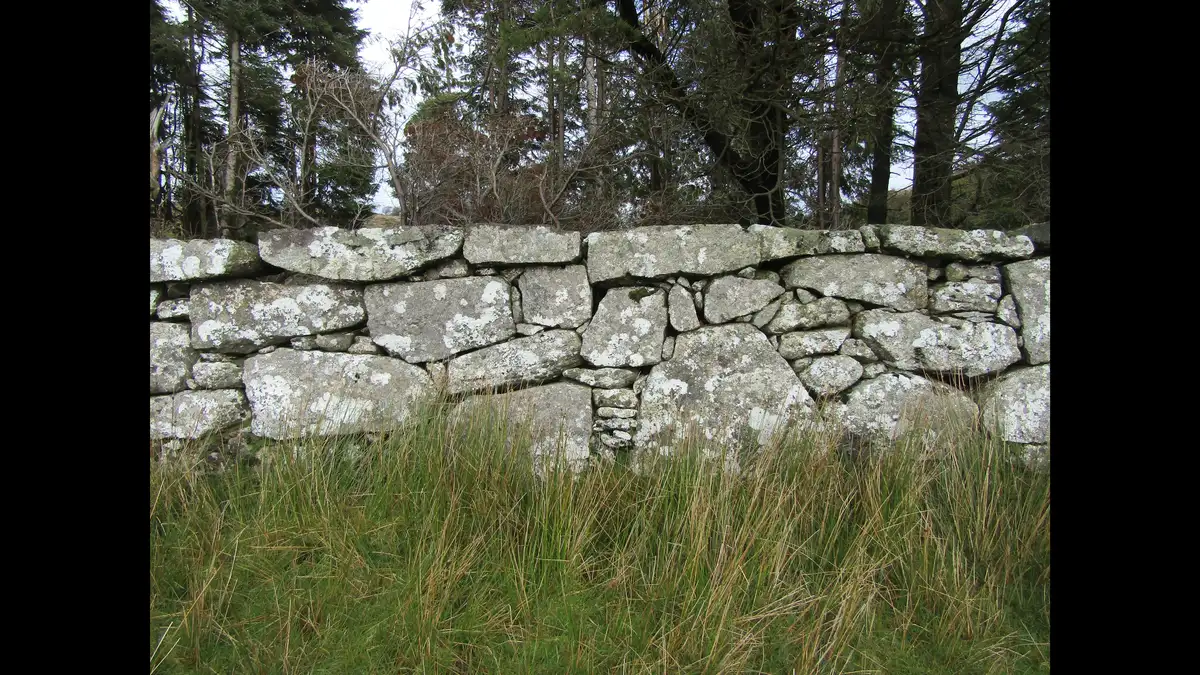
A dry stone wall stands without mortar, held together by weight, friction and the careful choice of each stone. That simple idea is what makes it such a good puzzle ground: every stone has a place, every row has a job, and a wall that looks solid from the front can still hide a loose middle. The nine races below turn those truths into play. Players count fieldstones, match throughstones, order capstones, measure a batter, sort hearting, check footings, count pinning stones, test a camber and count topstones, all within a time limit and against the other teams.
This guide gives you the full plan: the nine races in order, a table that lists each one at a glance, a plan for fitting 574 players into one day, team and tournament formats that keep everyone busy, a short checklist, and answers to the questions hosts ask most. Bring drinking water and a willingness to get your hands dirty. The wall will do the rest.
Key Takeaways
- Nine short races carry 574 players through one walling day, from the opening fieldstone to the final topstone.
- Every race uses real stone and simple tools, so new players can learn each game in under a minute.
- Teams rotate between nine stations, so nobody waits long and every team meets every race.
- Scoring stays simple: points for accuracy, points for speed, and a small bonus for the tidiest row.
- The day ends with a short tournament round and a shared look at the finished wall.
The 9 Races at a Glance
| Race | Task | Minutes | Players per team |
|---|---|---|---|
| Fieldstone Count Race | Count the fieldstones in one heap | 10 | 8 |
| Throughstone Match Race | Match throughstones to the openings they fill | 12 | 8 |
| Capstone Order Race | Order capstones from lightest to heaviest | 10 | 8 |
| Batter Measure Race | Measure the inward taper of a finished row | 12 | 8 |
| Hearting Sort Race | Sort hearting stones by size and shape | 10 | 8 |
| Footing Check Race | Check the footing stones under a short run of wall | 12 | 8 |
| Pinning Stone Count Race | Count the pinning stones in a finished row | 10 | 8 |
| Camber Check Race | Check the camber of a row of topstones | 12 | 8 |
| Topstone Count Race | Count the topstones along one stretch of wall | 10 | 8 |
How 574 Players Fit Into One Day
Five hundred and seventy-four players divide neatly into 41 teams of 14. That number is the heart of the plan: 41 teams is large enough to feel like a festival and small enough for one host to run. Each team sends eight players to each race, while the other six rest, watch and applaud their own team. Nobody plays all nine races at full strength, and nobody is left standing around with nothing to do.
The day runs on a simple rotation. Nine stations sit in a long row along one side of the walling ground, one station for each race. Teams move from station to station in order, spending ten or twelve minutes at each one and three minutes moving on. A full rotation takes about two hours, which leaves room for a midday rest, a short tournament round and a closing look at the finished wall. Referees stay at their stations all day, so the rules stay the same from the opening team to the last.
The sundial-maker’s day in our puzzle games for 571 players runs on gnomons, hour marks and brass dials, and it shows how a craft day can carry a huge crowd without crowding. This walling day borrows the same idea: fixed stations, fixed referees and short races that keep the whole crowd moving.
The 9 Races
Each race below takes ten or twelve minutes, uses only stone and simple tools, and can be learned in under a minute. Read them in order, because the day runs them in order: counting, matching and ordering come early, while measuring and checking come later, when hands are warm and eyes are sharp.
1. Fieldstone Count Race
Each team faces a heap of fieldstones and counts them. That sounds easy until the heap turns out to hold more than two hundred stones, piled in uneven rows with small ones sitting behind large ones. Teams may count in twos, in tens or in any grouping they like, but they may not move a stone while they count. The referee checks the written number against the true number, and the closest count wins the points.
The best tactic is to divide the heap by eye into four rough quarters and give each quarter to two players. Count each quarter twice, then add the four numbers together. Teams that rush the count almost always miss the small stones at the back of the heap, so slow down on the last quarter and let one player double-check the whole heap before the number goes on the score sheet.
2. Throughstone Match Race
A throughstone runs the full width of a wall, tying the two faces together, and this race asks teams to match each throughstone to the opening it fills. Ten throughstones lie in a row beside a short run of wall with ten empty openings. Players lift each stone, test it against the openings and work it into place when the fit feels right. A stone that rocks or sits proud of the front costs the team points.
Speed matters, but a forced fit costs more than a slow one. The winning teams test each stone in two or three openings before they commit, and they keep one player watching the front of the wall while the others lift. When a stone sits even and still, the team moves on. When it rocks, they lift it out and try the next opening.
3. Capstone Order Race
Capstones crown the top of a wall, and this race asks teams to order ten of them from lightest to heaviest using only their hands. No scales, no weighing tools and no tapping one stone against another. Players lift each stone, feel its weight, and arrange the ten in a row from lightest to heaviest. The referee then weighs each stone and awards points for every stone in its correct place.
Hands are better weighing tools than most players expect, but only when the team works in pairs. One player lifts and passes, the other compares the new stone against the row and finds its place. Teams that pass stones around the whole group lose track of what they have already judged, so keep the lifting to two players and let the rest of the team watch the row and call out swaps.
4. Batter Measure Race
Every good dry stone wall tapers inward as it rises, and that inward taper is called the batter. In this race, teams measure the batter of a finished row with a measuring cord and a long flat bar. One player holds the bar upright against the front of the wall, another holds the cord from the top of the bar to the face of the stones below, and a third reads the distance and writes it down. Three measurements at three different heights give the team its answer.
The trick is to keep the bar truly upright. A bar that leans even a little throws every number off, so the best teams take their time on the upright hold and let the measuring happen after that. Referees award points for accuracy before speed, and a team that measures twice and writes once usually beats a team that hurries through all three heights.
5. Hearting Sort Race
Hearting is the small stone that fills the middle of a wall, between the two outer sides, and this race asks teams to sort a mixed pile of hearting into three size groups: small, medium and large. The pile sits on a cloth on the ground, and players sort by eye and by hand, placing each stone in the right group. At the end of the time limit, the referee checks each group and removes every stone that sits in the wrong one.
Quick hands win this race, but only when the team agrees on the size bands before the time limit starts. Pick up three stones, one for each group, and keep them at the front of the cloth as a guide. Teams that argue about sizes halfway through the pile lose more time than teams that sort slowly and steadily from the opening minute.
6. Footing Check Race
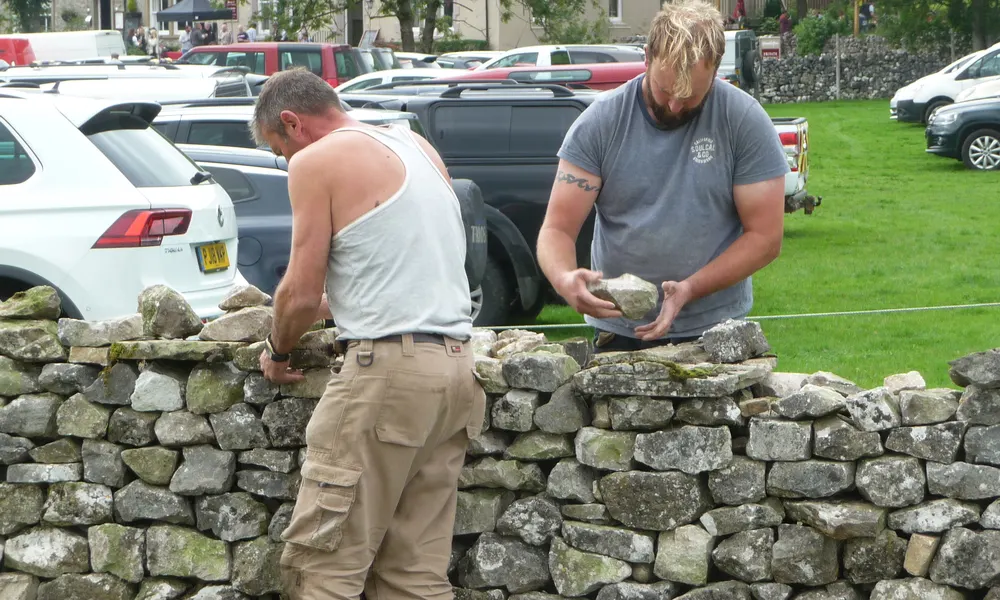
Footings are the large flat stones that carry the whole weight of a wall, and this race asks teams to check a short run of footing stones for faults. The referee has planted six faults in the run: a loose stone, a stone sitting proud of the front, a stone that rocks when tested, an opening too wide for the stones beside it, a stone upside down and a stone of the wrong size. Teams walk the run, test each stone and write down every fault they find.
Work the run slowly, one stone at a time, and test each stone with both hands. The loose stone gives itself away with a small movement under pressure, and the rocking stone moves when tested at one corner. Teams that walk past the run at speed spot the obvious faults and miss the quiet ones, so save the last minute for another walk and a fresh look at the stones you passed over.
7. Pinning Stone Count Race
Pinning stones are the small stones sitting between larger ones to hold them firm, and this race asks teams to count every pinning stone in a finished row. The row is ten stones long, and the pinning stones hide in the openings between them, above them and below them. Teams count by eye, without touching a stone, and write their number on the score sheet before the time limit ends.
Count in pairs, with one player calling the stones and the other writing the running total. Start at one end of the row and move steadily to the other, counting the pinning stones above the row before the ones below it. Teams that count in a random order almost always count the same stone twice or miss one entirely, so keep the order fixed and let one player do all the calling.
8. Camber Check Race
The top of a wall is never quite flat. A good waller gives the topstones a slight arch, called the camber, so that water runs off instead of sitting on the stones. In this race, teams check the camber of a row of topstones with a cord pulled taut from one end of the row to the other. The cord should clear the middle stones by a thumb width and touch the stones at each end.
Hold the cord steady and let one player do all the looking. Two players holding the cord at different heights will give two different answers, so agree on the hold before the measuring begins. Referees award points for each correct reading, and the team that writes its numbers down as it goes beats the team that tries to remember them all at the end.
9. Topstone Count Race
The last race is the simplest and the noisiest. Teams count the topstones along one stretch of wall, topstones being the flat stones that sit on top of the wall and carry the camber. The stretch is long, the stones vary in size, and the counting must be done by eye, without touching a stone. Each team writes its number down, and the referee reads out the true number once every team has finished.
Count aloud, one stone at a time, and let one player keep the running total while another points at each stone in turn. The pointing matters more than it sounds: on a long stretch, two counters can easily drift apart and count the same stone twice. The team that counts slowly and together almost always beats the team that splits the stretch and adds two half counts at the end.
Teams, Stations and Tournaments
Forty-one teams of fourteen need a format that keeps everyone busy, and the rotation does most of that work. Each team sends eight players to each race, so six players rest at every station. Those six are not idle: they watch their own team, applaud good work and learn the race before their turn comes. By the end of the day, every player has tried every race at least once.
The tournament round comes after the rotation ends. The eight leading teams meet in a short final made of three races: the Fieldstone Count Race, the Capstone Order Race and the Topstone Count Race. Each final race runs for ten minutes, and the team with the most points across all three takes the day. The other teams gather around the final stations to watch, so the closing hour feels like a shared ending.
The sieve-maker’s day in our puzzle games for 570 players sorts mesh, rims and horsehair, and its rotation plan is a useful model for moving large teams between stations. Borrow its rhythm: short races, fixed referees and a clear order of movement, and a crowd of 574 will move as smoothly as a crowd of 40.
Checklist: A Smooth Day From Opening Stone to Final Stone
- Walk the ground the day before and remove every tripping hazard.
- Arrange nine stations with room for two teams at each one.
- Give every team a score sheet, a pencil and a team colour.
- Brief every referee on the scoring rules before the opening race.
- Keep drinking water at every station and a shaded rest area nearby.
- Record the finished wall before the final tournament round.
Frequently Asked Questions
How long does each race take?
Each race runs for ten or twelve minutes, with three minutes to move to the next station. A full rotation of all nine races takes about two hours. Add a short opening talk, a midday rest and the tournament round, and the whole day runs for about five hours.
Do players need walling experience?
No. Every race can be learned in under a minute, and the referee at each station shows the team what to do before the time limit starts. Players who have worked with stone before will spot a few tricks early, but the races reward careful counting and steady hands more than walling skill.
What should each team bring?
Drinking water and sturdy footwear are the two essentials. Everything else is provided: the stone, the measuring cords, the score sheets and the pencils. Teams may also bring a team colour in the form of matching shirts.
How do you keep the scoring fair across nine races?
Every race is worth the same number of points, and the same referee scores every team at a given station. Score sheets travel with the teams, so the points add up in one place and every team can see its own running total. The brickworks day in our puzzle games for 547 players counts brick lengths, widths and colours, and its scoring sheet is a good model for keeping nine different races on one fair sheet.
Can younger players join in?
Yes. Mixed-age teams work well, because the races need eyes and patience as much as strength. Younger players often make the best counters, and referees can hand them lighter stones in the ordering and matching races. Every team of fourteen has room for players of all ages.
What if a team finishes a race early?
Early finishers stay at the station and help put the tools away for the next team. Referees can also ask them to double-check their own count or measurement before the time limit ends, which often catches a mistake worth several points. Nobody leaves a station early, so the rotation stays even all day.
The Bottom Line
The best puzzle games for 574 players are the ones that leave a real wall standing at the end of the day. Nine short races, forty-one teams and one old walling ground add up to a day that feels busy without feeling rushed, and every player goes home having lifted stone, tested a fit and counted something that mattered.
Start with the table, walk the ground, brief your referees and let the stones do the teaching. A dry stone wall rewards patience, and so does a day built around one. Gather your 574 players, open with the Fieldstone Count Race and see how quickly a crowd becomes a company of wallers.


