Have you ever been so sure of an answer, only to realize you were completely wrong the moment the truth was revealed? That specific “aha!” moment—where frustration meets amusement—is the magic of the trick question. At riddlepuzzle.com, we specialize in these mental gymnastics.
A great trick question isn’t just a riddle; it’s a brain trap question. It relies on “mental heuristics,” which are shortcuts your brain takes to process information quickly. Usually, these shortcuts are helpful, but in a tricky quiz, they are your greatest enemy. Today, we are breaking down the psychology of why we get tripped up and providing an extensive list of trick questions with answers to stump your friends and family.
1. The Psychology of the “Brain Trap”
Why do we fall for misleading questions? It’s not because we aren’t smart; it’s because our brains are “cognitive misers.” We try to solve problems with the least amount of effort possible.
Semantic Priming
If I ask you, “What do cows drink?” your brain immediately thinks: Cow -> Milk -> Drink. You are likely to shout out “Milk!” even though cows actually drink water. This is called priming. The context of the question sets a trap that your fast-thinking brain walks right into.
The Moses Illusion
Consider this: How many animals of each kind did Moses take on the Ark? Most people answer “Two.” But wait—Moses didn’t build the Ark; Noah did. This is a classic brain trap question because your brain focuses on the “Two” and the “Ark,” bypassing the incorrect name because it fits the general biblical theme.
2. Level 1: The Fast-Talkers (Speed Round)
These trick questions with answers are designed to be asked quickly. The faster the person answers, the more likely they are to fail.
-
Question: A clerk in a butcher shop is 5’10” tall and wears size 11 shoes. What does he weigh?
-
Answer: Meat. (Your brain tries to do math, but the answer is his job function).
-
-
Question: If you’re running a race and you pass the person in second place, what place are you in?
-
Answer: Second place. (Most people say first, but you haven’t passed the leader yet!).
-
-
Question: How many months have 28 days?
-
Answer: All 12 of them. (They all have at least 28 days).
-
-
Question: What has a thumb and four fingers but isn’t alive?
-
Answer: A glove.
-
3. Level 2: The Logic Loopholes
These misleading questions require a bit more thought. They are perfect for a tricky quiz setting where participants have time to sit and stew over the wording.
The Silent Killer
Question: What is so fragile that saying its name breaks it? Answer: Silence.
The Family Tree
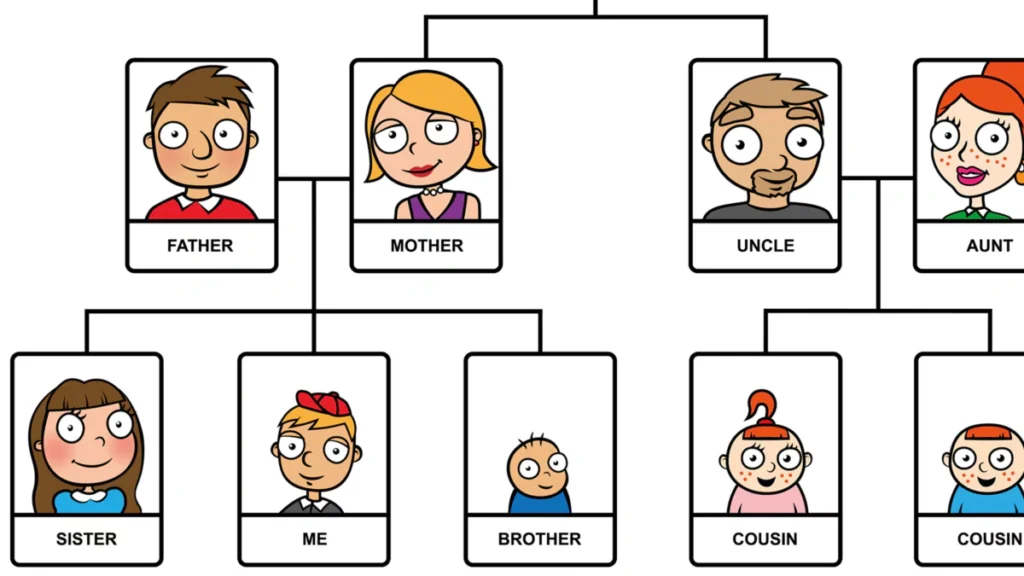
Question: If Teresa’s daughter is my daughter’s mother, what am I to Teresa? Answer: I am Teresa’s daughter. (Take a moment to map that one out—it’s a classic brain bender).
The Math Myth
Question: A bat and a ball cost $1.10 in total. The bat costs $1.00 more than the ball. How much does the ball cost? Answer: 5 cents. (If you said 10 cents, you’re in the majority, but the math doesn’t add up: $1.05 + $0.05 = $1.10).
4. Why We Use Trick Questions in Education
At riddlepuzzle.com, we believe these aren’t just games. They are educational tools. Brain trap questions teach critical thinking and “lateral processing.”
When a student (or an adult) falls for a trick question, it forces them to re-evaluate their listening skills. It teaches us to:
-
Listen to the whole prompt: Don’t start solving the problem until the sentence is finished.
-
Question the Premise: Is the information provided actually true or relevant?
-
Check for Ambiguity: Could a word have two meanings? (Like the “weighing meat” example).
5. Level 3: The “Deep Sea” Riddles (Expert Level)
Ready for the hardest trick questions with answers in our collection? These are the ones that lead to long debates and “I can’t believe I missed that” groans.
-
Question: What can travel around the world while
staying in a corner? * Answer: A stamp.
-
Question: I have cities, but no houses. I have mountains, but no trees. I have water, but no fish. What am I?
-
Answer: A map.
-
-
Question: What is seen in the middle of March and April that can’t be seen at the beginning or end of either month?
-
Answer: The letter “R”.
-
-
Question: You see a boat filled with people. It has not sunk, but when you look again you don’t see a single person on the boat. Why?
-
Answer: All the people were married. (The trick is in the word “single”).
-
6. Creating Your Own Tricky Quiz
If you want to host your own night of brain trap questions, follow these three rules from the riddlepuzzle.com playbook:
Rule 1: Use Homophones
Words that sound the same but have different meanings are the bread and butter of trickery.
-
Example: “If you have two ‘eights’ (8s), how many do you have?” vs “If you have two ‘ates’ (past tense of eat)…”
Rule 2: Create a False Narrative
Lead the listener down a path of specific imagery. Mention a “house,” “red bricks,” and “smoke” to prime them for a physical building, then ask a question about something abstract.
Rule 3: Use Numbers as Distractors
Insert numbers that don’t matter.
-
Example: “A plane crashes on the border of the US and Canada. 60 people were from New York, 40 were from Ontario. Where do you bury the survivors?”
-
Answer: You don’t bury survivors. (The numbers 60 and 40 are purely to distract your brain into doing geography math).
7. The Social Value of Trick Questions
In the age of scrolling and short attention spans, a tricky quiz is one of the few things that can actually hold a group’s attention. Whether it’s a “Pub Quiz” or a family dinner, trick questions act as social “icebreakers.” They equalize the room—the CEO is just as likely to fall for a brain trap question as the teenager.
8. Conclusion: Stay Sharp!
The world is full of misleading questions, both in games and in real life. By practicing with these trick questions with answers, you aren’t just learning trivia; you’re sharpening your mind to look past the obvious.
At riddlepuzzle.com, we are constantly updating our database of the world’s most frustrating and fun riddles. Remember: the simplest answer is usually the right one—unless, of course, it’s a trick!
Keep questioning, keep thinking, and don’t let the “clerk in the butcher shop” get the best of you.
Frequently Asked Questions (FAQs)
Q: Are trick questions the same as riddles?
A: Close, but not quite. A riddle is usually a metaphor (e.g., “I have teeth but no mouth”), whereas a trick question is often a literal question that uses linguistic trickery or misleading context to hide a simple answer.
Q: Can trick questions improve IQ? A: While they won’t necessarily raise your IQ score, they do improve “fluid intelligence”, the ability to solve new problems and identify patterns in unfamiliar situations.
Q: Why are they called “brain trap questions”?
A: Because they are designed to catch your “System 1” thinking (fast, instinctive) and force you to use “System 2” thinking (slow, logical).
Q: What is the most famous trick question ever?
A: Many consider “Which weighs more: a pound of lead or a pound of feathers?” to be the classic. (They both weigh exactly one pound).
Q: How do I win at a tricky quiz?
A: The best strategy is to be a literalist. Don’t assume anything. If a question sounds too simple, it probably is—look for a double meaning in every noun and verb.