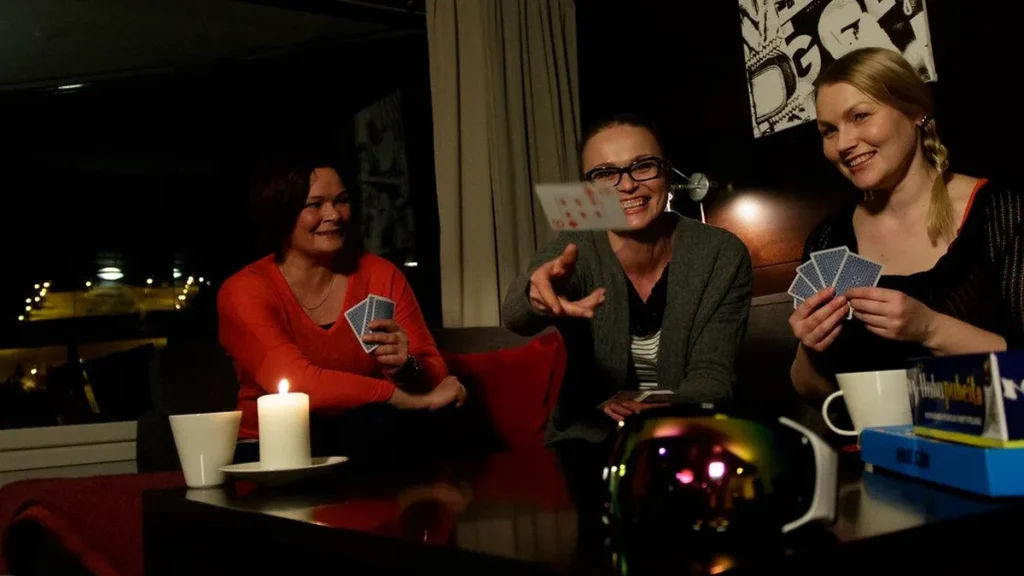
Four hundred and fifty-five players is a wonderful problem to have. It is too many people for one table and far too many for a single puzzle sheet, but it is exactly the right number for a full day of puzzle games run as a relay: ninety-one teams of five, moving from station to station, each round giving a different kind of thinker a chance to shine.
The trick is variety. If every round is a word puzzle, the word people win before lunch and everyone else stops caring. If every round is a number grid, the same thing happens in reverse. A good day mixes grid logic, word play, number puzzles, and hands-on tiling, so every team has at least two rounds where it feels dangerous and at least one where it has to ask for help.
This guide walks through the whole day: how the teams are formed, how the nine rounds run, what the schedule looks like, and how to keep scoring fair when ninety-one teams play at once. The format follows the relay pattern of our puzzle games for 453 players, scaled up by two more teams, so if you have run a big puzzle day before, most of this will feel familiar.
Key takeaways
- Split 455 players into 91 teams of five, and give every team a colour, a captain, and a scorecard.
- Run nine rounds of 25 minutes each, with five minutes to rotate, so the day fits into one hall session.
- Mix grid logic, word play, number puzzles, and tiling so no single skill decides the day.
- Print every puzzle set twice, and keep a spare set at each station for damaged sheets.
- Score each round out of ten, and break ties with a single five-minute tiebreaker puzzle.

How 455 players fit into one day
Ninety-one teams of five is the cleanest split, because five is small enough for everyone to talk at once and large enough to cover different strengths. Put one strong word player, one number player, and one patient finisher on each team if you can, and let the other two seats fall where they may. A coloured wristband per team keeps the hall readable at a glance.
Each station hosts ten teams at a time, Rounds last twenty-five minutes, with five minutes to rotate, pack up, and find the next table. Nine rounds at thirty minutes each comes to four and a half hours, plus a half-hour lunch break and a fifteen-minute welcome. Nobody sits still for more than half an hour.
Scoring stays simple on purpose. Every round is marked out of ten: one point per puzzle solved, or one point per correct row, depending on the game. At the end of the day, the three highest totals go to a tiebreaker, a single five-minute puzzle played in front of the hall.
| Game | What it tests | Round length | Best for |
|---|---|---|---|
| Kurodoko Race | Shading and logic | 25 minutes | Patient planners |
| Dosun Fuwari Race | Balance and placement | 25 minutes | Visual thinkers |
| Angle Loop Race | Path building | 25 minutes | Pattern spotters |
| Hyper Sudoku Race | Number logic | 25 minutes | Sudoku fans |
| Diagonal Sudoku Race | Number logic | 25 minutes | Careful checkers |
| Battleship Puzzle Race | Deduction | 25 minutes | Quiet strategists |
| Pentomino Tile Race | Tiling and shape | 25 minutes | Hands-on solvers |
| Wordle Race | Word deduction | 25 minutes | Word lovers |
| Connections Grouping Race | Word grouping | 25 minutes | Team talkers |
The nine puzzle games for 455 players
Every game below is played the same way: a team gets a fresh puzzle sheet, a pencil, and twenty-five minutes. Talking is encouraged, shouting across the hall is not, and the station judge holds the answer sheet. The nine games are listed in the order that works best through the day, starting gentle and finishing with two word games that get the whole hall talking.
1. Kurodoko Race
Kurodoko is a shading puzzle, and it is a kind first round because it looks friendly and turns out to be strict. The grid starts with a few numbered clue cells, and the team shades the rest until every numbered cell can see exactly that many white cells in its row and column, no two shaded cells touch side by side, and all the white cells stay connected in one piece. The rules fit on a single card, and a team can learn them in two minutes.
Give each team a ten-by-ten grid with three clue numbers already filled in, and a second, slightly harder grid as a bonus sheet. Score one point per finished row that follows all three rules, up to ten points for a fully correct grid. Teams that talk through the clues out loud do far better than teams where one person grabs the pencil and goes quiet.
2. Dosun Fuwari Race
Dosun Fuwari is a balance puzzle, and it is the prettiest game on the list. The grid is divided into rooms, and the team places balloons and iron balls so that every room holds exactly one balloon and one ball, with each balloon floating above its ball in the same column. It sounds like a riddle, and it plays like one, because the first few placements feel obvious and the last few feel impossible until someone sees the trick.
Print the grids large, because a team of five needs to see the whole board at once, and use coloured pencils, one colour for balloons and one for balls. Score one point per room correctly filled, up to ten points. Dosun Fuwari rewards teams that slow down and check each other, and punishes rushing, because one wrong balloon early on can quietly ruin the whole grid.
3. Angle Loop Race
Angle Loop is a path puzzle, and it is the game that gets the hall buzzing. The grid is dotted with circled numbers, and the team draws a single loop through the cells so that every circled number sits on a corner of the loop with exactly that many of its neighbouring cells inside the loop. The loop must close, pass through every circled cell, and never cross itself, which means a team has to think about the whole shape at once rather than solving one corner at a time.
Try playing this round with string as well as pencils, because a team can lay a loop out on the table, look at it, and adjust it before committing anything to paper. Score one point per correctly placed corner, up to ten points. It is the first round where patient planners pull ahead, because the puzzle punishes anyone who draws a confident line before checking the numbers.
4. Hyper Sudoku Race
Hyper Sudoku is the classic nine-by-nine grid with four extra shaded regions, each of which must also hold the digits one to nine exactly once. It is a familiar face with a twist, and that is why it works as the first number round: every team has at least one person who has solved a Sudoku before, but almost nobody has solved one where the shaded boxes matter as much as the rows and columns.
Hand each team a grid with about thirty digits already filled in, and print the four shaded regions in a light colour so they are obvious without being distracting. The Sudoku race collection for 452 players shows how a whole day can be built from Sudoku variants, and Hyper Sudoku earns its place as the variant that rewards teamwork most: one player owns the rows, one owns the columns, and one watches the shaded boxes. Score one point per correctly completed box or shaded region, up to ten points, and allow the judge one free hint digit per team after fifteen minutes have passed.
5. Diagonal Sudoku Race
Diagonal Sudoku adds a single rule to the classic grid: both long diagonals must also hold the digits one to nine exactly once. It is a small change with a large effect, because the diagonals cut across every row, column, and box, so a digit placed early on the diagonal limits the whole grid. Teams that treat it like an ordinary Sudoku will find themselves stuck halfway through, and teams that start by filling the diagonals first will finish with time to spare.
Print the two diagonals in a bold colour so no team can miss them, and remind every team of the diagonal rule out loud, twice, because at least one team every year forgets it and then wonders why the answer sheet disagrees with a grid that looks perfect. Score one point per completed row, column, or diagonal, up to ten points. This is the round where careful checkers earn their keep.

6. Battleship Puzzle Race
Battleship Puzzle, sometimes called Bimaru, is a logic puzzle dressed as a sea battle. The grid hides a fleet of ships, and the team works out where they are from the numbers at the end of each row and column, which say how many ship segments sit in that line, plus a few segments already revealed. Ships never touch each other, not even at the corners, and the fleet always holds the same mix of ship sizes, so every placement narrows the rest of the grid.
This is the quietest round of the day, and the hall usually drops to a murmur while teams hunt for the four-segment battleship. Give each team a ten-by-ten grid with the fleet list printed beside it, and a set of small counters or coins to place on the grid while it tests ideas. Score one point per ship found in full, up to ten points, with the battleship worth two on its own.
7. Pentomino Tile Race
Pentomino Tile Race is the hands-on round, and it is the one the hall remembers. A pentomino is a shape made of five squares joined edge to edge, there are twelve of them, and the team must fit them together to fill a rectangle or a shape printed on the table. The pieces can be turned over and rotated, and the puzzle is as much about fingers as it is about thinking, because a piece that looks wrong in one orientation clicks into place in another.
Cut the twelve pieces from thick card or thin wood before the day, one set per team, and print three target shapes of increasing difficulty: a plain six-by-ten rectangle, a rectangle with a square hole, and a shape with a notch cut out of one side. Score three points for the first shape, three for the second, and four for the third, up to ten points. This is also the round where the most helping happens, as a team that finishes often wanders over to point at the next table’s gap. Let that happen.
8. Wordle Race
Wordle Race turns the daily word game into a team sport. The station judge holds a secret five-letter word, and each team gets six guesses to find it, with the usual green, yellow, and grey clues after every guess. The twist is that the whole team must agree on each guess before it is written down, and the judge only gives the clues once the guess is final. A team that argues well will find the word in four guesses; a team where one person shouts the first word that comes to mind will burn its guesses on words that teach it nothing.
Play this round on a whiteboard or a large sheet of paper so the whole team can see the clues at once, and let the judge run five words in a row, so a team that wastes its guesses on the first word still has four more chances. Score two points per word solved, up to ten points for all five words. Wordle Race is the loudest round of the day, with every clue read out and argued over.
9. Connections Grouping Race
Connections Grouping Race is the finale, and it is the game that gets the whole hall talking at once. The team is given sixteen words and must sort them into four groups of four, where each group shares a hidden link. The links might be things that can follow the same word, things that belong to the same category, or words that share a hidden pattern, and one group is always deliberately harder than the other three. The team must find all four groups and name the link for each one, because a group without a reason is only a guess.
Print the sixteen words on separate cards so the team can move them around the table and start again. Score two points per group found with its link named correctly, plus two bonus points if all four groups are found within fifteen minutes, up to ten points. Connections is a fitting last round because it rewards the team that talks, listens, and changes its mind.
How to run each round without chaos
Rotation is where big puzzle days fall apart, so run it like a train timetable rather than a suggestion. At the end of each round, the station judge rings a bell, the teams pack their sheets into a named envelope, and a volunteer at the door calls the next station by colour. Print the rotation on the back of every scorecard, so a lost team can find its own way without asking.
Judging needs to be quick and consistent, because ninety-one teams will queue at the scoring table if the judges hesitate. Each station judge carries an answer sheet in a sealed envelope and a red pen, and marks the sheet the moment the bell rings, before the team leaves the table. A team may appeal a mark once, and the appeal goes to a head judge who walks the hall with a master answer book.
Keep the spare puzzles close. Every station holds two spare sets of its puzzle, plus spare pencils and scorecards. The grid-logic races for 451 players used the same spare-set rule, and it saved at least three rounds that day when a spilled drink took out a whole table’s sheets. A puzzle day is a paper day, and paper needs spares.
Checklist: the day before the event
- Print nine puzzle sets per station, plus two spares, and pack each station’s sheets into a labelled envelope.
- Count the teams: ninety-one teams of five, with a colour, a captain, and a scorecard for each one.
- Brief the ten station judges and the head judge together, with the answer sheets and the appeal rule.
- Test the bell, the rotation signs, and the scoring table, and walk the route between stations yourself.
- Cut or print the Pentomino pieces, the Connections word cards, and the Angle Loop string, one set per team.
- Charge the camera, lay out the lunch tables, and put the tiebreaker puzzle in a sealed envelope.
Frequently asked questions
How do 455 players fit into teams?
Split them into ninety-one teams of five. If a team has four players because someone is ill, let it play as four; if a team has six, split it into two teams of three and pair them for the word rounds.
How long does the whole day take?
Nine rounds of twenty-five minutes, with five minutes to rotate, comes to four and a half hours, plus a fifteen-minute welcome and a half-hour lunch break. Plan for five and a quarter hours from the first bell to the prize giving.
Do we need one big hall, or can we split across rooms?
One big hall is better, because the noise of ninety-one teams is part of the fun, and a single hall makes rotation simple. If you must split, use three rooms of thirty teams each, run the same nine rounds in each room, and bring everyone together in the largest room for the tiebreaker and the prizes.
What if a team has never played one of the nine formats?
Every station starts with a two-minute explanation and a worked example, and the first puzzle in each round is always the easiest one. The grid logic games all fit on a single rules card, and the station judge is there to answer questions for the first five minutes of the round.
Can younger or older players take part?
Yes. The word rounds suit younger players with quick vocabularies, the tiling round suits anyone with patient hands, and the grid logic rounds suit players who like to think slowly. Mixed-age teams do particularly well, because the different strengths cover each other.
What happens if a puzzle set is damaged during a round?
Every station holds two spare sets, and the station judge hands one over without stopping the clock. If a whole table’s sheets are ruined, the head judge issues a fresh set and adds five minutes to that team’s round. Spills happen at every big puzzle day, and the spare sets are the cheapest insurance you will ever buy.
The bottom line
A day of puzzle games for 455 players works when the games are varied, the rounds are short, and the scoring is simple enough for a tired judge to do with a red pen. The nine games above give every team a fair run: grid logic for the patient, numbers for the careful, tiling for the hands-on, and word play for the talkers. Print the sets, brief the judges, ring the bell, and let ninety-one teams of five do the rest.