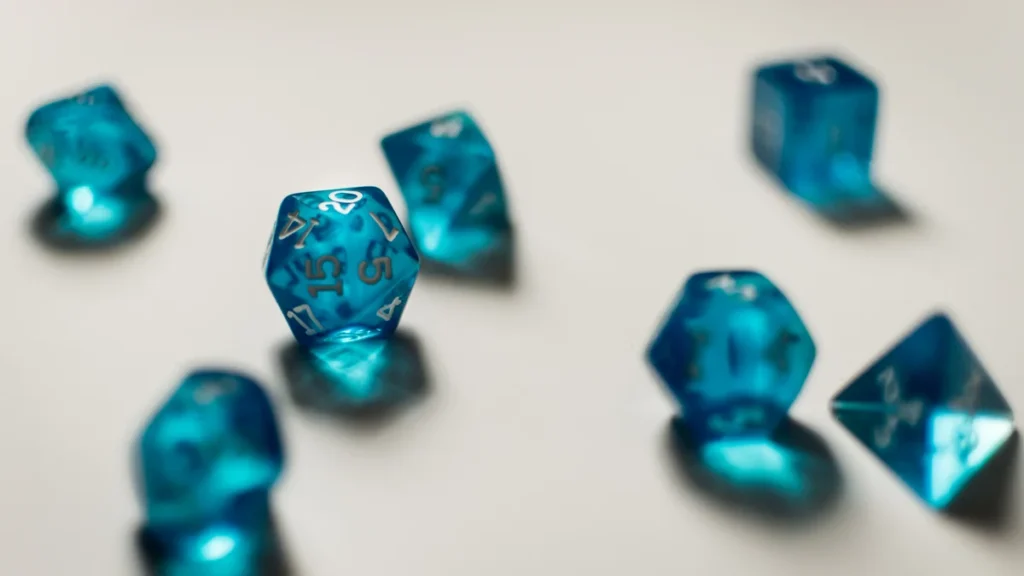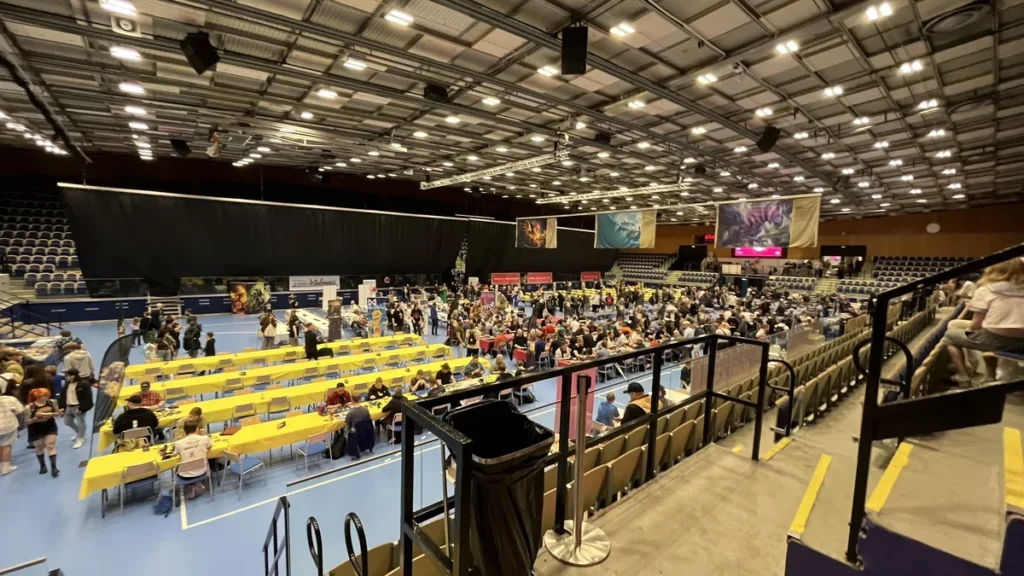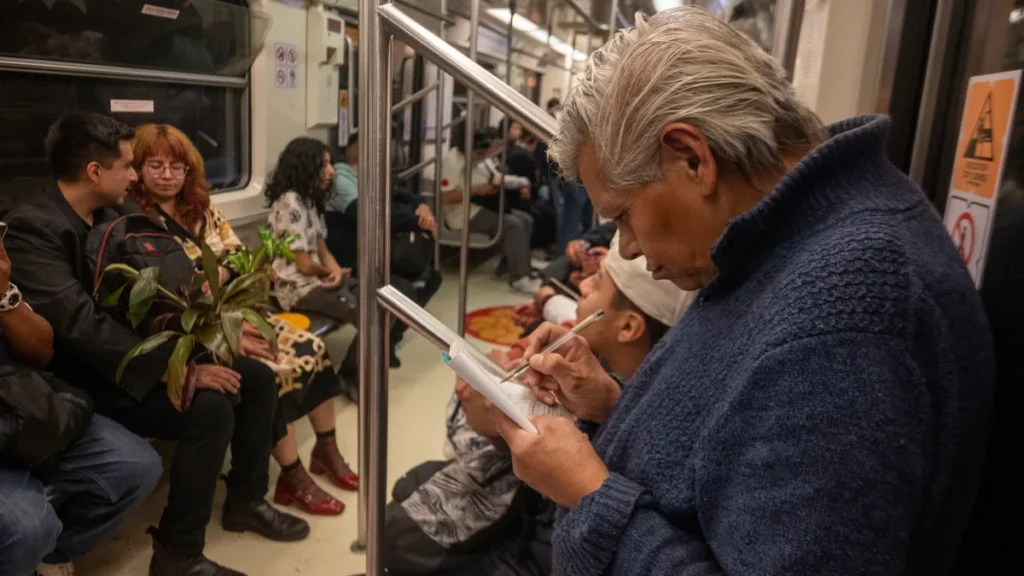
Running puzzle games for 419 players is a planning job before it is a games day. Four hundred and nineteen people cannot gather around a single puzzle and finish before lunch, so the event has to be built the other way round: many small games running at the same time, tied together by one clock and one scoreboard. When that structure is right, a hall full of strangers stops feeling like a crowd and starts feeling like a festival.
A group of 419 usually means a company day, a school celebration, a community festival, or a conference social that has outgrown its usual quiz night. The mistake most organisers make is choosing a clever puzzle first and thinking about the crowd second. They pick a game they love, buy one set, and then discover that 419 people need 419 timers, 419 score sheets, and a way to know who is winning. Decide the teams, the stations, and the rotation first, then choose the games that fit.
This guide splits 419 players into 139 teams of three, with two floating players who rotate in as substitutes and help the station judges, and runs nine puzzle games across nine stations, finishing with a single champion team in under three hours. Every game below explains in under two minutes, needs no specialist knowledge, and rewards careful thinking as much as speed.
Key takeaways
- Split 419 players into 139 teams of three, with two floating players rotating in as substitutes, so every person has a clear job in every round and nobody sits out for long.
- Run nine puzzle games at nine stations, with each team visiting every station once.
- Give each game a strict 15-minute slot, including scoring, so the whole event fits inside three hours.
- Use identical printed sheets and pieces at every station, so results are fair and scoring stays simple.
- Keep one live leaderboard visible to the whole hall, and finish with a grand final the entire room can watch.

Why Puzzle Games Work for 419 Players
Puzzle games suit huge groups because they do not need a stage, a star player, or expensive equipment. A puzzle is a quiet challenge any team can start the moment the whistle blows, and the room fills with the hum of people thinking together instead of waiting for their turn. That matters at this scale, because the fastest way to lose 419 people is to make 400 of them watch while nineteen play.
Puzzles also level the room in a way that sport and trivia rarely do. Speed, strength, and general knowledge all favour the same confident few, but a puzzle day rewards different minds in different rounds: the number thinker shines at Kakuro, the word lover shines at the word search relay, and the patient planner shines at the tangram table.
The format is also cheap to run at this scale. Nine stations need printed sheets, pens, domino sets, tangram sets, timers, and clipboards. If a sheet is spoiled, the judge hands out a fresh copy and the round carries on. If you have run a smaller version of this format before, the step-by-step plan for puzzle games for 417 players uses the same team-and-station logic and scales up cleanly to a group of 419.
One more advantage matters when the group is this large: puzzles are easy to judge. Most of these games have a single right answer, so a volunteer with an answer key can mark a sheet in seconds. That keeps the rotation moving and stops arguments at the score table, which is exactly what you need when 139 teams are all waiting for the next round.
The Plan at a Glance
The maths is simple and it drives every other decision. With 419 players in teams of three, there are 139 teams, and two floating players left over. Give those two a real job: they rotate into teams whose members need a break, and they help judges carry scores to the leaderboard between rounds.
Nine stations means 139 teams rotate through nine rounds, so each station hosts about fifteen or sixteen teams across the day, one team at a time, while the others are busy elsewhere. Nobody queues. Each round lasts fifteen minutes: twelve minutes of solving and three minutes of scoring and moving on. Nine rounds take two hours and fifteen minutes, leaving forty-five minutes for the welcome, the grand final, and the prizes.
Teams of three are the right size for these games: one reads the clues aloud, one writes or places the pieces, and one double-checks the work before anything is marked. Set the hall up the night before if you can. Place the nine stations in a wide loop around the edge of the room, with the leaderboard and the final stage in the middle. Each station gets a table, three chairs, a printed rules card, the game materials, a timer, and a score sheet.
The Nine Games for 419 Players
These nine games cover numbers, words, mazes, shapes, dominoes, riddles, and one clue trail, so no single skill decides the day. Each one runs for fifteen minutes at its own station, and every team plays every game once. Keep a worked solution at each station so the judge can mark answers in seconds. The plan used for puzzle games for 416 players follows the same rotation idea, and these nine games slot into that structure without changing the timing.
1. Kakuro Number Race
Kakuro is a number puzzle played on a grid where each run of empty cells must add up to the clue number, with no digit repeated inside a run. It sounds technical, but a new team can learn the rules in ninety seconds, and the first small grid is usually finished inside five minutes.
For a race format, print three grids of rising difficulty on one sheet so teams always have a next challenge. Teams score points for each completed grid, with bonus points for finishing all three before the twelve minutes run out.
2. Word Search Relay
A word search is a grid of letters hiding a list of words, and the relay version stops one fast finder from doing the whole puzzle alone. One player at a time steps up to the sheet, finds a word, circles it, and tags the next player.
Score one point per word found, with a two-point bonus for the longest word on the list. Use a fresh grid for every rotation so teams cannot copy answers from the table next door, and choose a theme that fits the day, such as the company, the school, or the town.
3. Maze Race
The maze race is the simplest station to explain and one of the most tense to watch. Each team gets the same printed maze and a pen, and the first team to draw a clean path from the entrance to the centre wins the round. Print three mazes of rising difficulty on one sheet, so a team that finishes the first maze quickly moves straight on to the next.
Score points for each finished maze, with bonus points for a team that completes all three before the clock stops.
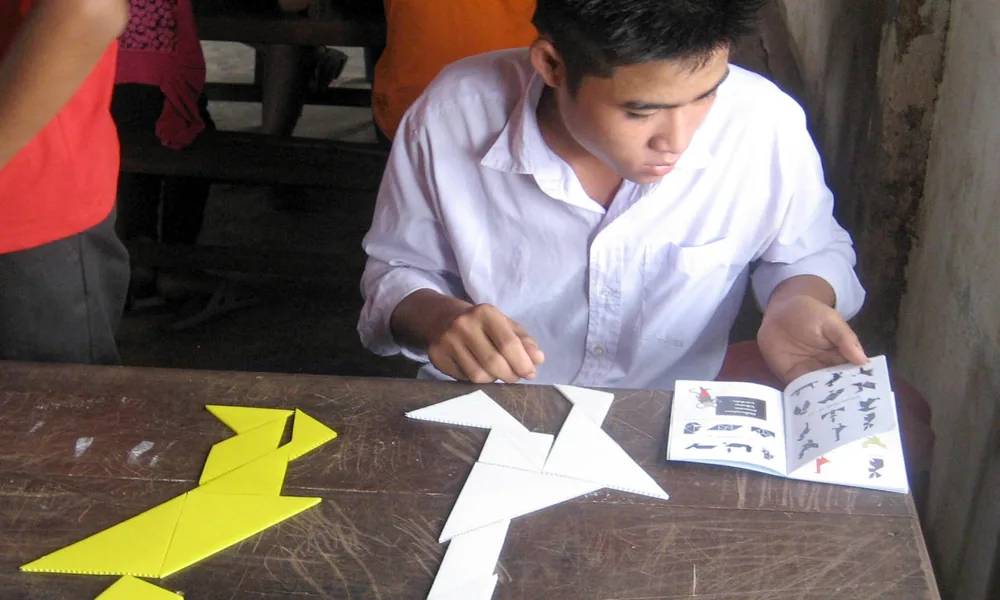
4. Tangram Challenge
Tangram is a shape puzzle made of seven flat pieces that must be arranged to form a silhouette, such as a bird, a boat, or a runner. Give each team one set of pieces and a silhouette card, and let the team work out which piece goes where. The pieces look simple, but the first shape usually takes longer than anyone expects.
Score ten points for each completed silhouette, with two shapes per round so a fast team can earn twenty. Keep the silhouette cards face down until the clock starts, and use the same two shapes for every team so the round is fair.
5. Domino Puzzle Race
Dominoes become a puzzle when the goal is not to win a hand but to build the longest valid chain. Give each team the same set of dominoes and one rule: touching ends must match, and the chain must use as many dominoes as possible before the clock stops. Teams spread the tiles on the table, try a layout, and rebuild it when the numbers refuse to meet.
Score one point for every domino in the longest valid chain the team can show the judge when time runs out, with a five-point bonus for using every domino in the set. The game rewards planning over speed, because a chain built in a hurry usually strands two or three tiles at the end.
6. Riddle Relay
Riddle relay is a seated chain of riddles. Each team gets a sealed envelope holding five riddles, and the team may open only one riddle at a time. Solve it, write the answer on the card, and open the next envelope. The chain forces the team to finish what it started instead of cherry-picking the easy riddles.
Score two points for each solved riddle, with a bonus for solving all five before the clock stops. Choose riddles with a single clear answer so the judge never has to argue about whether a clever alternative counts.
7. Puzzle Hunt
The puzzle hunt sends teams on a clue trail around the hall. Each team starts with a clue that leads to a marked spot, where the next clue is waiting, and the trail ends at the station table with a final puzzle to solve. The hunt uses the whole room, which makes it the liveliest station, and teams arrive back at the table out of breath and laughing.
Score one point for every clue found in order, with five bonus points for solving the final puzzle at the table. Keep the trail inside the hall so no team wanders off, and use numbered clue cards so a team that finds a clue out of order can be sent back on track. The guide to running puzzle games for 415 players shows the same relay handover working at a similar scale.
8. Crossword Sprint
Crossword sprint turns the classic grid into a timed team challenge. Each team gets the same mini crossword, with fifteen clues and a twelve-minute clock. One player reads the clues aloud, one writes in the answers, and one checks the crossings, because a wrong answer blocks every word that crosses it.
Score one point for every correct answer, with a five-point bonus for a fully completed grid. Use a crossword written for the event, with clues about the group, the place, or the occasion, so the answers feel personal instead of generic.
9. Riddle Relay Race
Riddle relay race is the physical cousin of the seated riddle relay, and it closes the circuit with movement. Two tables stand a few steps apart: one holds the riddle cards, the other holds the answer sheet. One player at a time runs to the riddle table, reads a riddle, runs back, and the team solves it together before the next runner goes.
Score two points for each riddle solved, with a bonus for the team that solves all five riddles first.
Compare the Nine Games
Use this table to brief your station judges. Every game fits the same fifteen-minute slot, but each one asks for different materials and rewards a different kind of thinking.
| Game | What it tests | Equipment | Best for |
|---|---|---|---|
| Kakuro Number Race | Number logic | Printed grids, pens | Careful checkers |
| Word Search Relay | Word spotting | Printed grids, pens | Fast eyes |
| Maze Race | Steady planning | Printed mazes, pens | Calm hands |
| Tangram Challenge | Spatial thinking | Tangram sets, cards | Visual builders |
| Domino Puzzle Race | Number matching | Domino sets | Patient planners |
| Riddle Relay | Lateral thinking | Sealed envelopes | Word players |
| Puzzle Hunt | Clue following | Clue cards, markers | Energetic teams |
| Crossword Sprint | Word knowledge | Printed grids, pens | Trivia lovers |
| Riddle Relay Race | Thinking on the move | Riddle cards, tables | All-rounders |
How Scoring Works
Keep the scoring simple enough that a volunteer can explain it in one sentence. Each game is worth a maximum of twenty points: ten points for a completed game and partial points for steady progress, plus a bonus of up to ten points for finishing early or completing every challenge at the station. A team that works steadily but never finishes still earns points.
Record every score on the team score sheet as soon as the round ends, and carry the sheets to the leaderboard table between rounds. Post the running totals where the whole hall can see them, and read out the top five teams before the final round. If two teams tie at the end, settle it with a single sudden-death riddle on the stage rather than a countback, because the whole room can watch a tie-break and cheer.
The Grand Final
The grand final takes the top three teams and puts them on stage in front of everyone. Give each finalist team the same puzzle, such as a large tangram silhouette or a final riddle chain, and let the room watch them work. The final should last no more than fifteen minutes, because a long final loses the crowd.
Let the audience play along by projecting the puzzle on a screen or reading the riddles aloud, so the whole hall is solving at the same time as the finalists. Announce the winner, hand over the prizes, and thank the volunteers by name. A final that the whole room enjoys is what people remember on the way home.
Checklist for the Day
Run through this list the night before and again on the morning of the event, and tick each item off as it is done.
- Print twenty copies of every puzzle sheet, plus answer keys for each station judge.
- Count the tangram sets and domino sets, and pack one spare set of each.
- Seal the riddle envelopes in order and label them by station and round.
- Set the nine stations in a loop, with the leaderboard and stage in the middle.
- Brief every volunteer on the rules, the scoring, and the rotation whistle.
- Test the timers, the microphone, and the leaderboard display before the doors open.
Frequently Asked Questions
How do you split 419 players into teams?
Make 139 teams of three, which covers 417 players, and give the two remaining players the job of floating substitutes. They rotate into teams whose members need a break and help judges carry scores to the leaderboard. Teams of three work well because one person reads, one writes, and one checks.
How long does the whole event take?
Plan for three hours. Nine rounds of fifteen minutes take two hours and fifteen minutes, and the welcome, the grand final, and the prizes take the remaining forty-five minutes. Start on time, because a late start eats into the final and the prizes.
What if a team finishes a station early?
Give them a second, harder sheet at the same station. Print extra grids for Kakuro, the word search, the maze, and the crossword, so a fast team keeps earning bonus points instead of sitting idle.
Do teams need any special knowledge?
No. Every game explains in under two minutes and uses everyday skills such as adding numbers, spotting words, and following clues. The games reward different kinds of thinking, so a team with mixed strengths will do better than a team of similar players.
What happens if a team is late to a station?
Start the clock anyway and let the team play the minutes that remain. Stopping the rotation for one late team delays all 139 teams, so the fairest rule is the simplest one: the clock runs, and the team scores what it can in the time left.
Can children and adults play together?
Yes, and mixed-age teams often do well, because children spot patterns in mazes and word searches that adults walk straight past. Keep the clues fair for all ages, avoid riddles that depend on adult knowledge, and let every team member take a turn at every station.
The Bottom Line
Running puzzle games for 419 players works when the plan comes before the puzzles. Split the crowd into 139 teams of three, give each team nine stations to visit, keep every round to fifteen minutes, and let one live leaderboard tie the whole day together. The games themselves are simple, cheap, and easy to judge, which is exactly what an event this size needs.
Start with the hall layout and the rotation, print the sheets the night before, and brief your volunteers before the doors open. Do that, and 419 strangers will spend three hours thinking, laughing, and chasing the same finish line, and leave feeling like they played together all day.